01
Barbara and Keith’s Coul House wedding
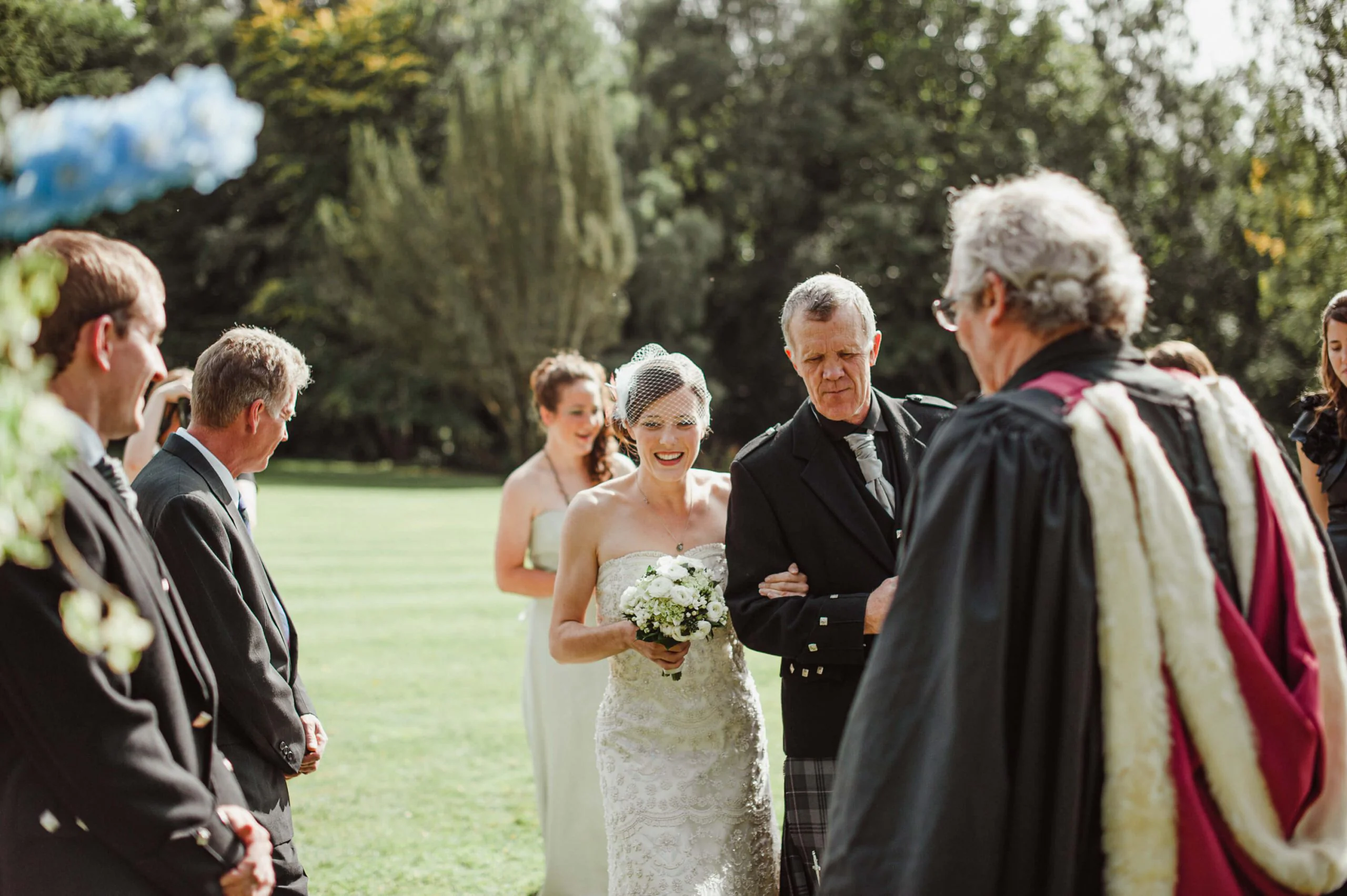
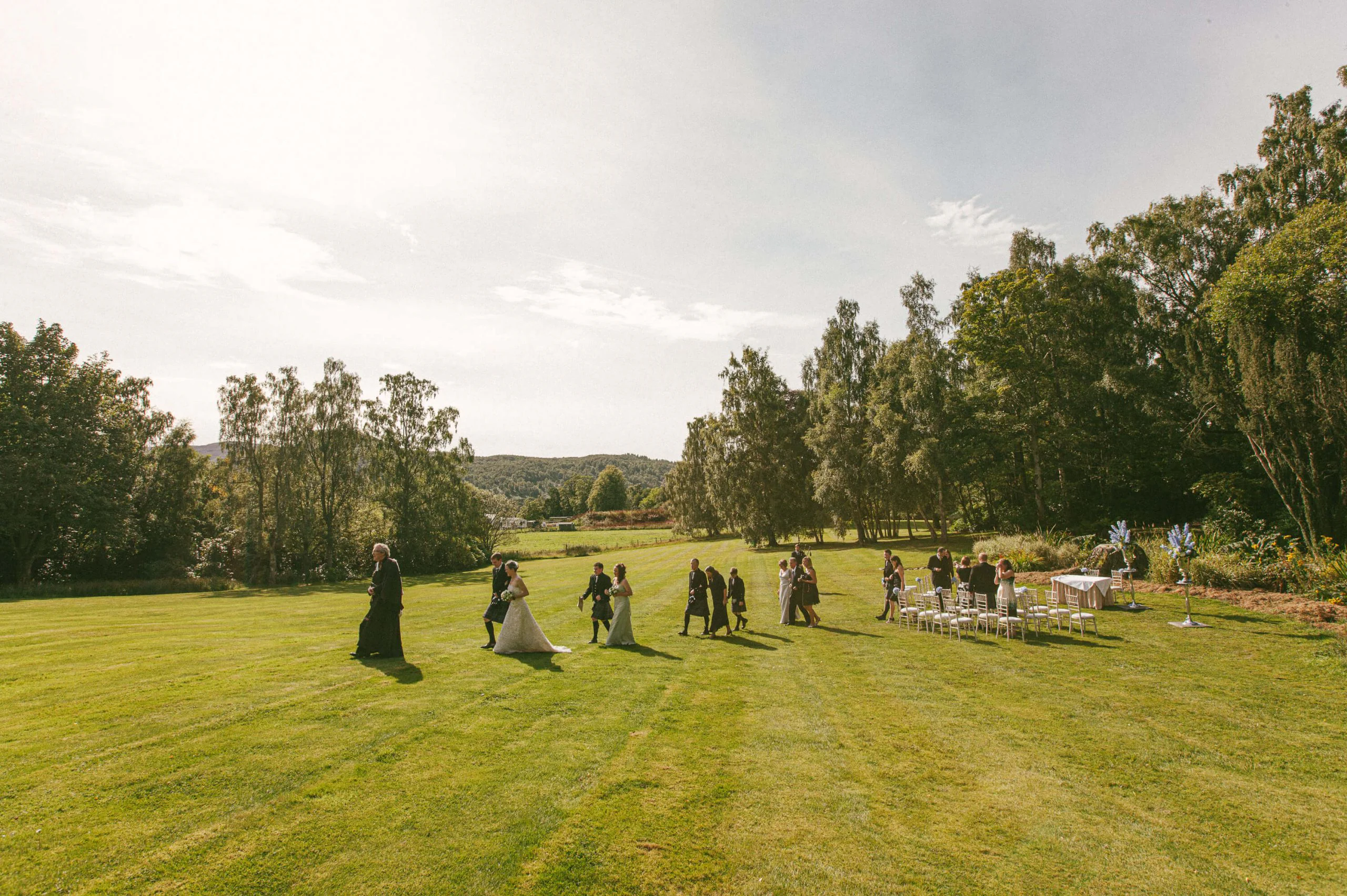
The simplest way to understand this wedding is through its scale. Barbara and Keith were not trying to move a large production through a sequence of distant Scottish landmarks. They chose Coul House for a small celebration, kept the ceremony and reception in one place, and used the Highland landscape nearby when there was time to step away for portraits. That gave the day a clear beginning, middle and end without making the photography the main event.
The original wedding was photographed on 30 August 2010. Barbara and Keith are the couple, and both the ceremony and reception were at Coul House in Contin. Those details are documented in my archived ISPWP real-wedding feature as well as the surviving image set. I have kept them here because they make this page useful as a real piece of work rather than a page built around a place name.
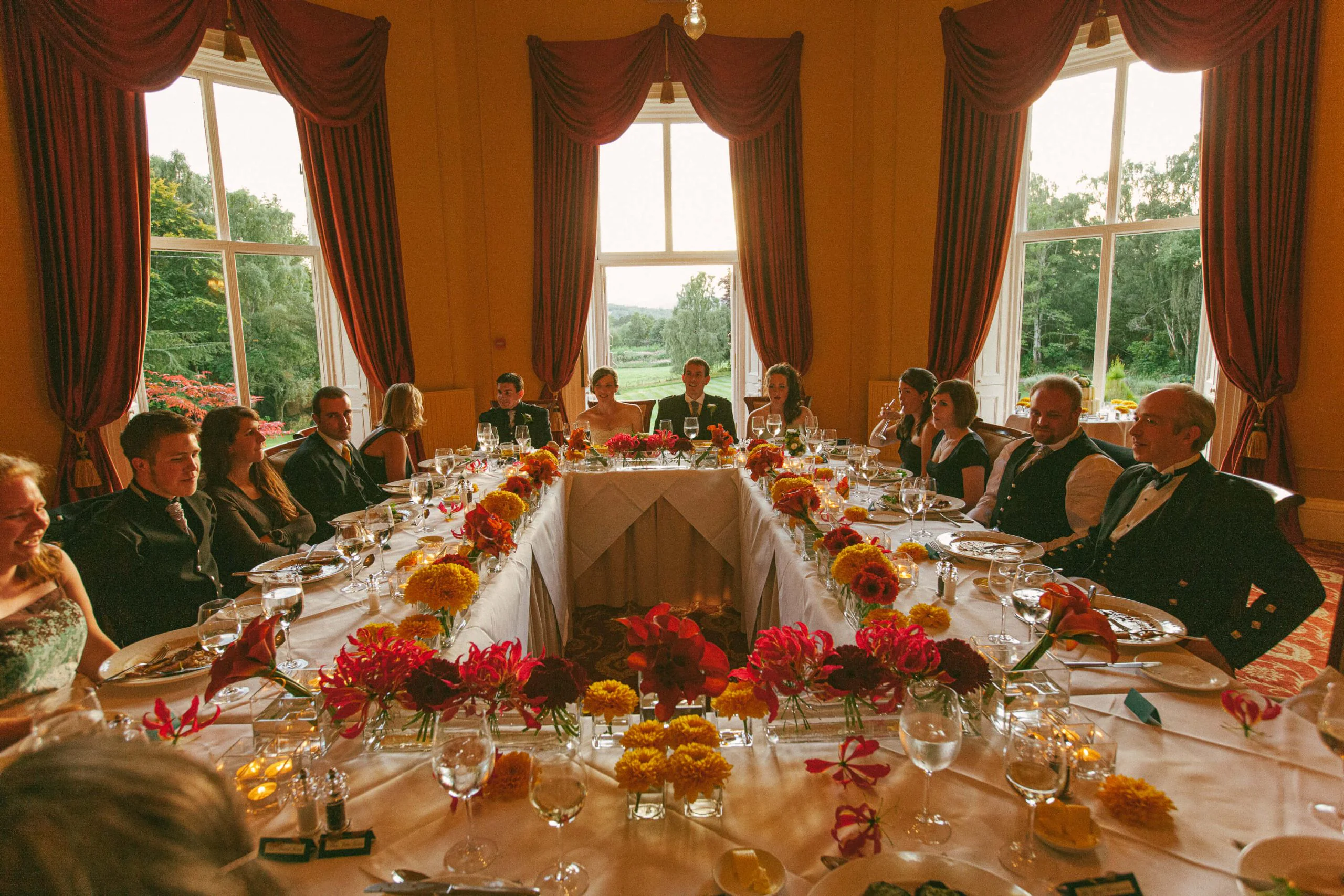
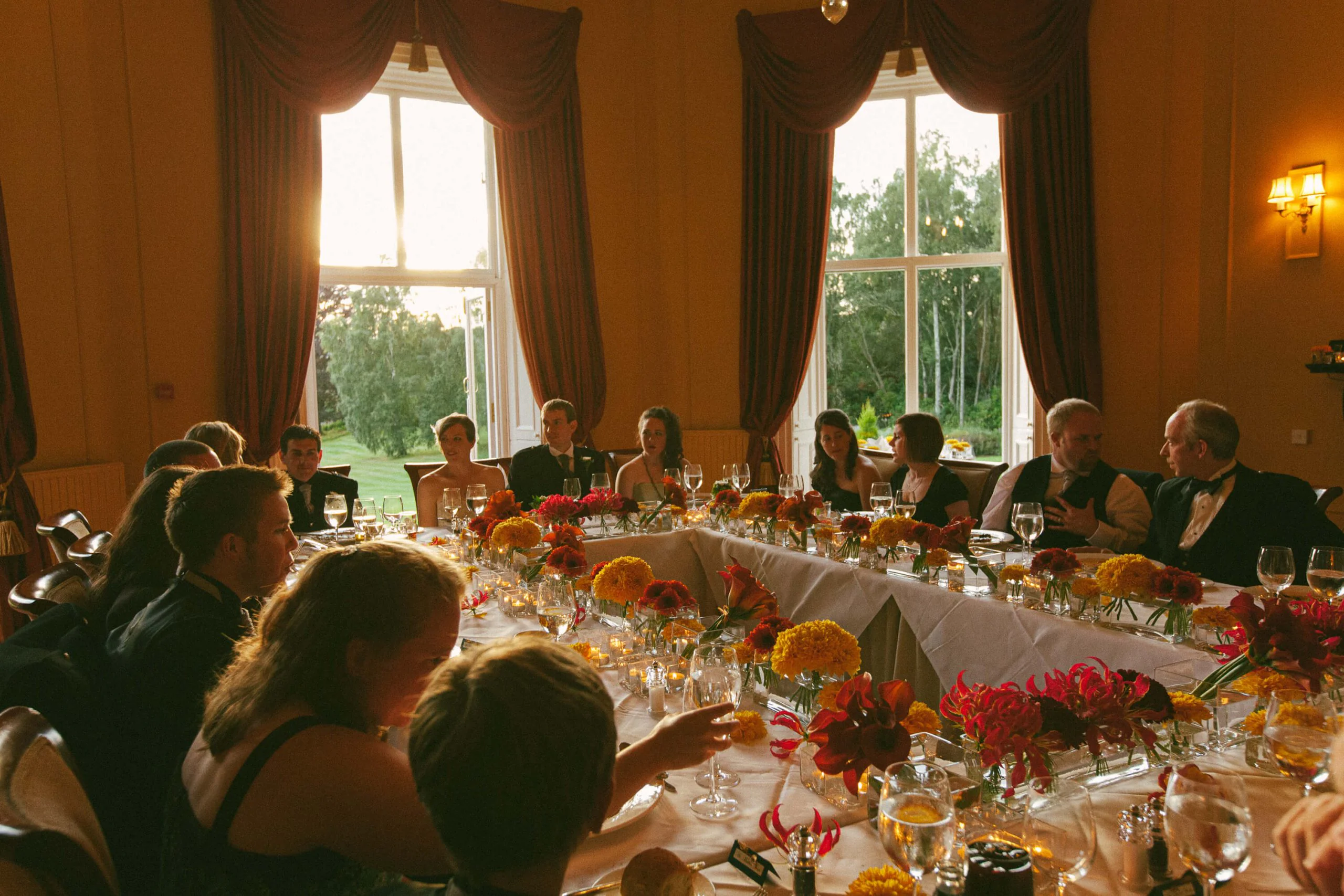
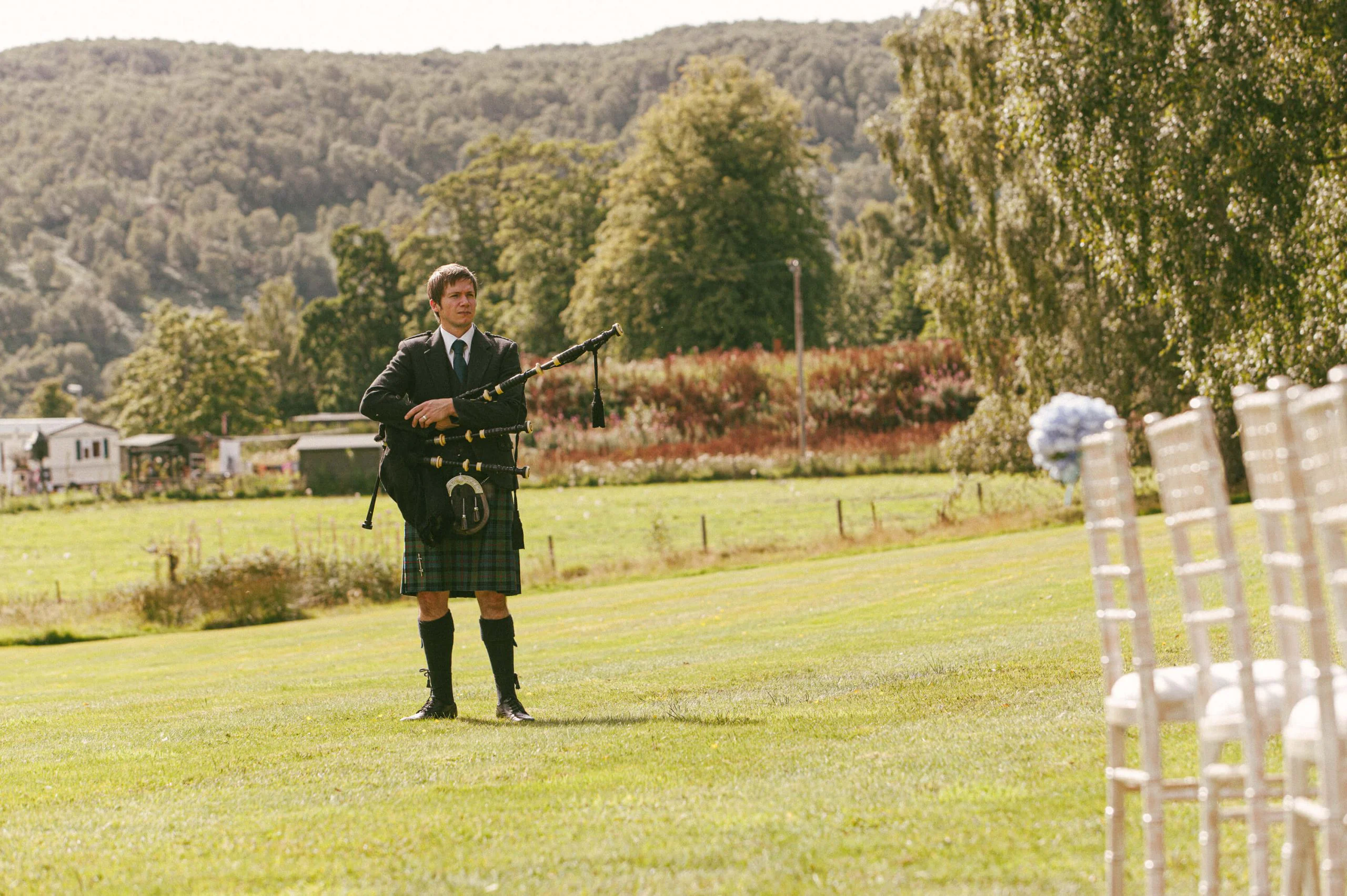
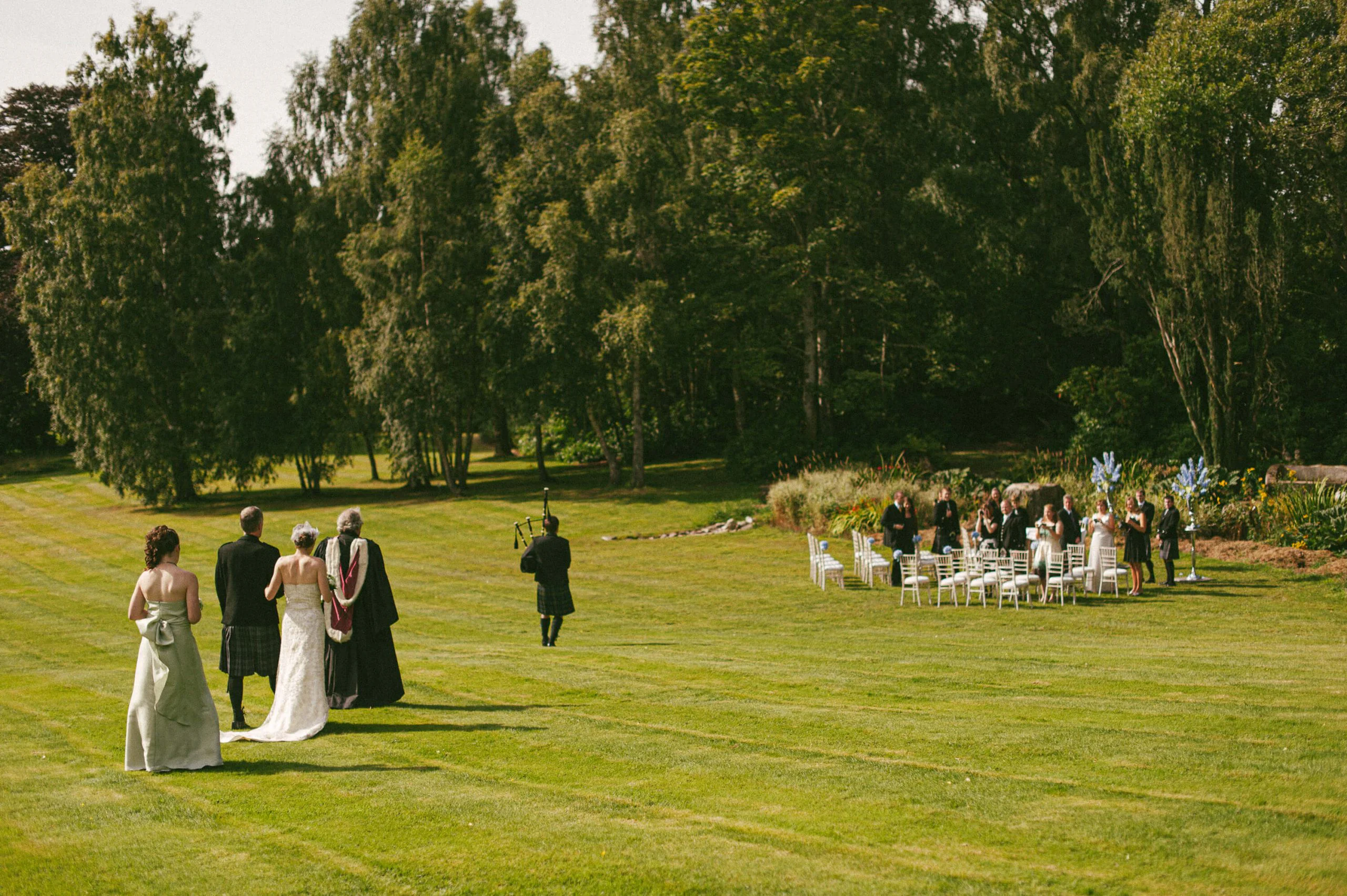
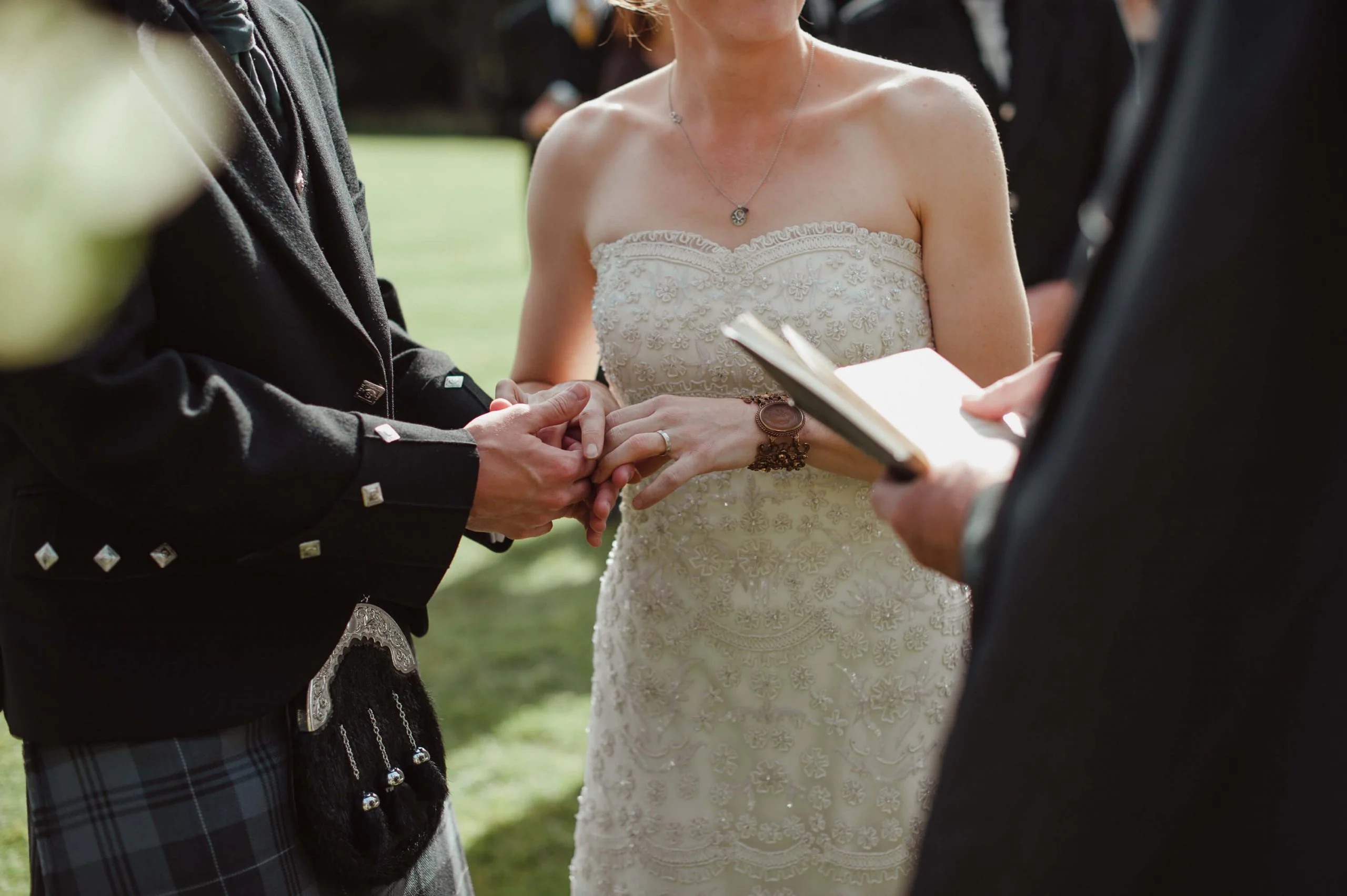
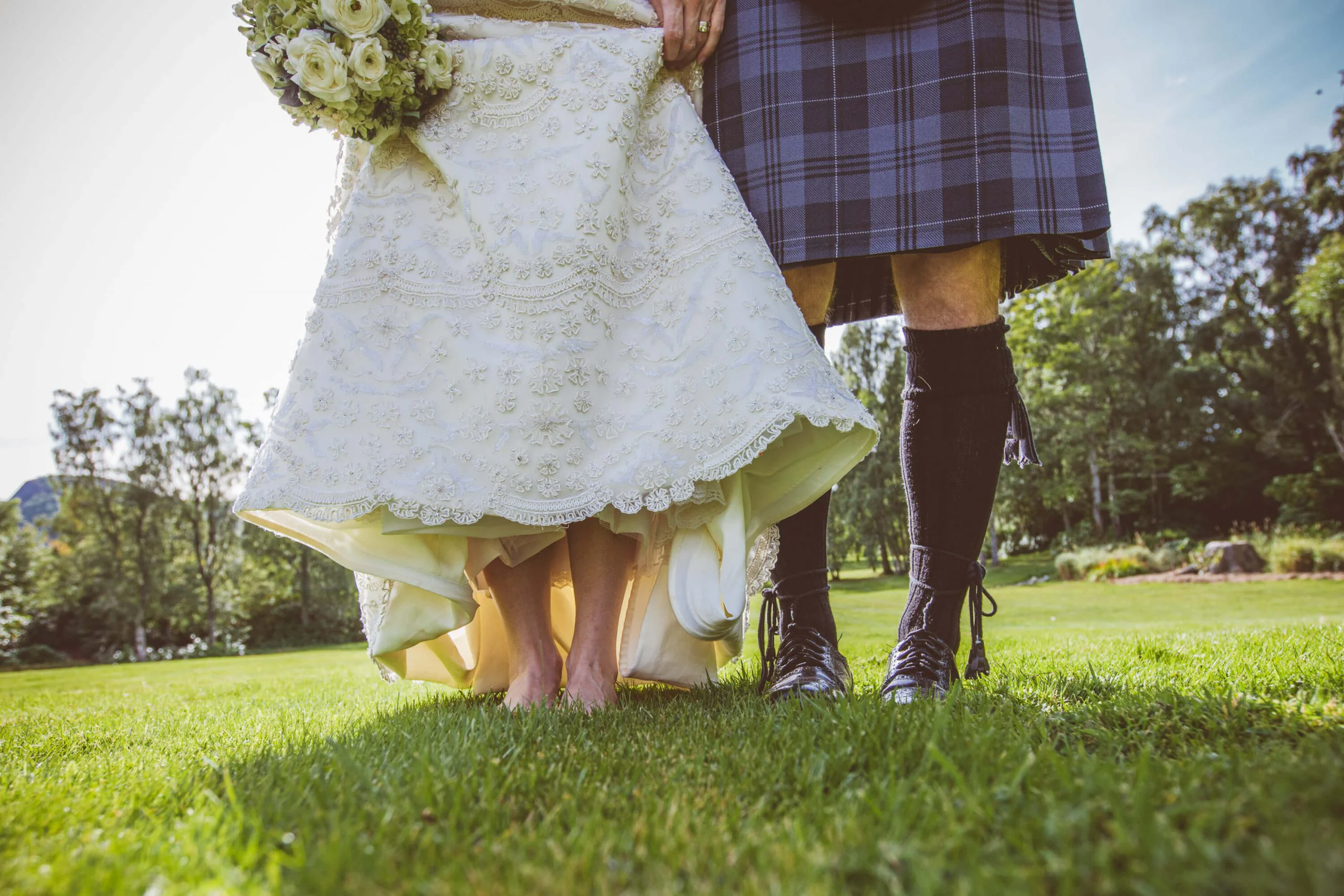
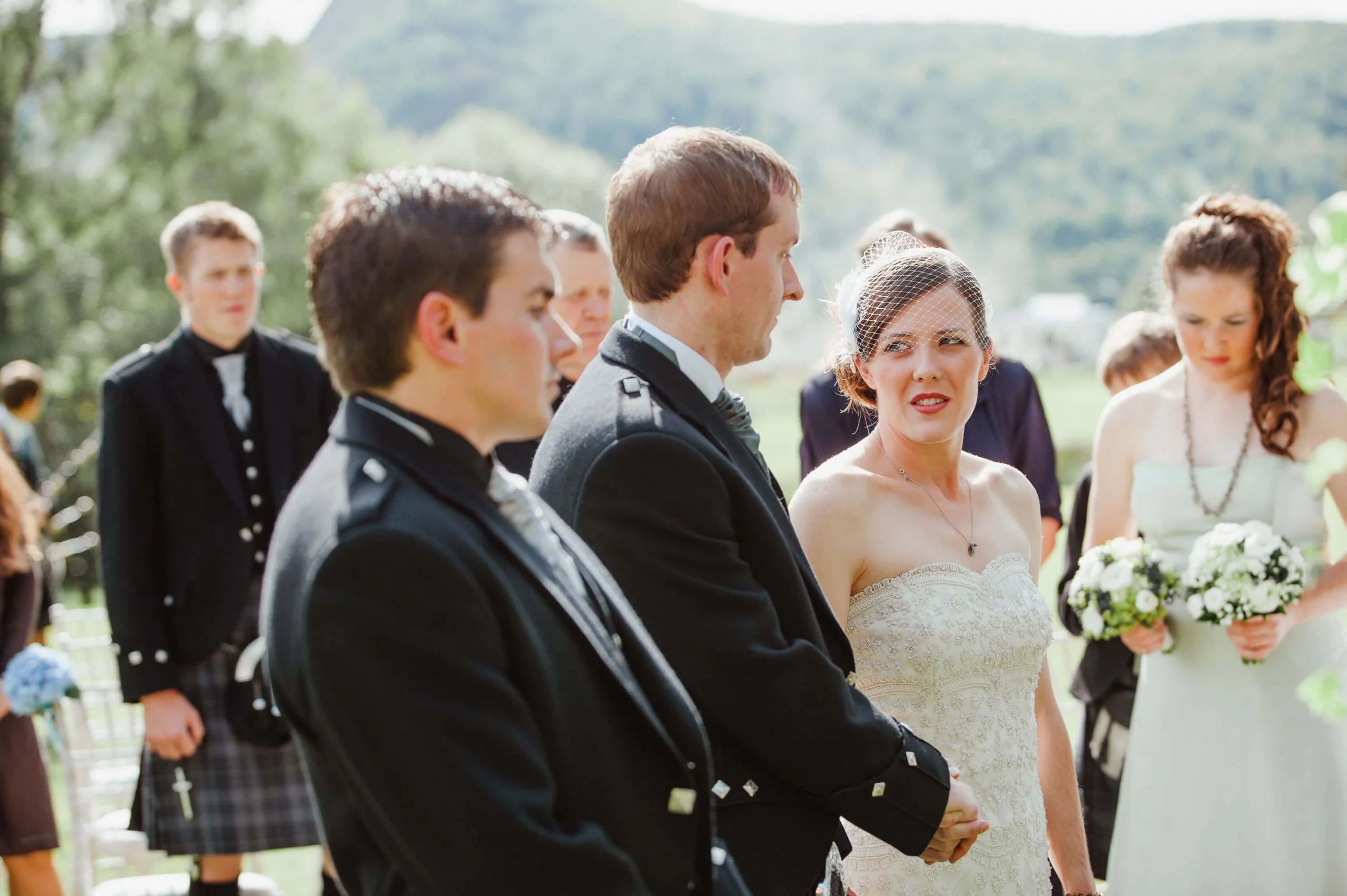
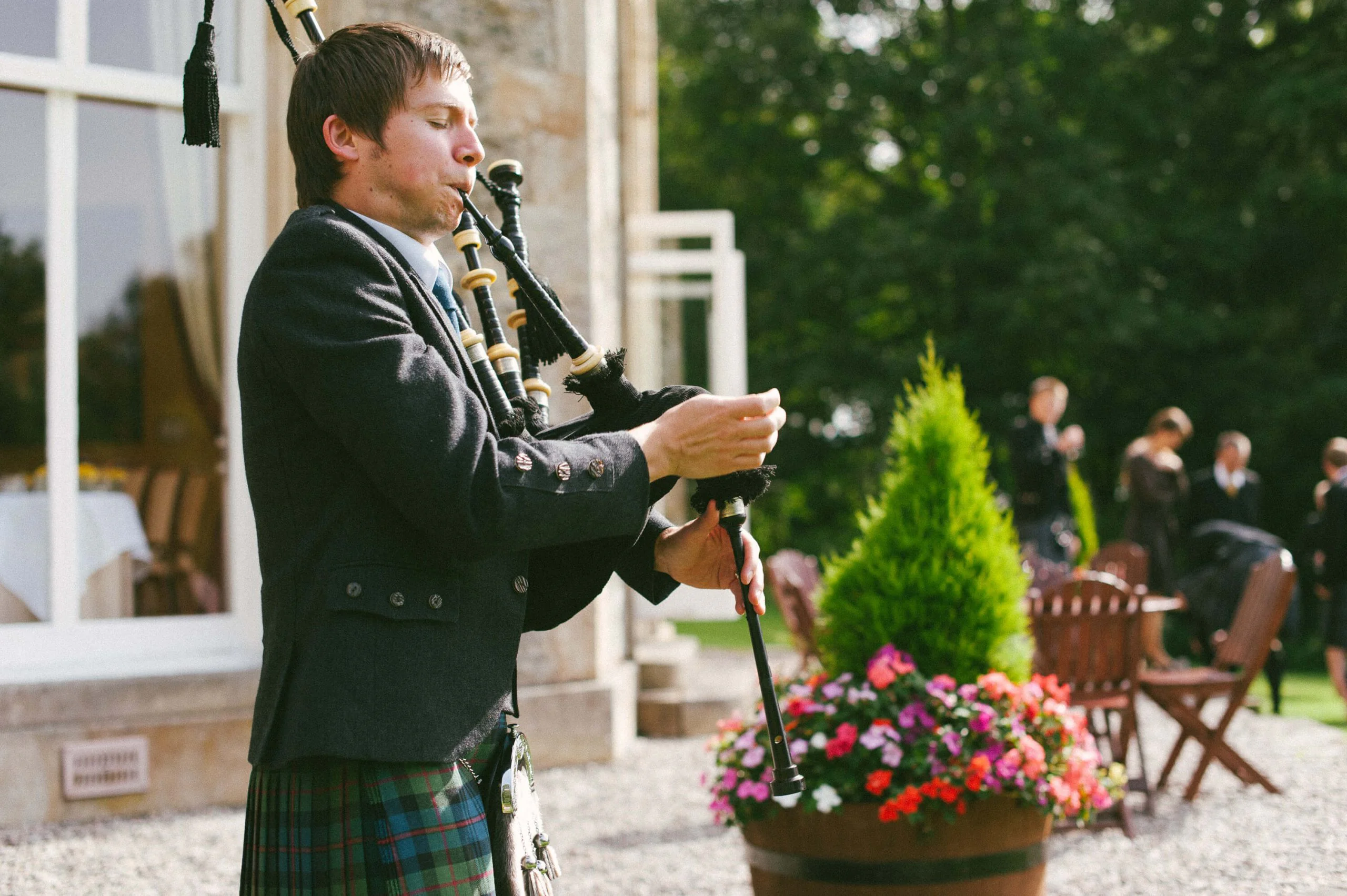
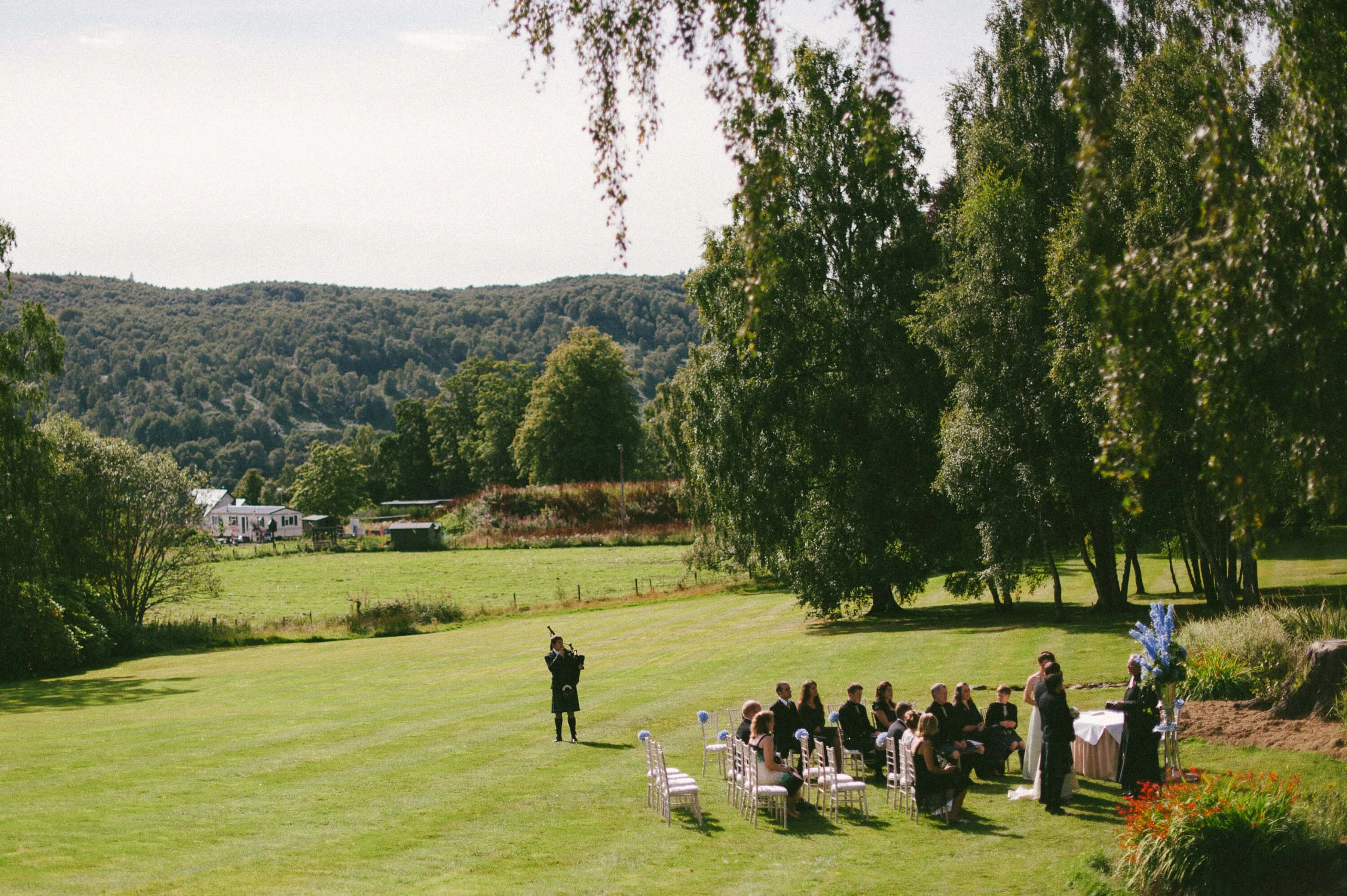
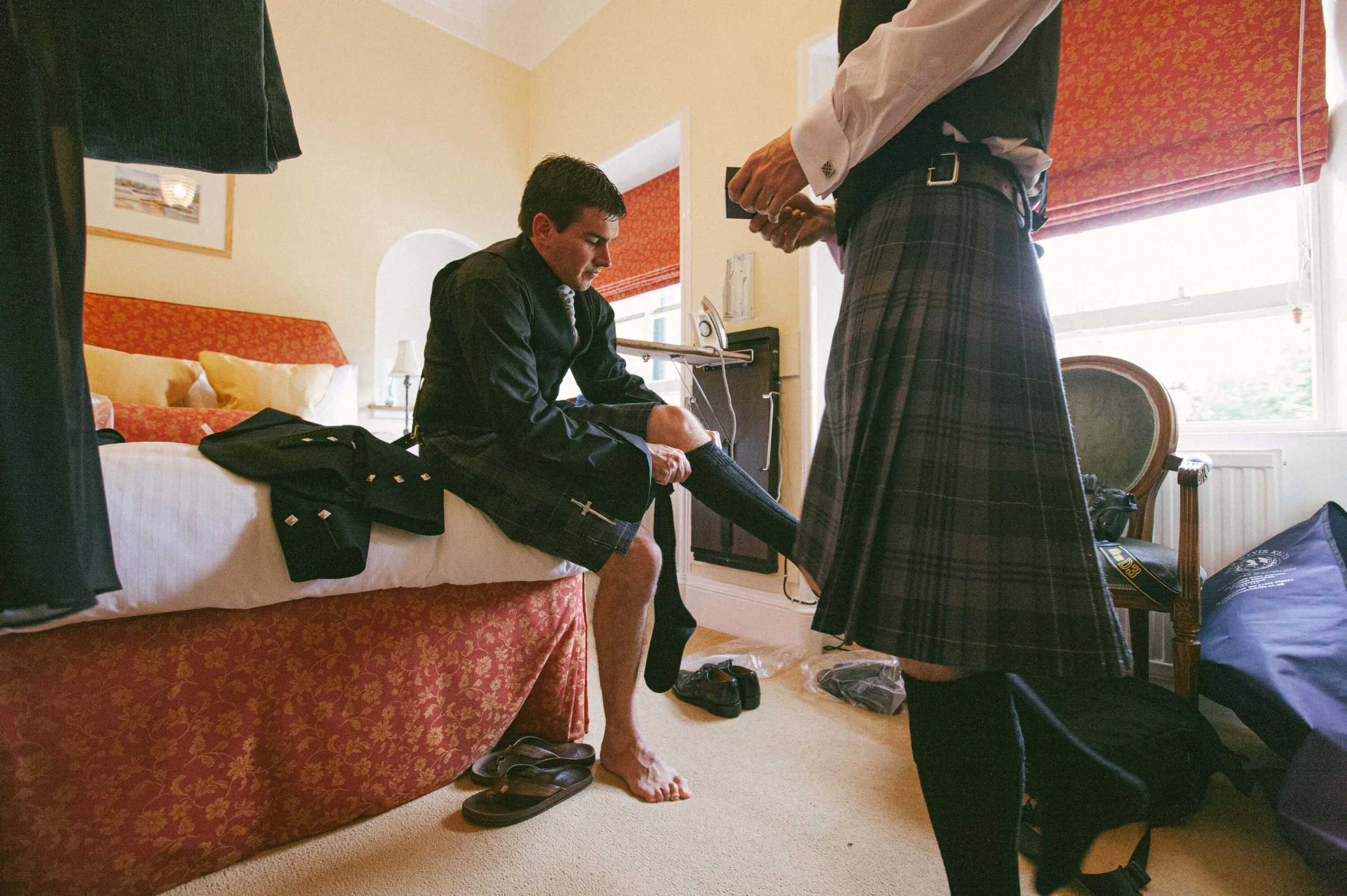
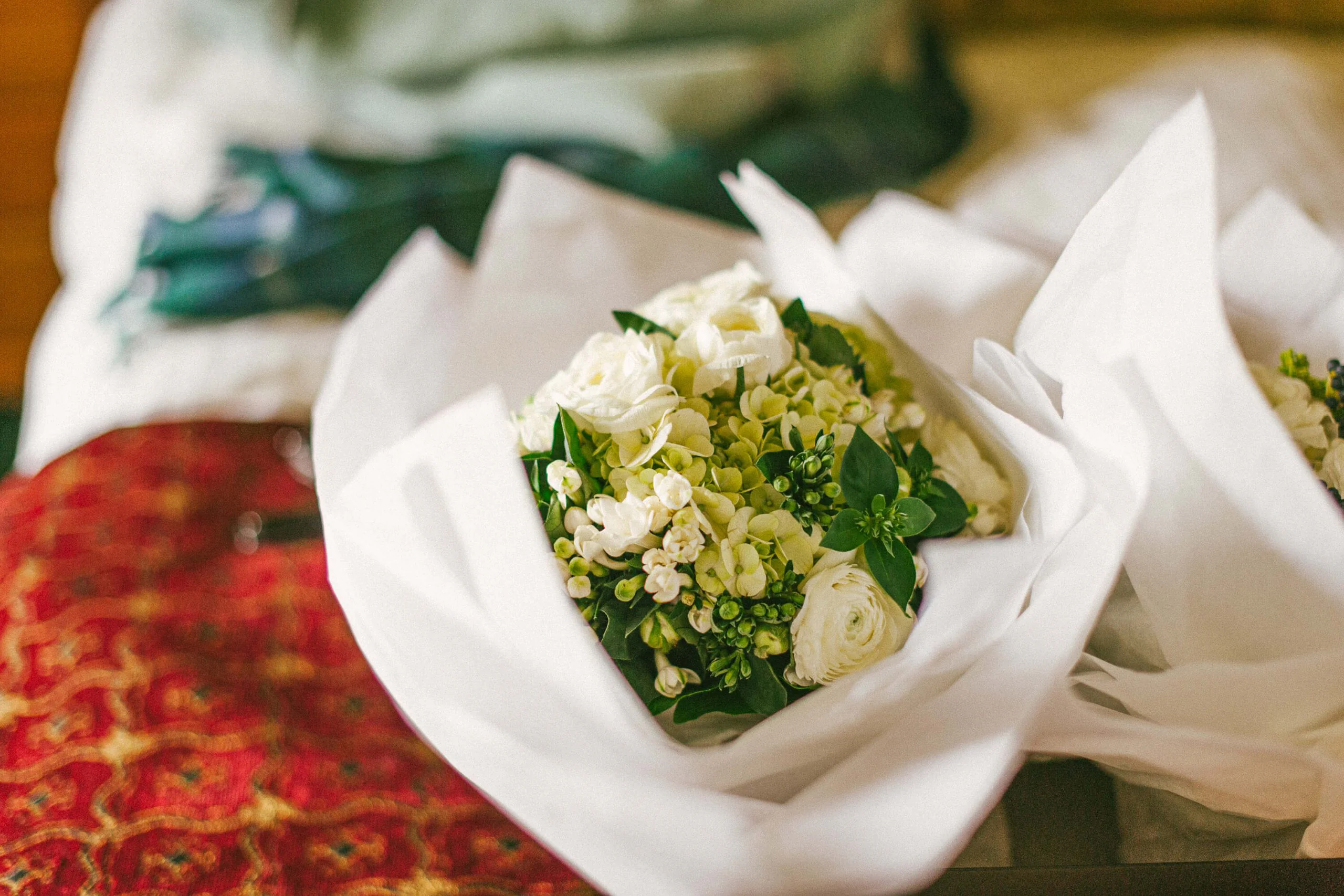
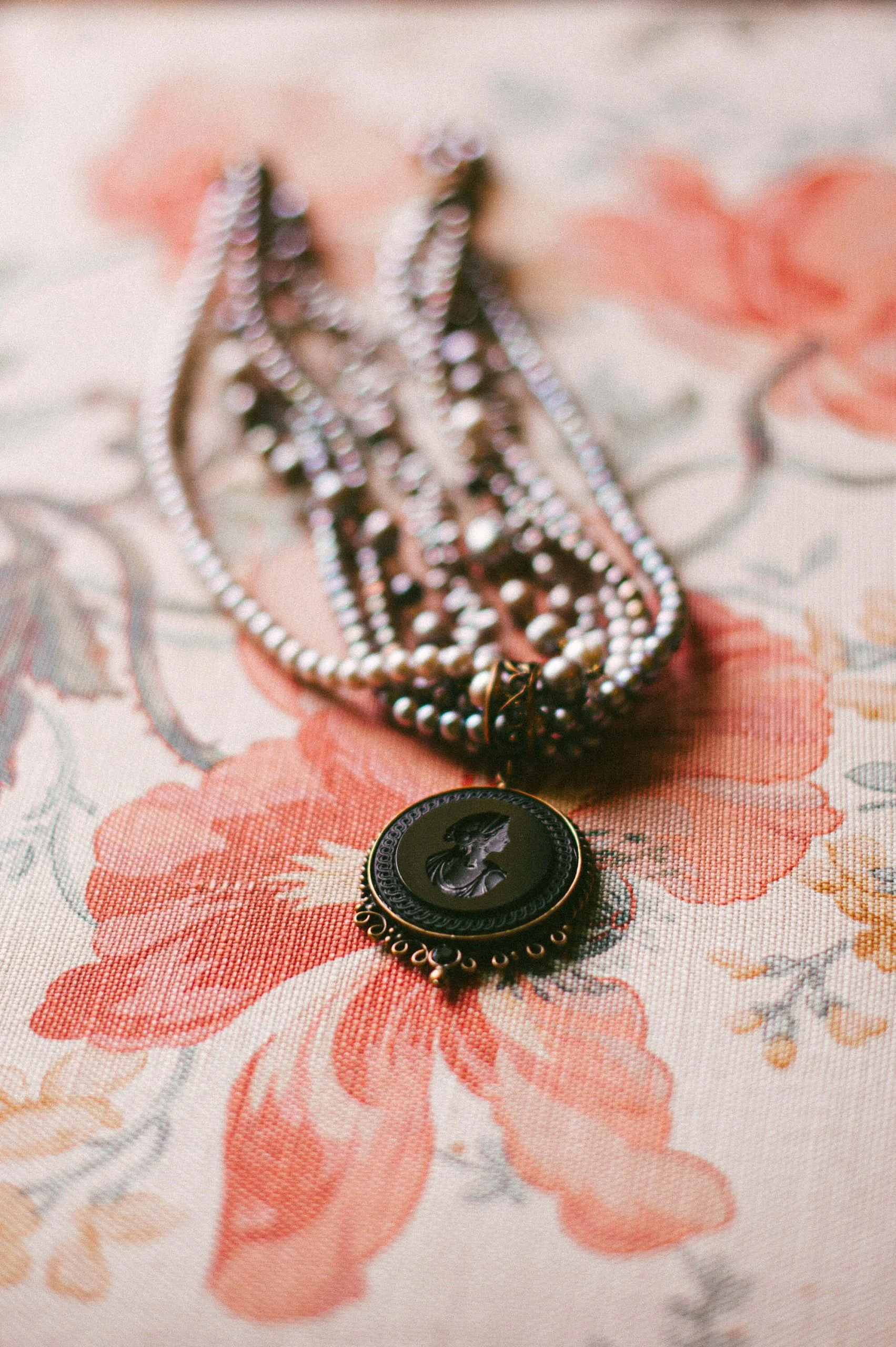
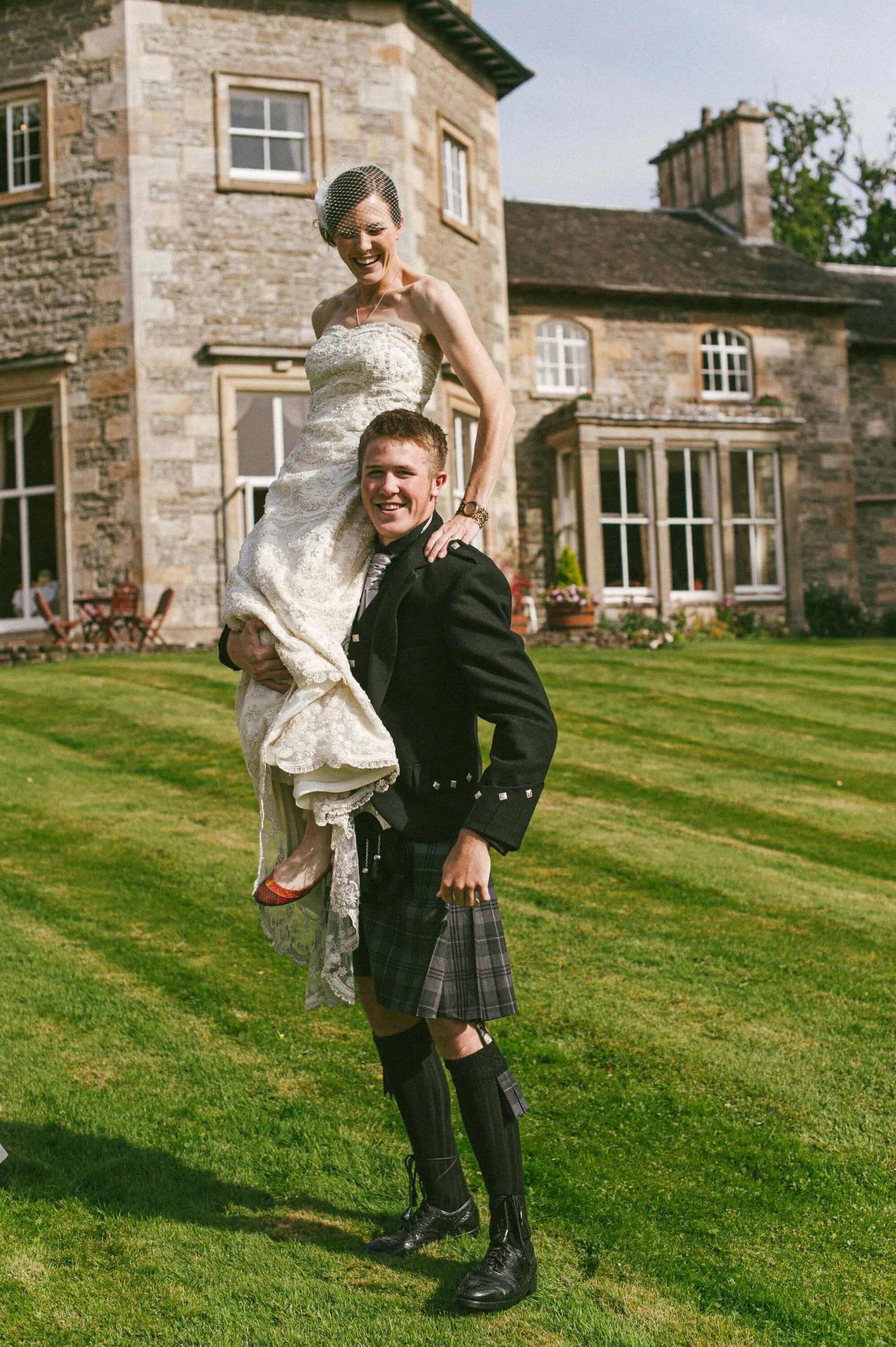
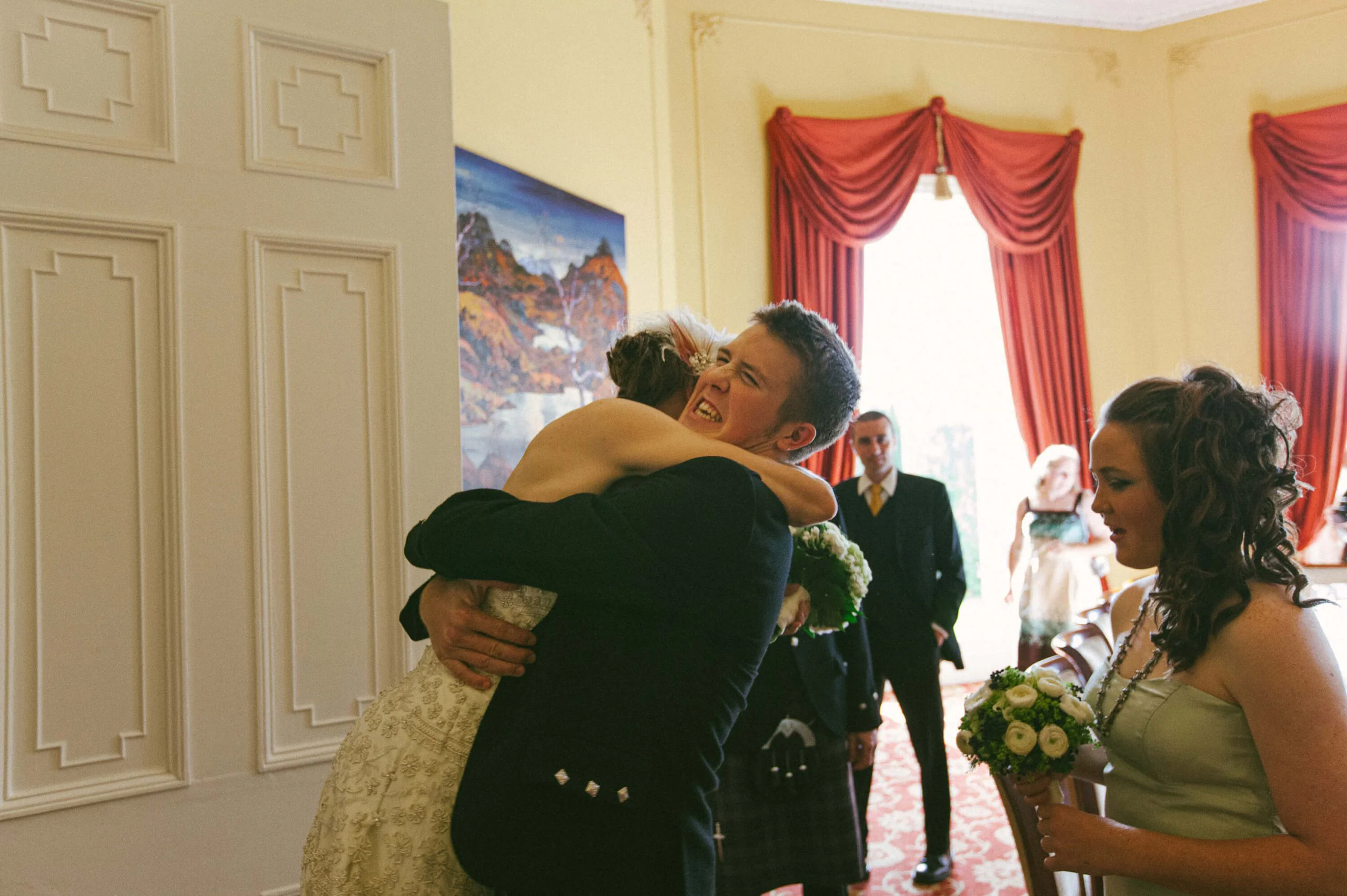
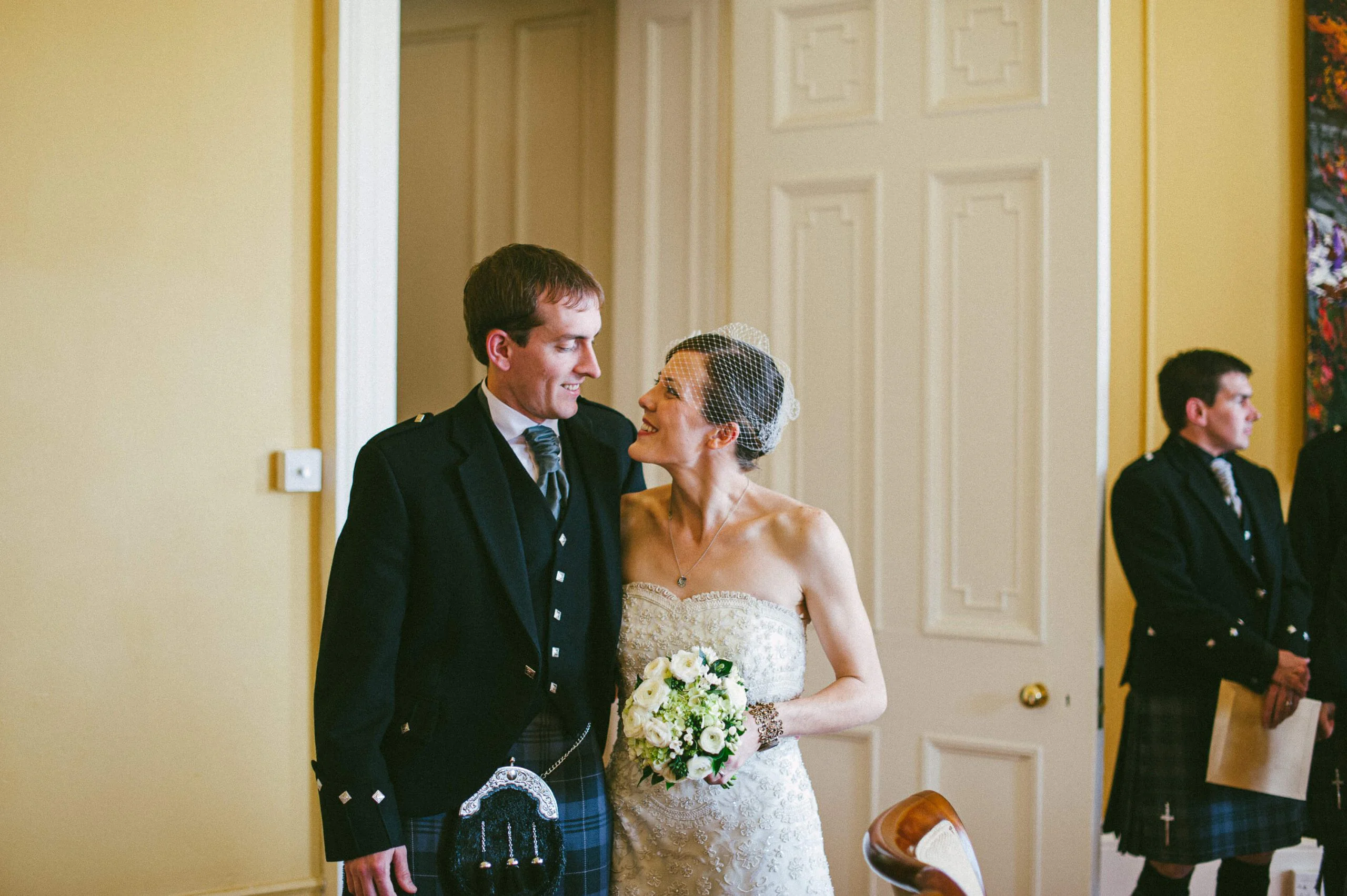
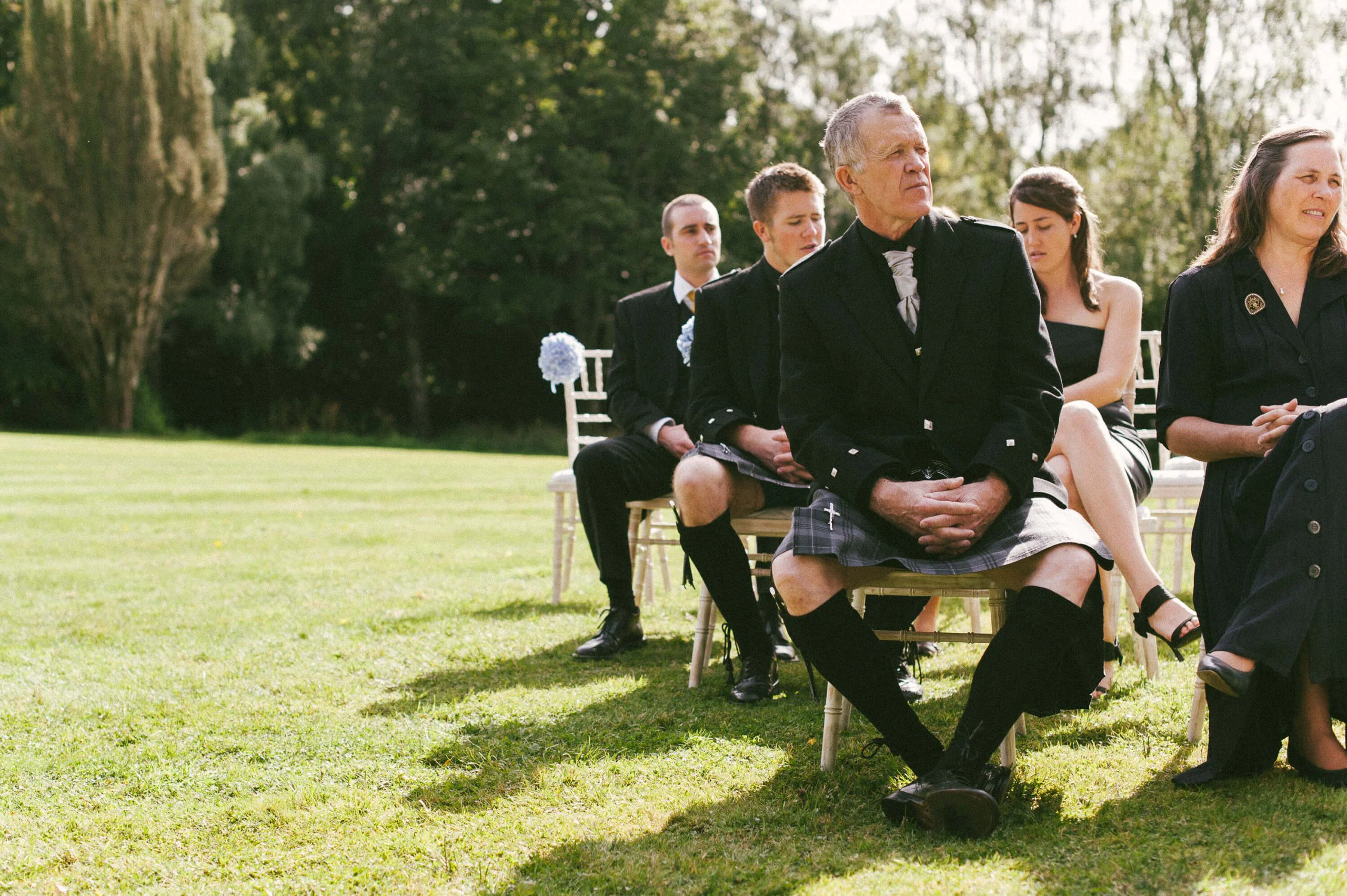
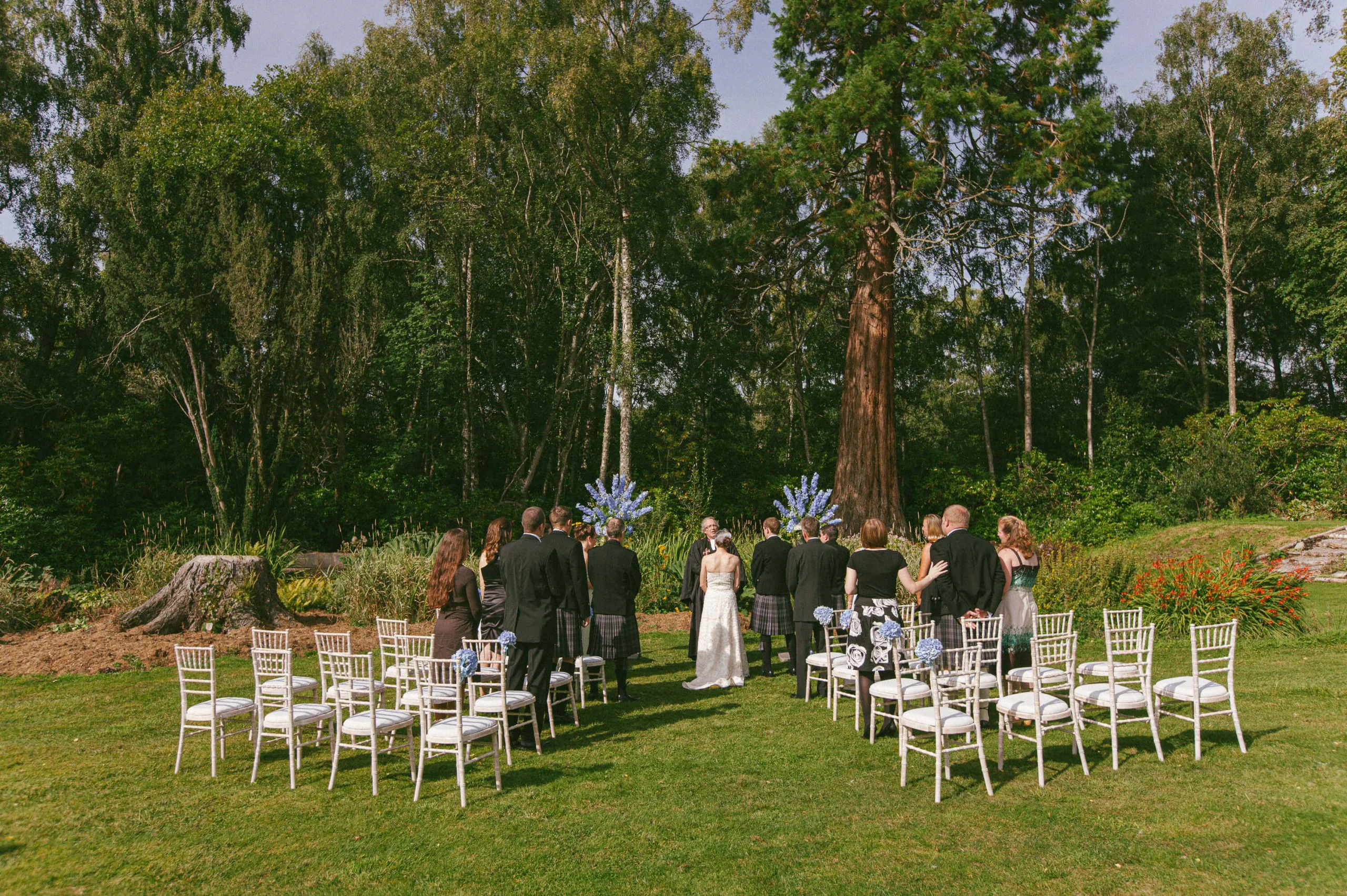
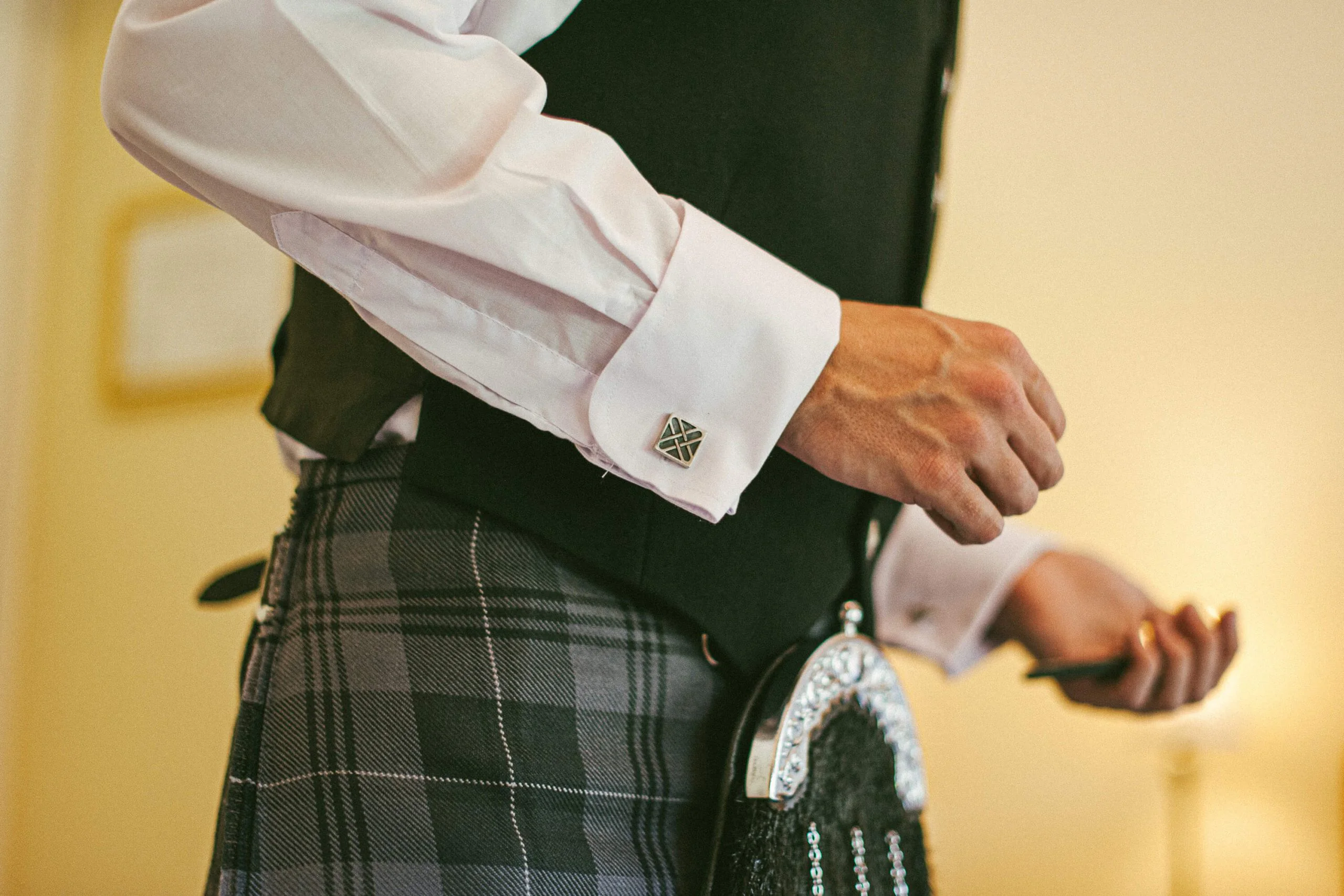
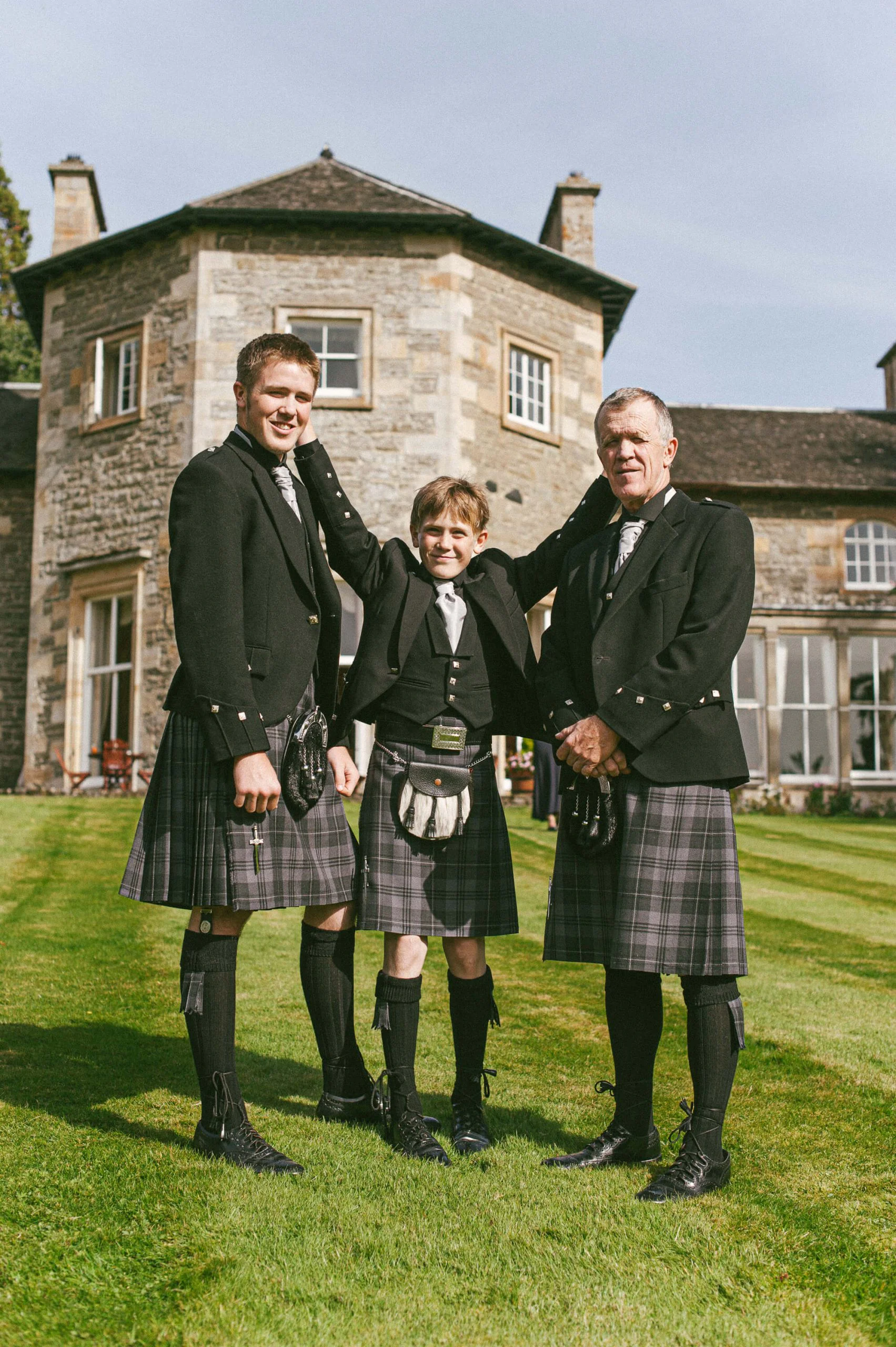
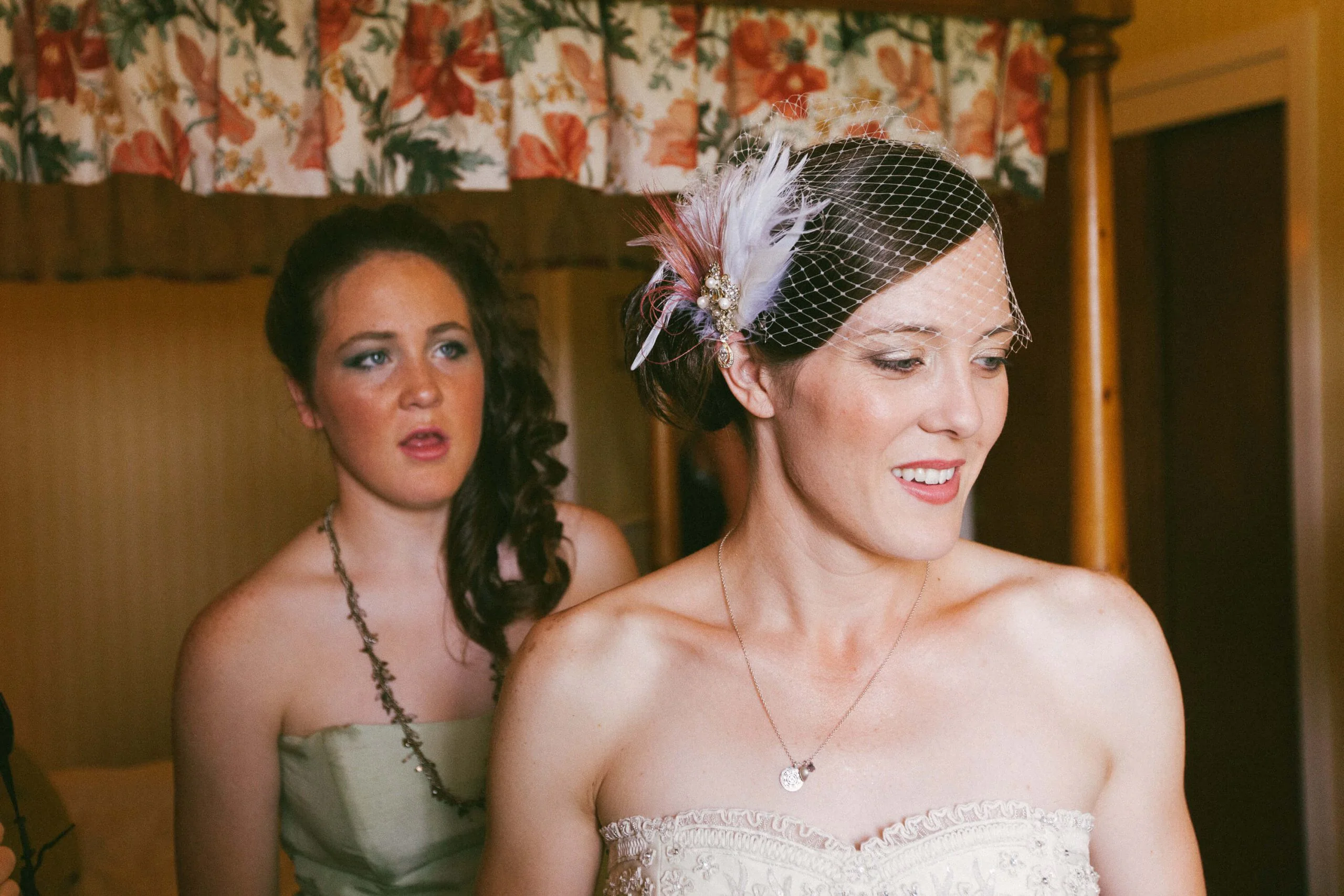
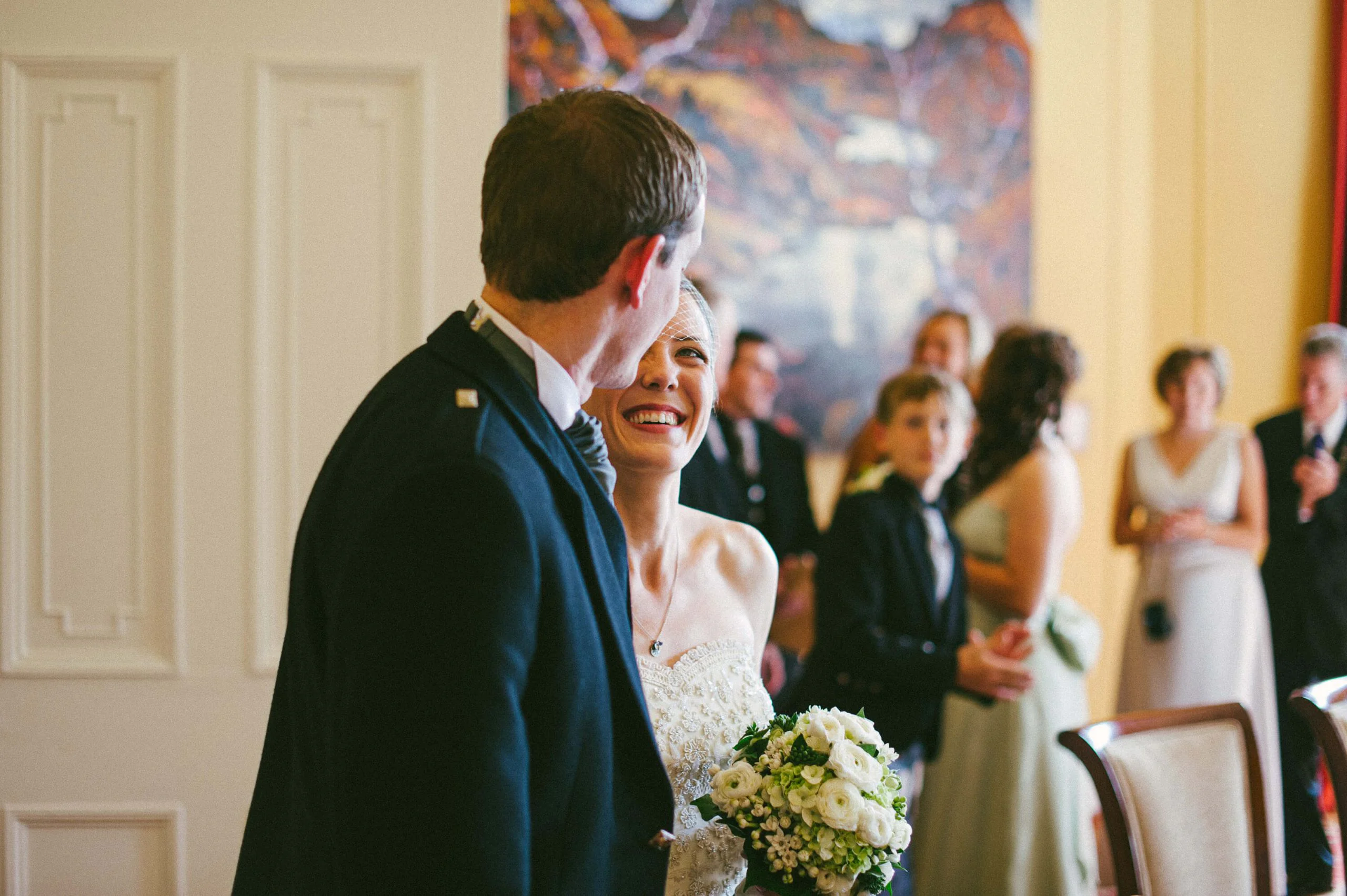
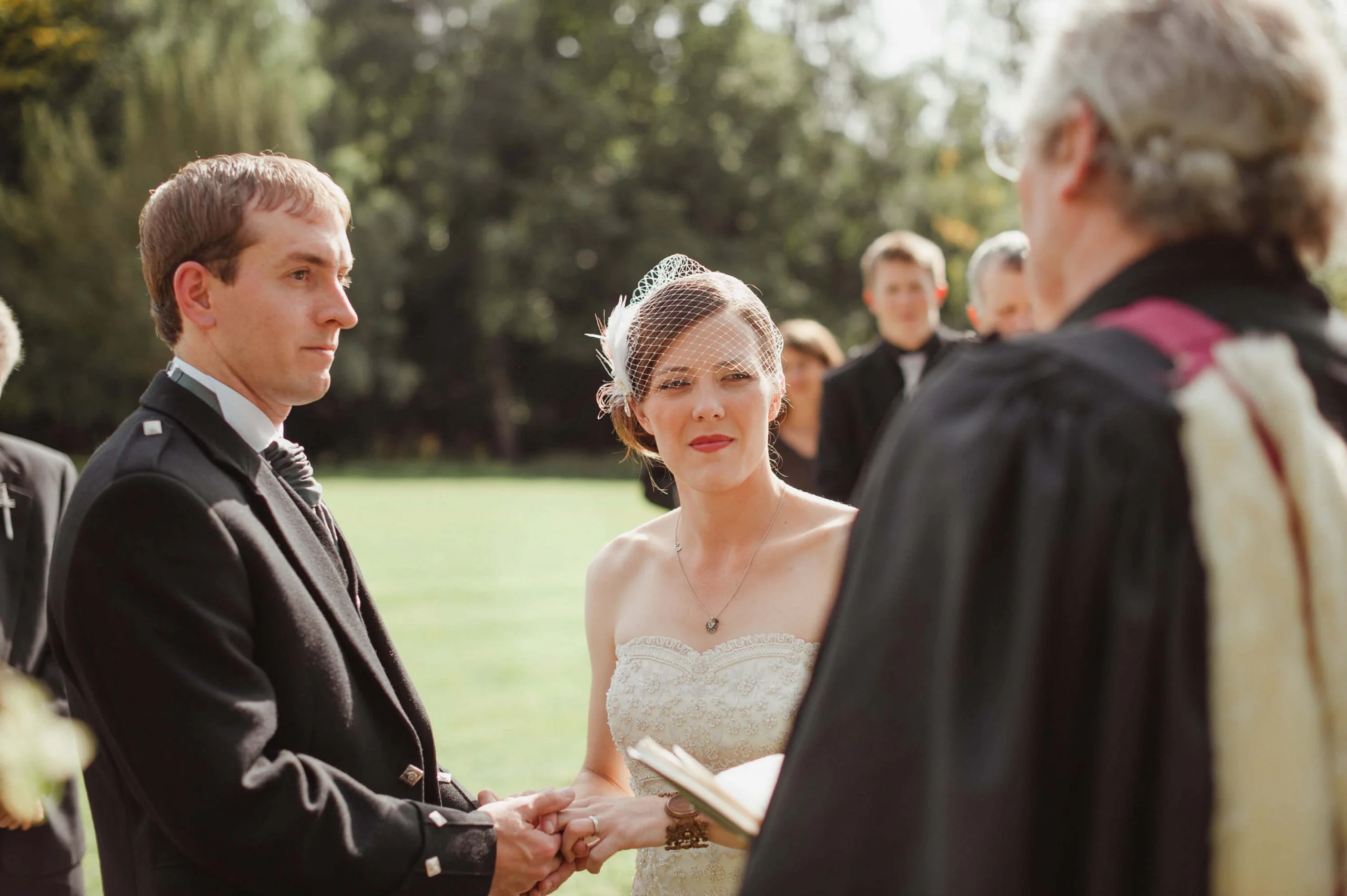
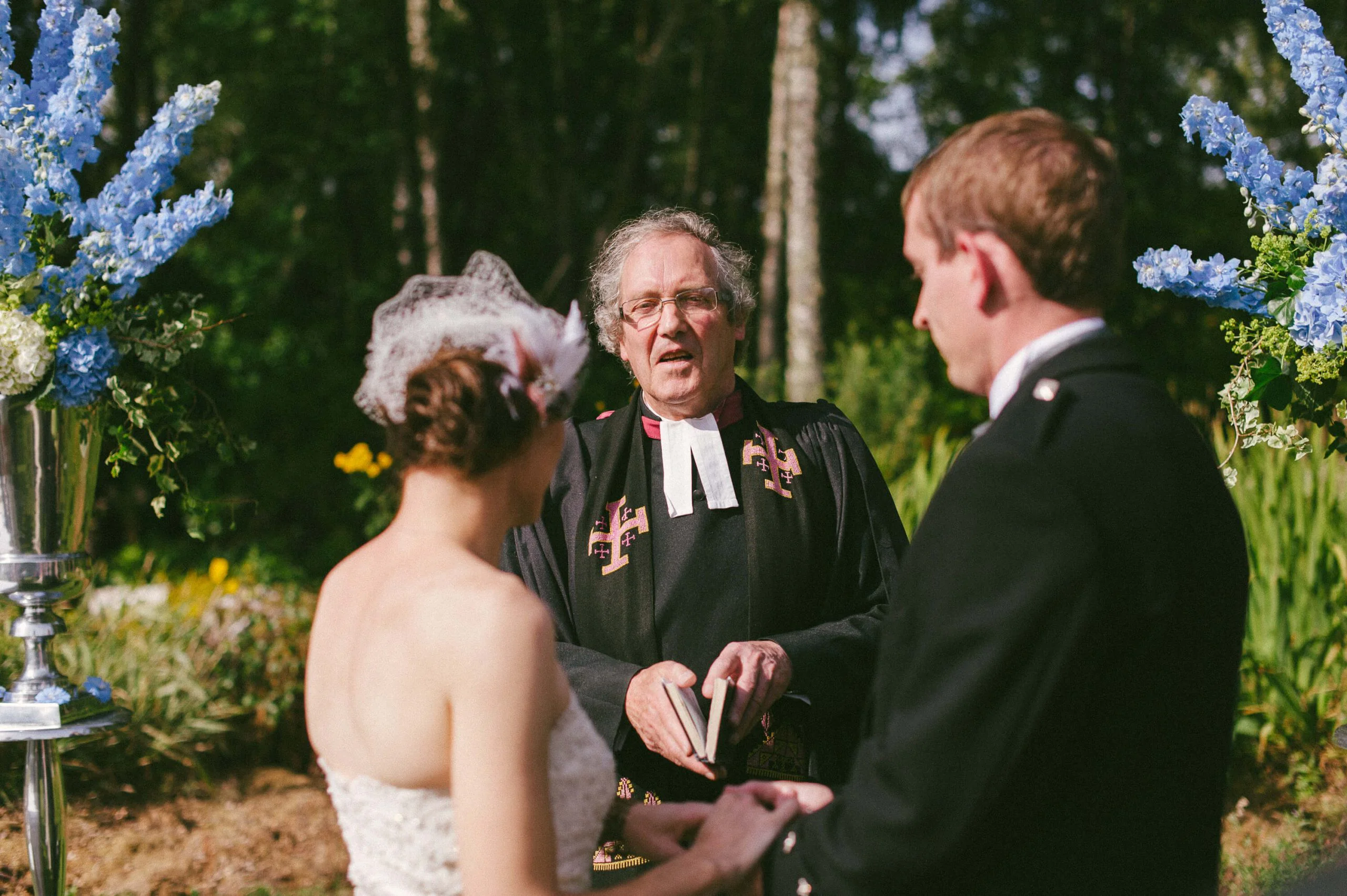
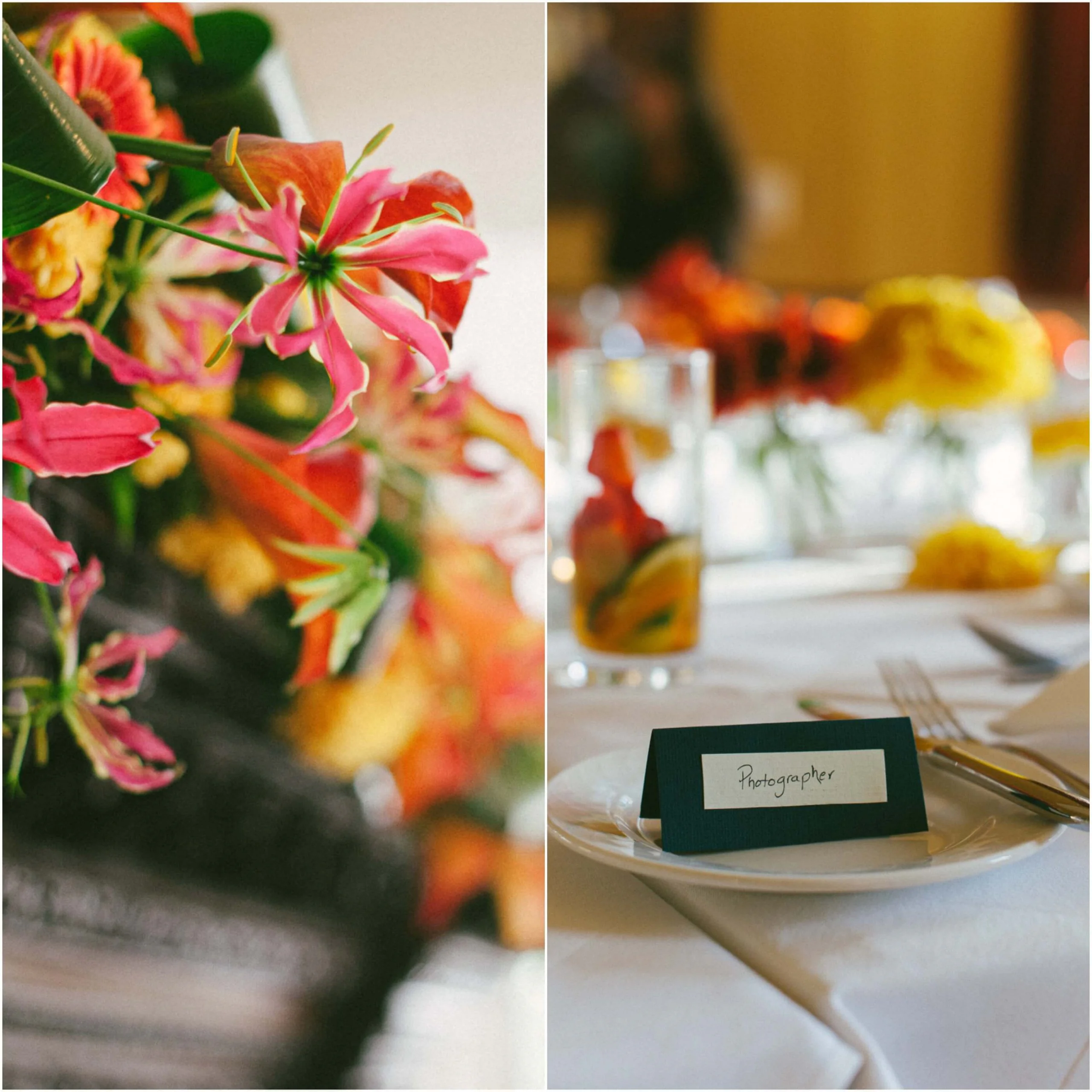
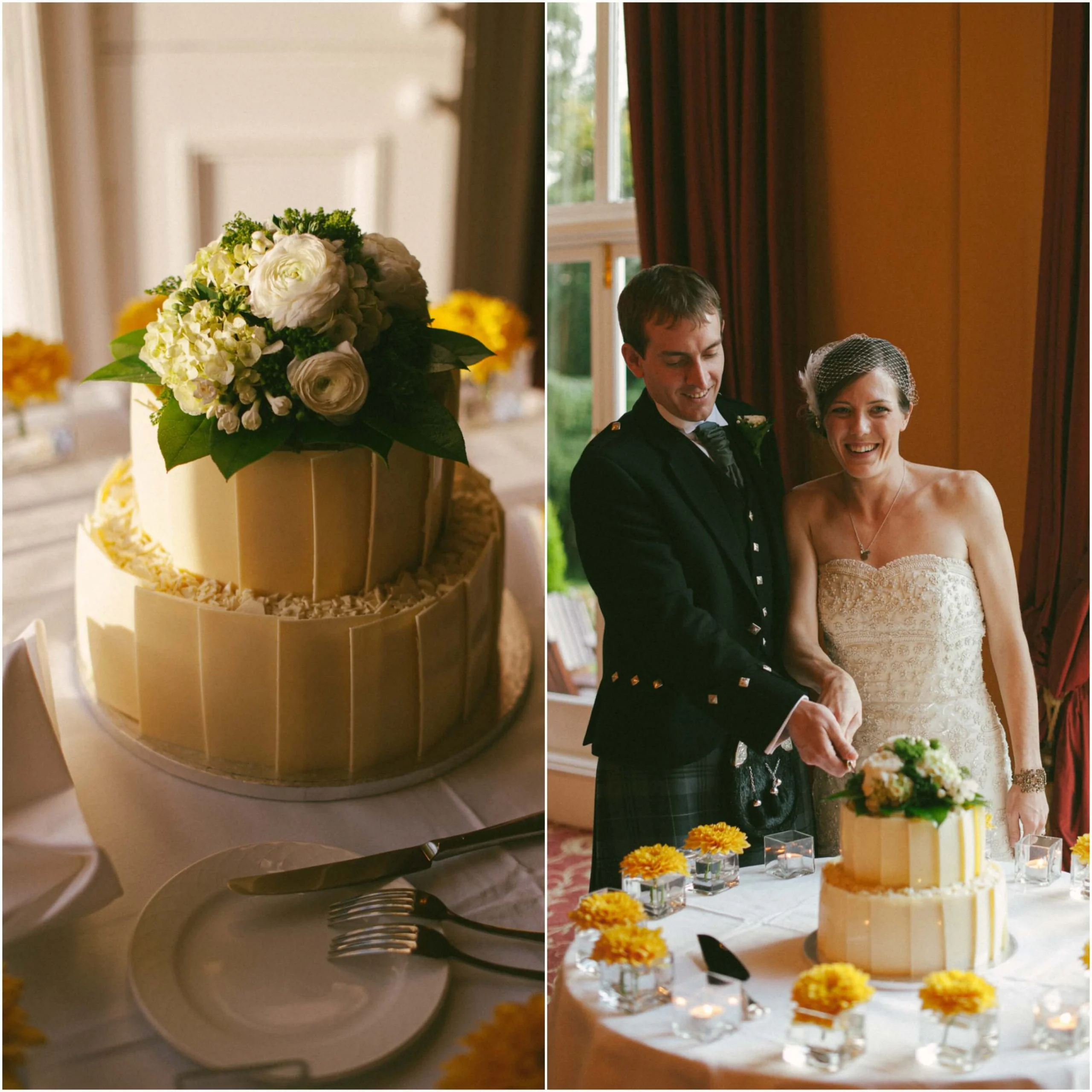
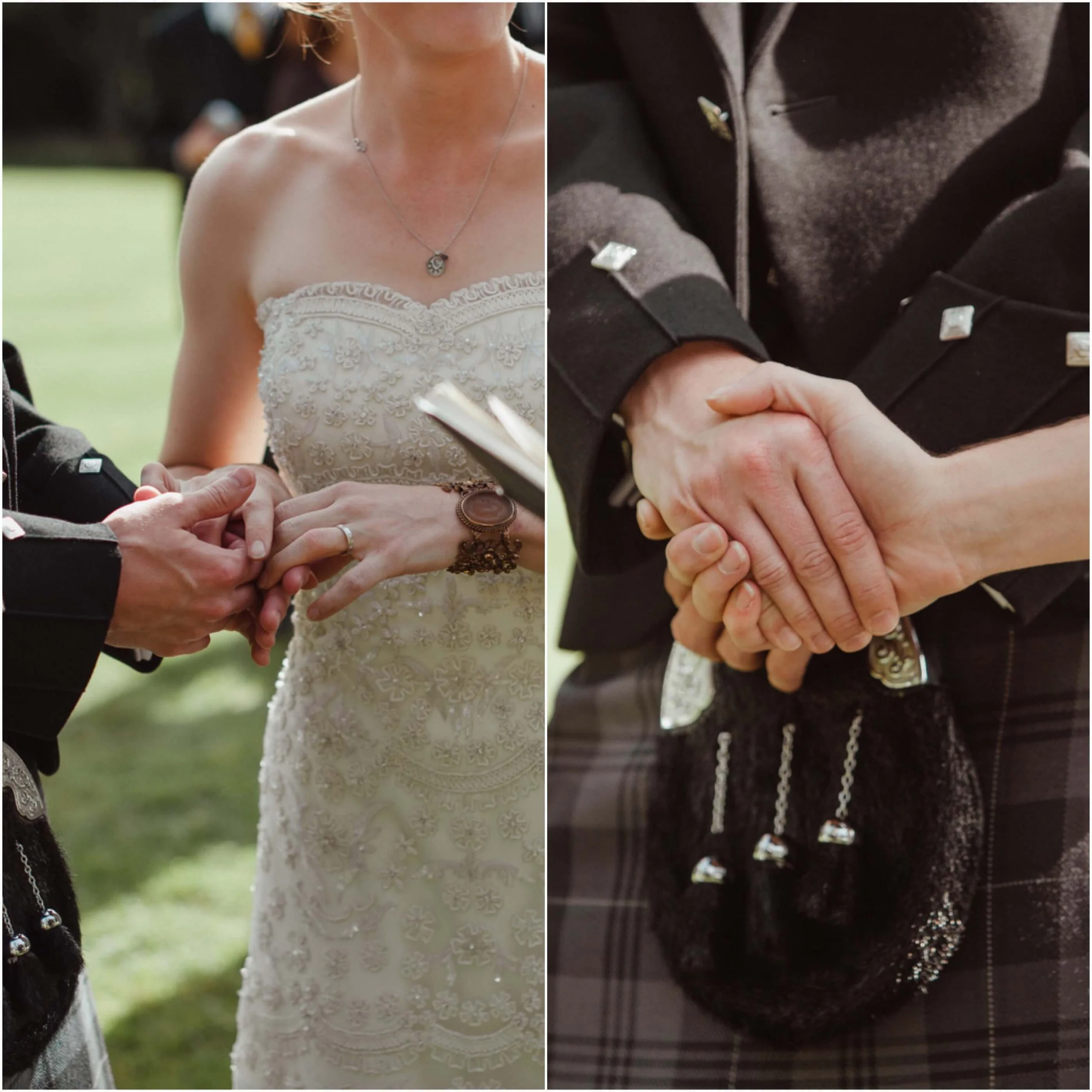
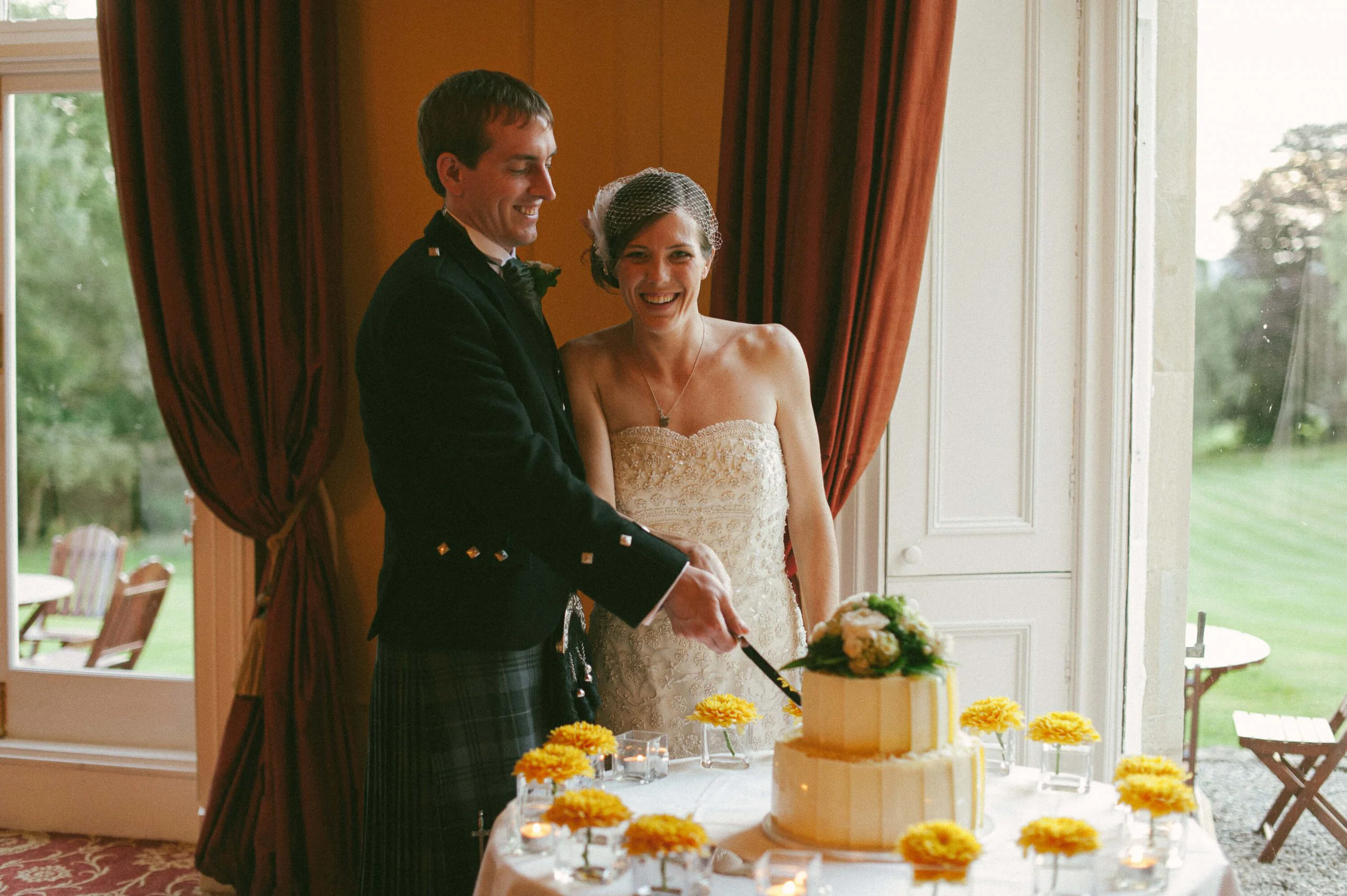
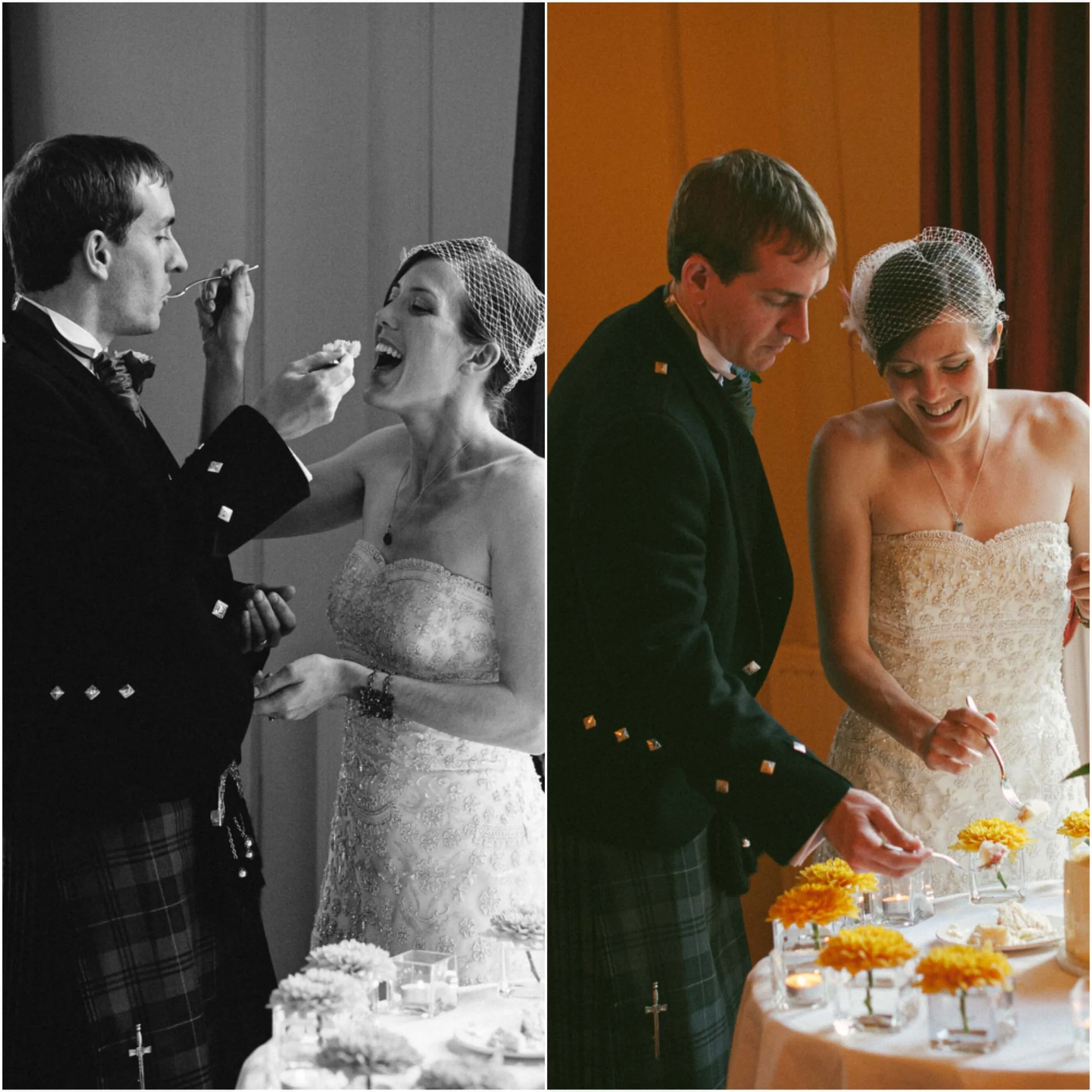
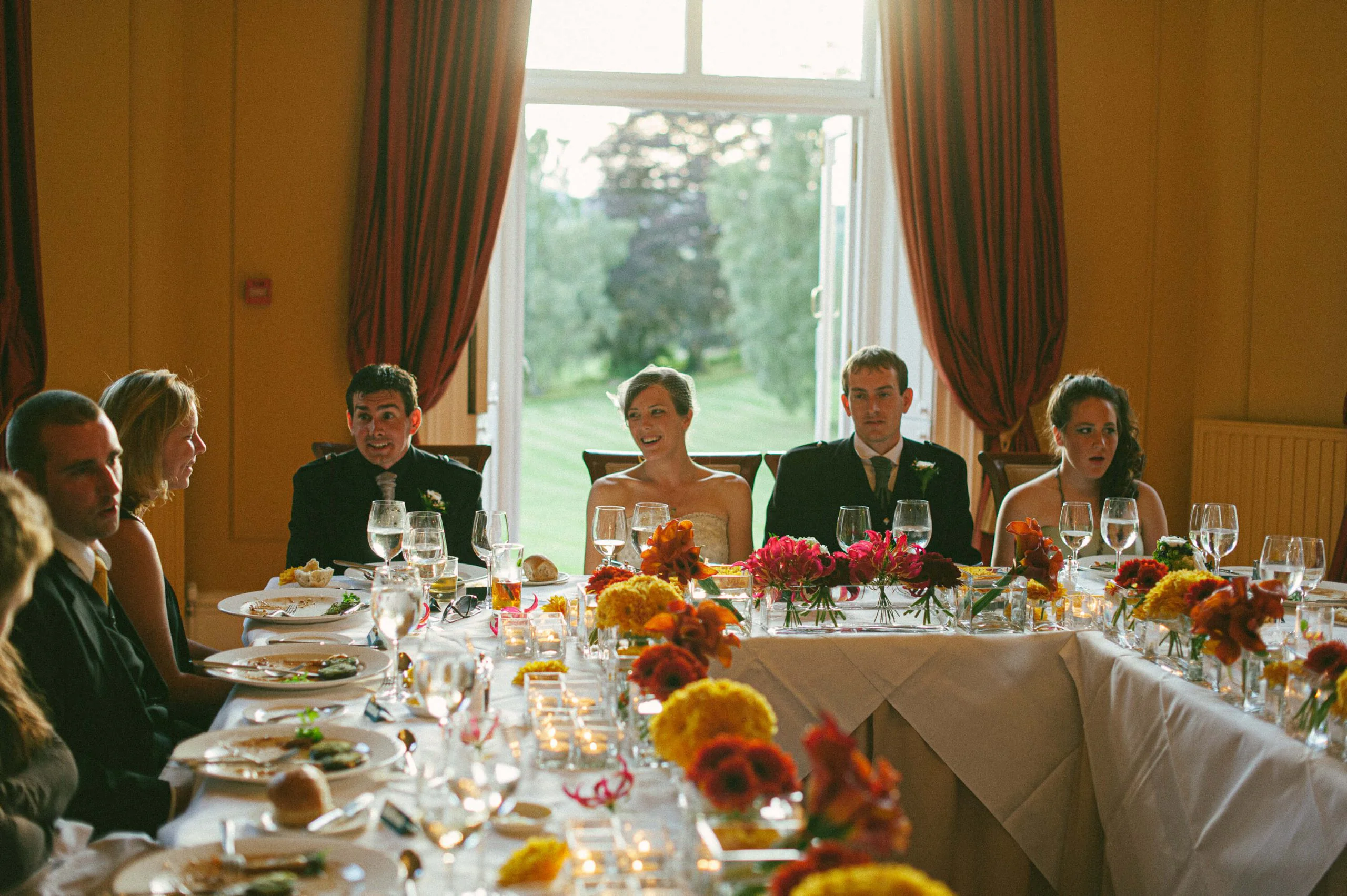
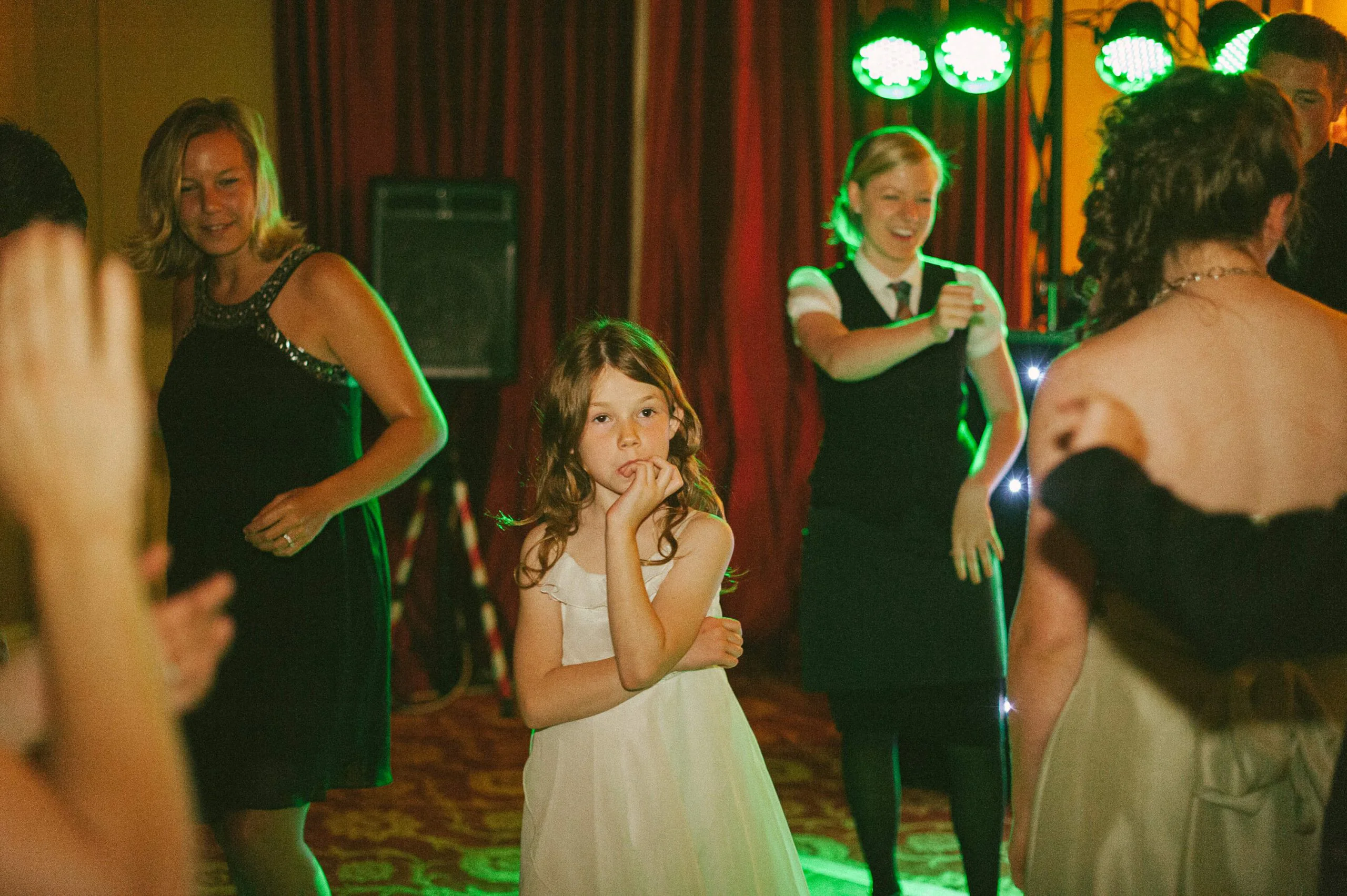
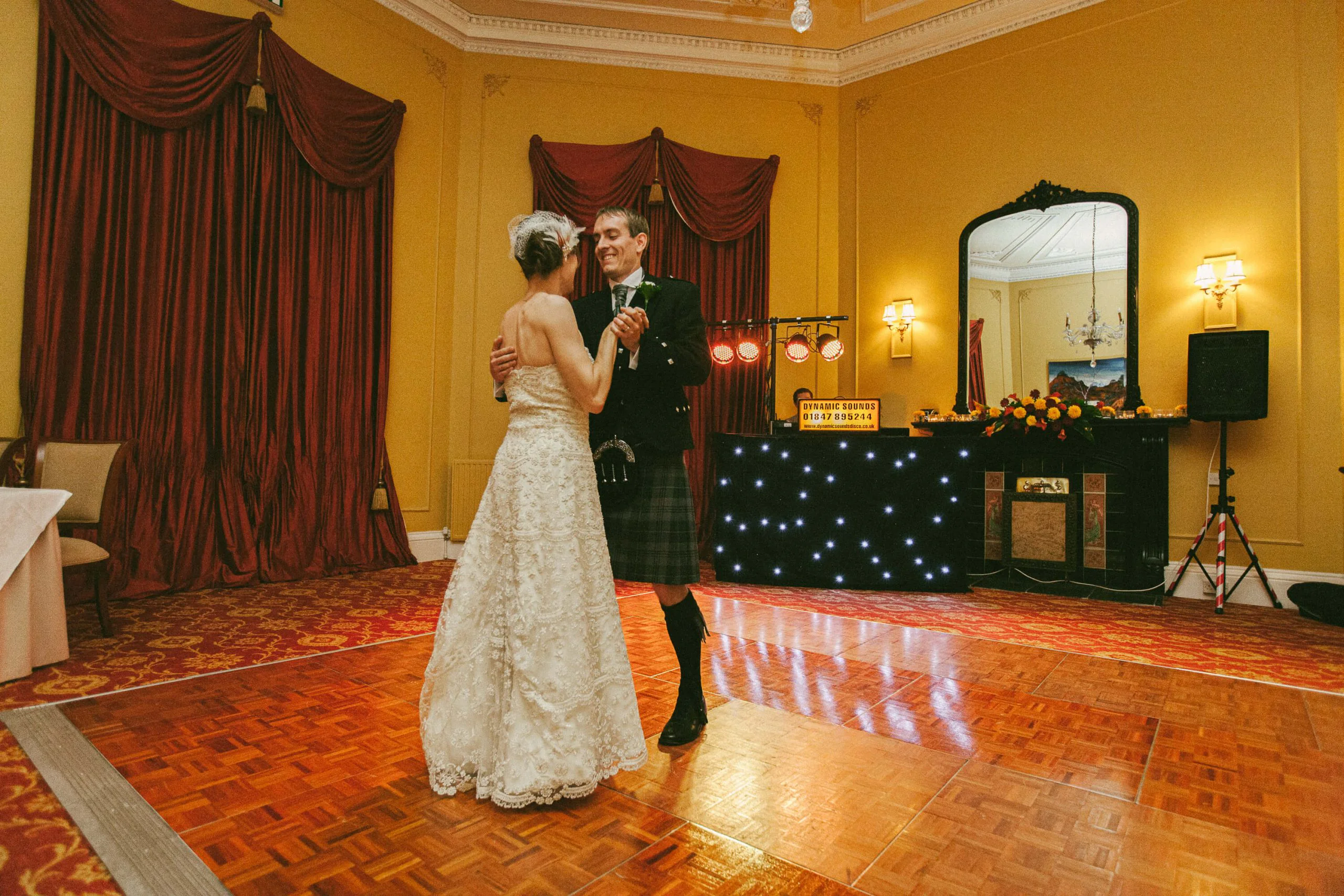
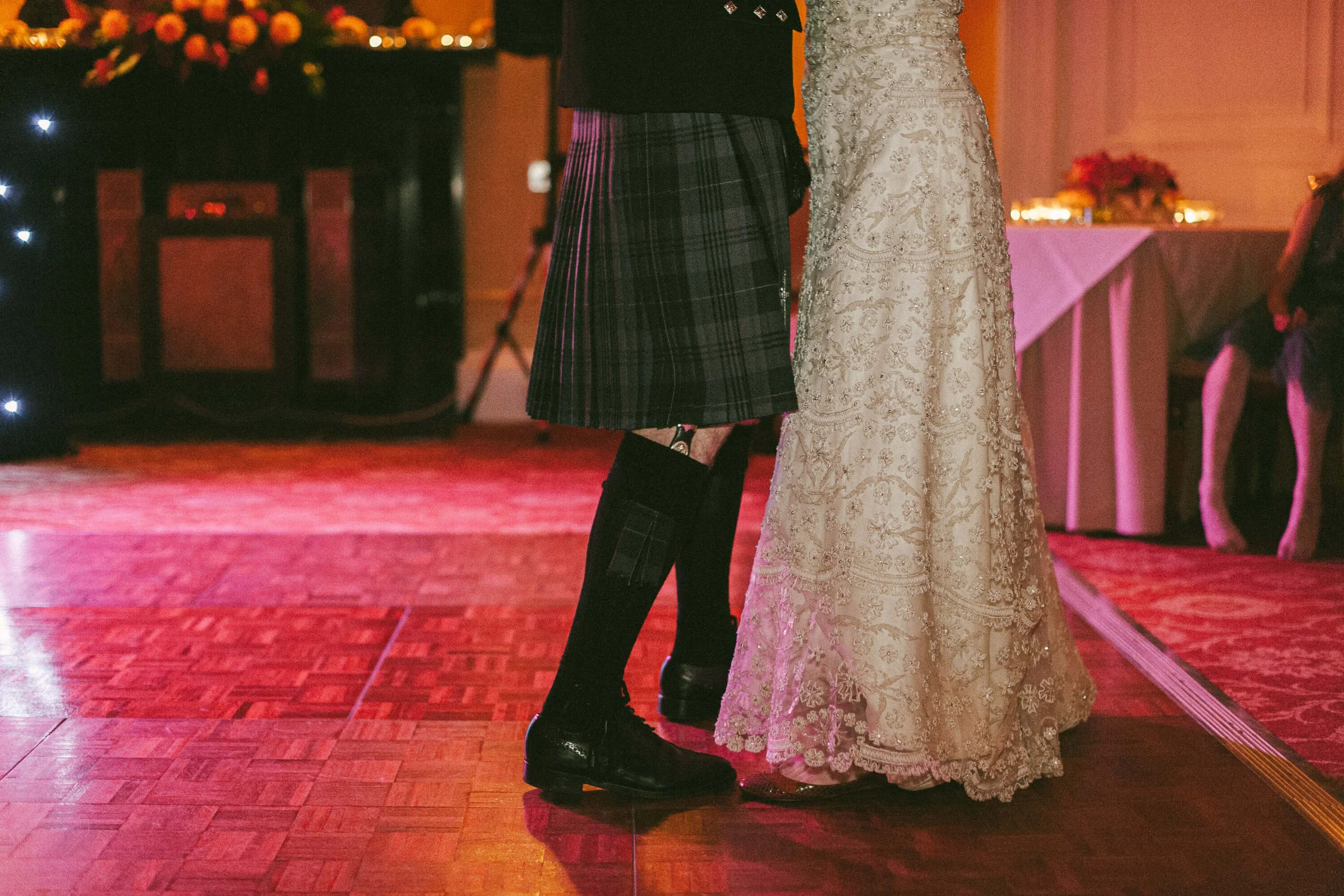
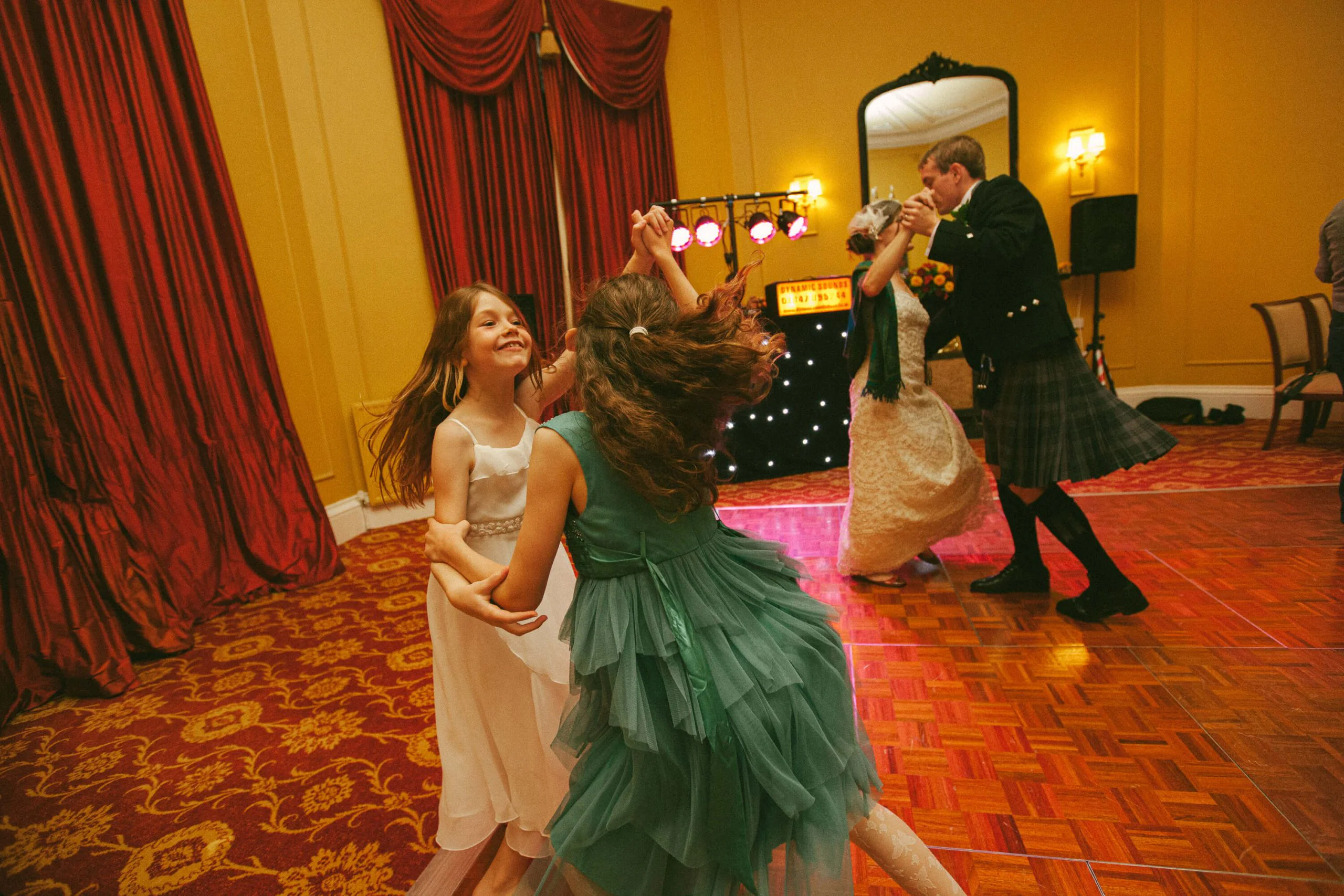
For me, that distinction matters. A venue can be described from a brochure; a wedding can only be understood by watching how people actually use it. The gallery shows the rooms, the guests, the ceremony, the transition into the reception and the landscape portraits as one continuous photographic story.
02
Why one venue worked well for this small Highland wedding
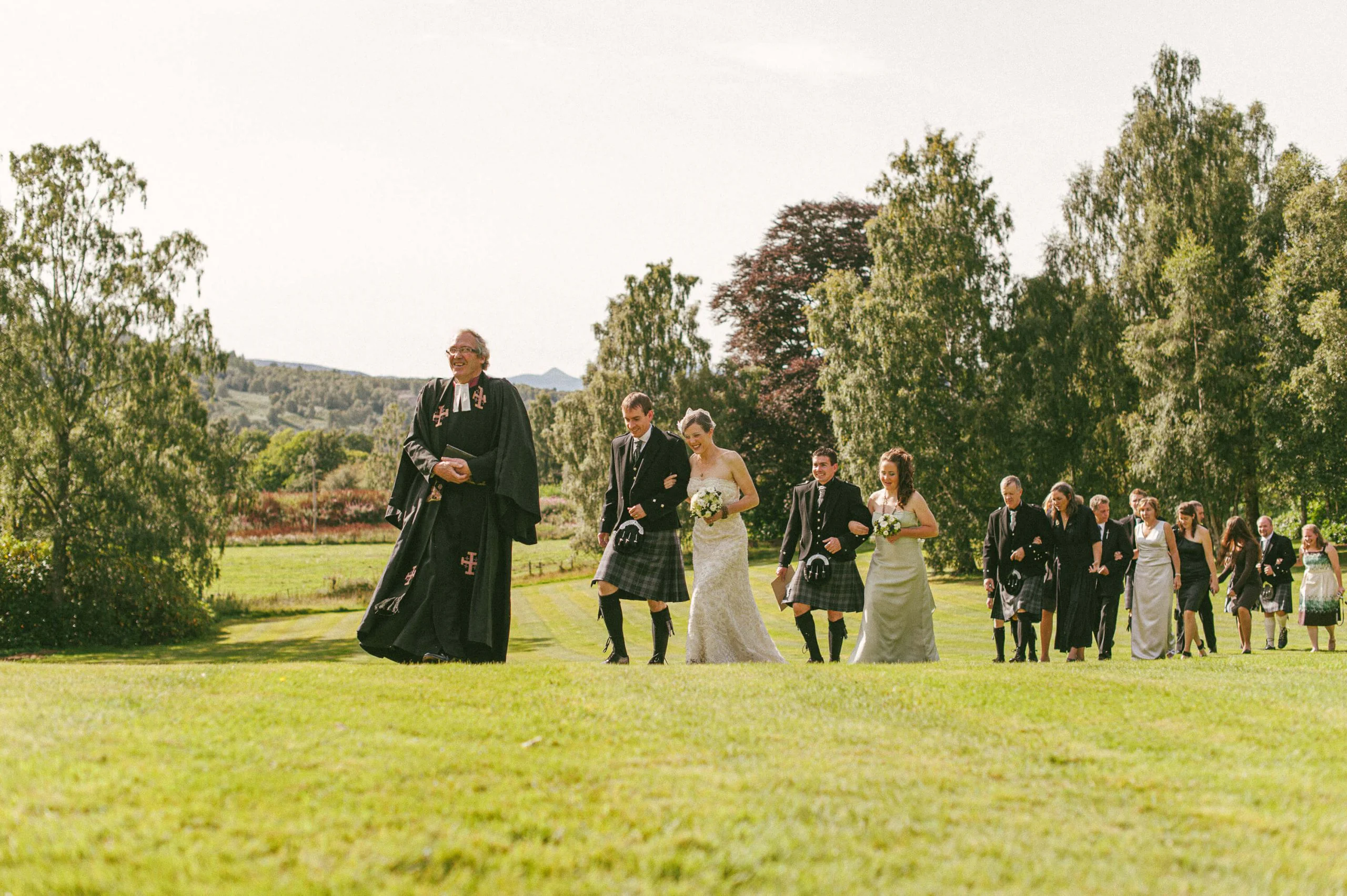
Keeping both the ceremony and reception at Coul House removed a layer of logistics that can otherwise dominate a Highland wedding. There was no need to load guests into cars between the formal part of the day and the meal, and no long gap while everyone tried to arrive at a second address. That is valuable for photography because the unscripted part of the wedding starts immediately after the ceremony.
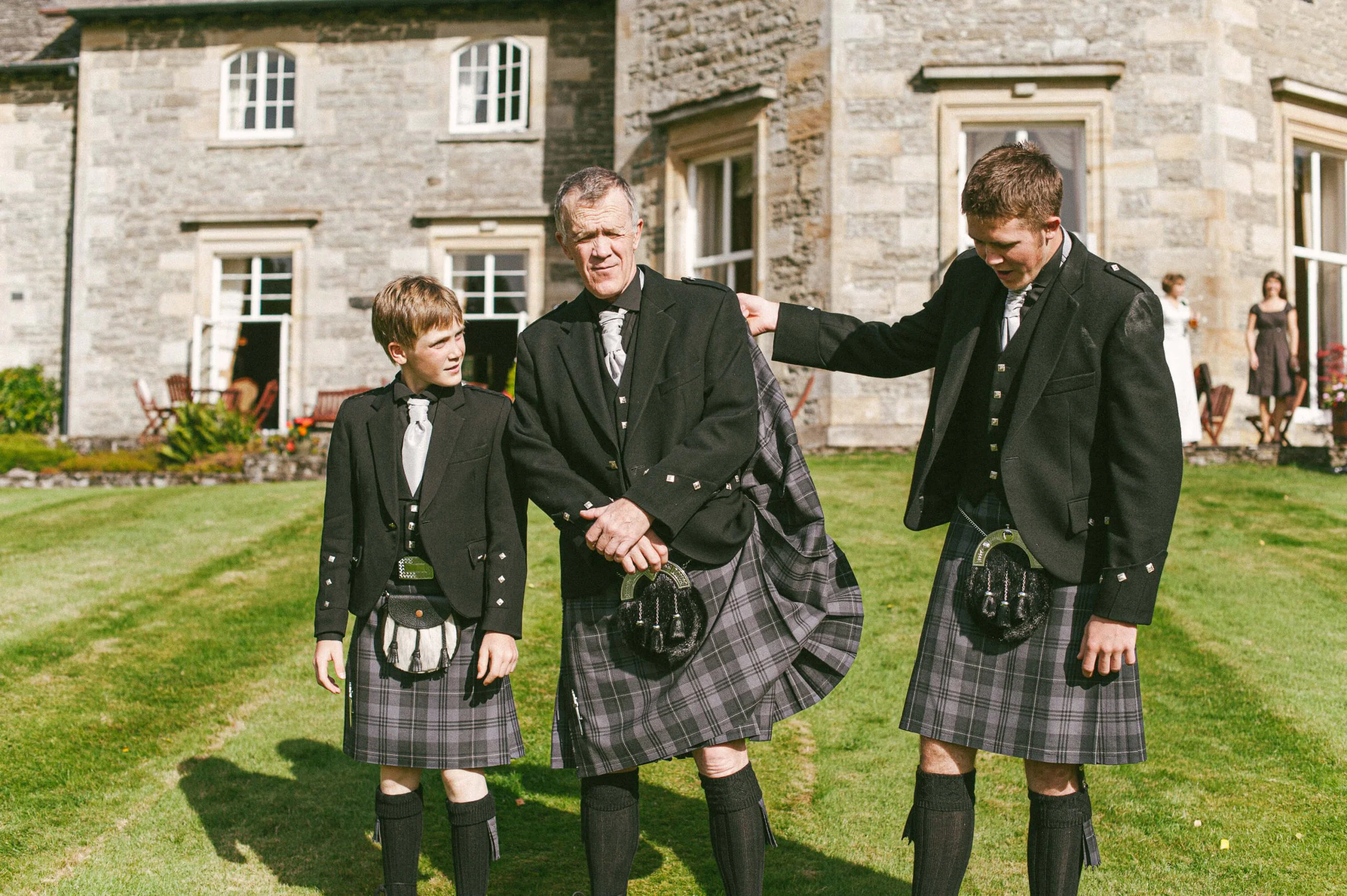
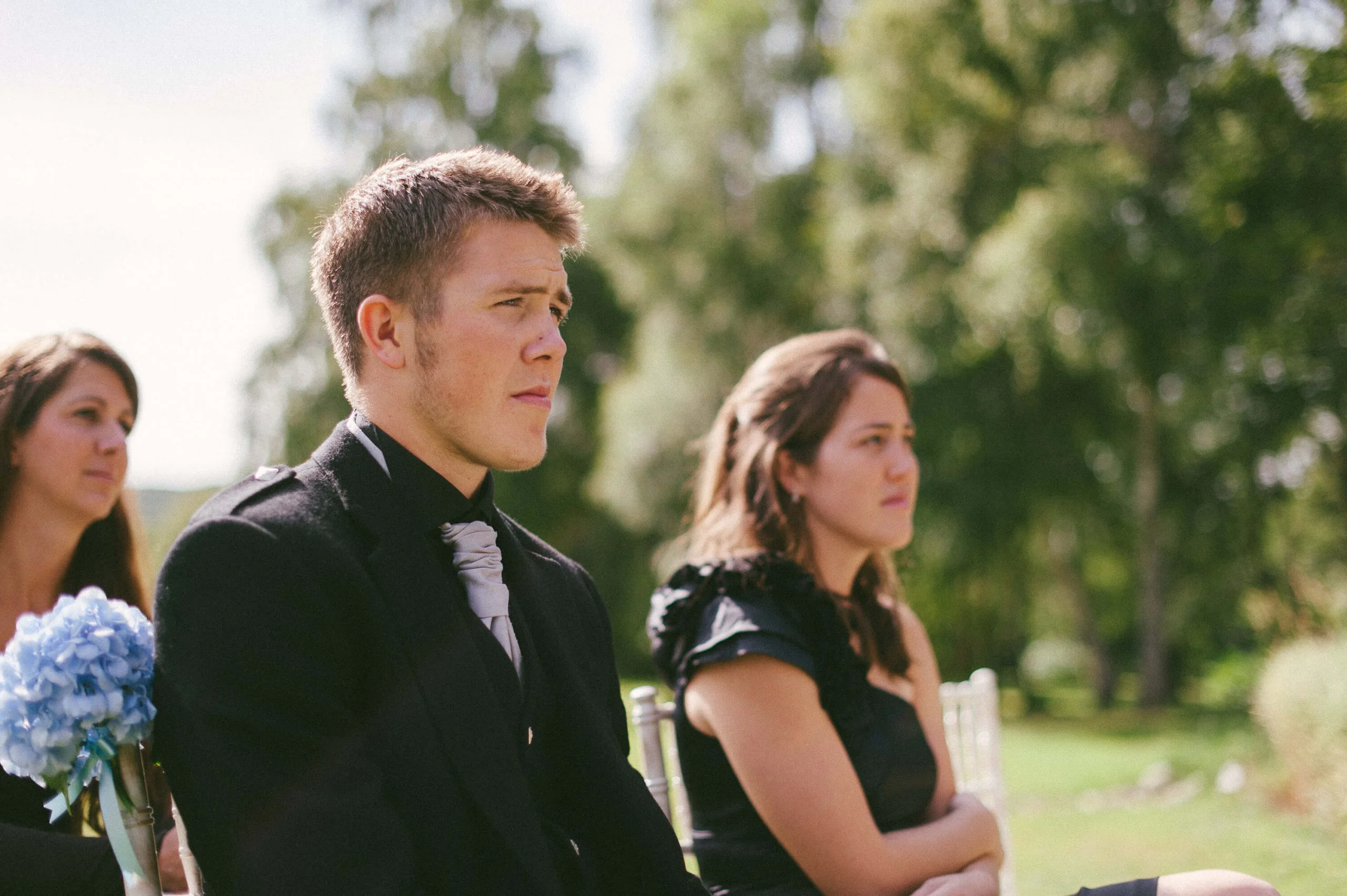
At a small wedding, the guests are visually present throughout the day. There are fewer anonymous groups and more repeated relationships: parents, close friends, siblings and the people the couple have deliberately chosen to bring with them. I can work quietly around those connections instead of continually resetting the room for a new stage of the schedule.
The venue currently describes itself as a country-house hotel in Contin, roughly twenty to twenty-five minutes north of Inverness, with mature grounds and views toward the surrounding hills. The useful point for a wedding is not the marketing description; it is that the hotel, gardens and landscape sit close enough together to create variety without turning the day into a road trip.
03
Portraits in the hills without losing the wedding
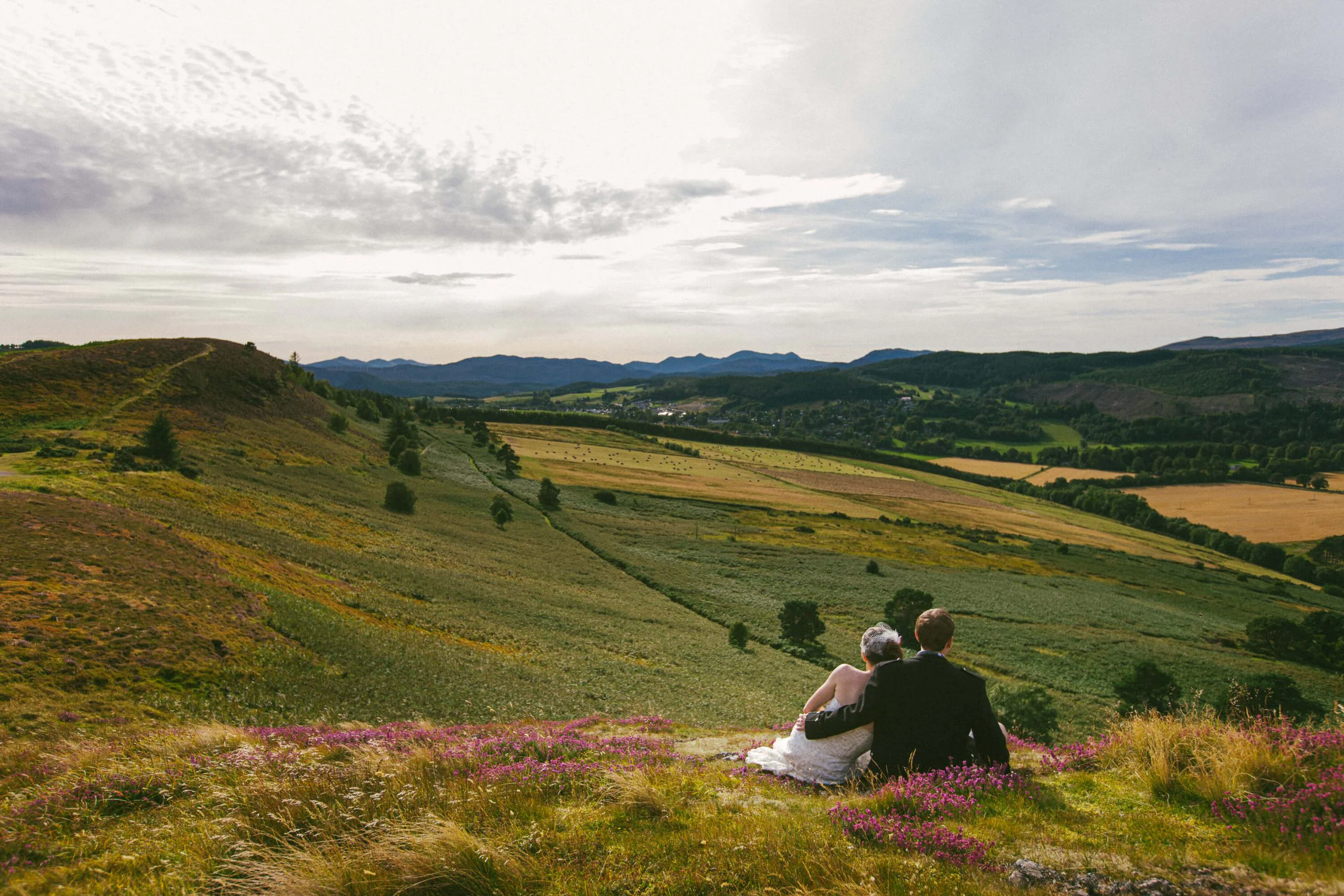
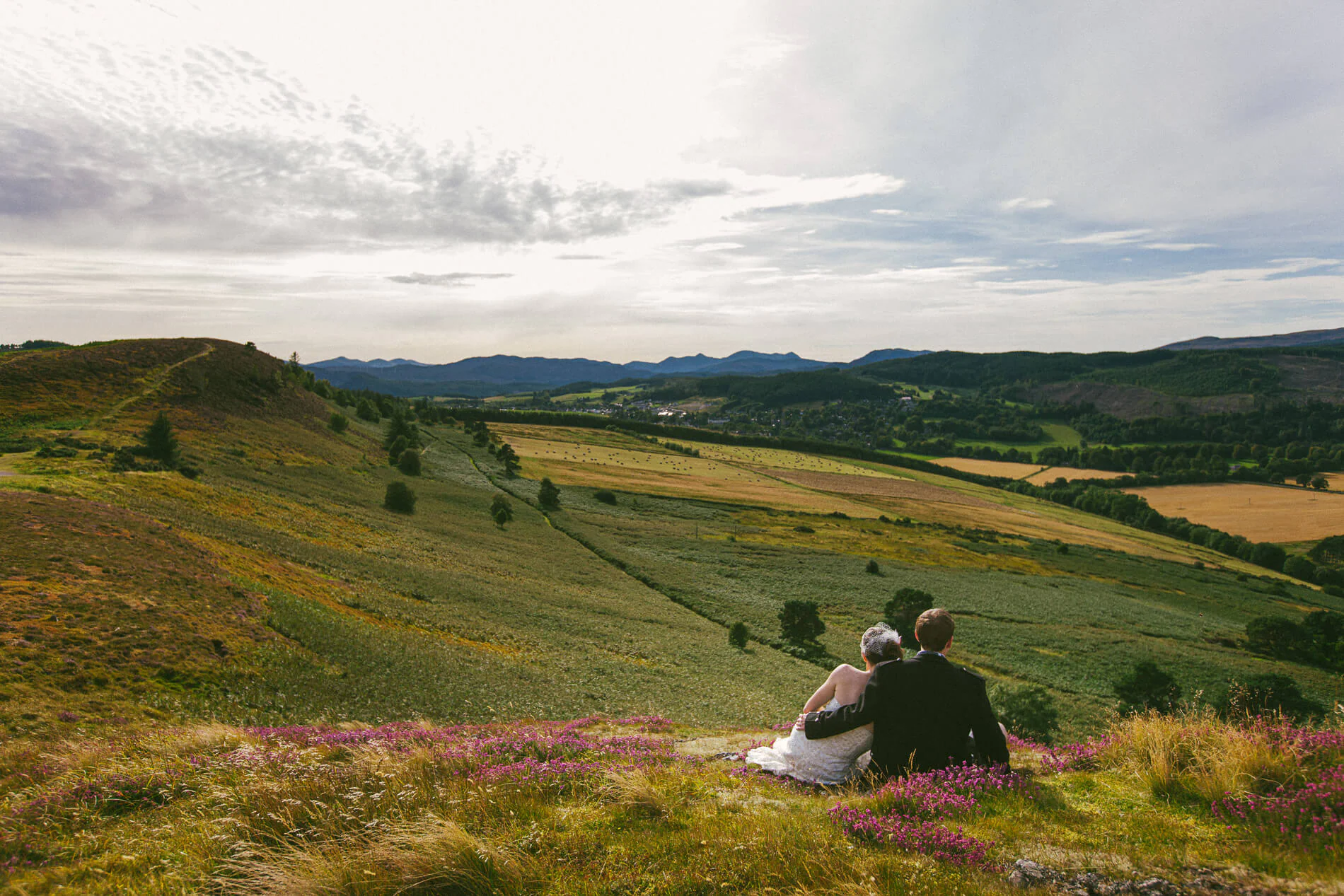
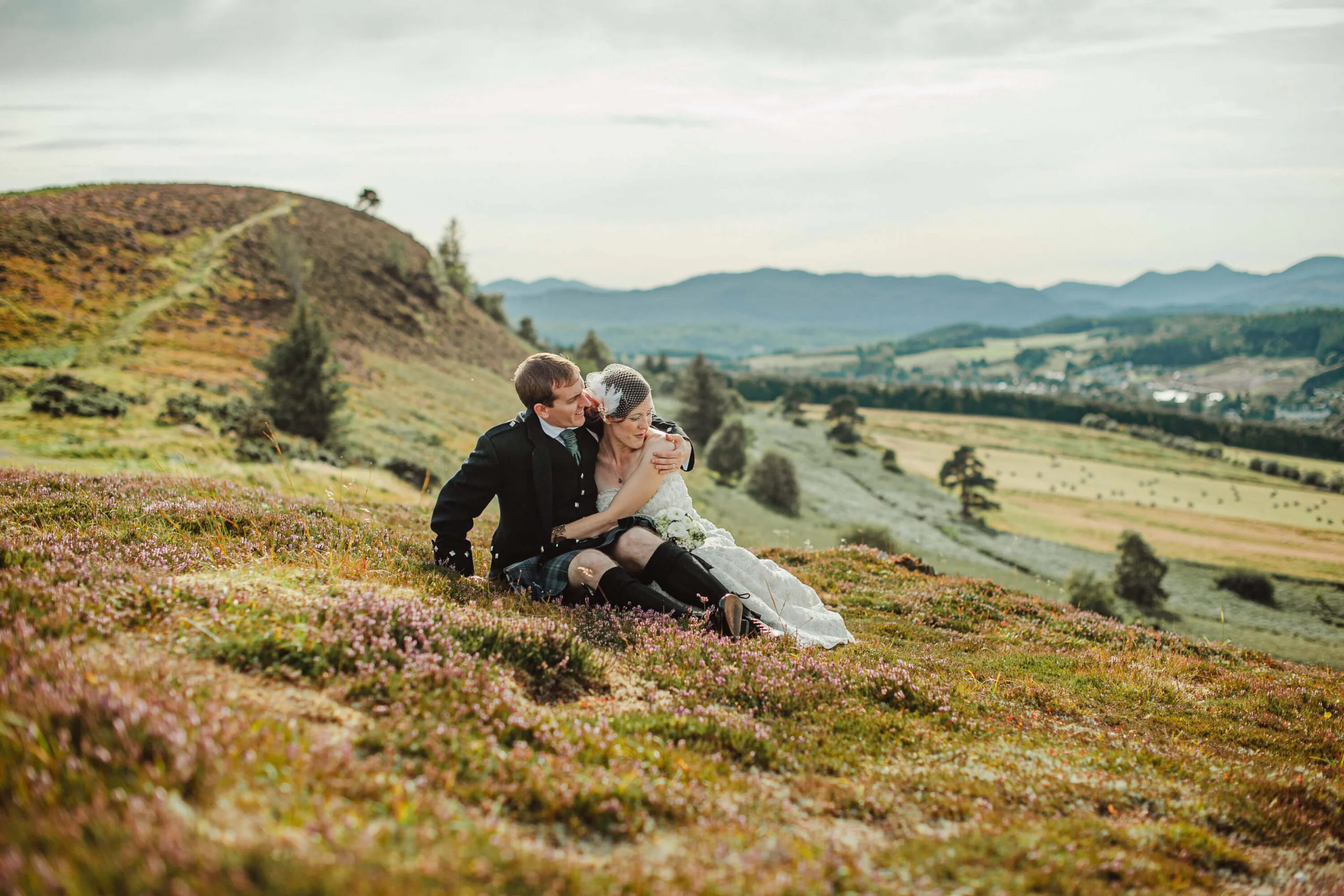
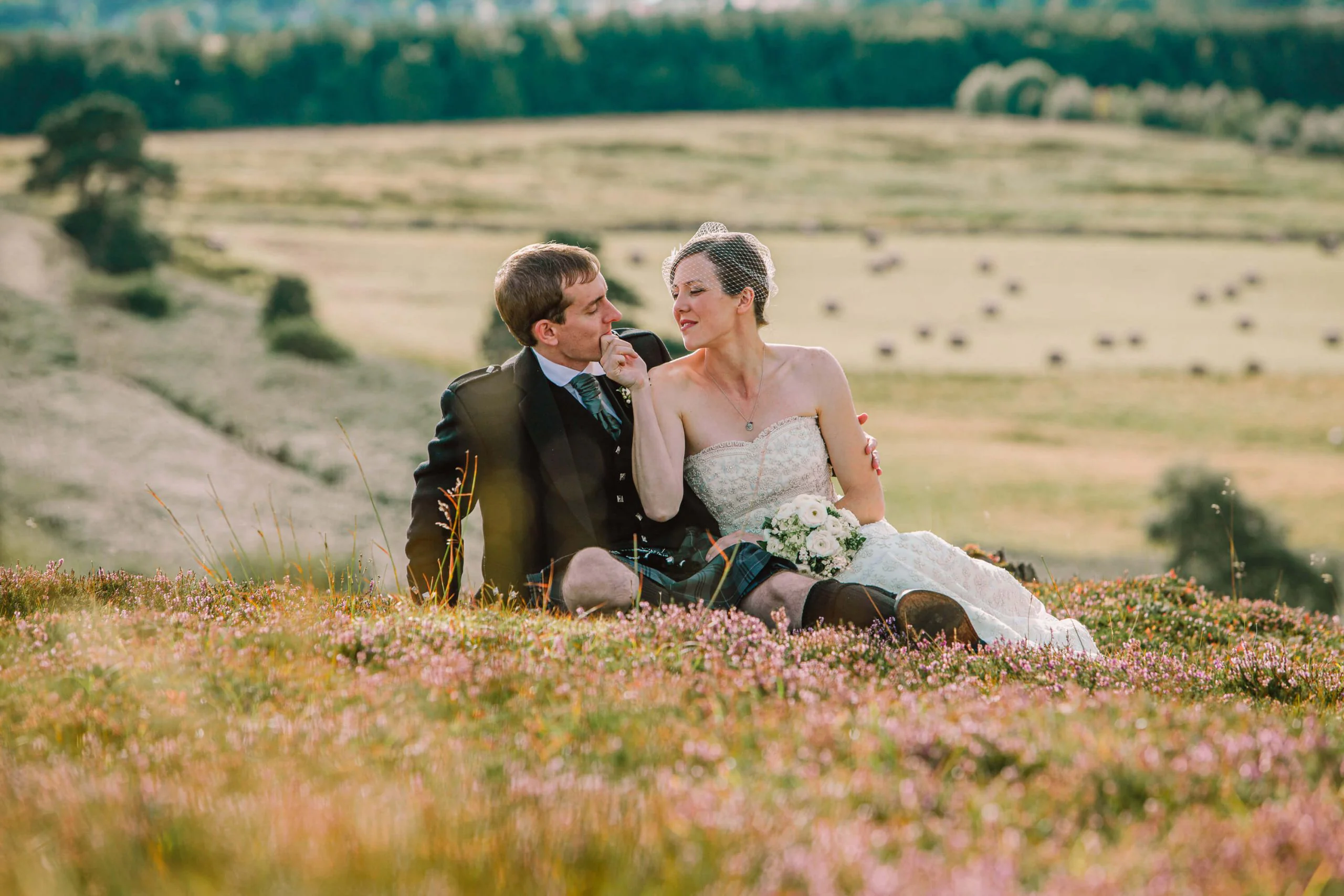
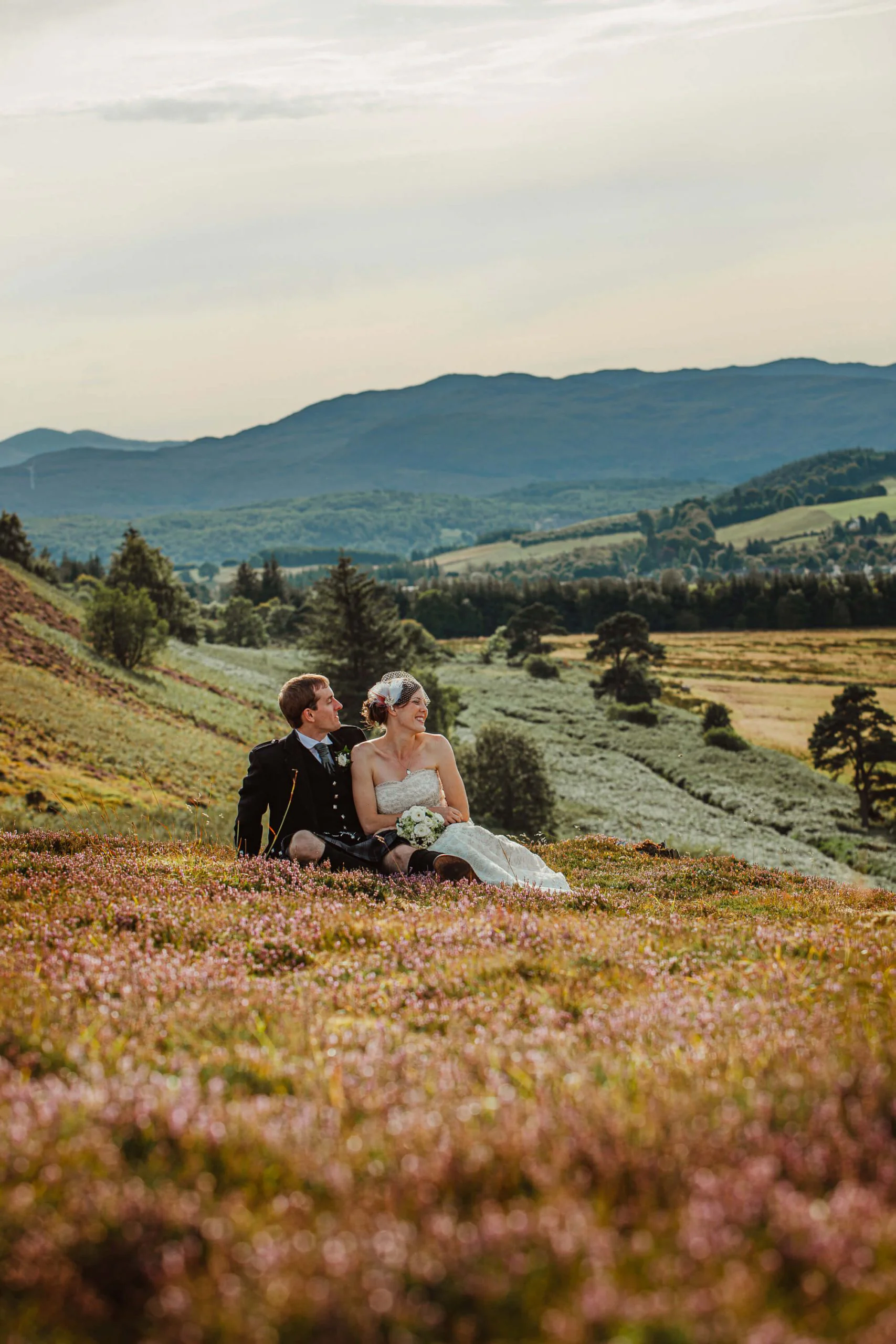
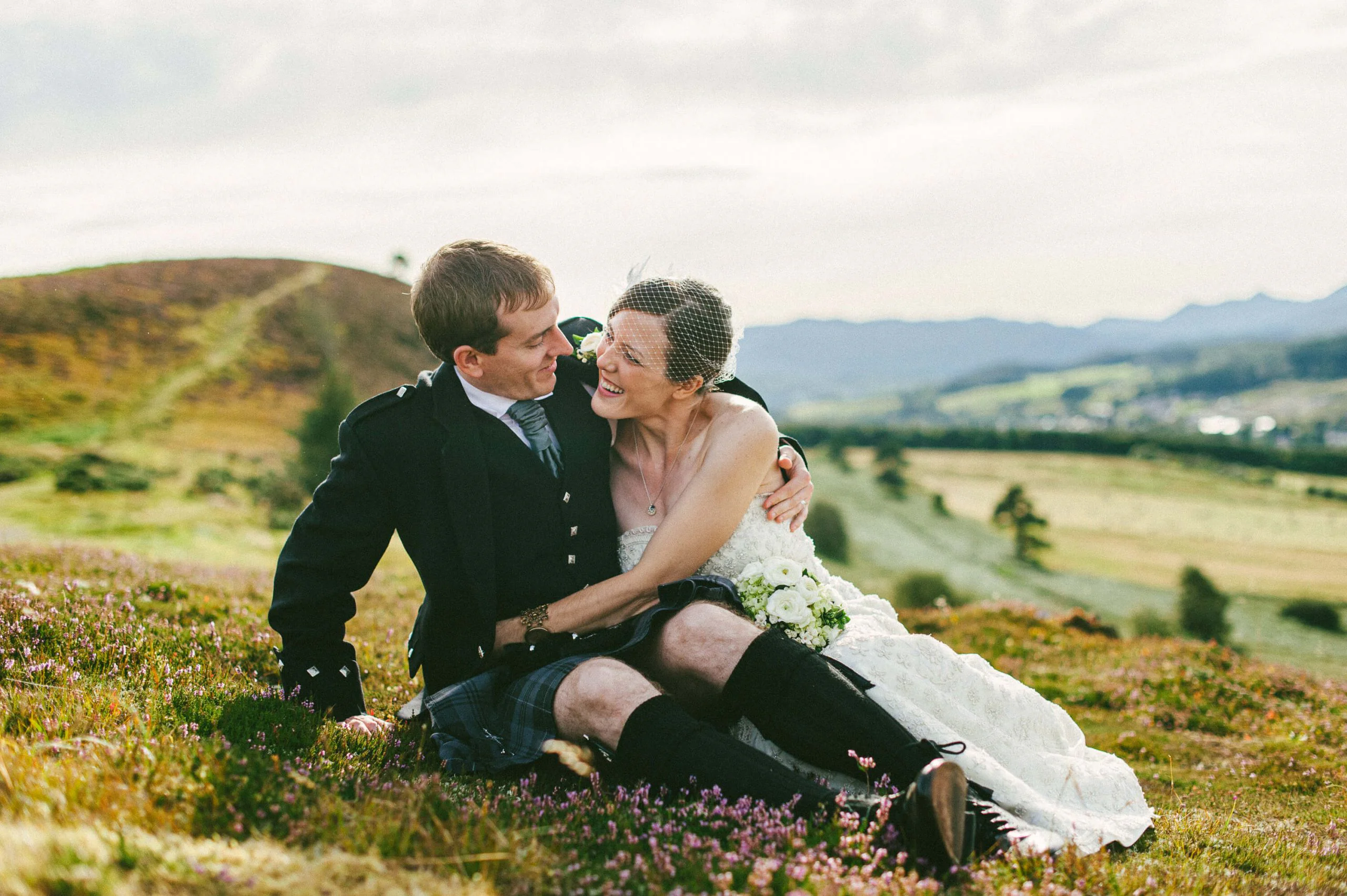
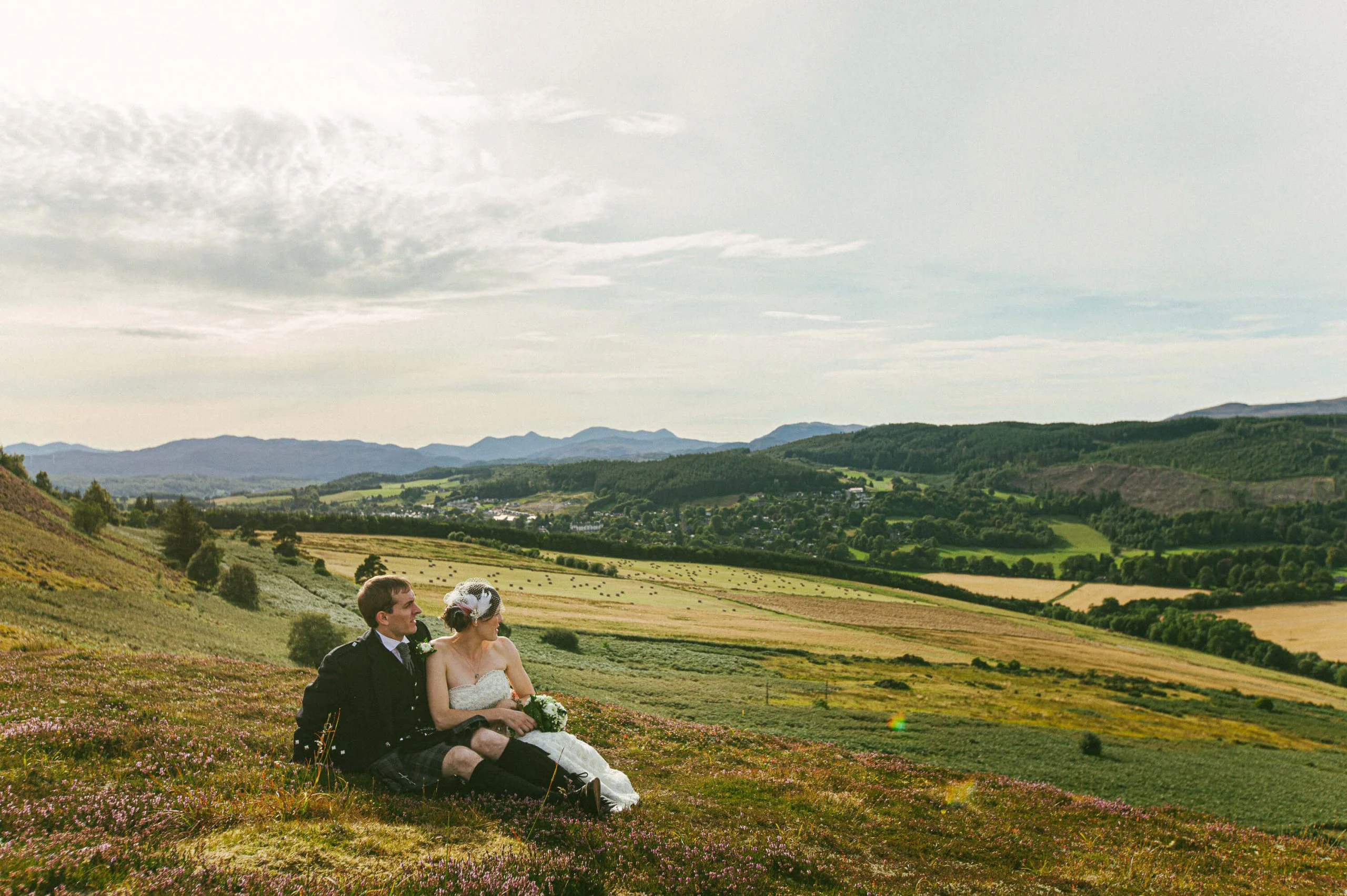
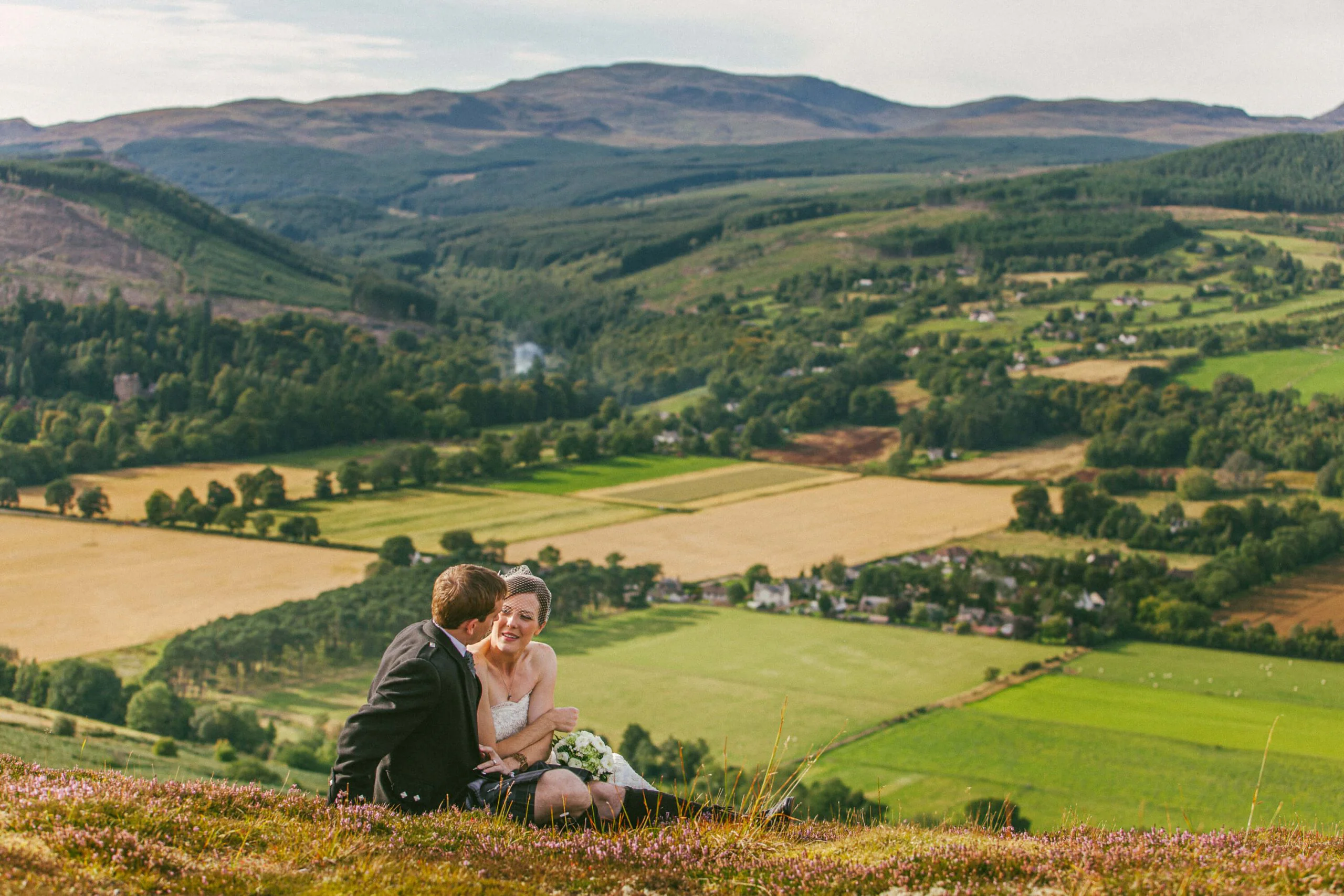
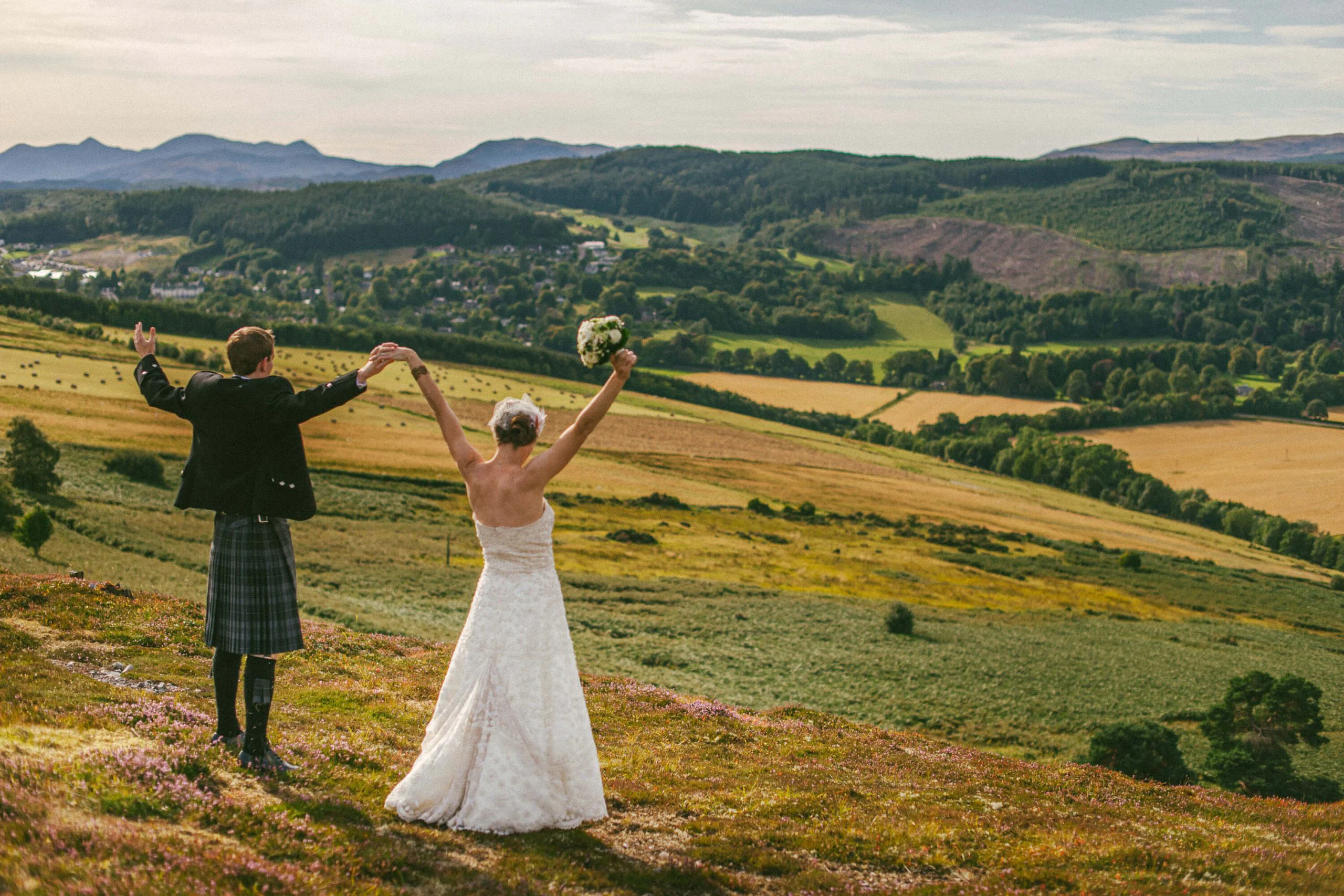
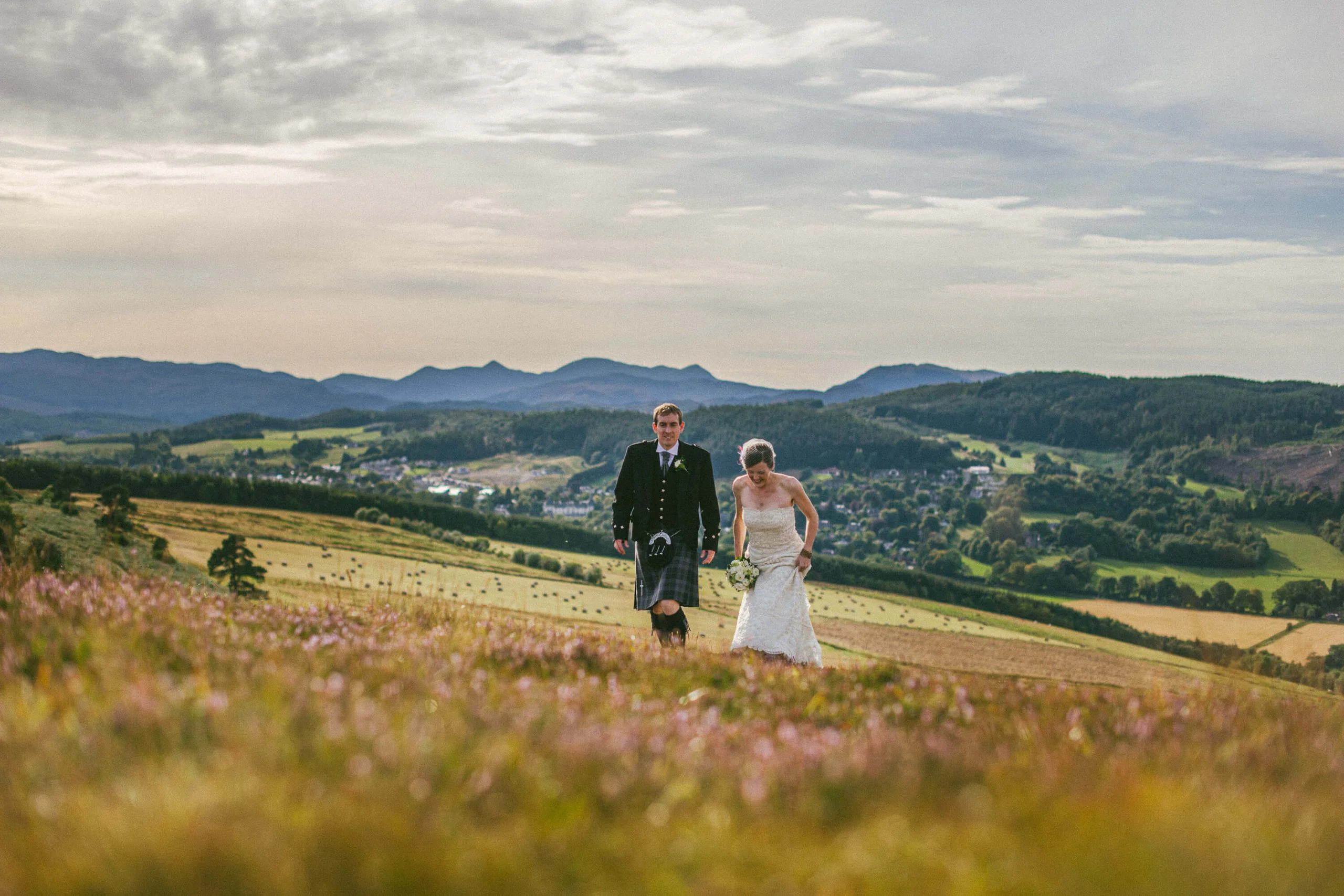
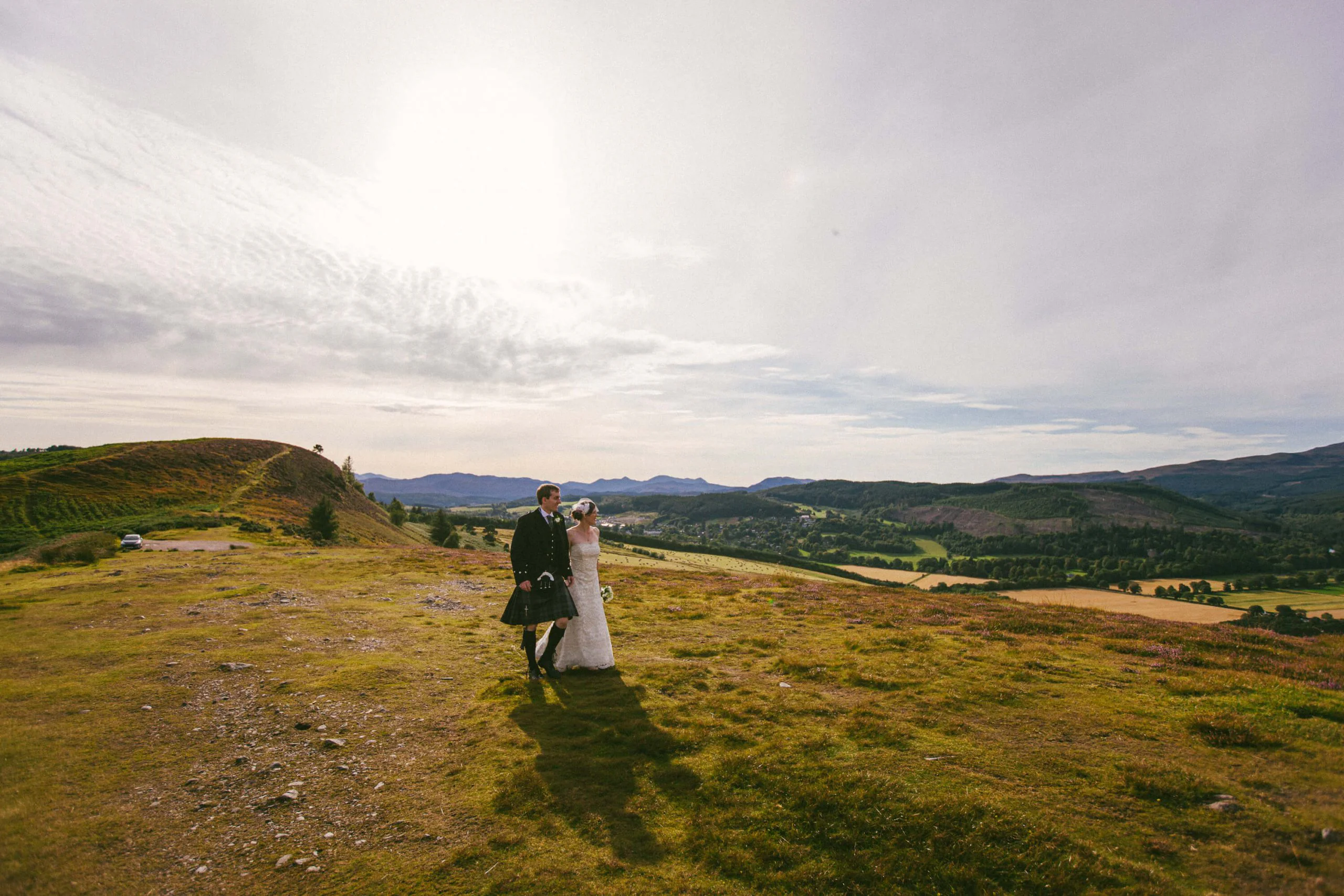
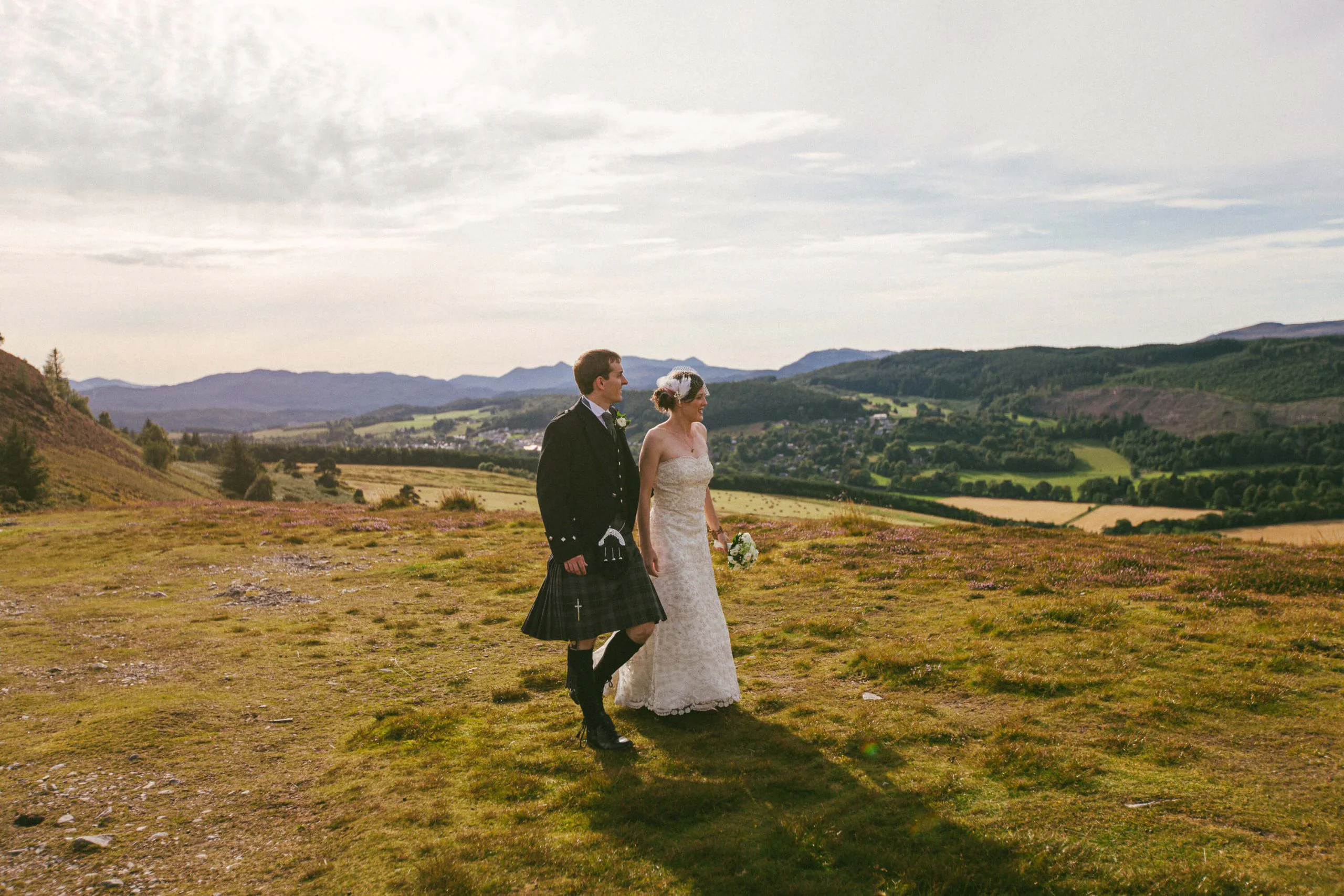
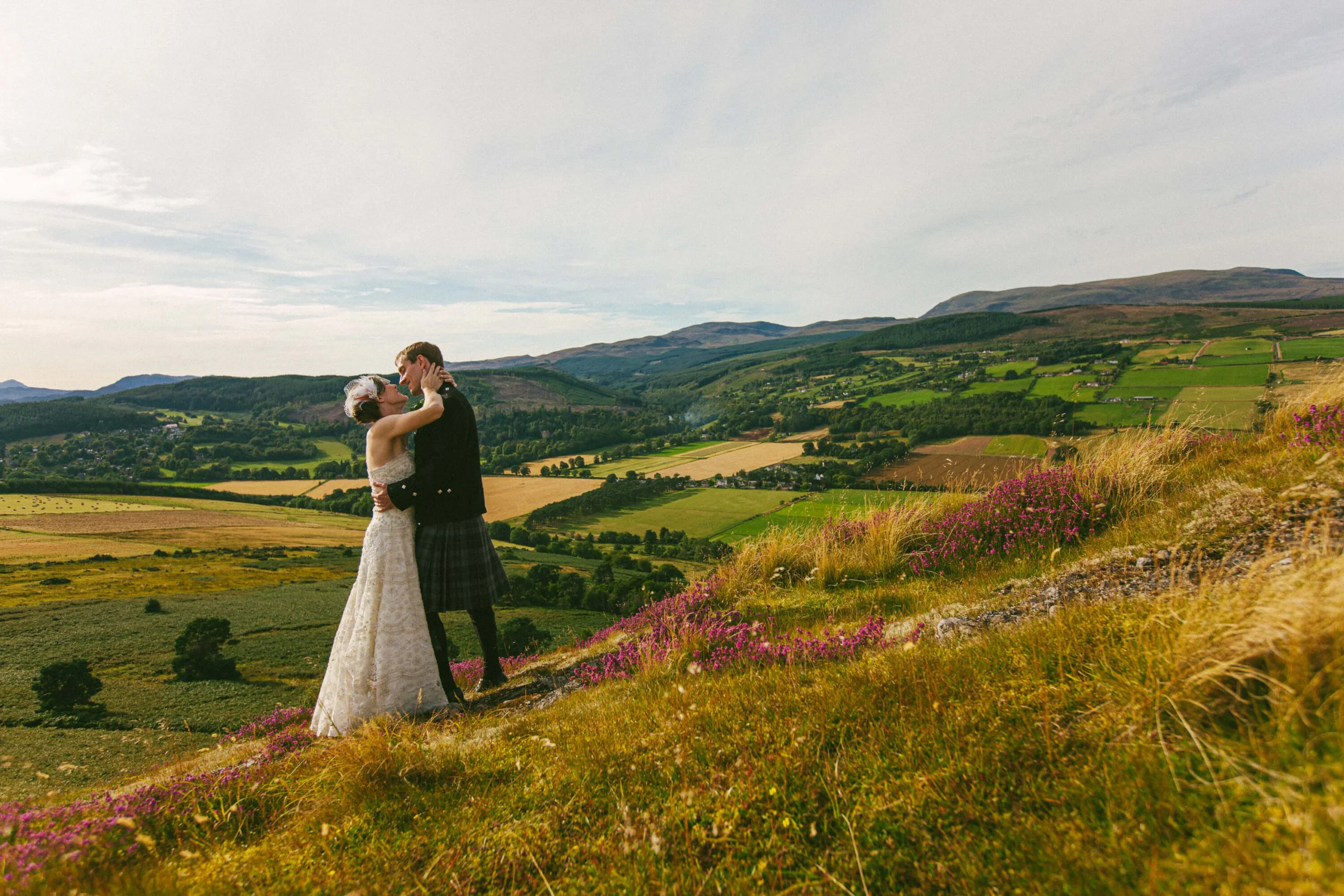
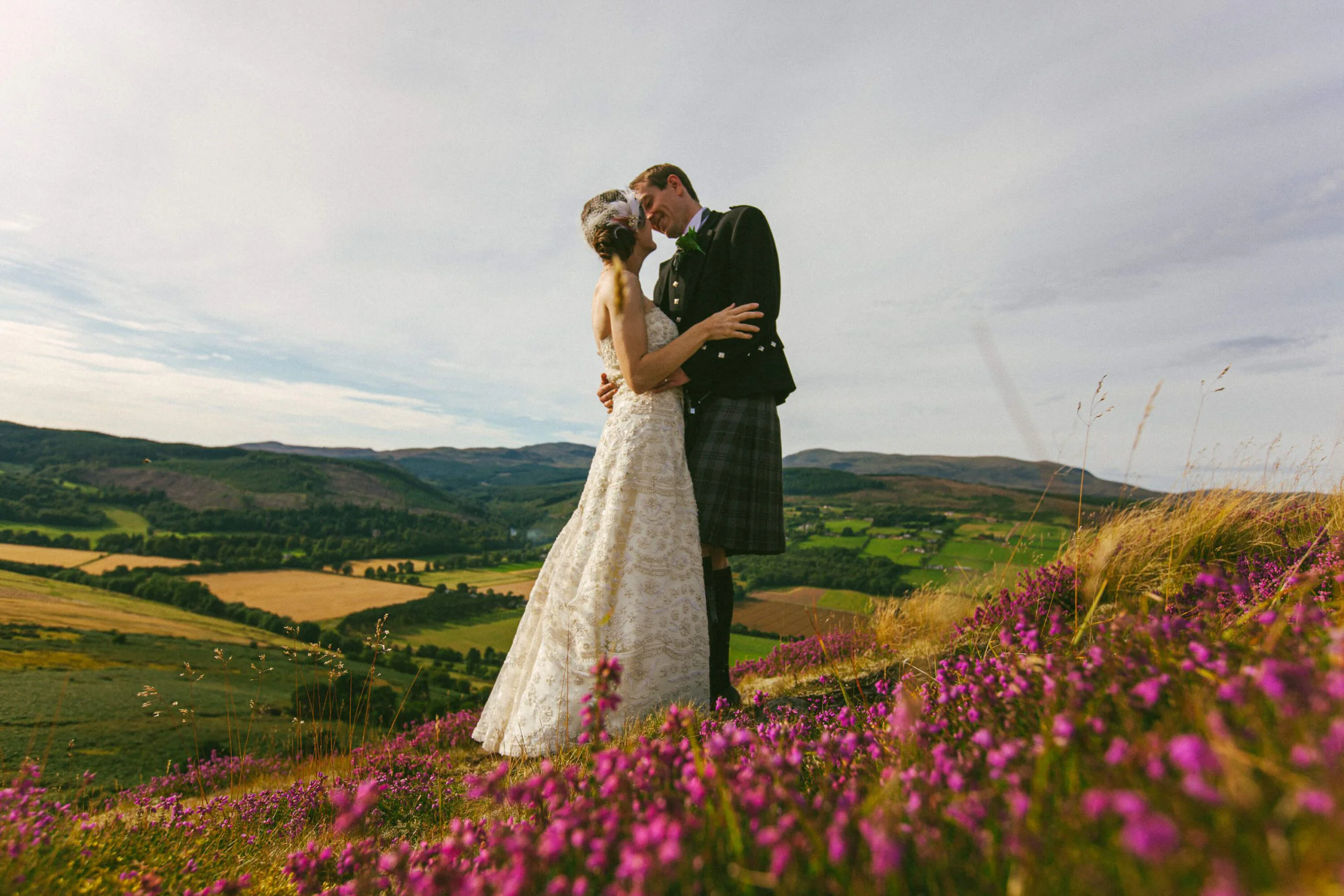
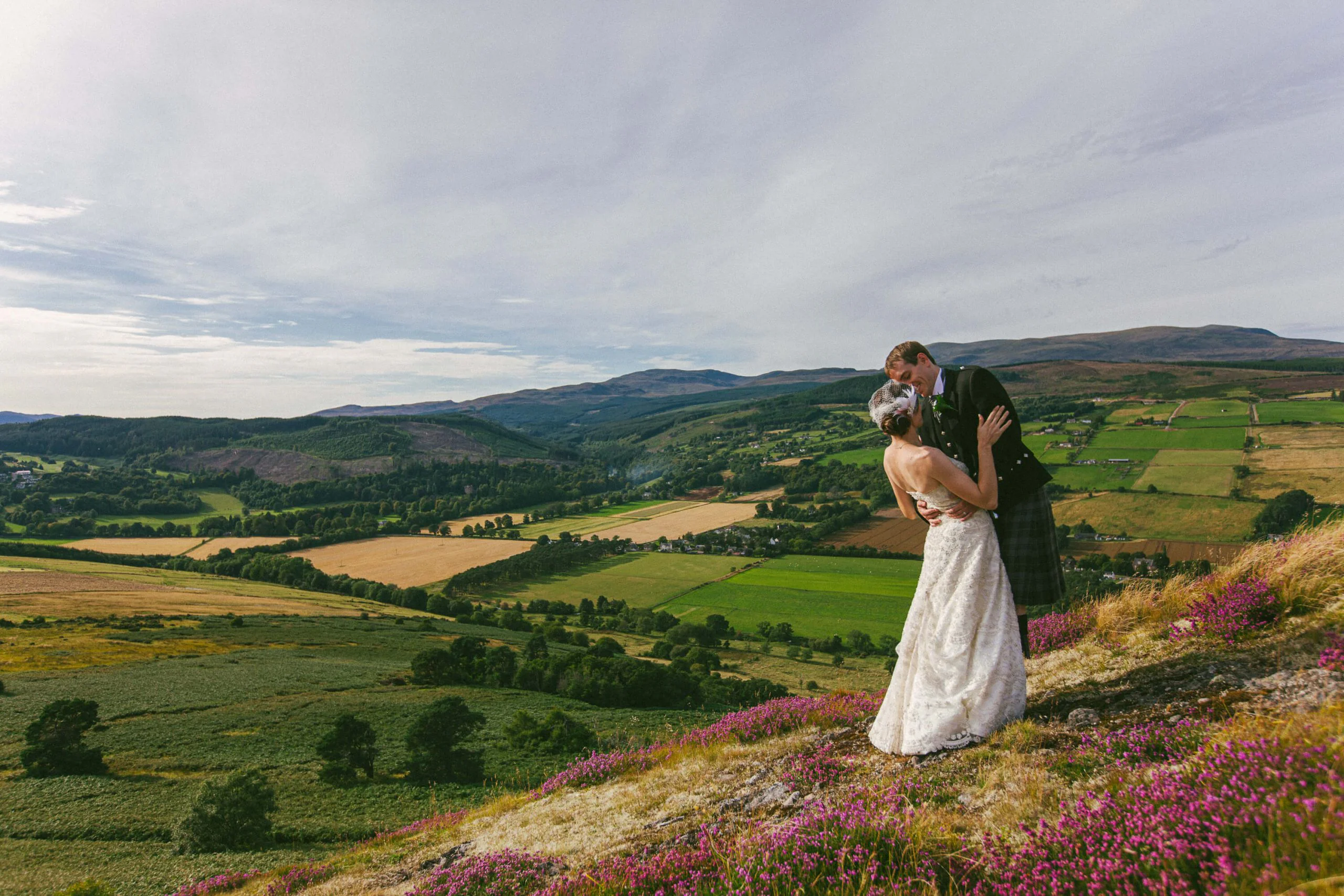
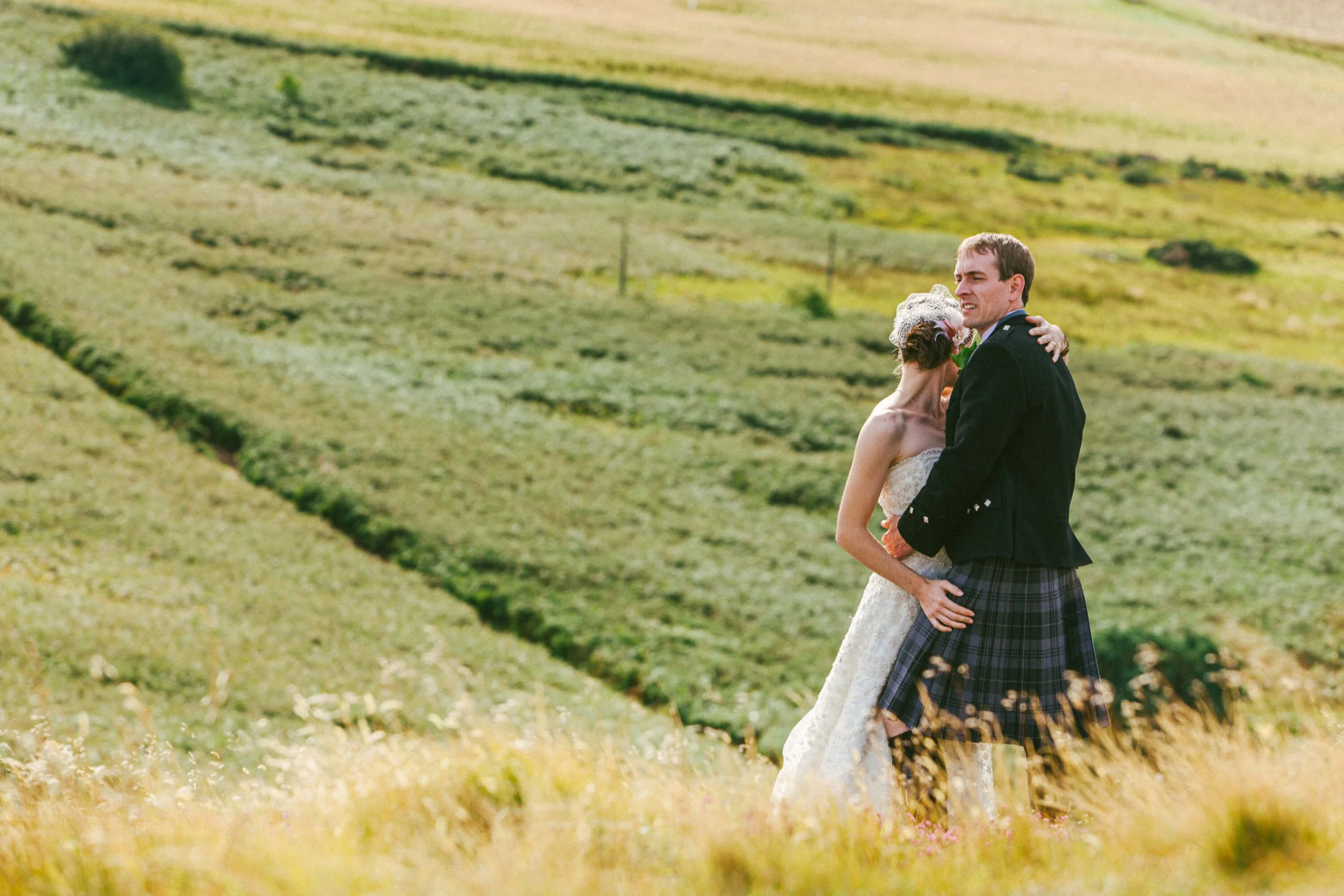
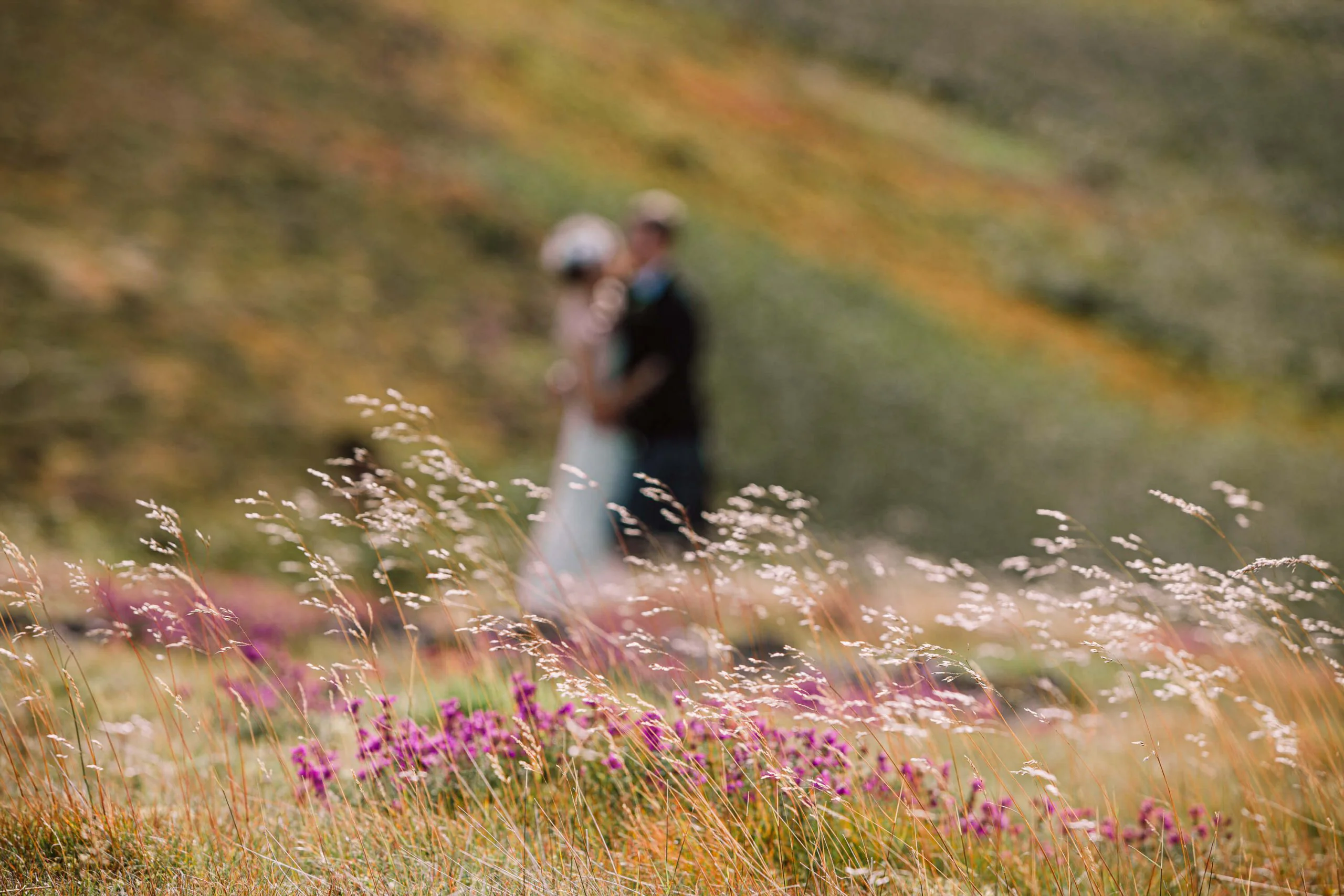
The short portrait trip into the hills is the part of Barbara and Keith’s wedding that people often remember from the photographs. The scale of the landscape changes the feel of the pictures immediately: the couple become smaller in the frame, the weather becomes visible and the setting starts to explain where the wedding took place. None of that requires an hour of posing.
I prefer to work with a short, purposeful portrait window. We move, stop when the background and light work, make the photographs and return. The couple should not come back to their own reception feeling as if they have been absent from it. That principle is even more important at an intimate wedding because every missing person is noticeable.
A Highland portrait also does not need to prove that every famous view was visited. The strongest photographs usually come from one or two locations that fit the actual route. In this wedding, the surrounding hills were enough. The photographs belong to Barbara and Keith’s day because the landscape sits naturally beside the hotel story rather than competing with it.
04
Coul House interiors, gardens and the way they affect photographs
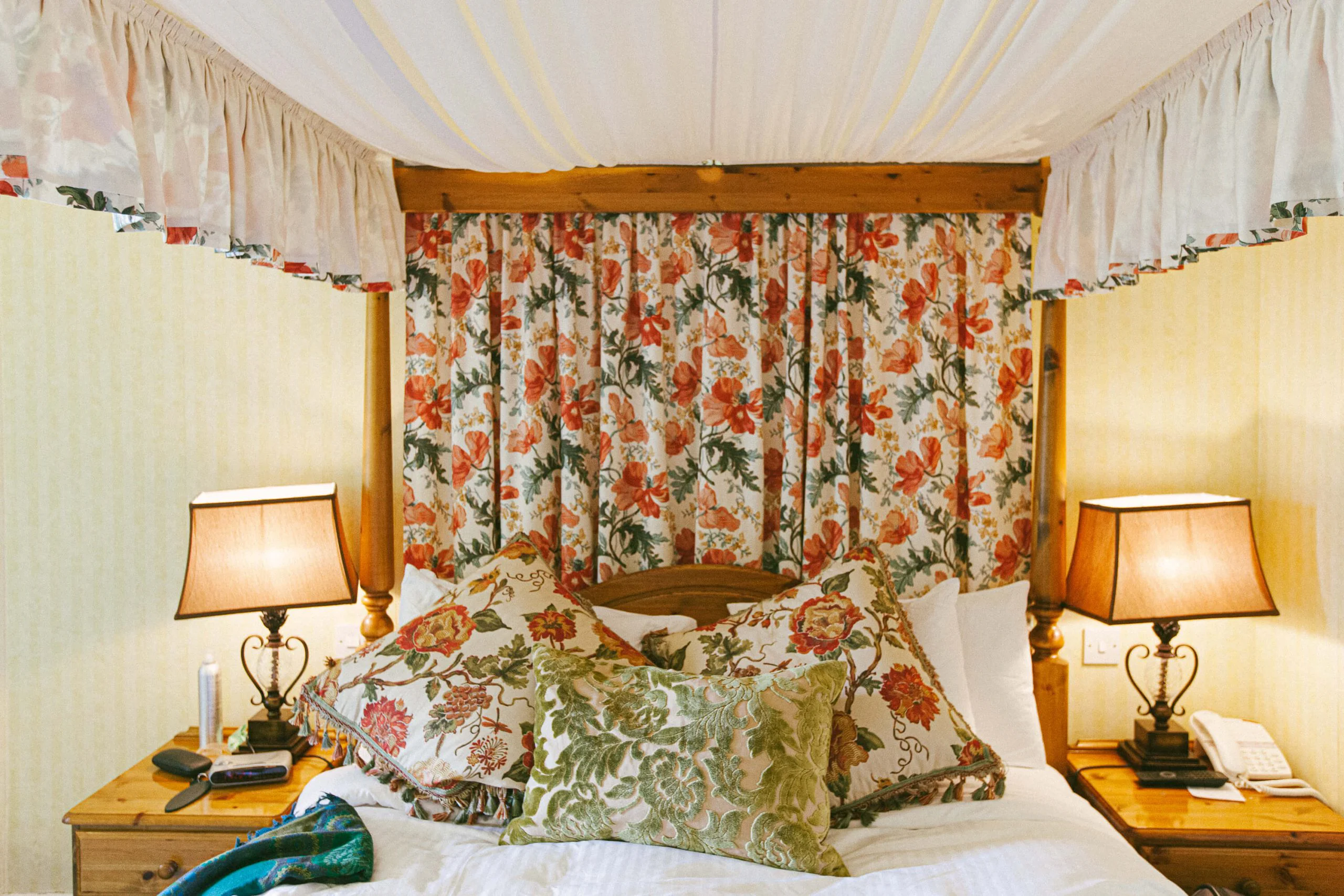
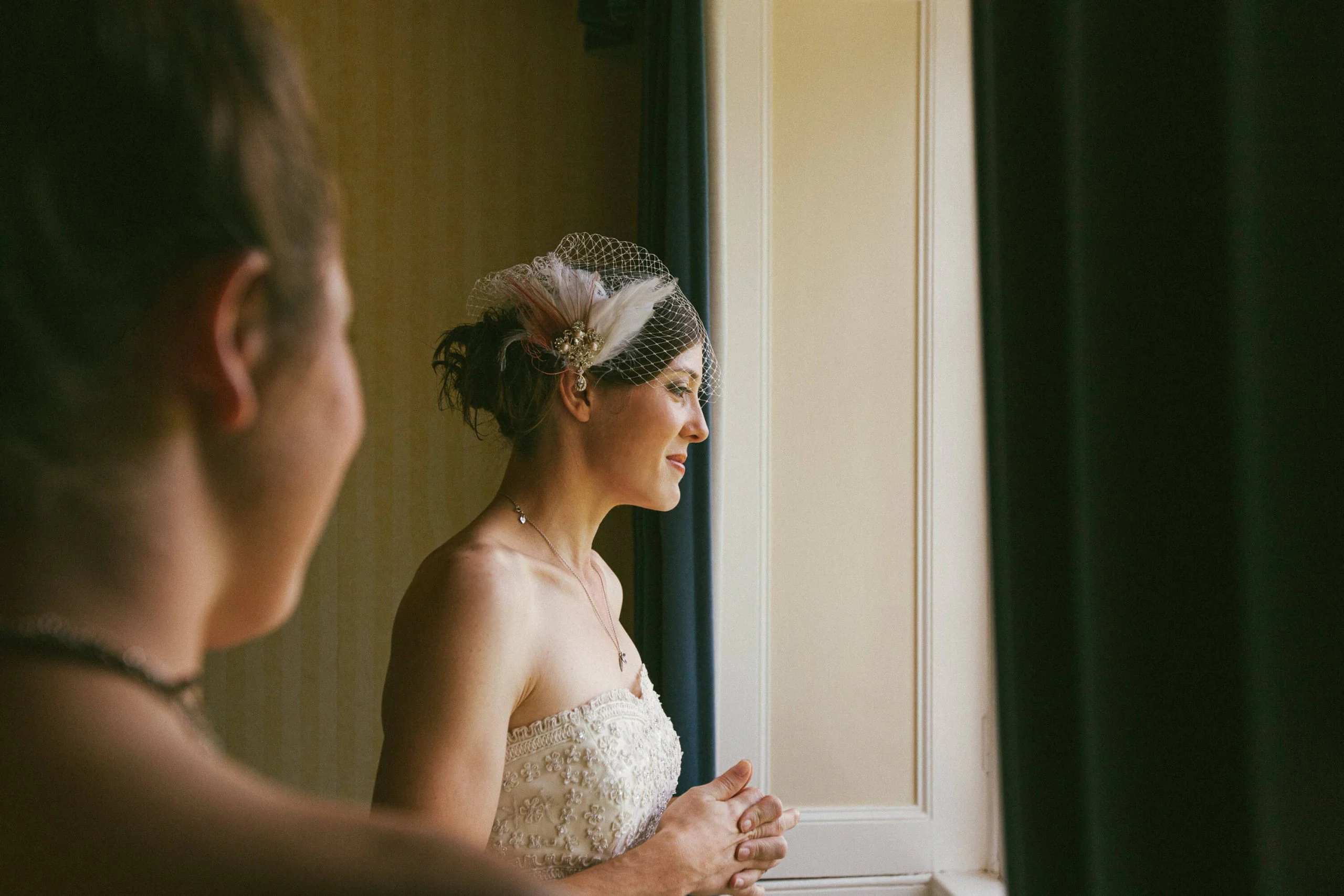
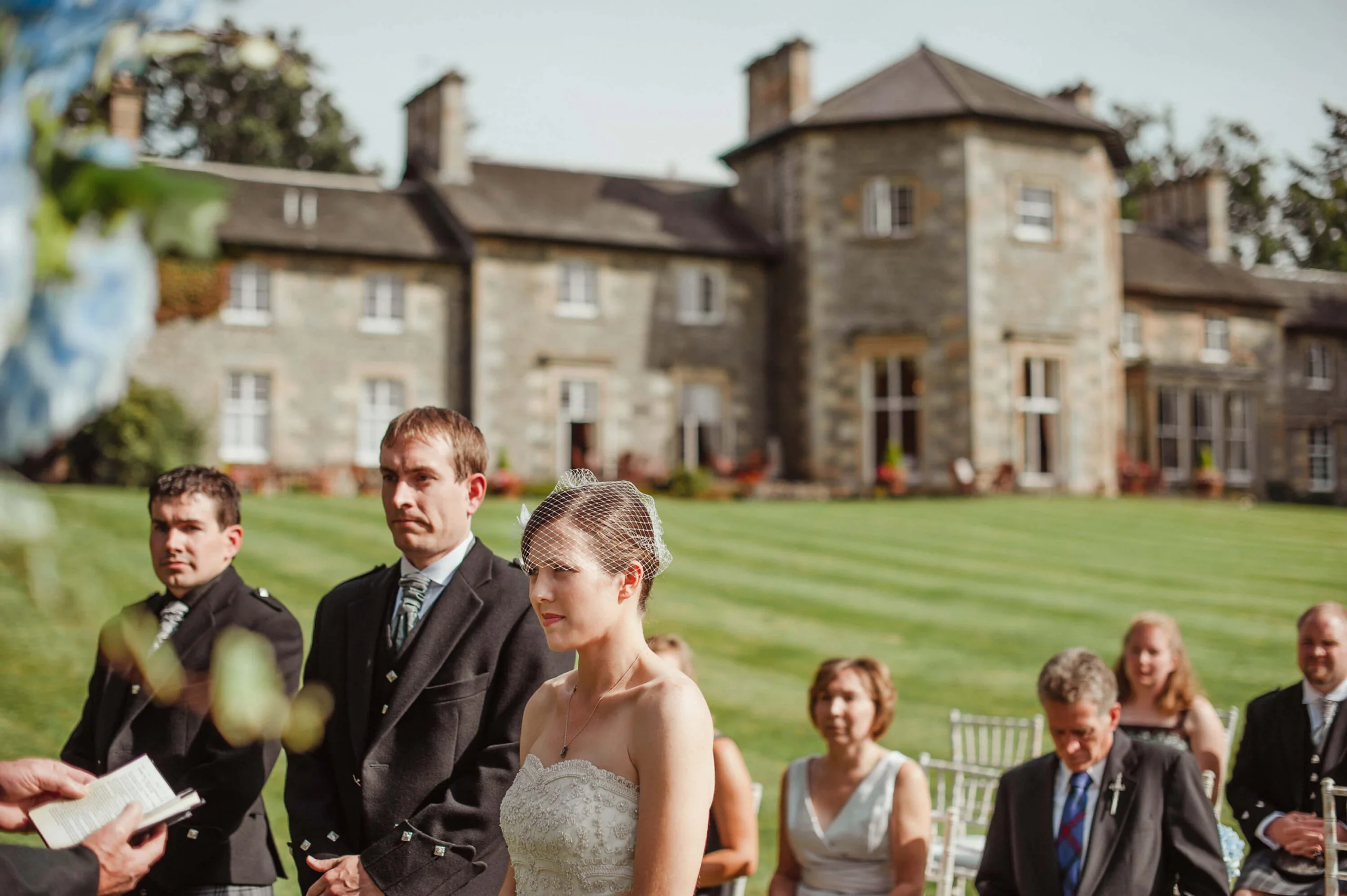
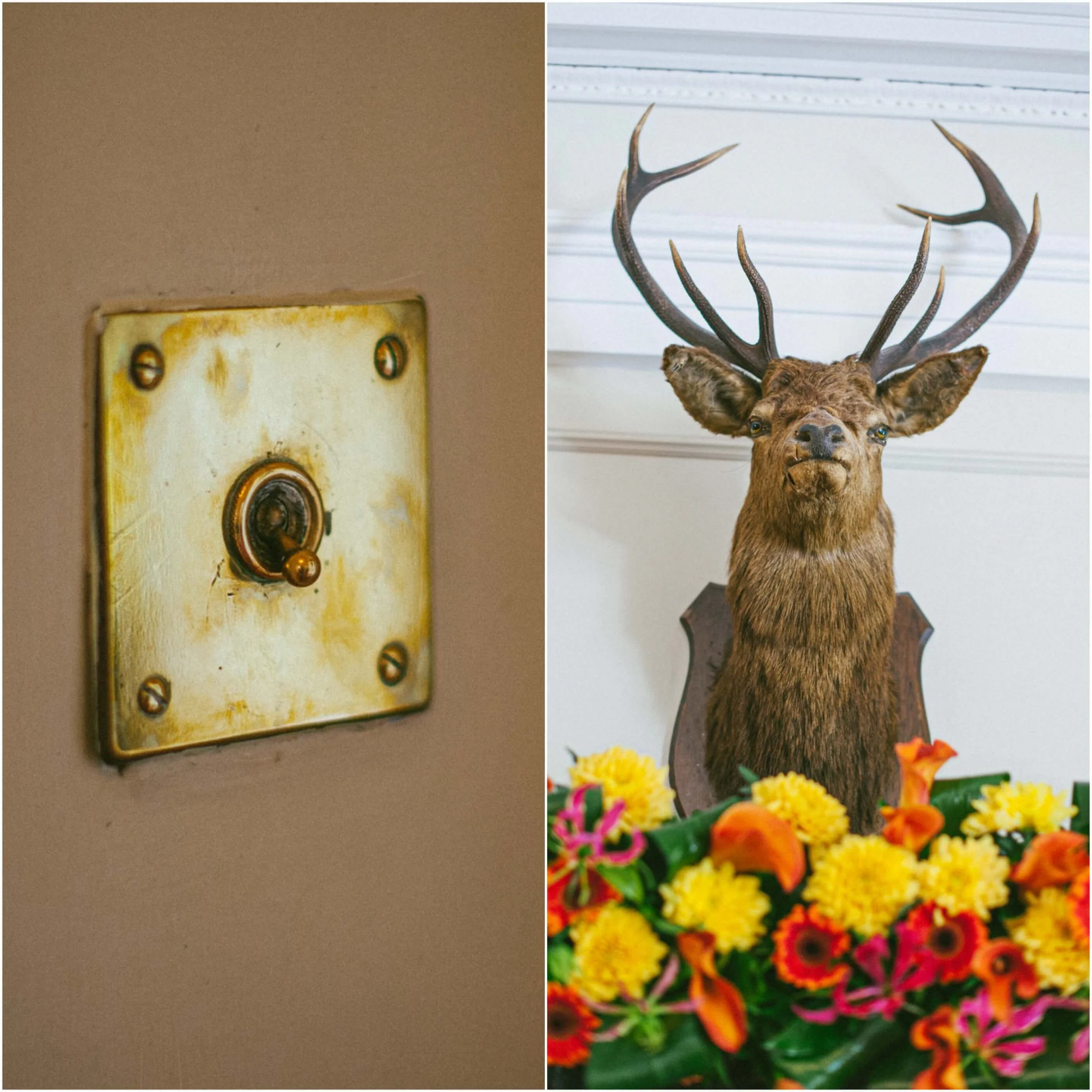
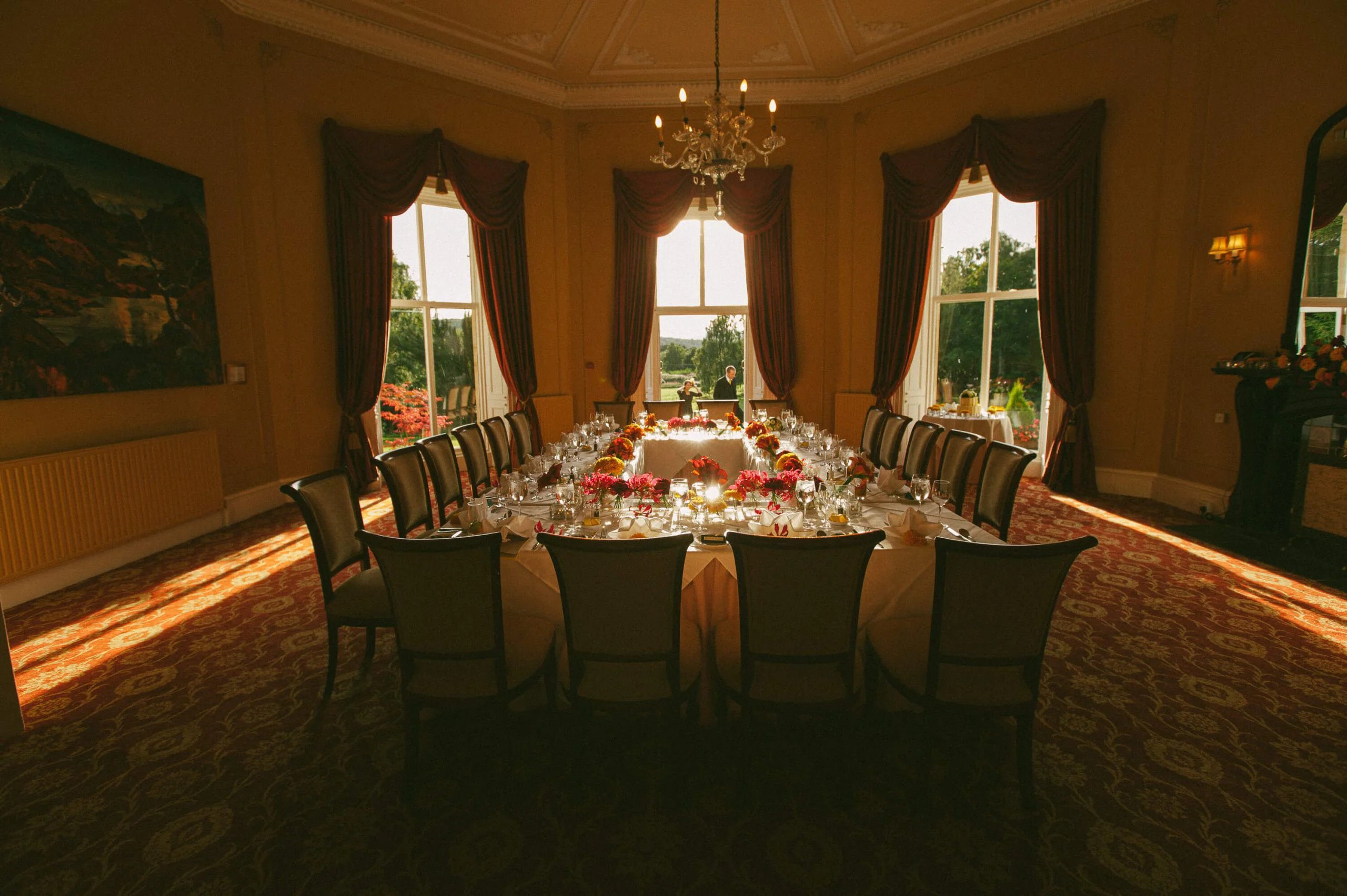
Coul House has a very different visual character from a modern event space. The building has historic proportions, ornate interior details and large windows, while the gardens and mature trees change the scale again outside. I treat those areas as different lighting environments rather than trying to force one consistent look across the whole venue.
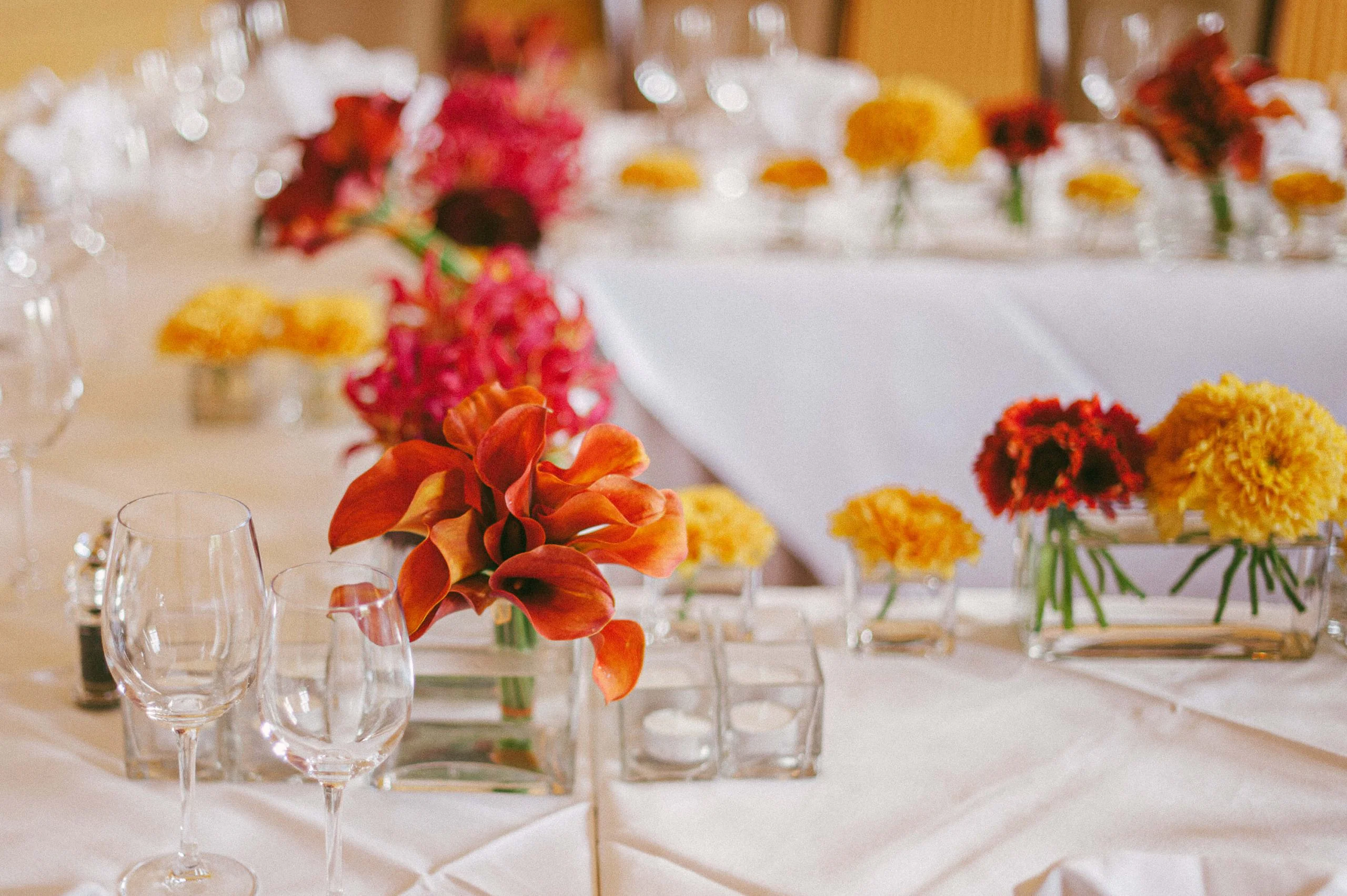
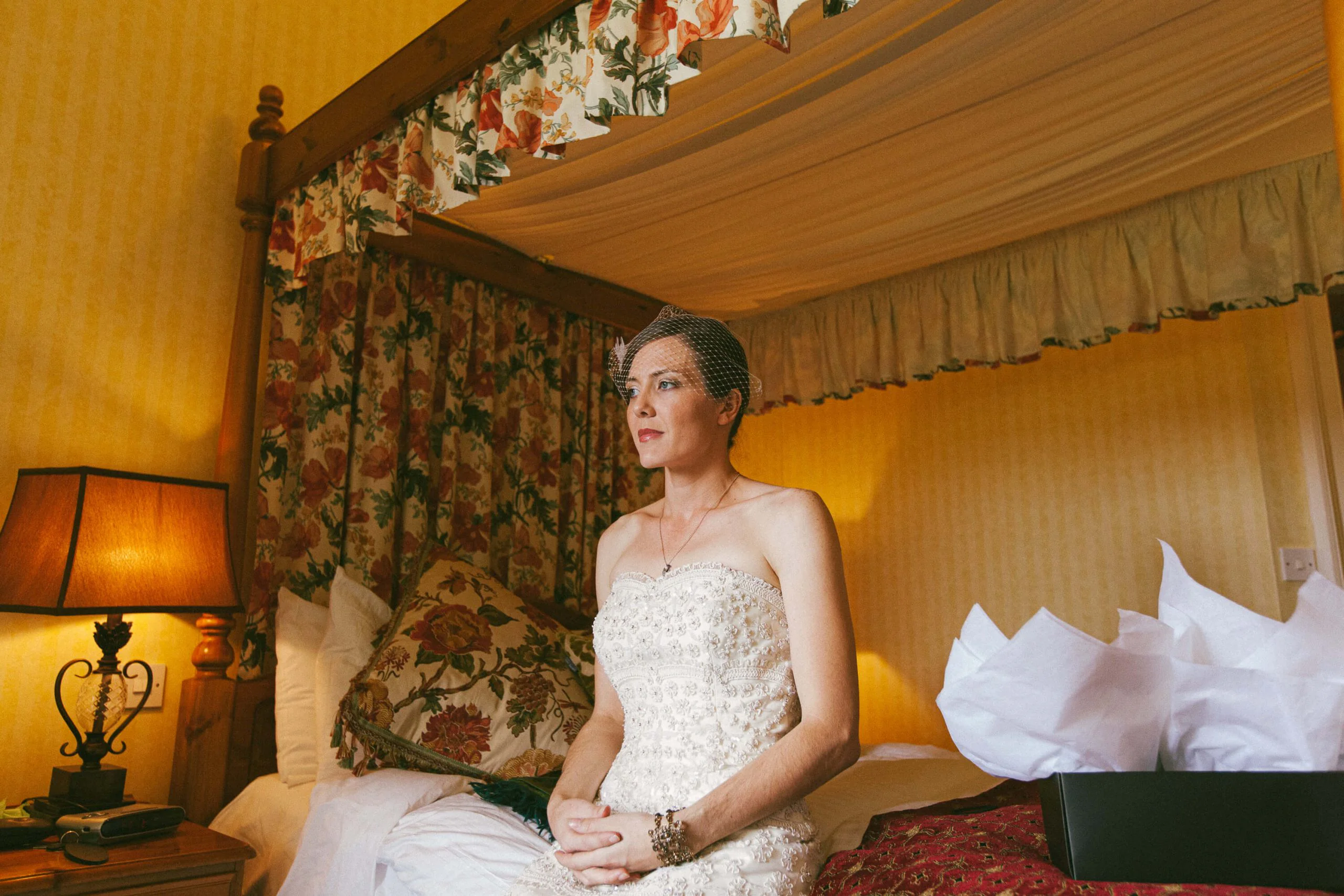
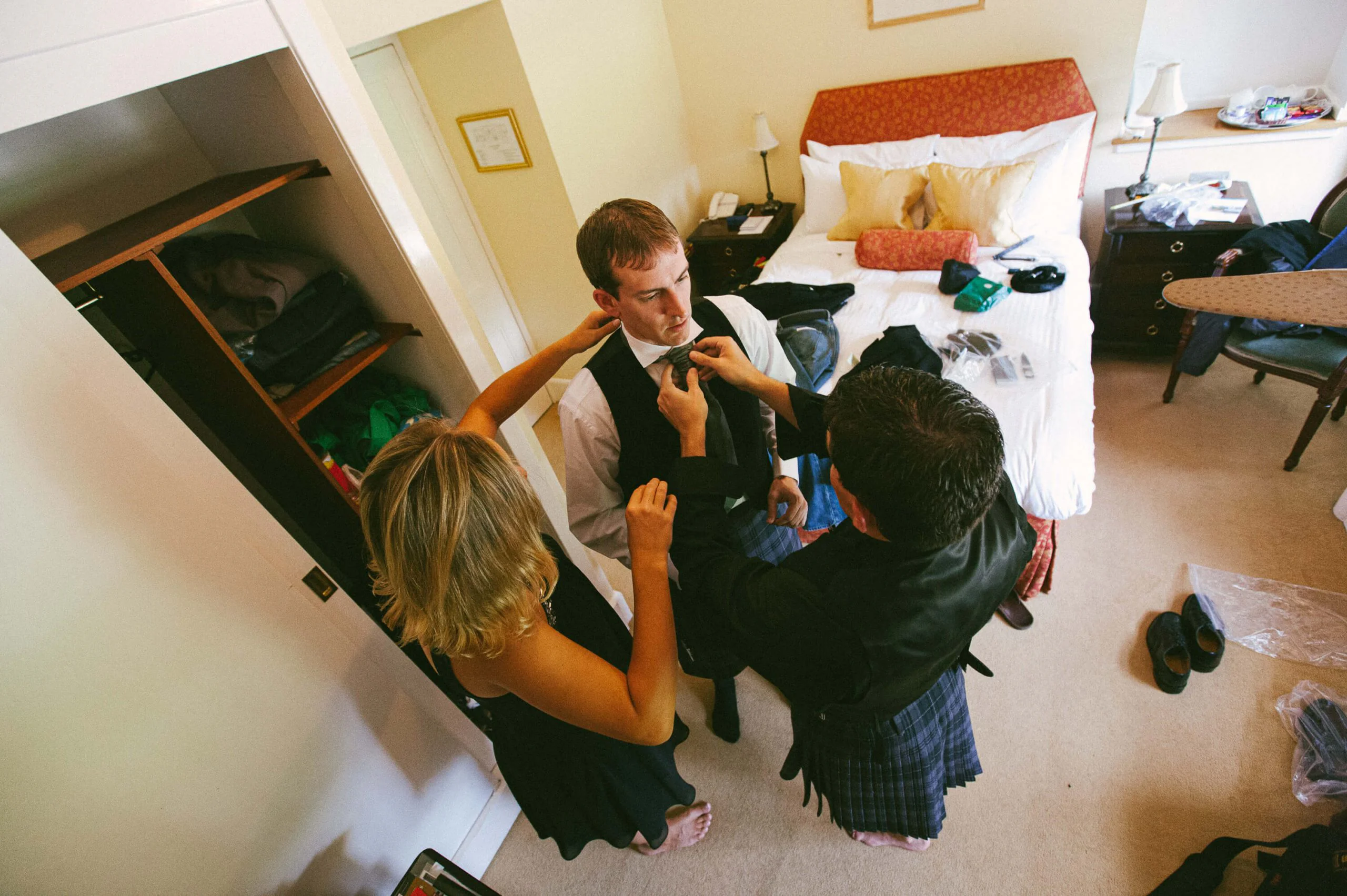
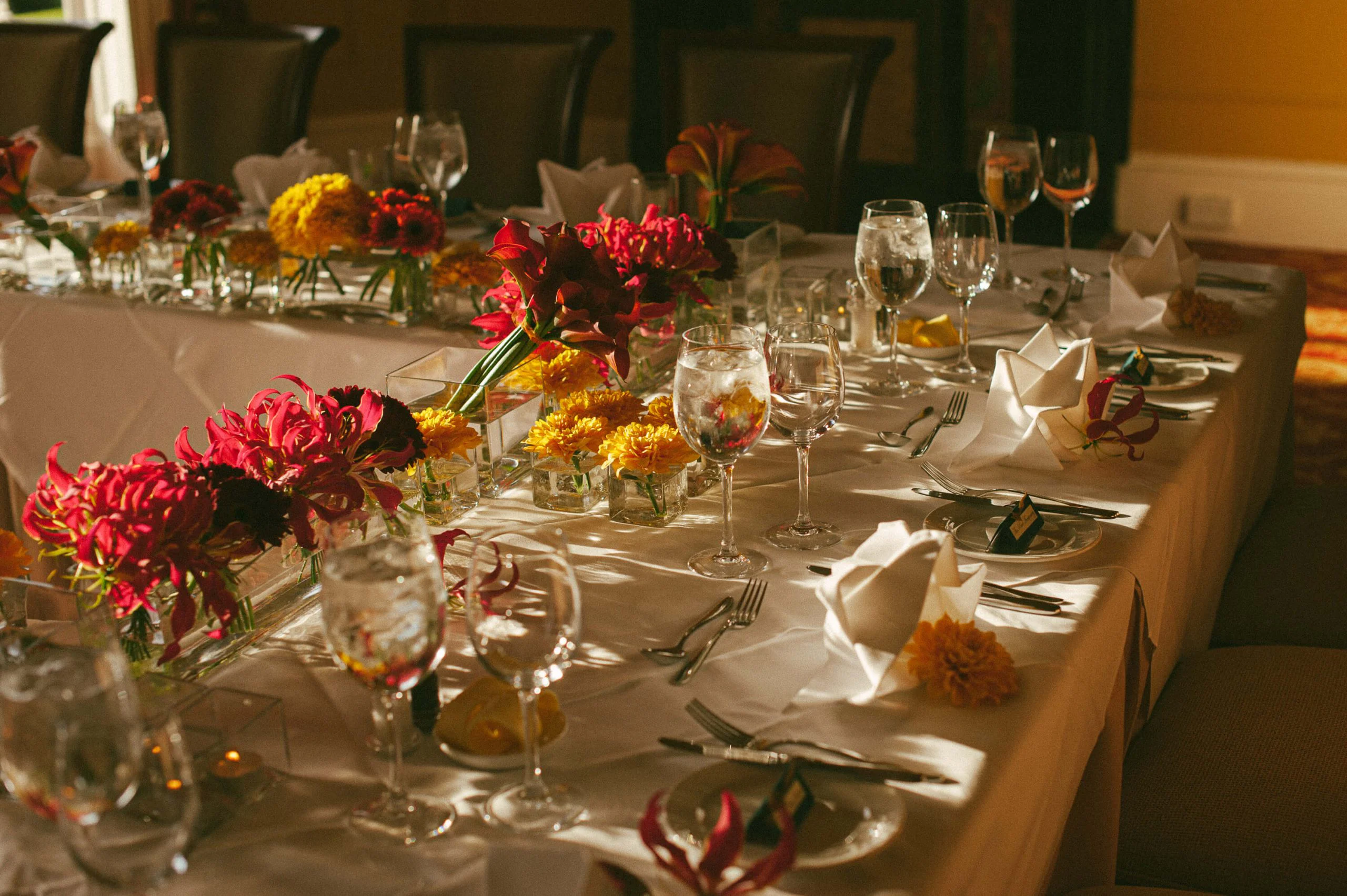
Inside, the direction of window light matters more than the size of the room. For preparations and quieter portraits I look first for a clean source of natural light and a background that does not pull attention away from the person. During the ceremony and reception I work with the room as it is, because those photographs need to describe the actual atmosphere rather than a temporary portrait set.
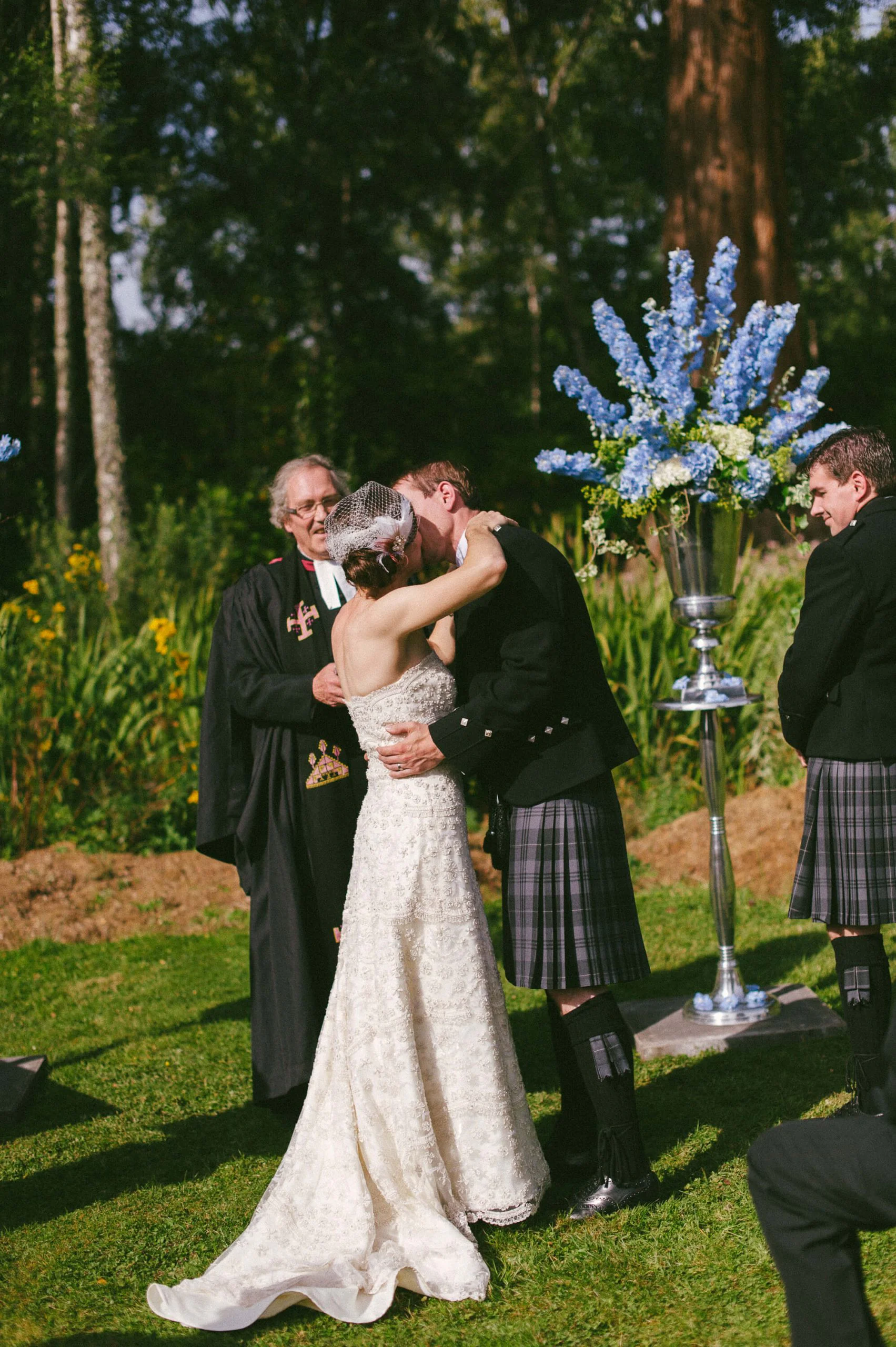
Outside, the lawns, trees and wider Highland views give more freedom. A cloudy sky can make the gardens very soft; a break in the cloud can create much stronger direction. I do not decide in advance that one particular patch of lawn must be used. I watch what the light is doing and choose the part of the grounds that works at that moment.
05
Travelling to Coul House from Inverness
Coul House is in Contin, north of Inverness. The hotel describes the drive from Inverness as roughly twenty to twenty-five minutes, and Inverness Airport is farther east. That sounds straightforward, but a wedding schedule should still be built from the real accommodation and arrival plan rather than from a generic travel estimate.
If the couple and guests are staying at the hotel, the day becomes much simpler. If preparations happen elsewhere, I want the exact addresses before I suggest photography timings. A twenty-minute route on a normal afternoon can become something different once luggage, unfamiliar roads, formal clothes and several cars are involved.
For a photographer travelling from outside the Highlands, I would rather arrive the day before than build a wedding morning around a long same-day drive. It removes a risk that has nothing to do with photography and gives me a chance to see how the venue and surrounding roads are working in the actual weather.
06
Weather, daylight and a Highland timeline
Scottish weather is not a reason to make the schedule complicated. It is a reason to keep it flexible. I normally want more than one possible outdoor window, because the useful ten minutes may arrive earlier or later than expected. If the weather stays closed, the wedding still needs to work indoors; if it opens, we are ready to use it.
The date matters as much as the forecast. A late-August wedding has much more usable evening light than a winter wedding, but the quality of that light can change quickly behind cloud and hills. I look at sunset time, the direction of the landscape and the actual dinner schedule together rather than treating golden hour as a separate event that the whole wedding must stop for.
Wind also changes the practical plan. Some exposed viewpoints can be uncomfortable even when the rain has stopped. The answer is usually to work closer to the venue, use shelter, or wait for a shorter opening rather than pushing the couple into a location simply because it looked good on a scouting photograph.
07
How I would plan another Coul House wedding now
I would start with the ceremony time, where each person is getting ready, the size of the wedding and whether everyone is staying at Coul House. From there I would protect the ceremony, congratulations and reception first. Portraits and group photographs fit around that structure rather than controlling it.
For family groups I would ask for one short list in advance and photograph them efficiently near the venue. For the couple I would keep the main portrait session short, then leave open the option of another ten minutes later if the light becomes more interesting. That produces more variety without removing them from their guests for a long block.
Most importantly, I would still photograph the wedding as a sequence. The complete gallery matters more than one dramatic Highland frame. Barbara and Keith’s photographs have value because the hills, hotel, guests and small moments all belong to the same day. That is the standard I would use for another Coul House wedding.