01
Doris and Andre returned to the town where they met
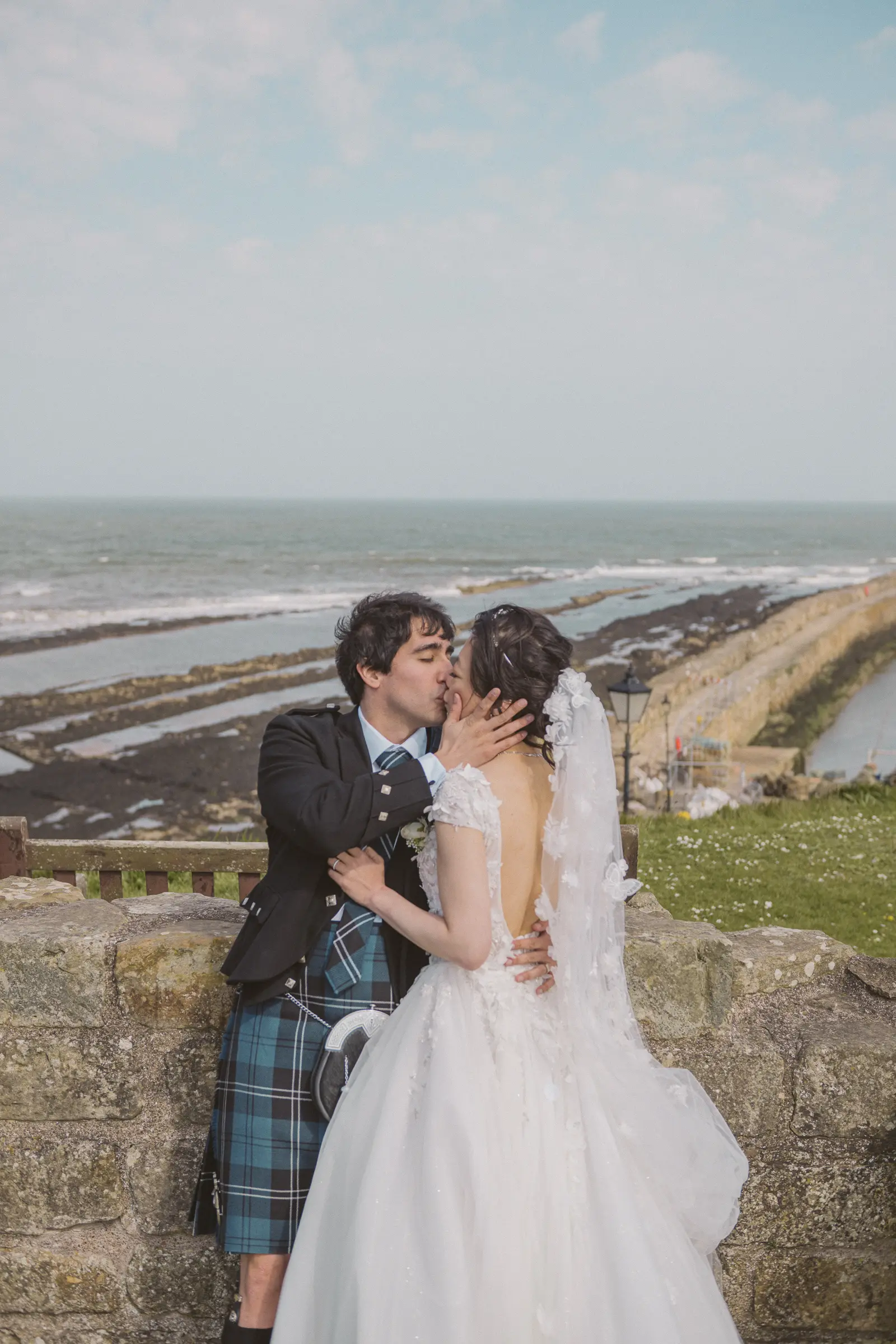
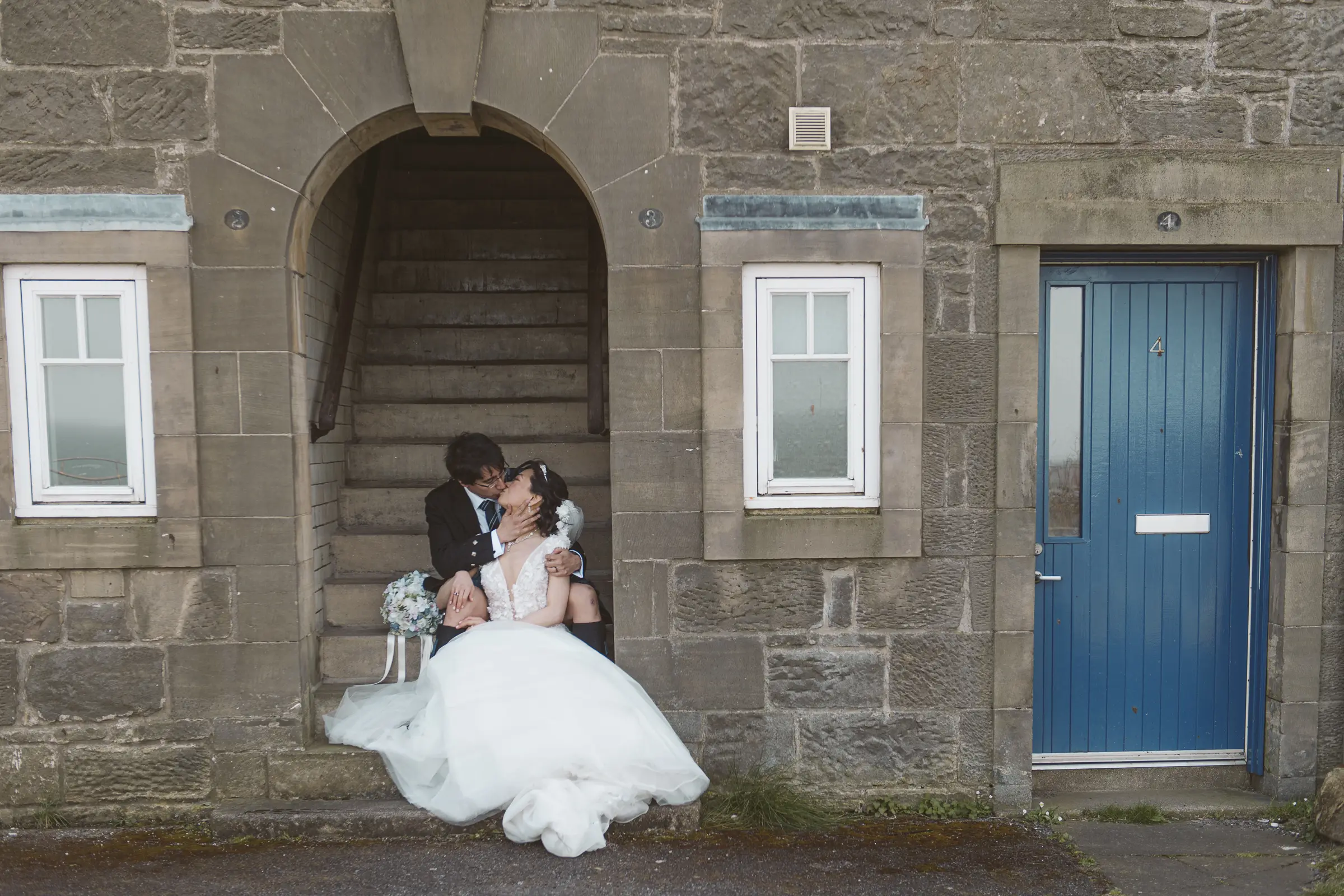
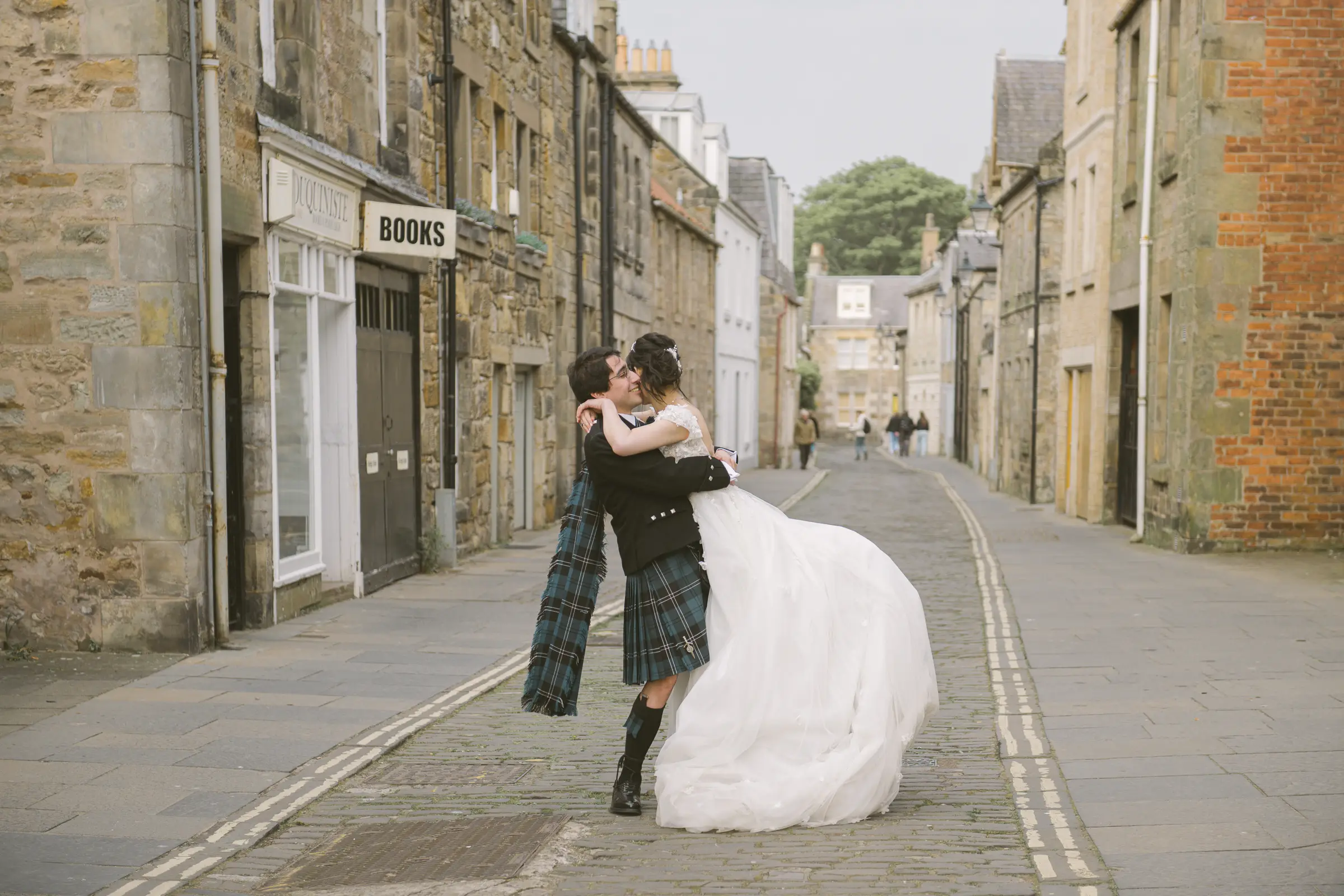
St Andrews already belonged to Doris and Andre before it became their wedding location. They met at the university, so returning there for the wedding gave the photographs a reason to use the town beyond its architecture. The university buildings, streets and coast were not interchangeable backgrounds; they were places tied to the couple’s own story.
That is why I would not describe this as a destination route assembled from the best-known St Andrews landmarks. The day was small and personal. The civil ceremony, walk through town, university photographs, beach and lunch formed one compact sequence, and the photography followed that sequence rather than forcing a separate shoot onto it.
For couples planning something similar, this is a useful model. If a place already has meaning, use it. A shorter route through locations that matter usually produces a stronger gallery than a longer list of places chosen only because they are recognisable.


02
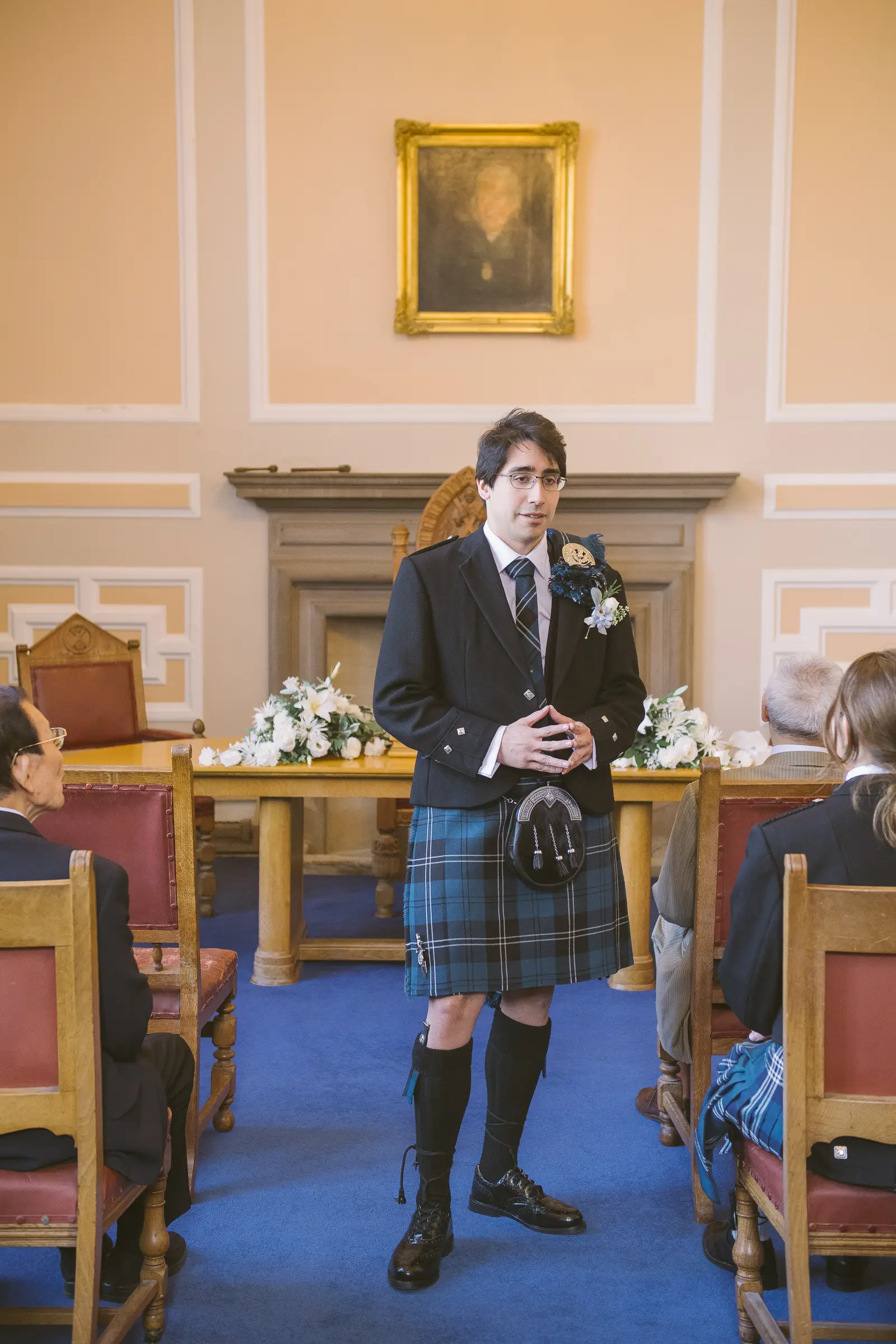
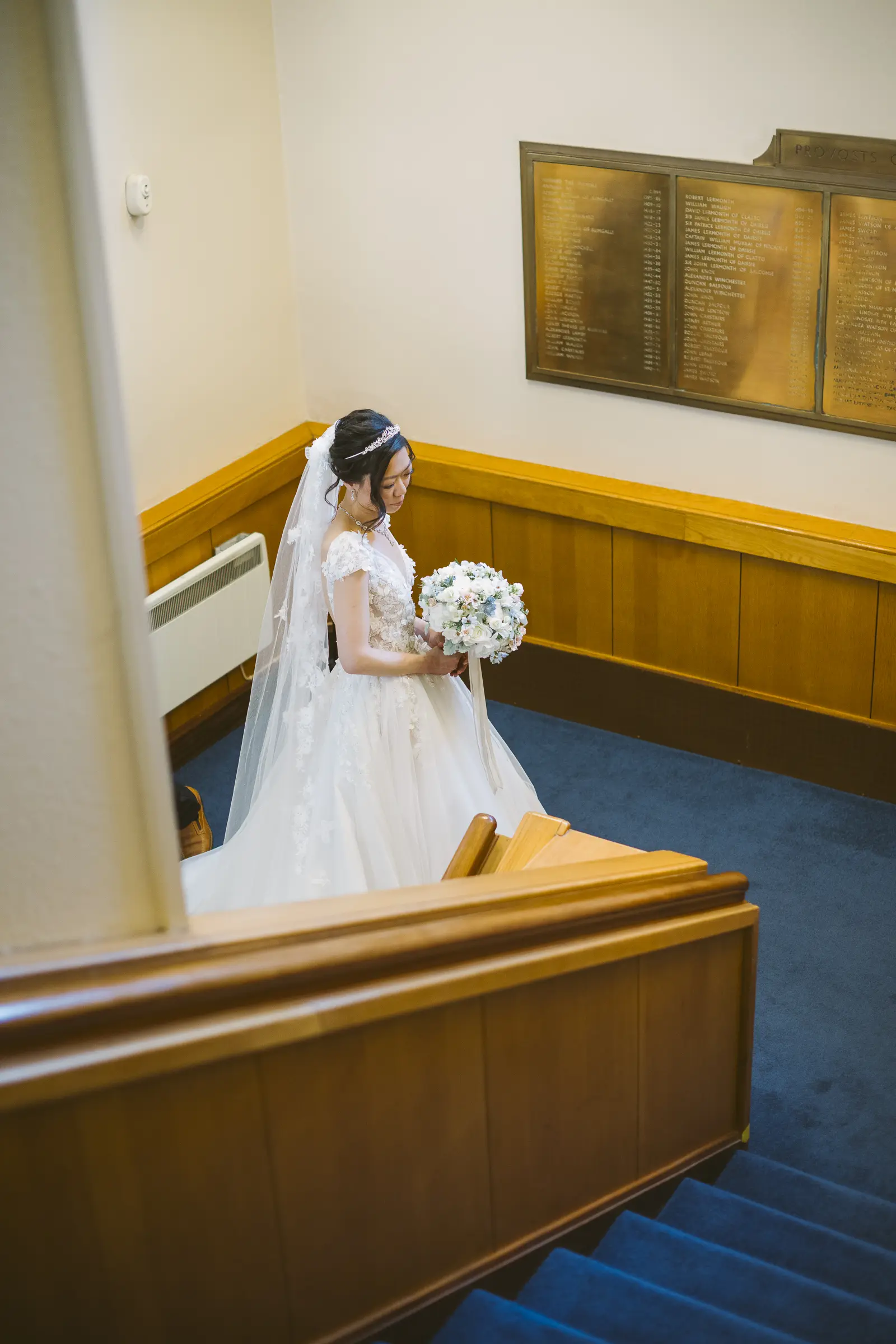
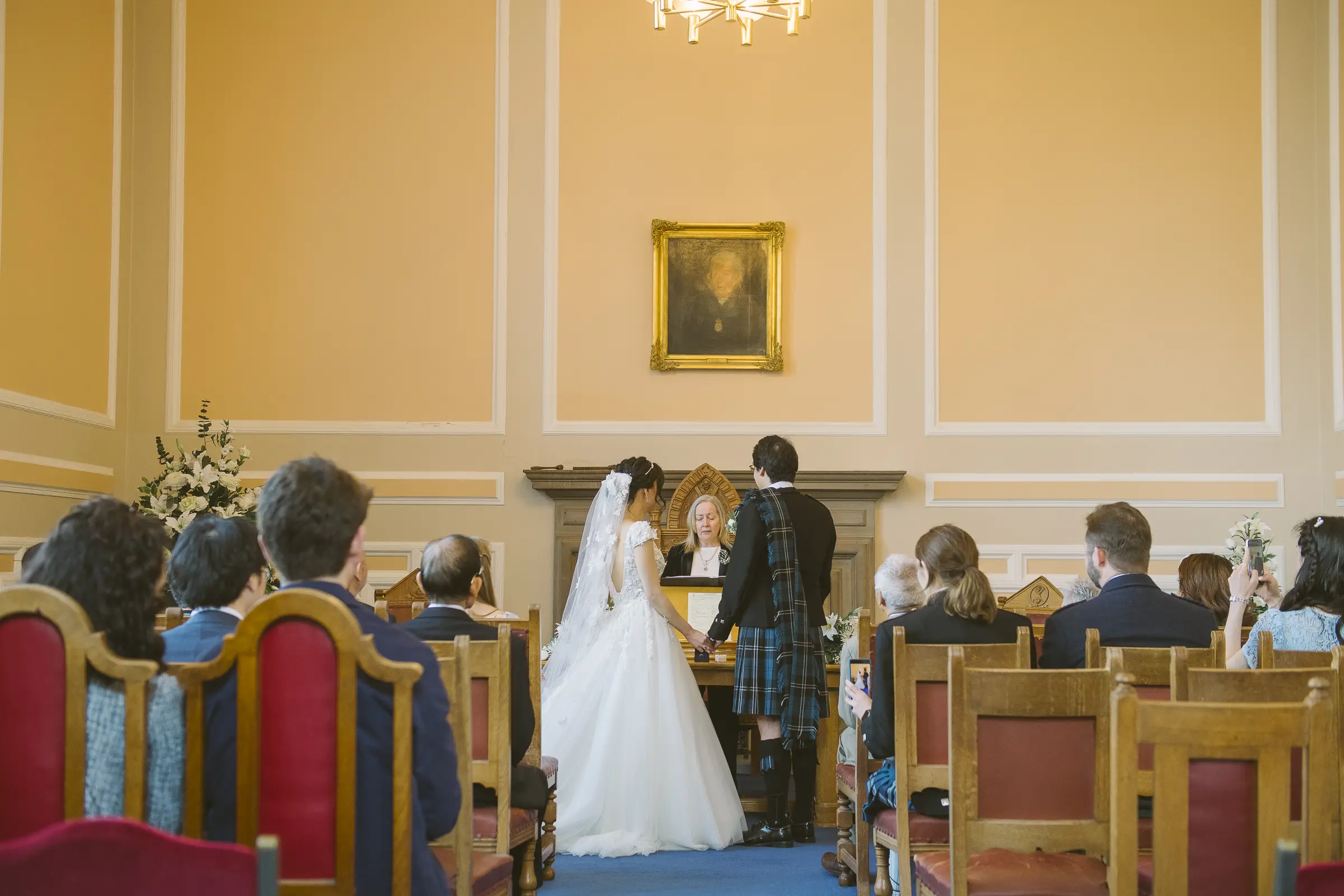
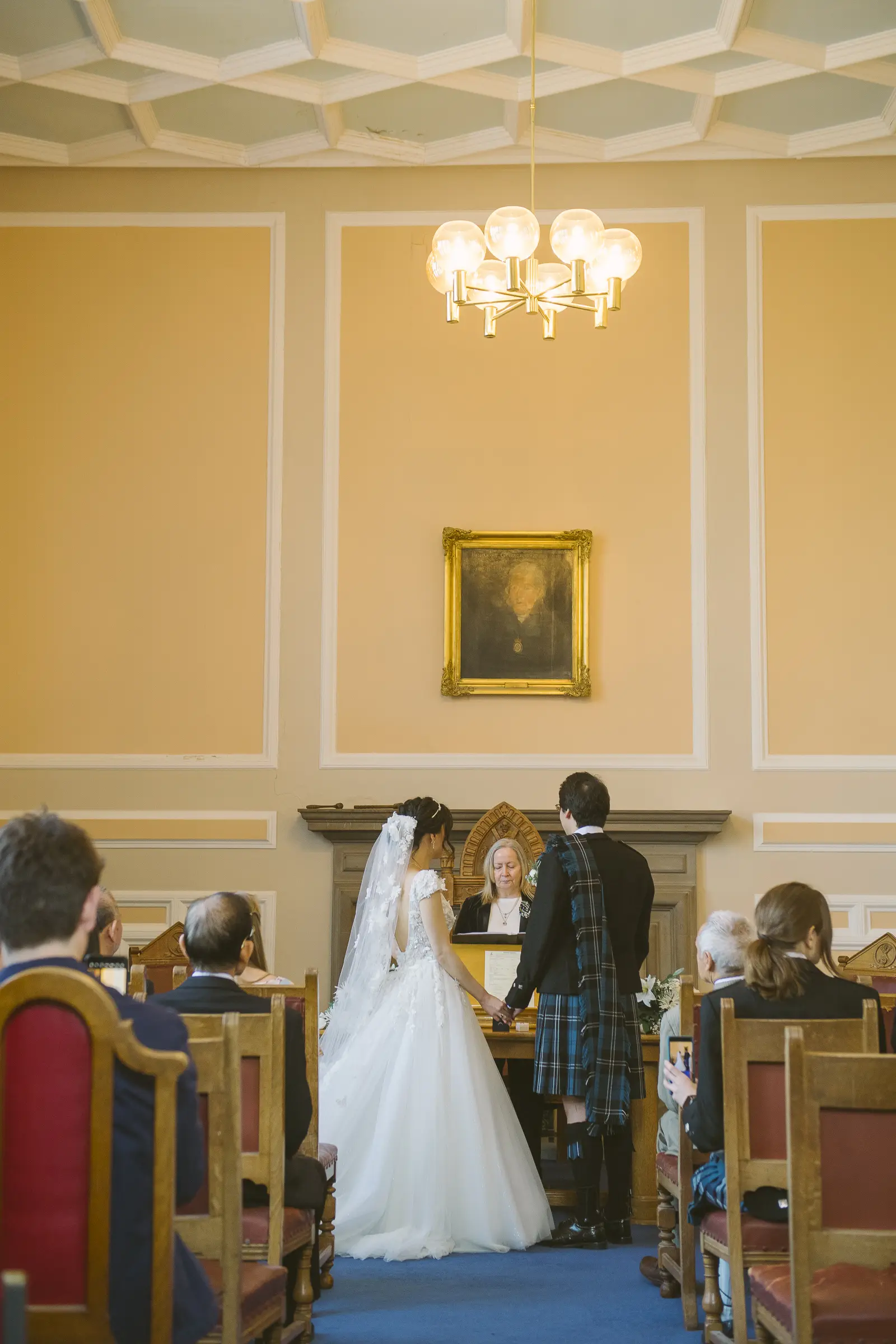
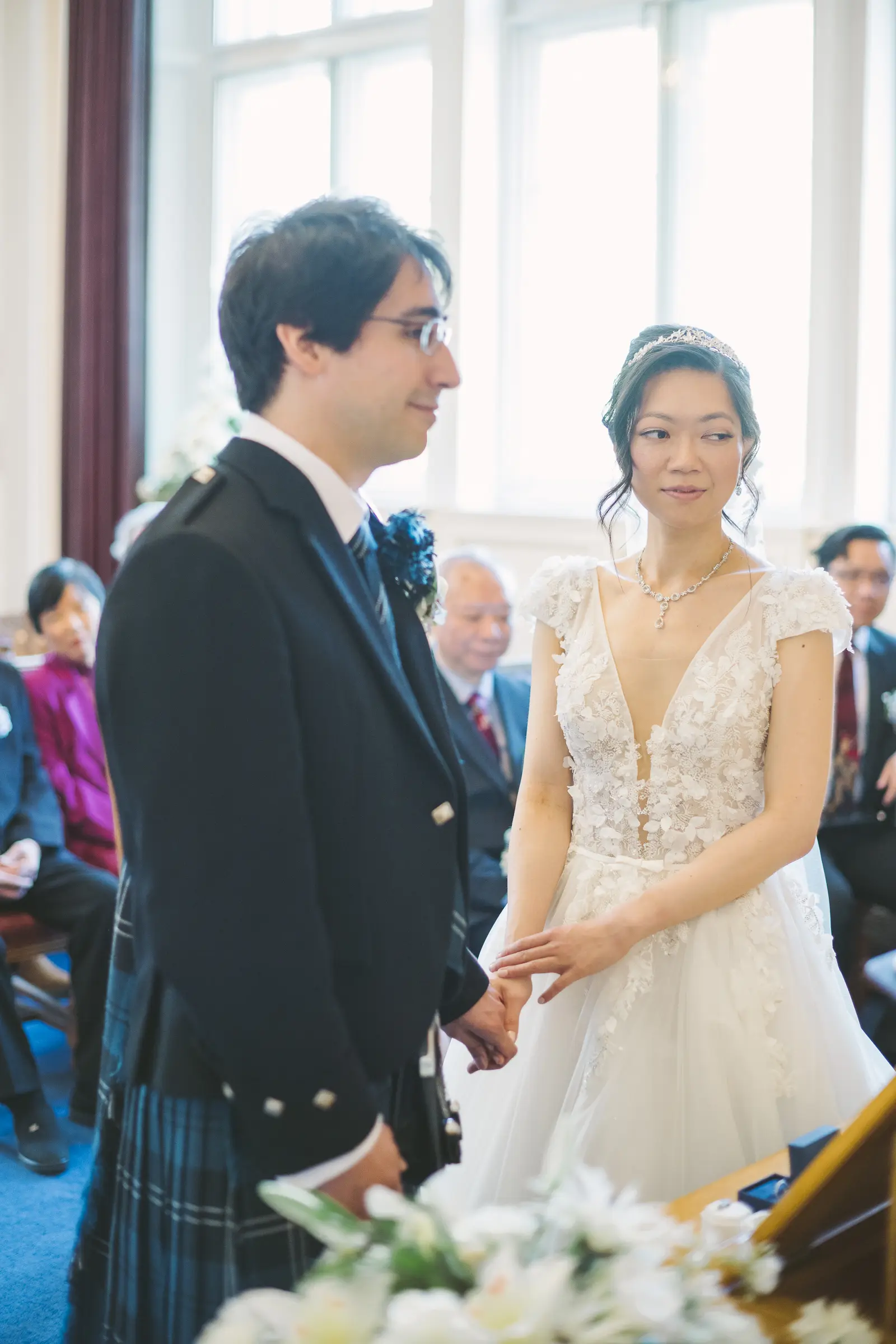
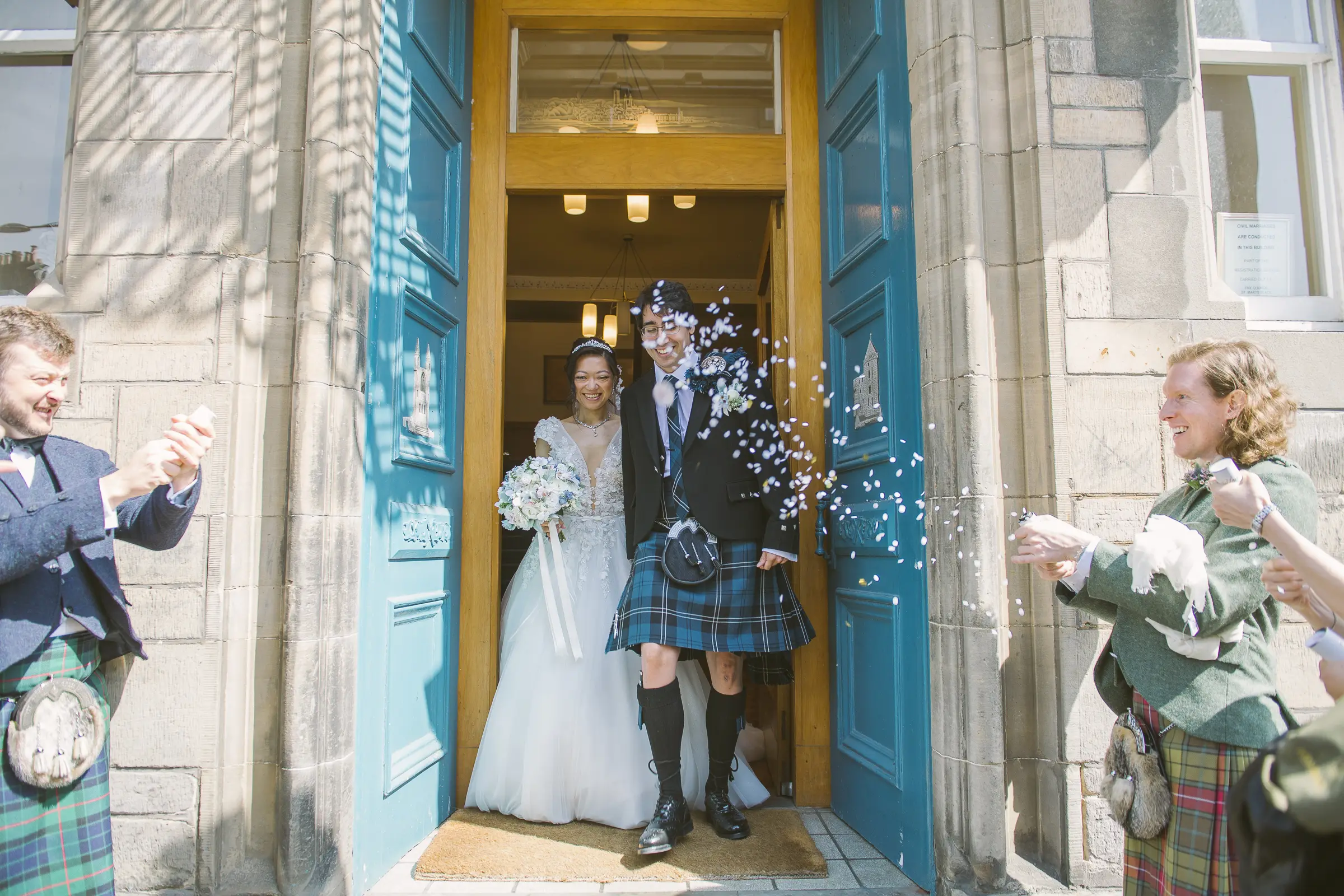
The civil ceremony at St Andrews Burgh Chambers
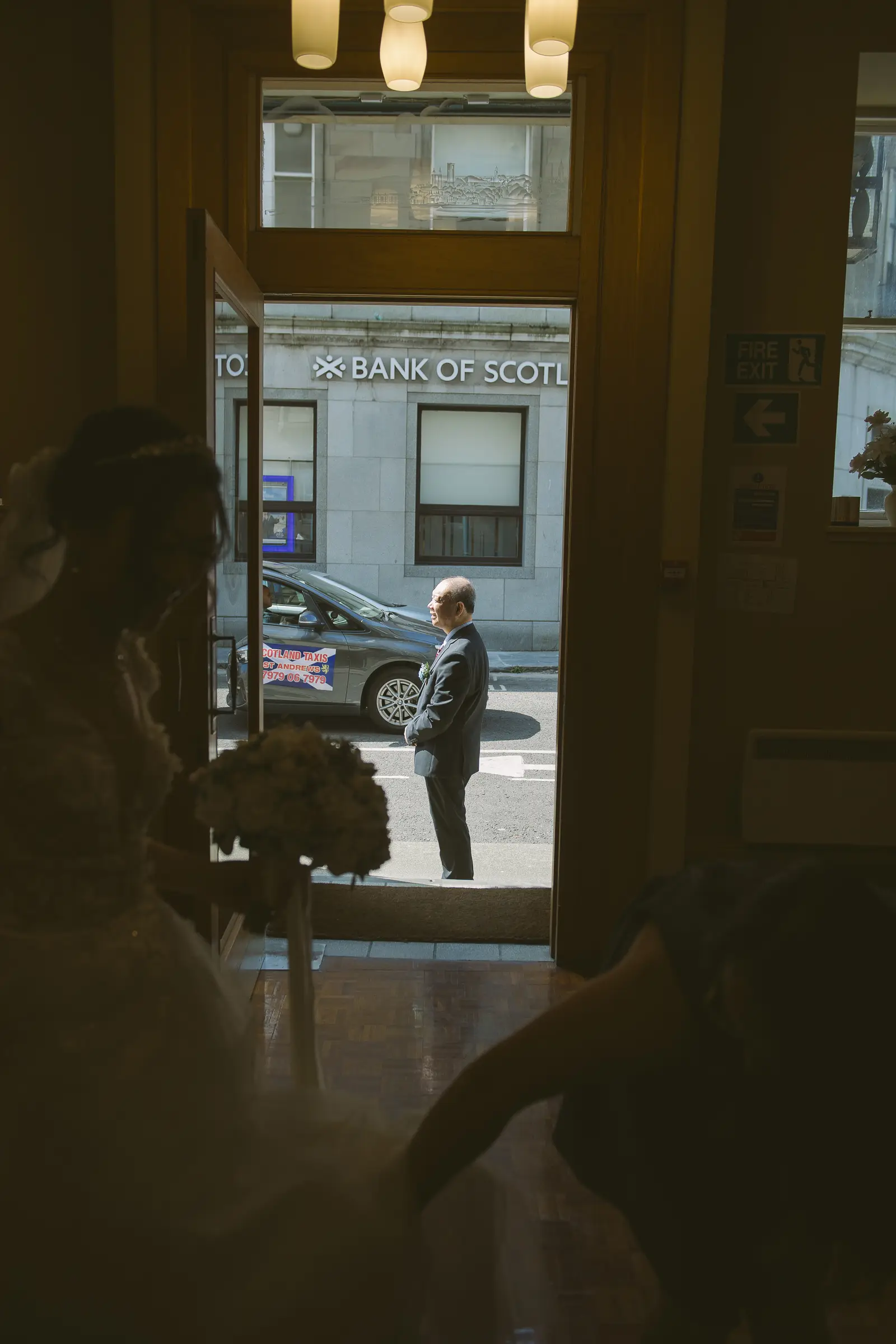
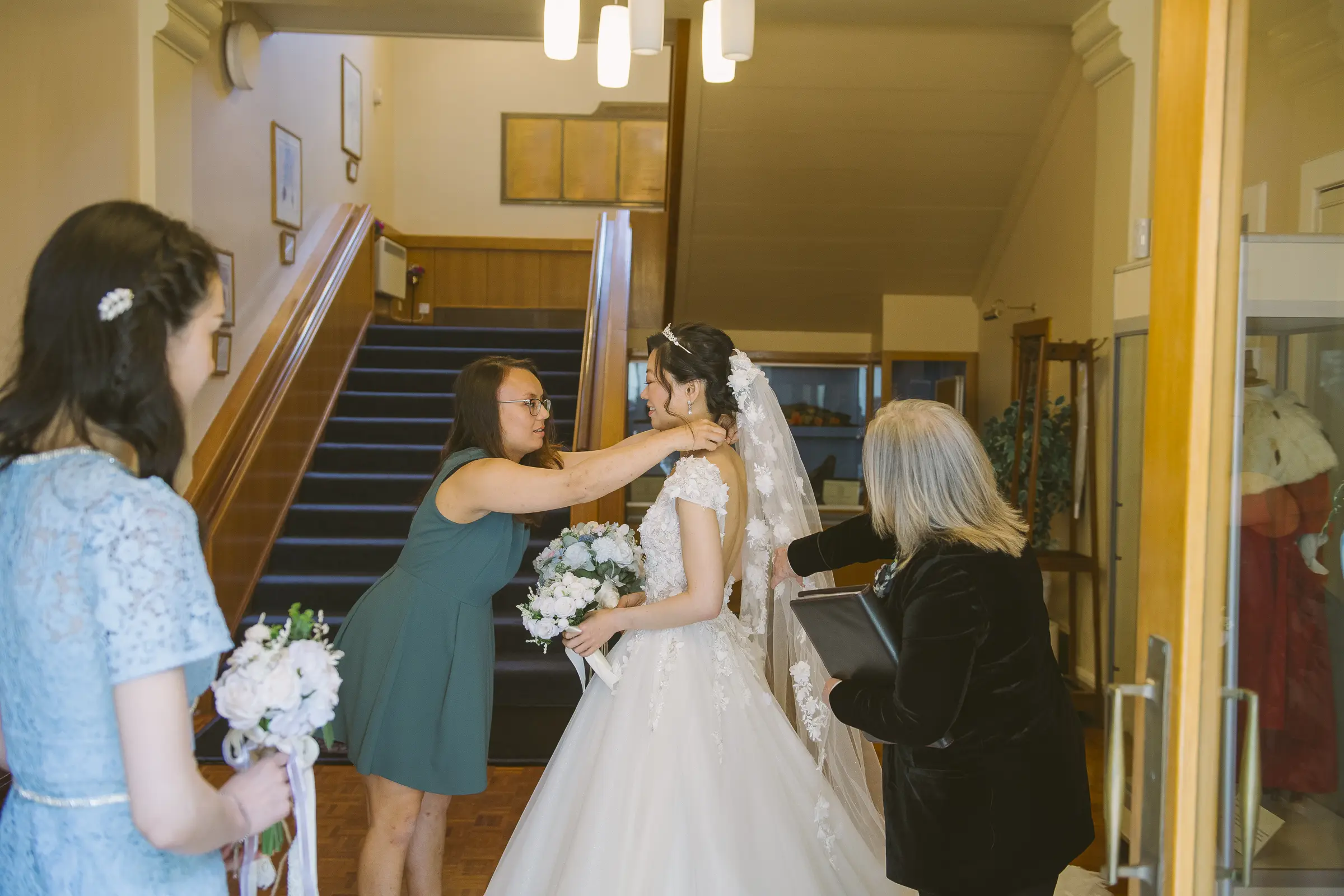
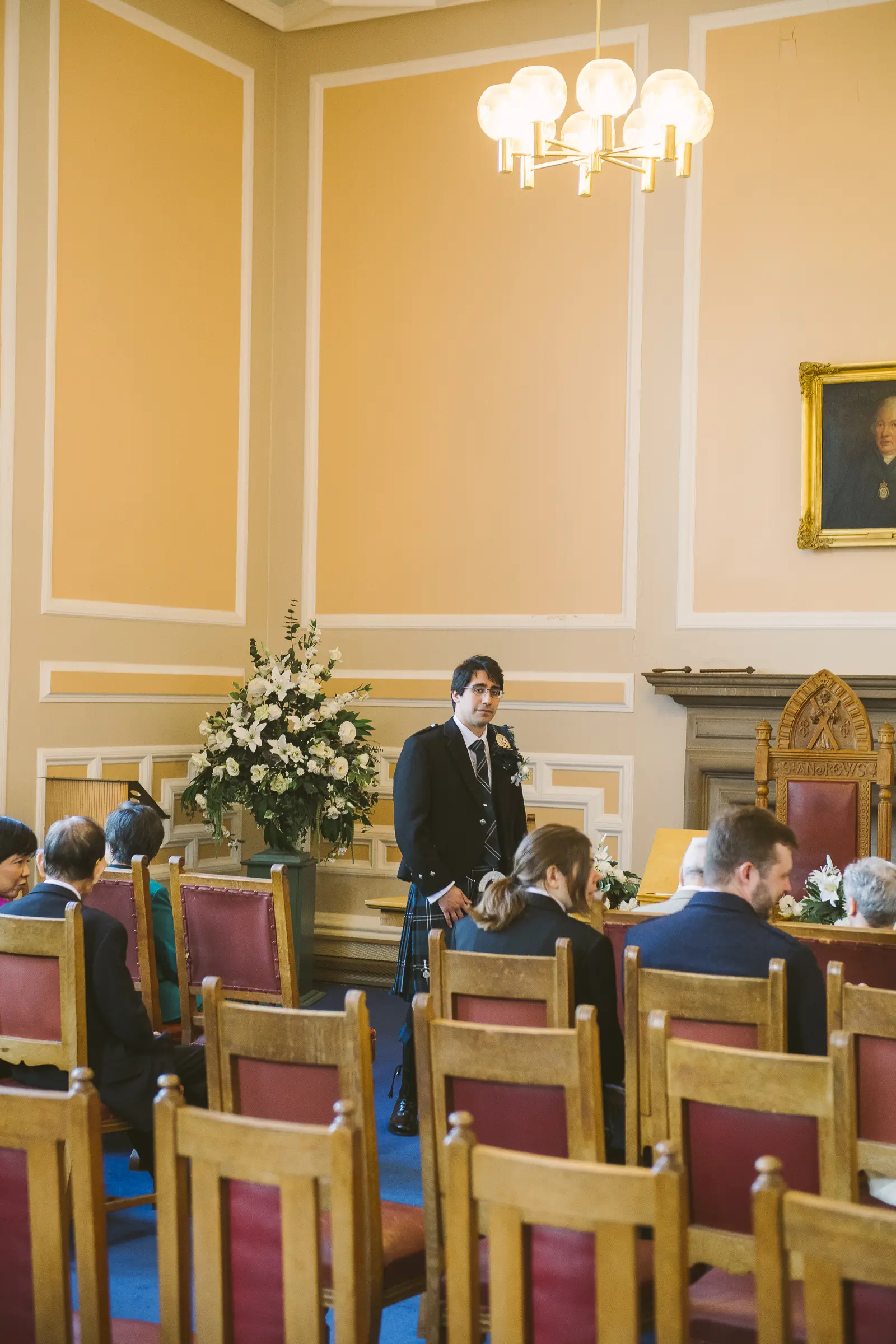
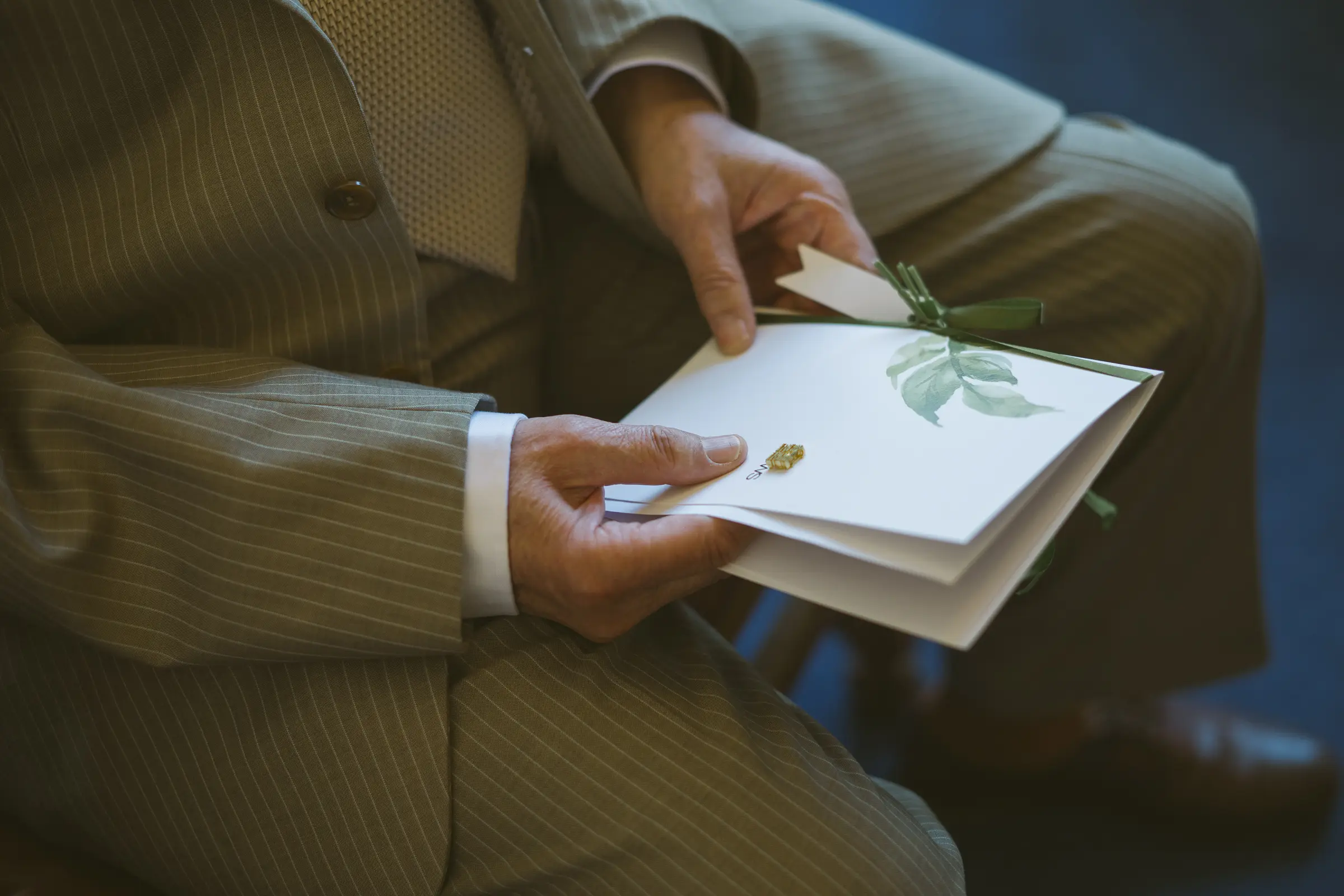
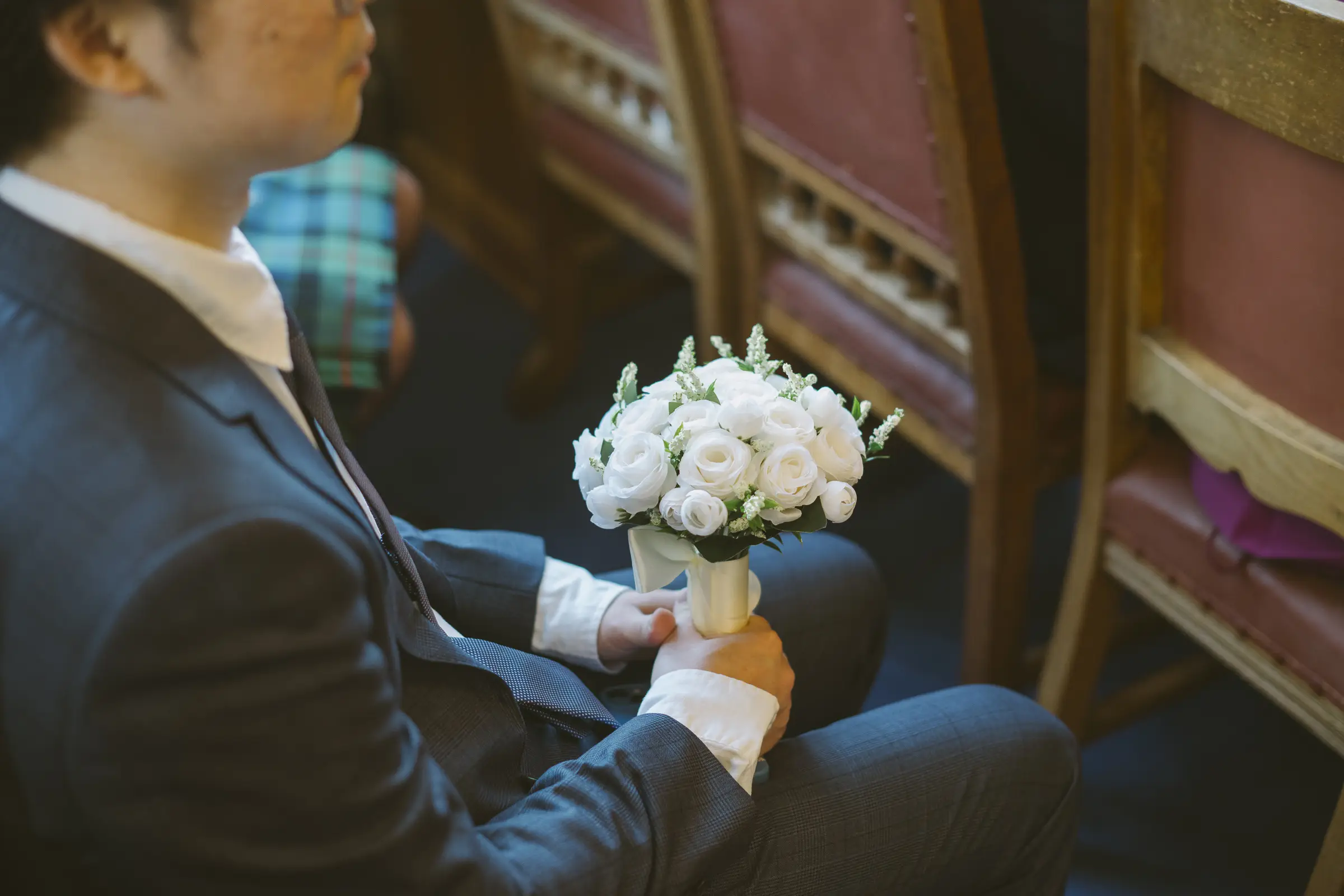
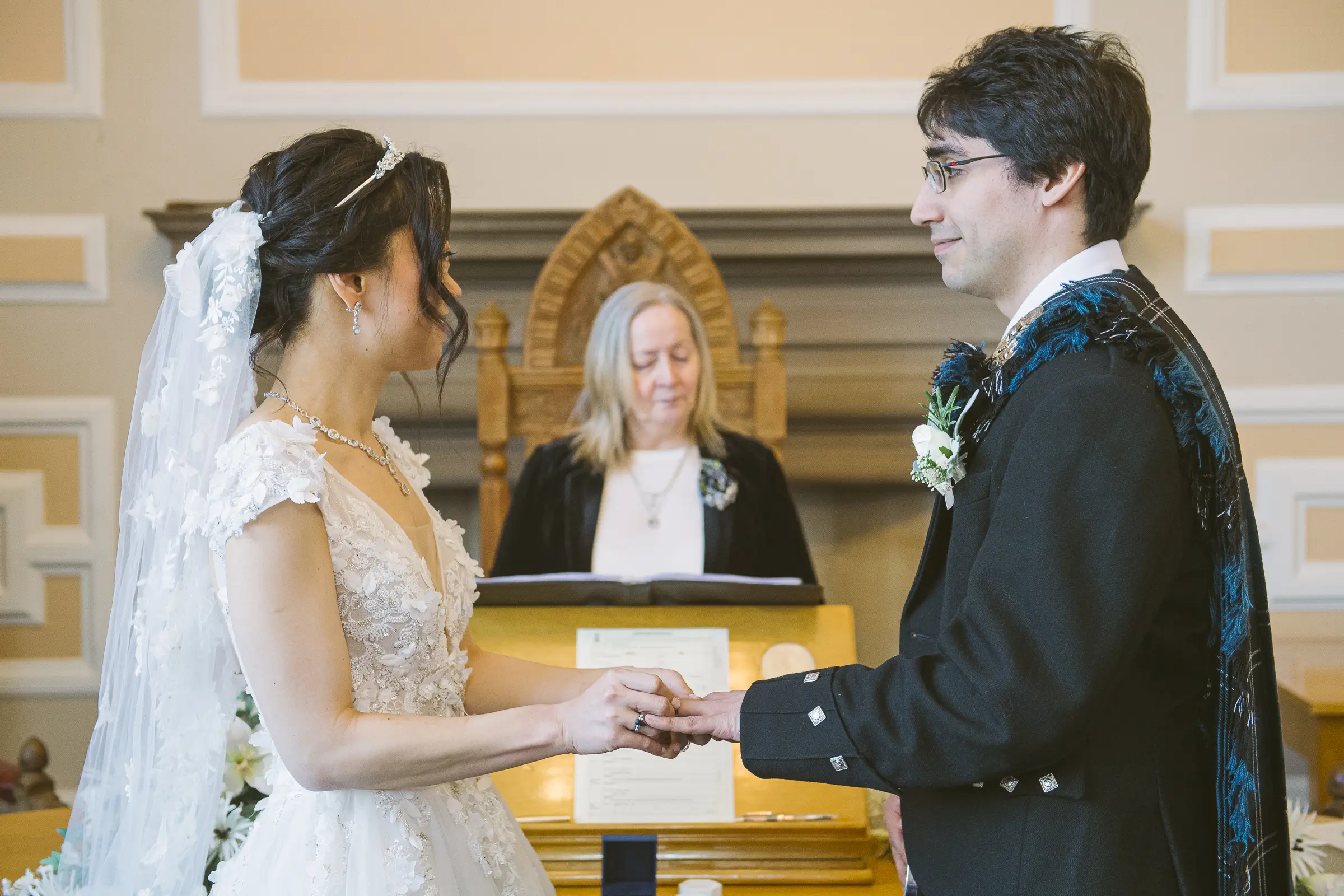
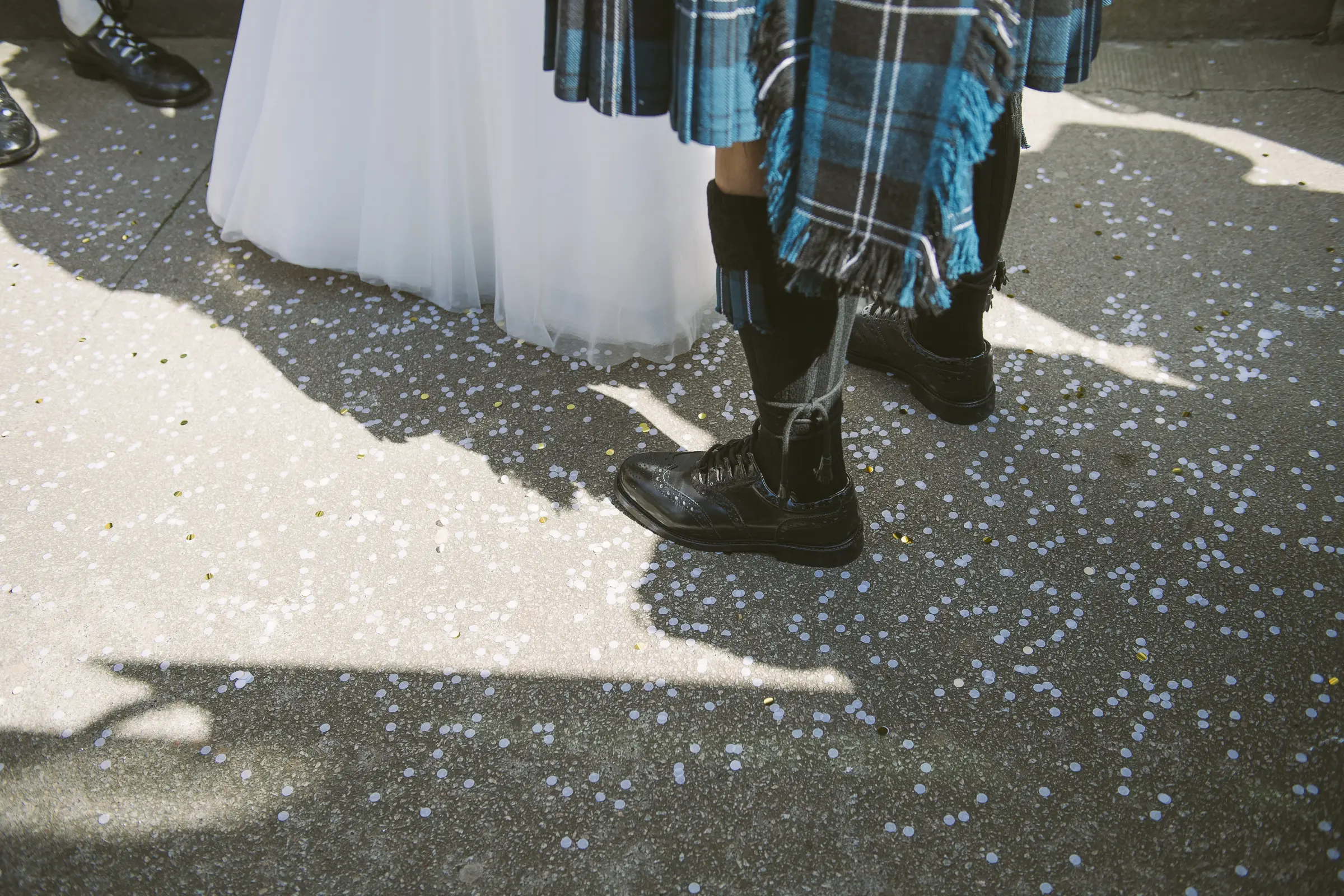
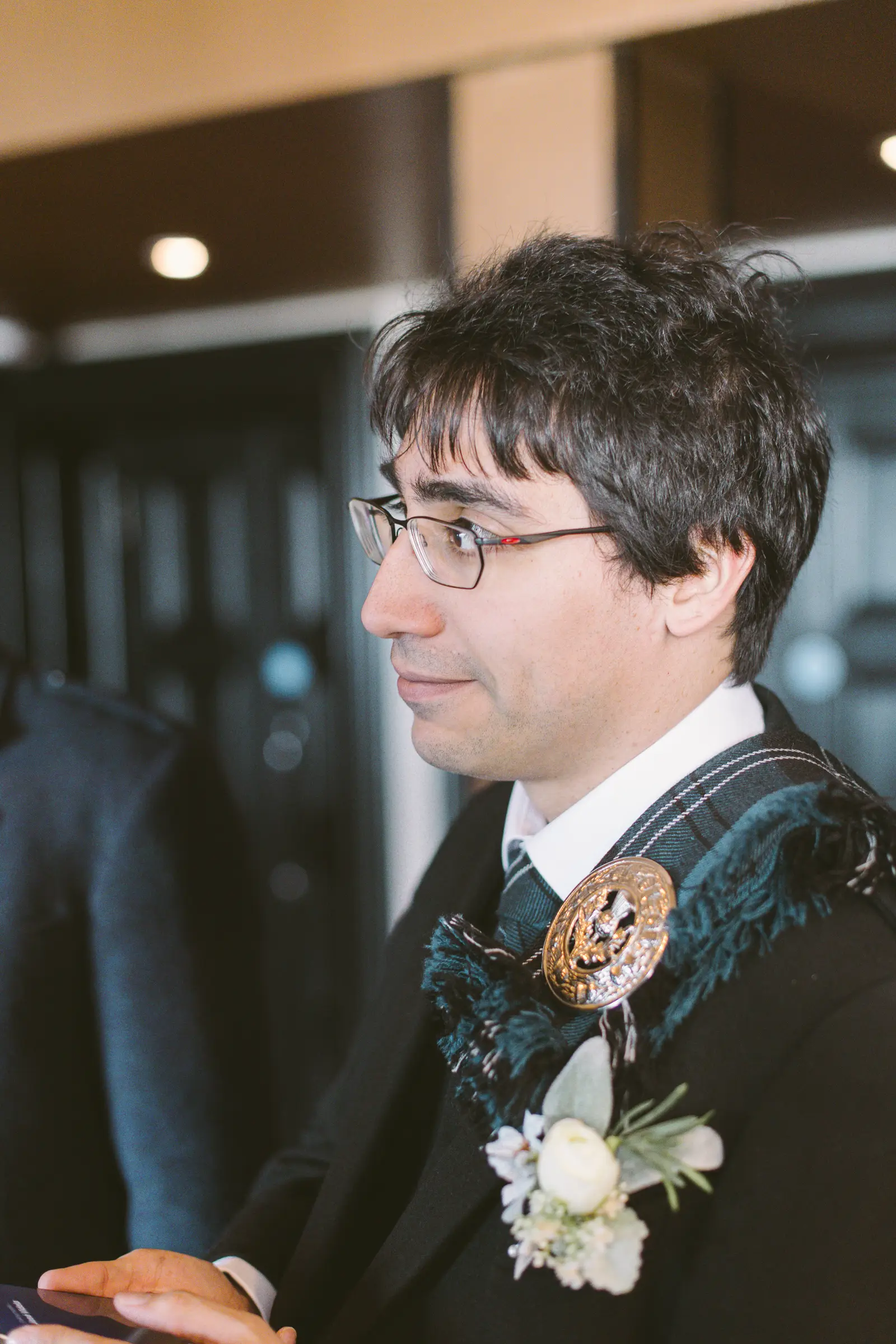
The Burgh Chambers gave Doris and Andre a straightforward civil ceremony in the centre of St Andrews. For photography, the important part is the continuity between the ceremony and what happens immediately afterwards: people coming outside, congratulations, reactions, family photographs and the first few minutes when the formal part of the day has finished.
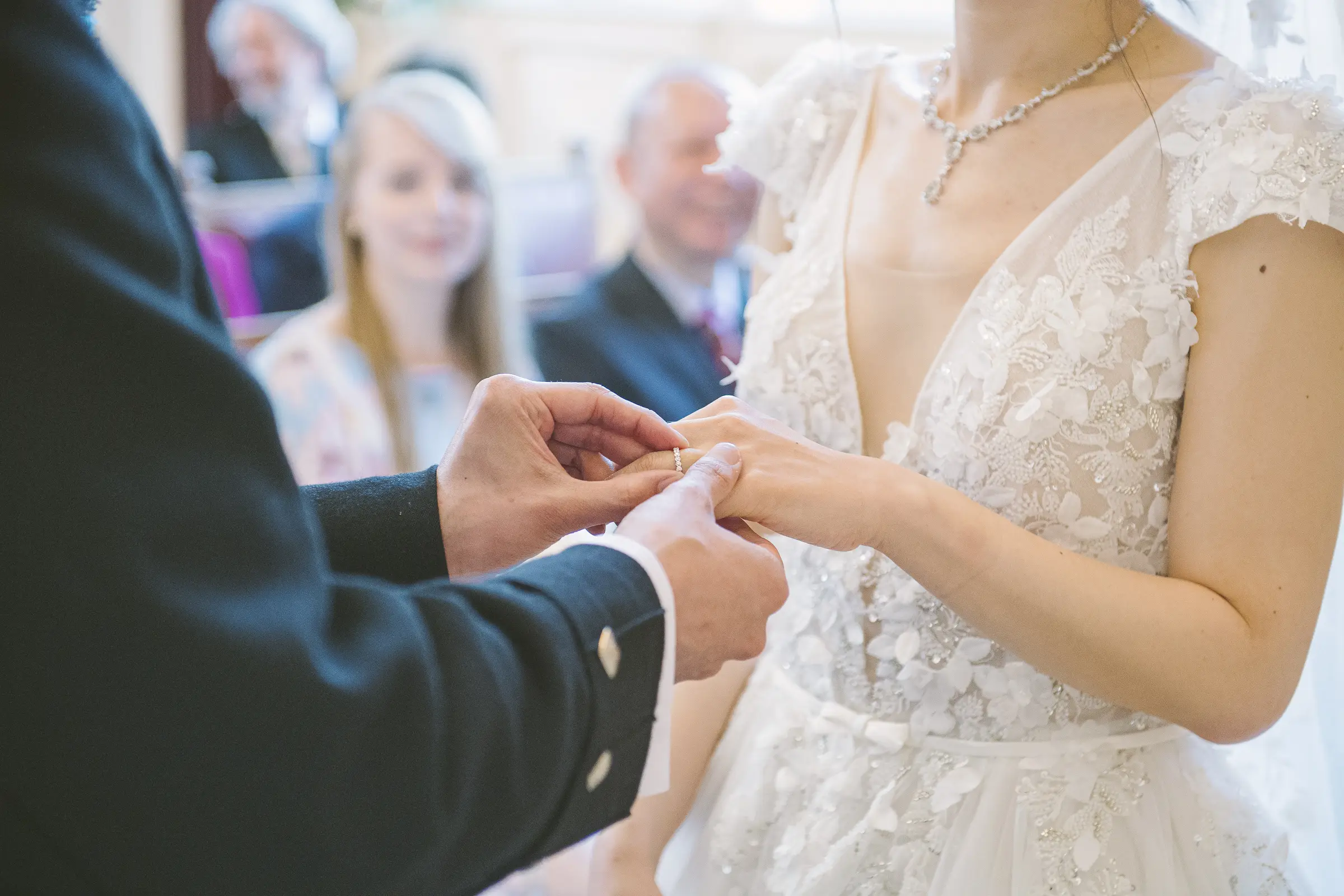
I keep the ceremony coverage quiet. There is no benefit in turning a small civil wedding into a production with constant movement. I want a clear view of the vows and reactions, then enough freedom to photograph what happens naturally around the couple.
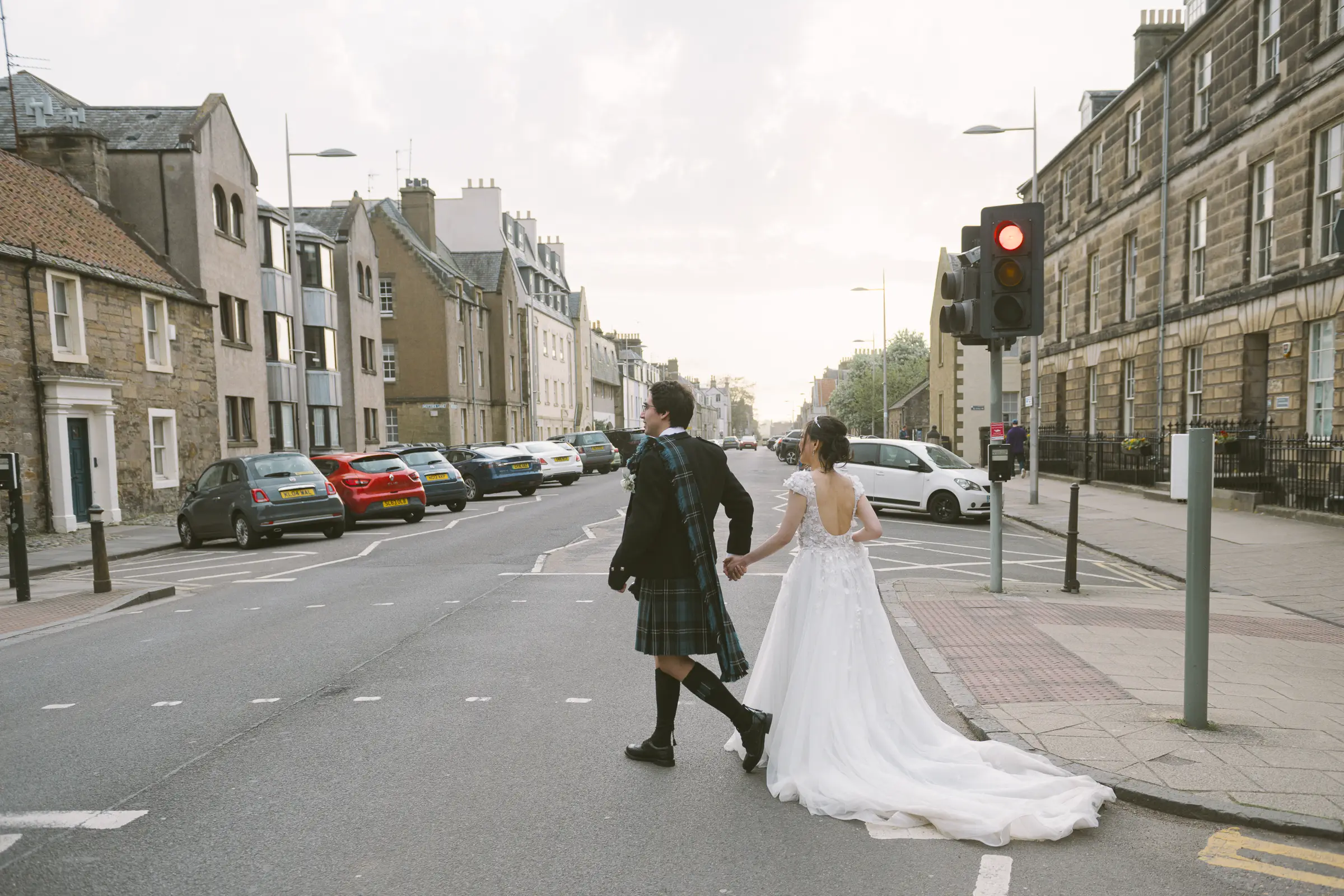
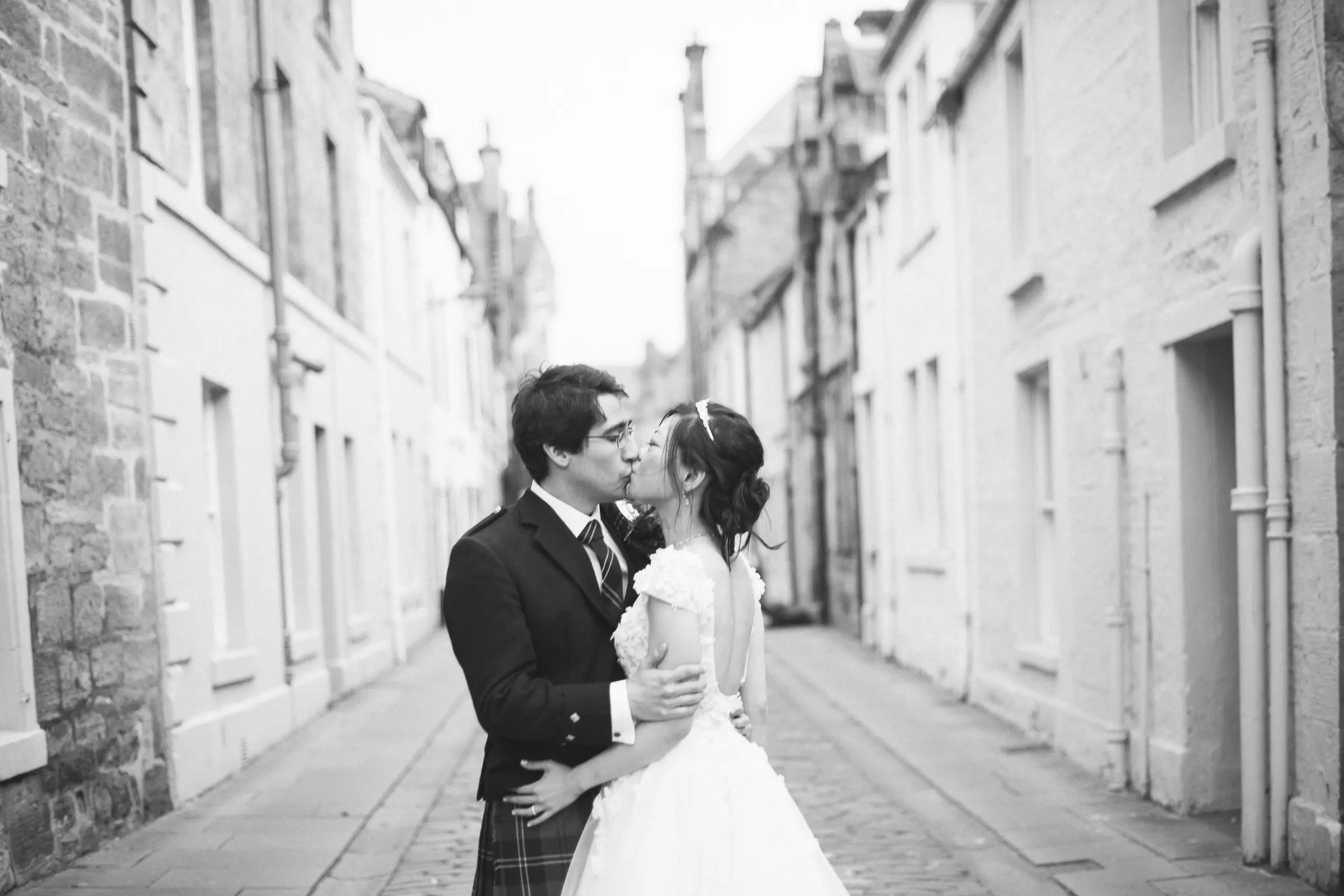
Because the venue is in town, the next part of the day can begin on foot. That is an advantage in St Andrews. The distance between useful locations is small enough that the wedding can gain visual variety without spending a large part of the schedule inside cars.
03
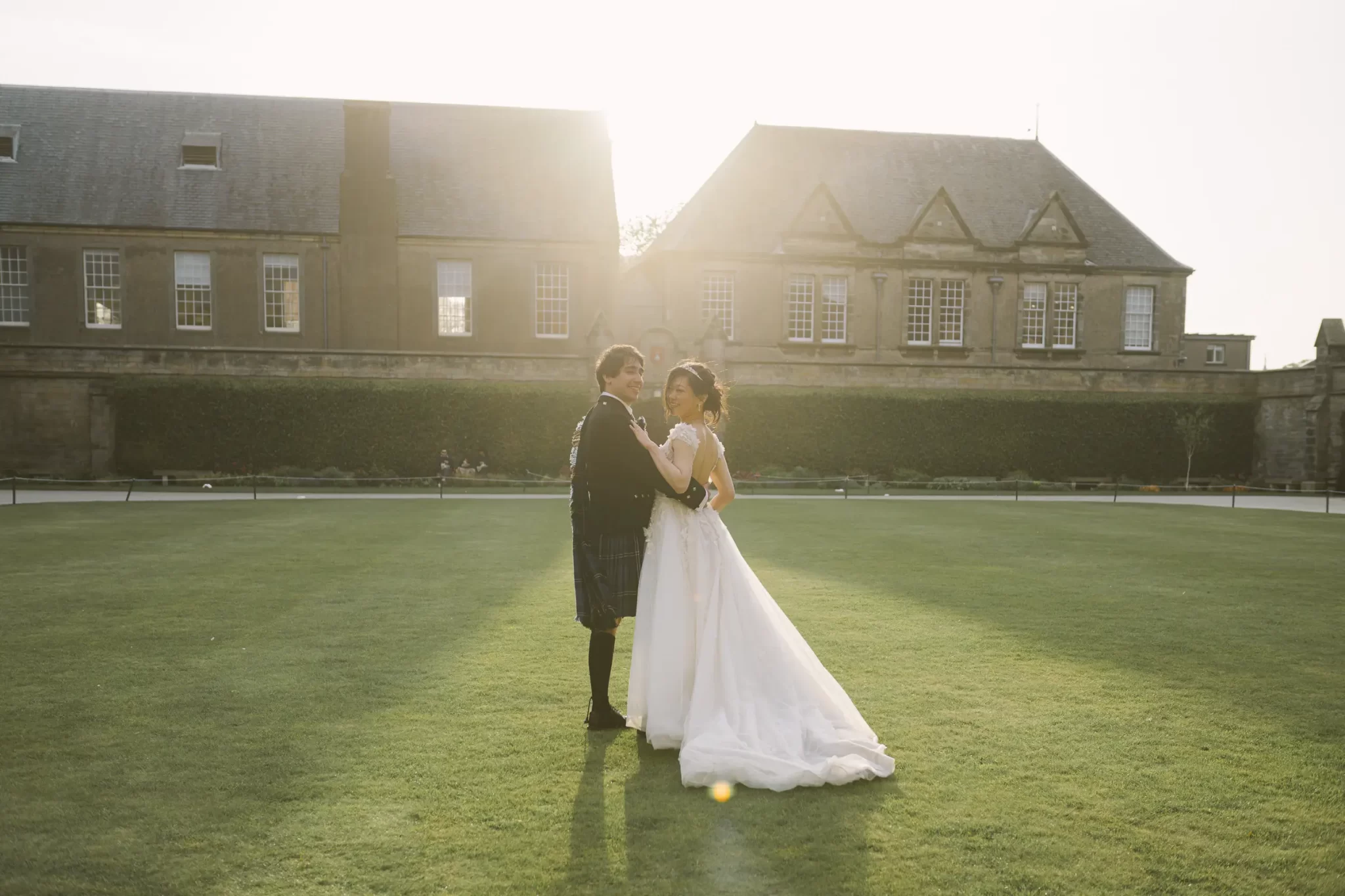
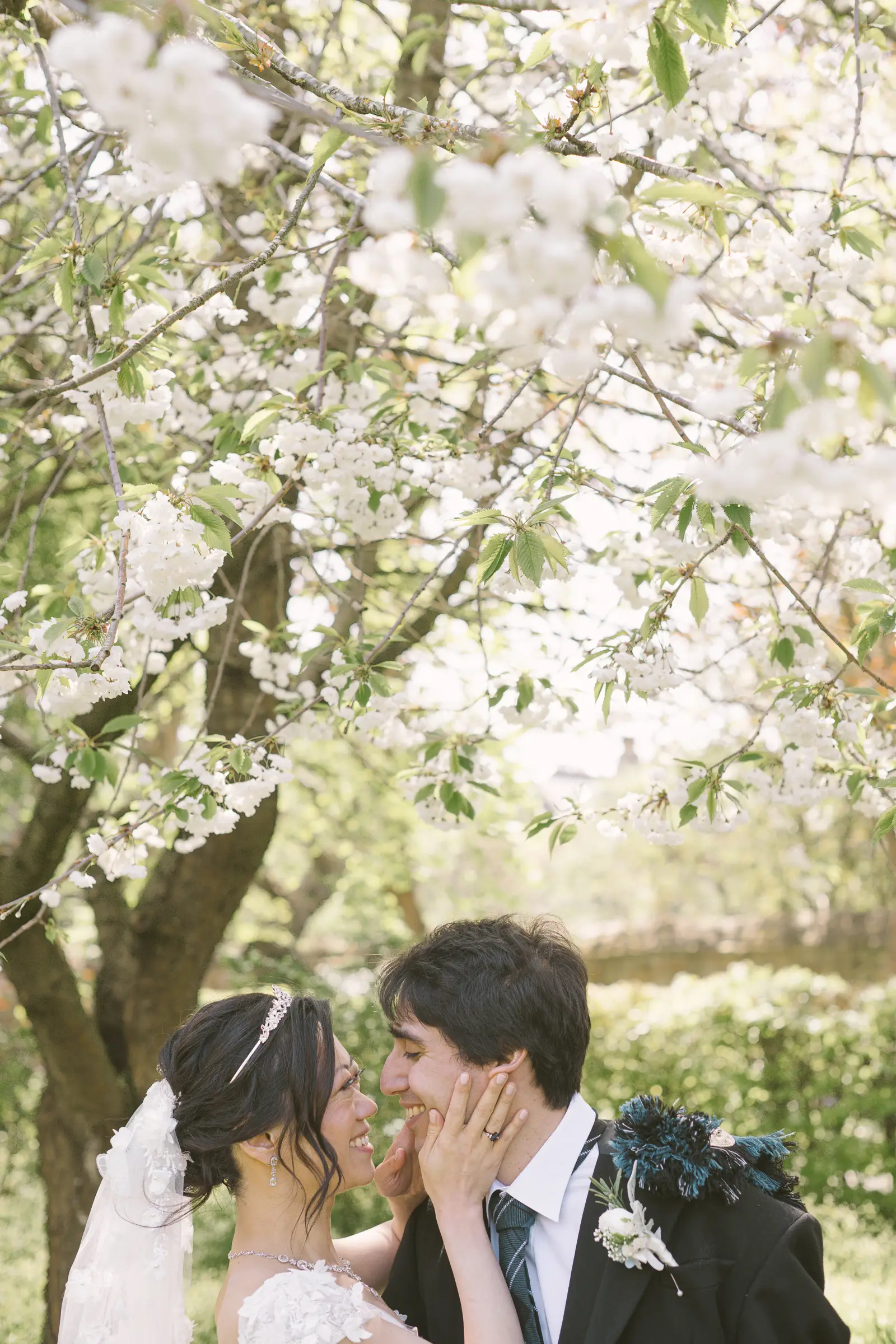
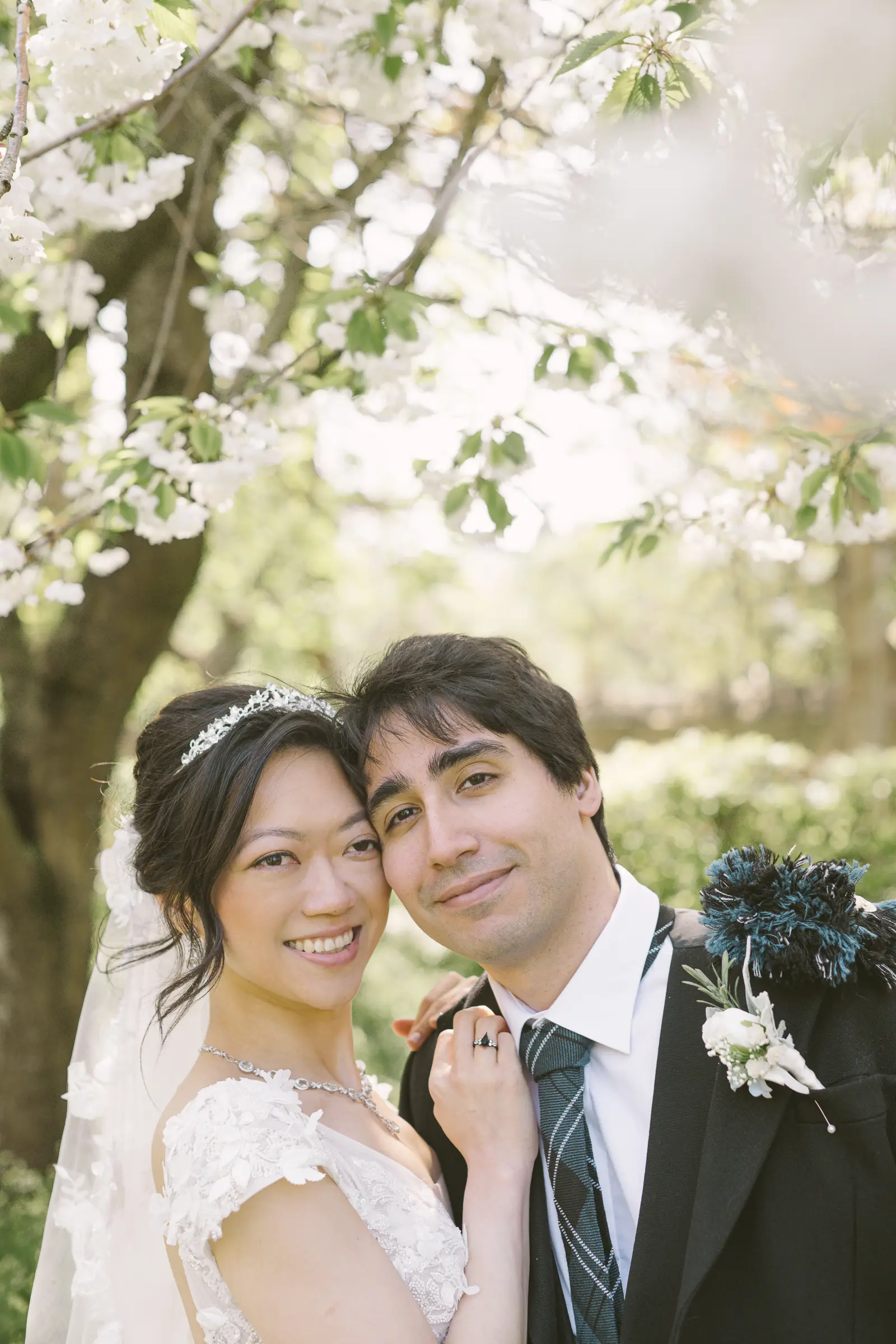
Photographing the University of St Andrews as part of their history
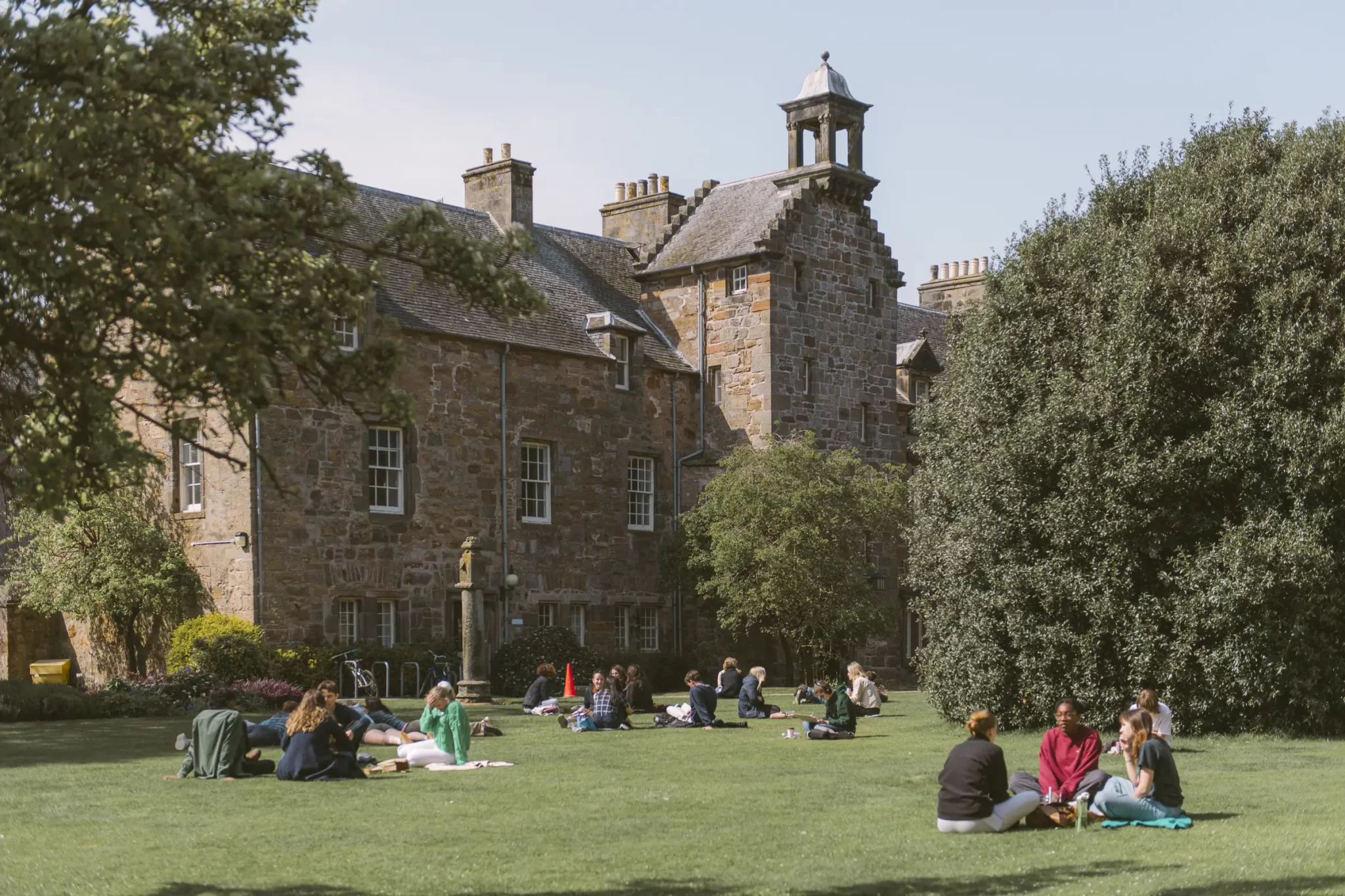
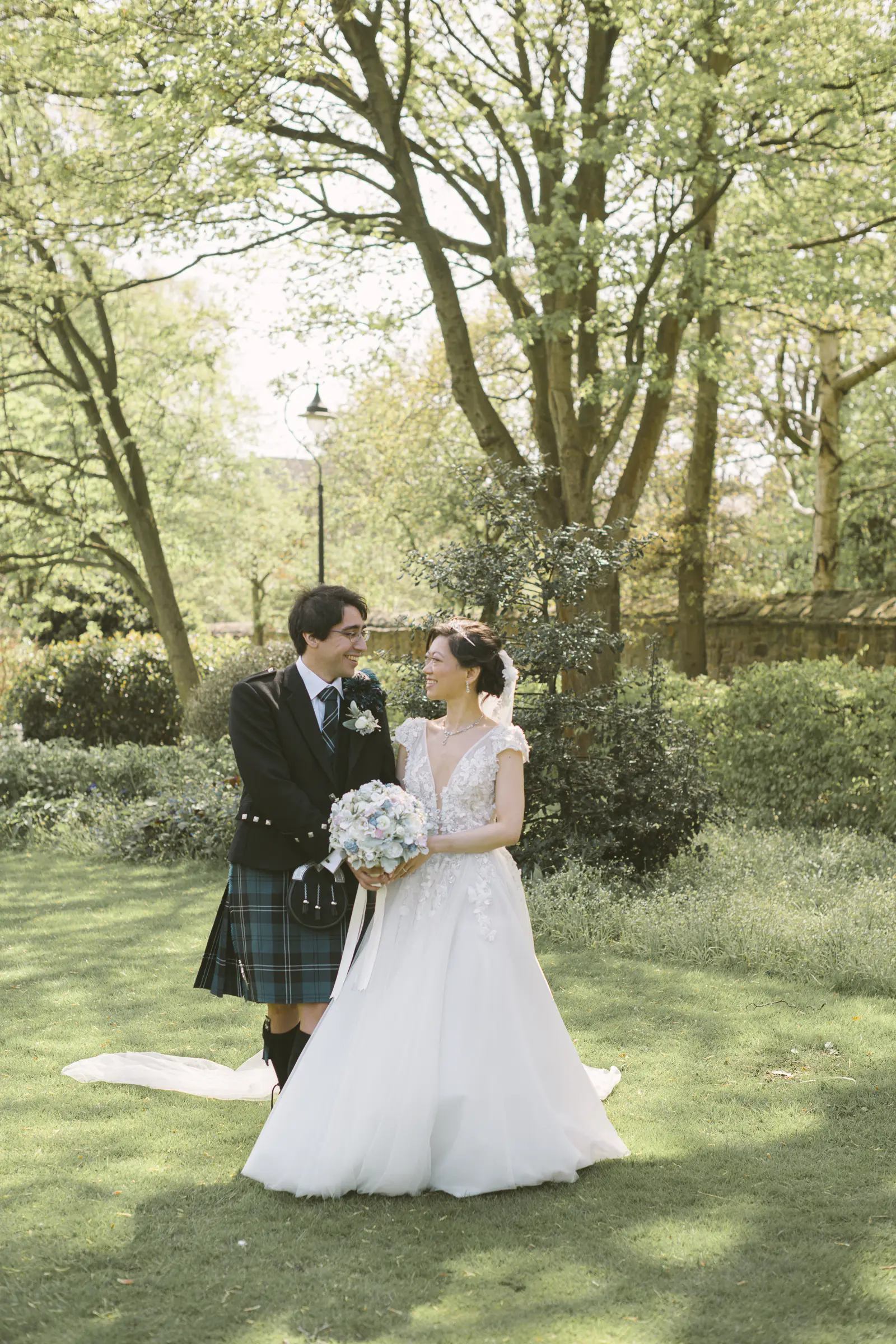
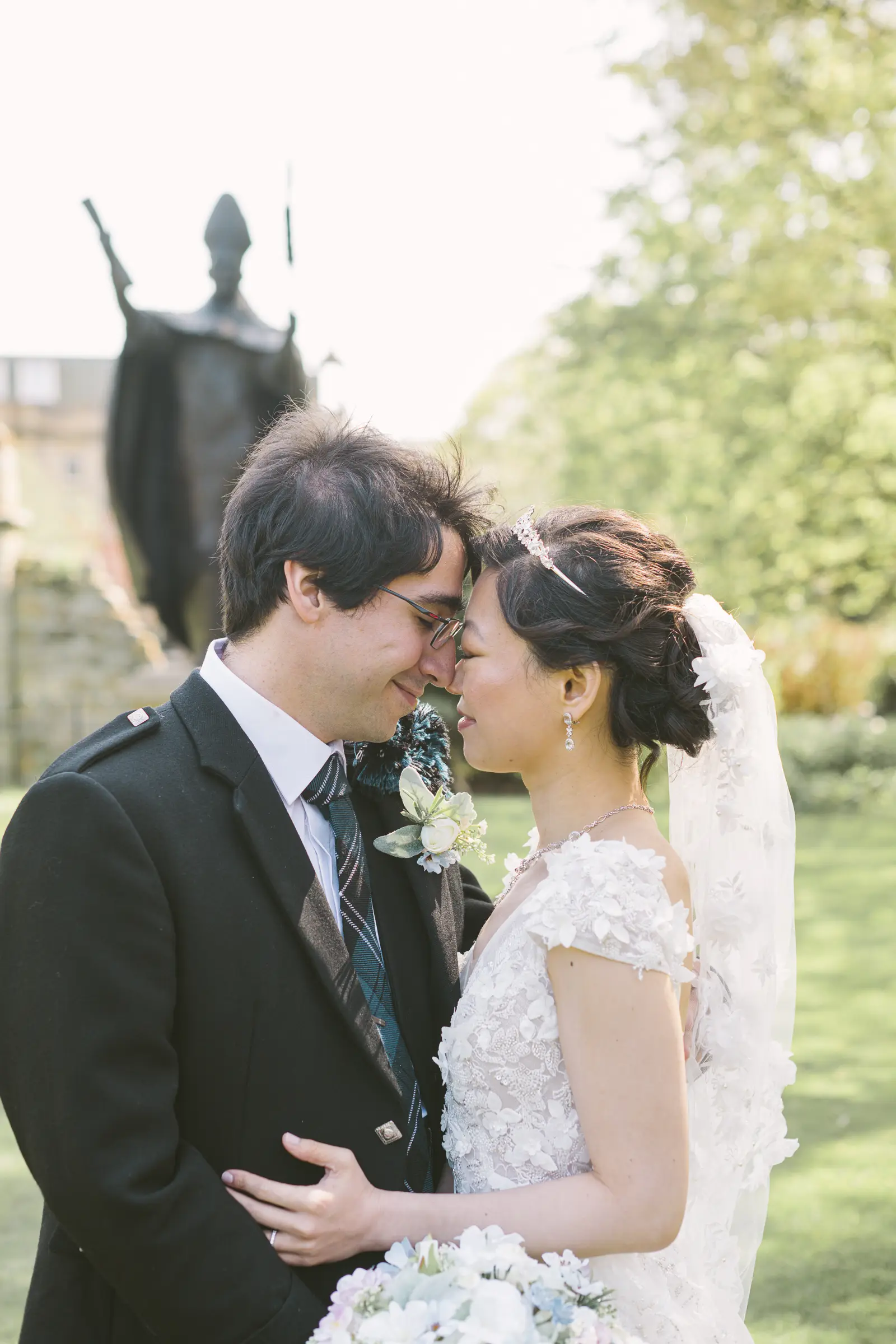
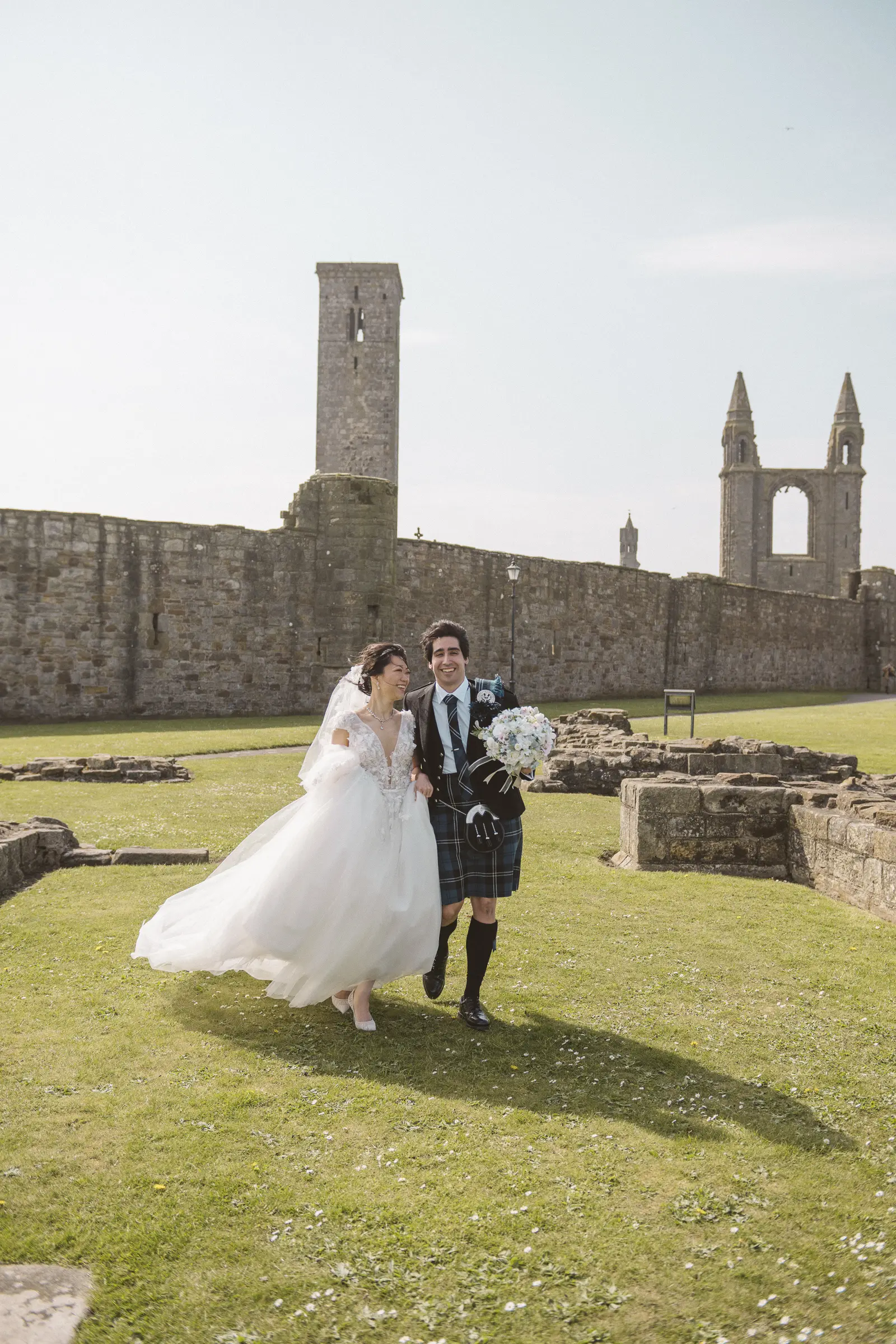
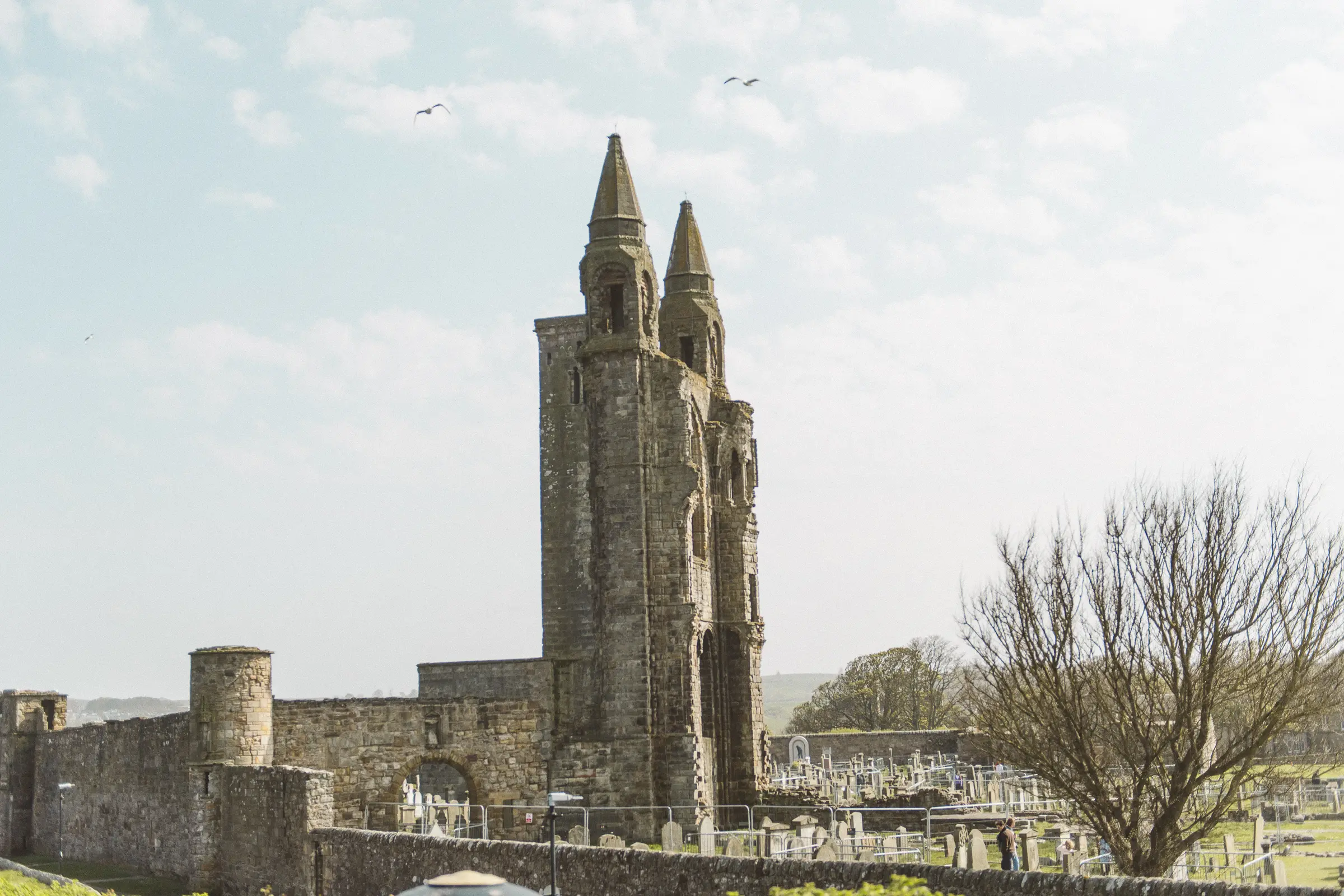
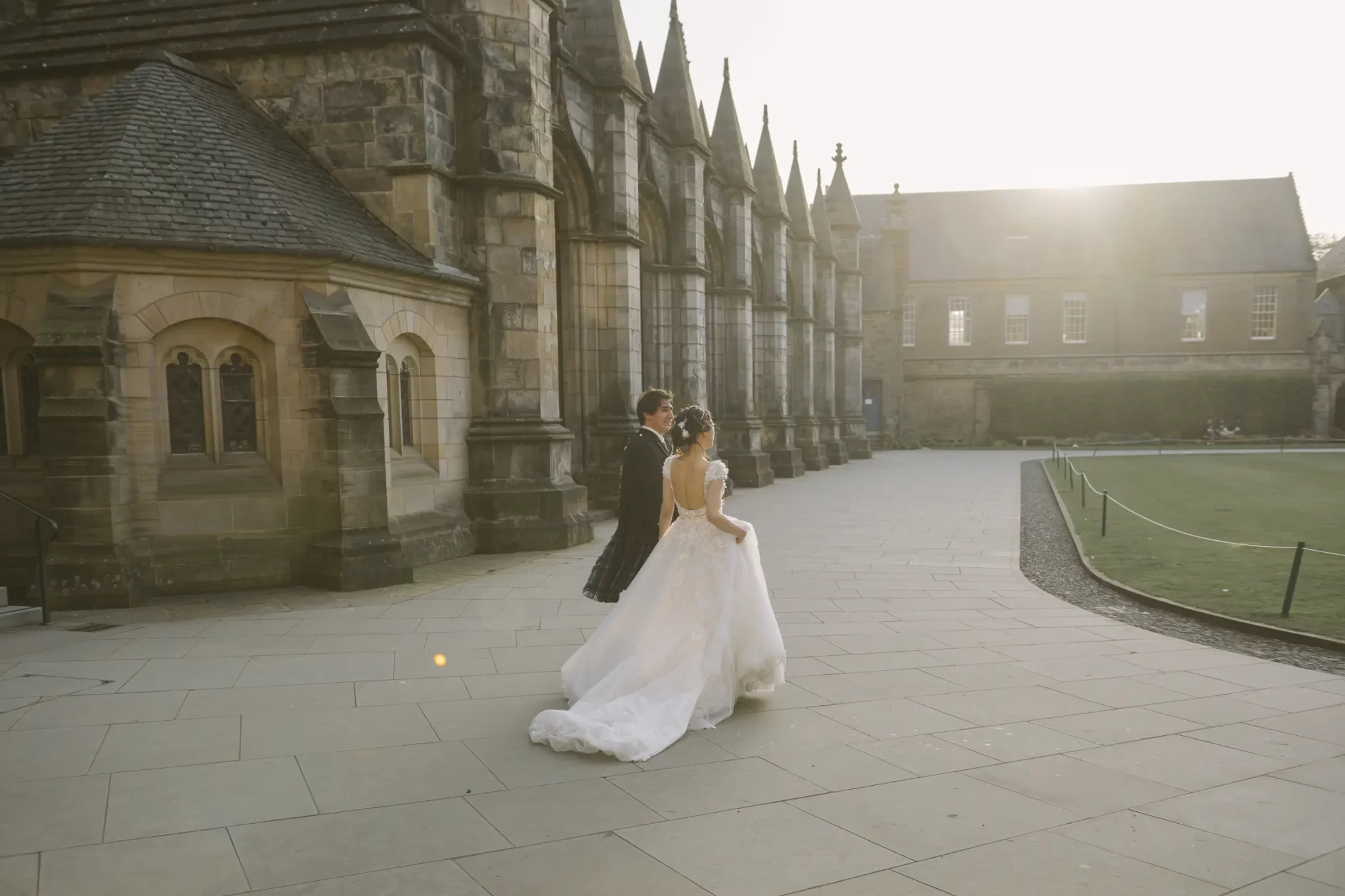
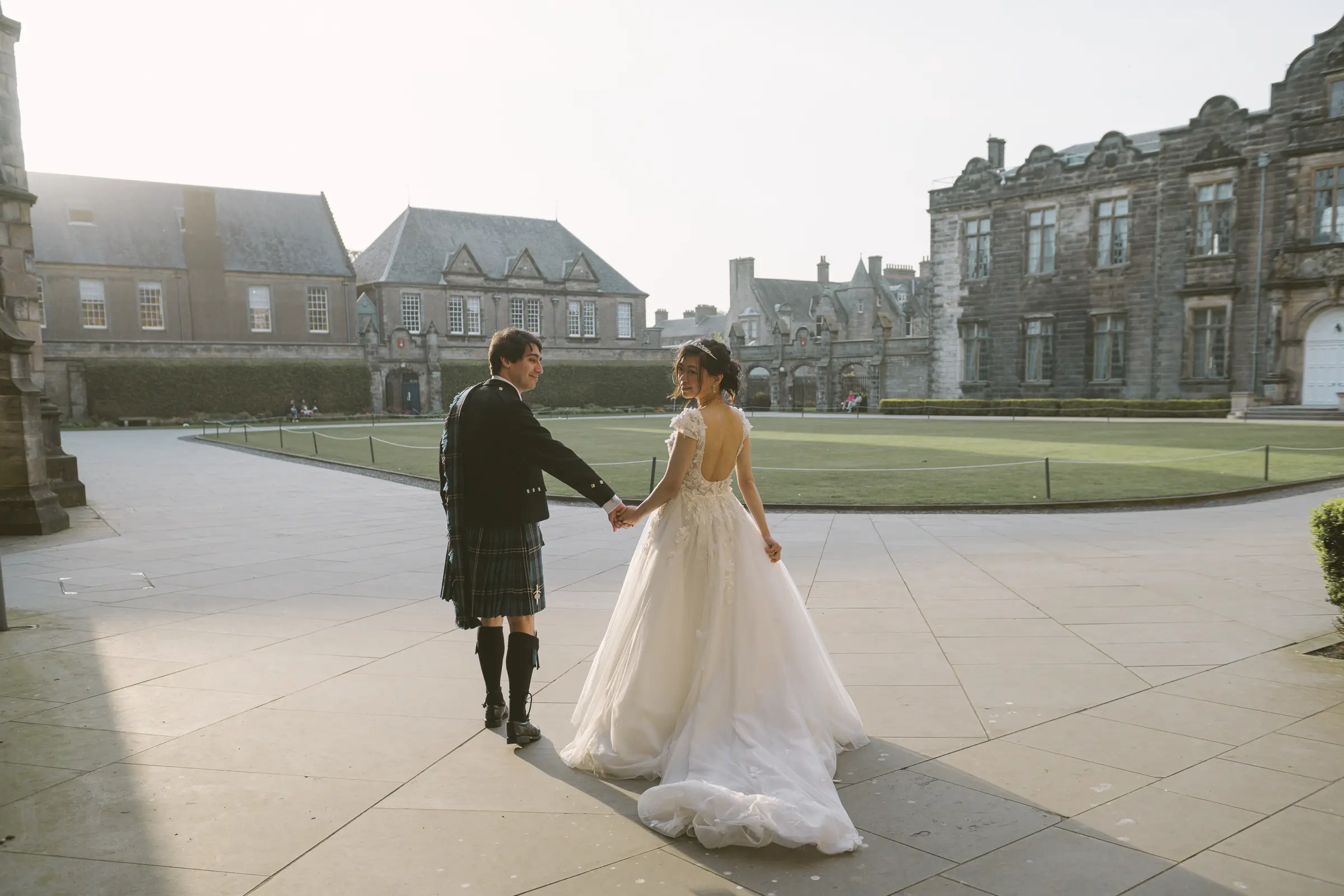
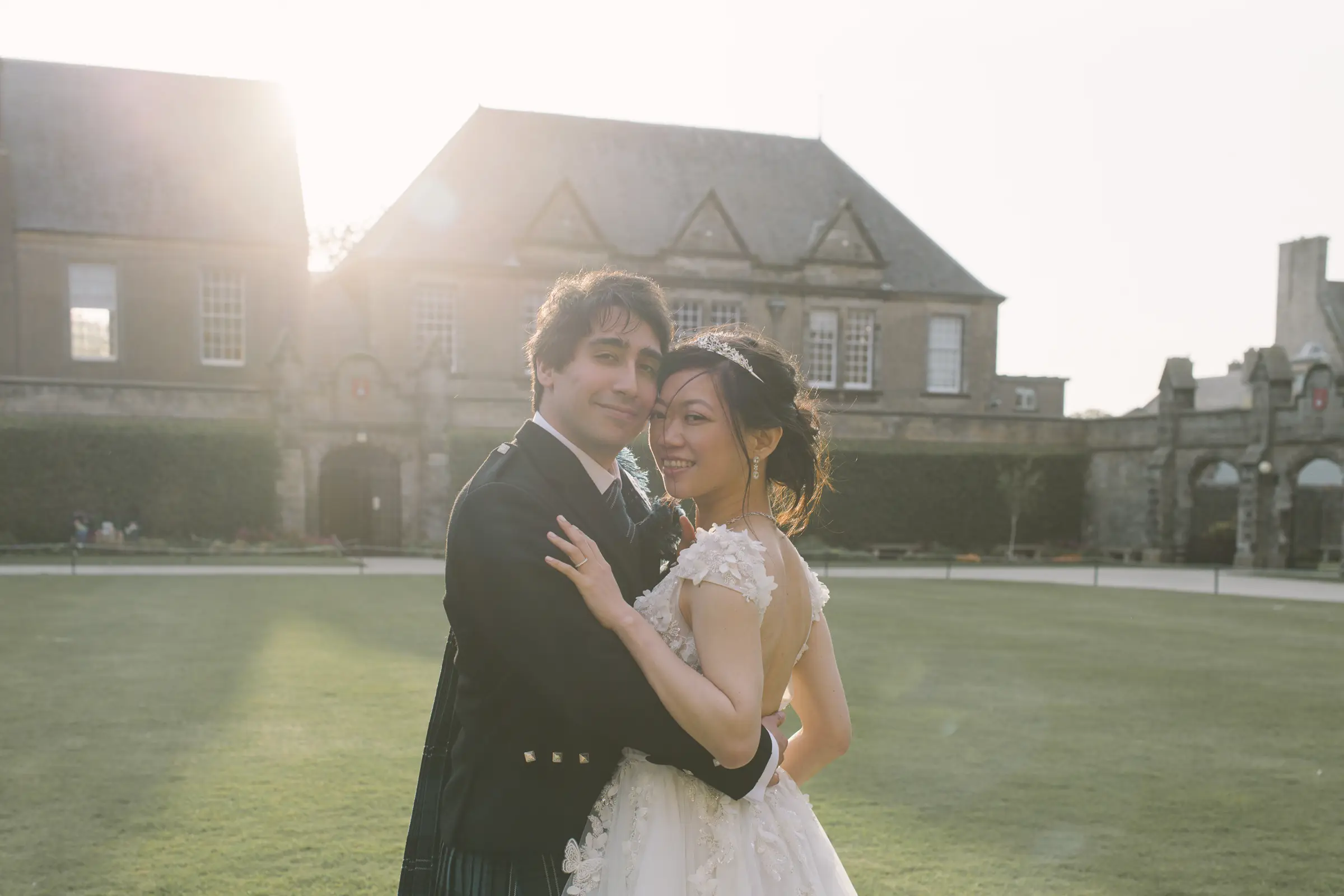
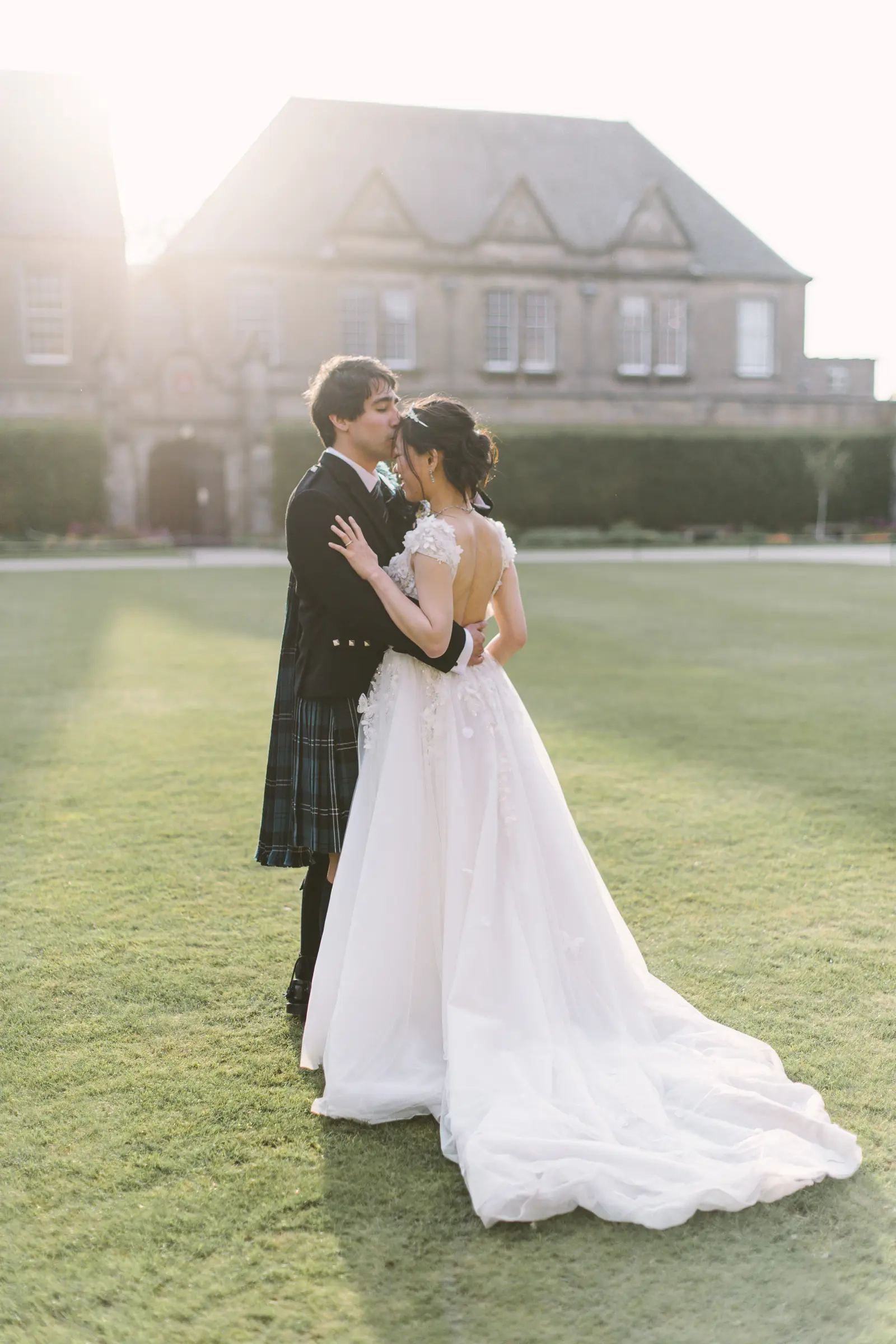
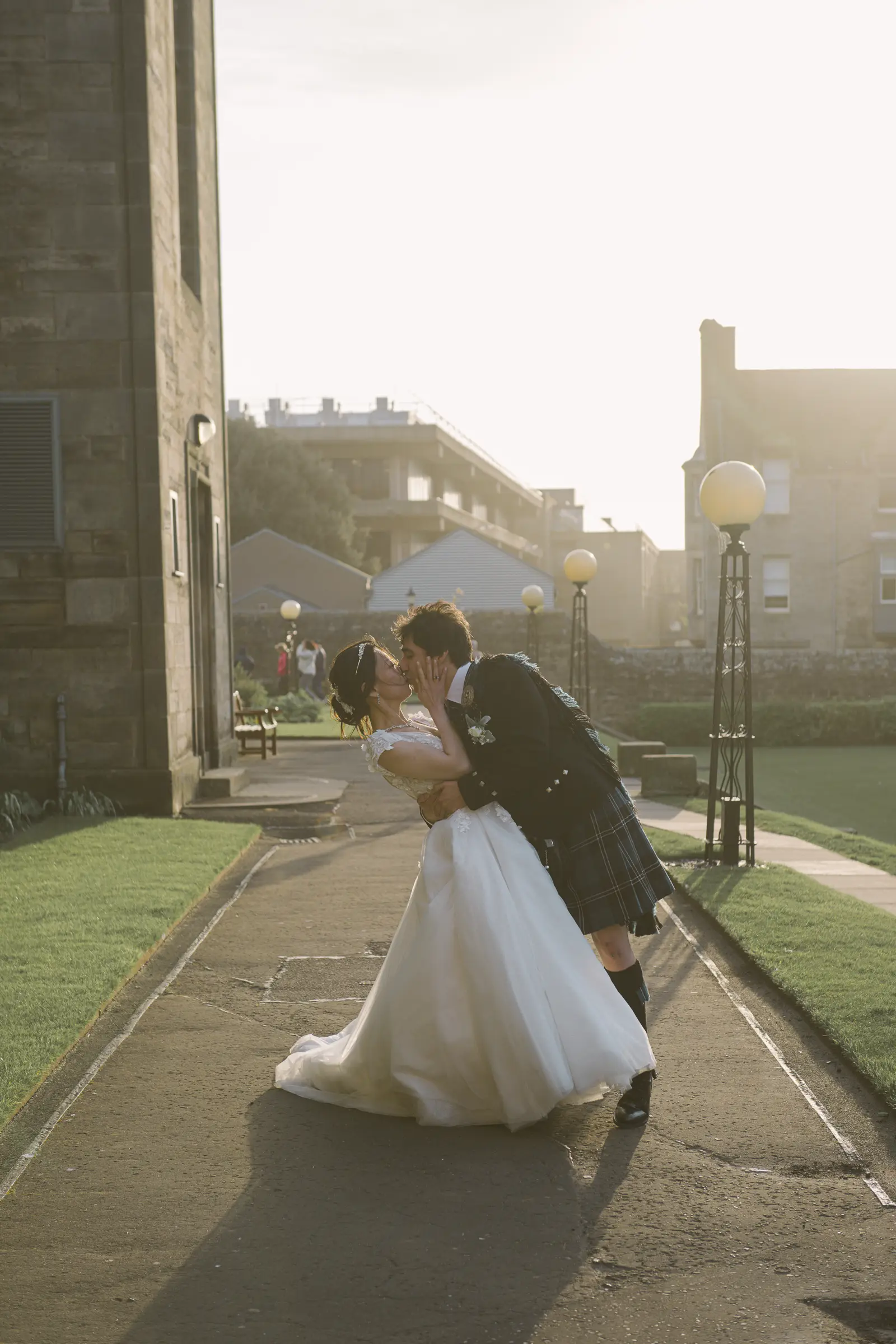
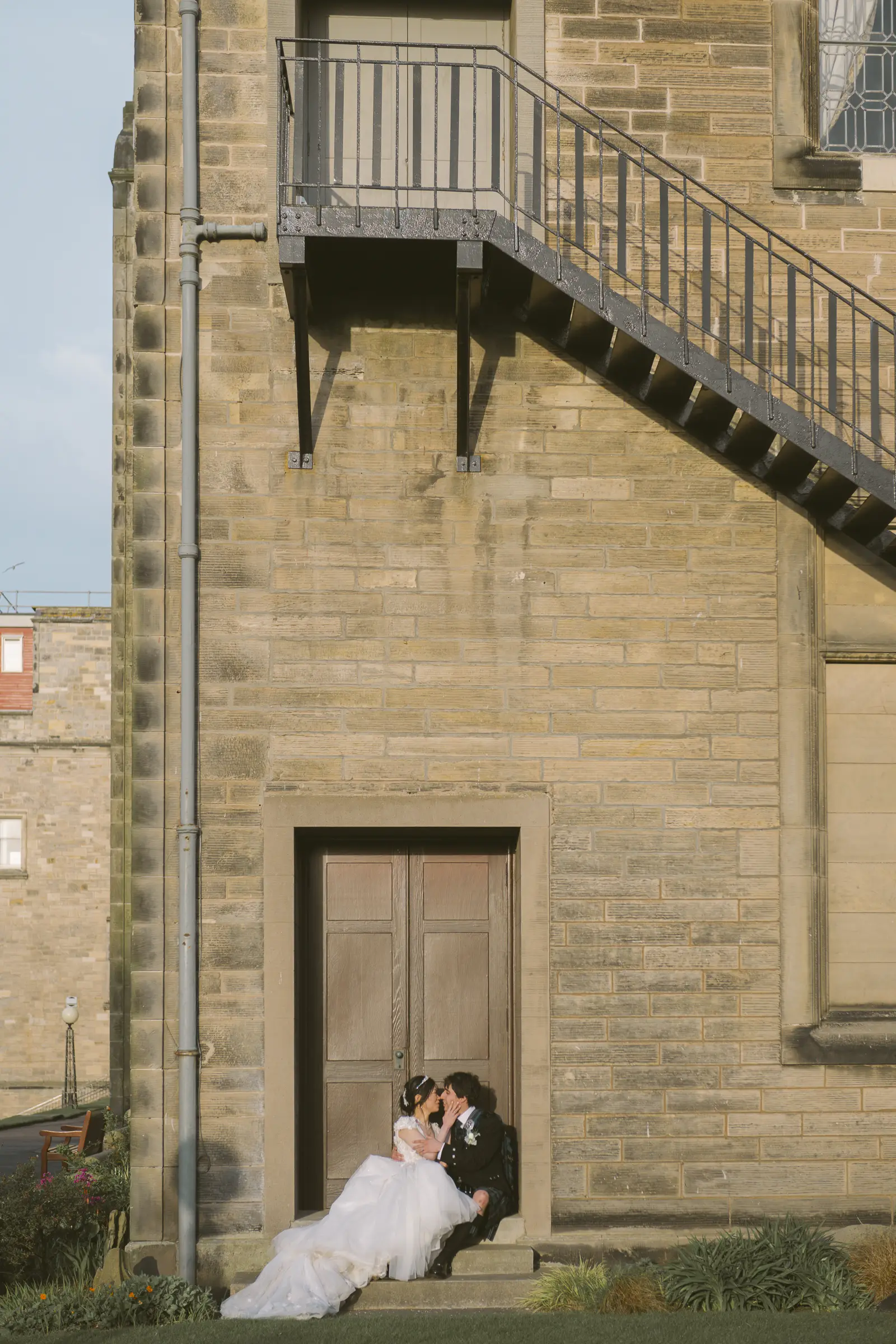
The university grounds were the most personal portrait location because Doris and Andre had actually met there. That changes the way I photograph a place. I am not trying to create a catalogue of buildings; I am looking for enough context to make St Andrews recognisable while keeping the couple and their connection to the location at the centre of the frame.
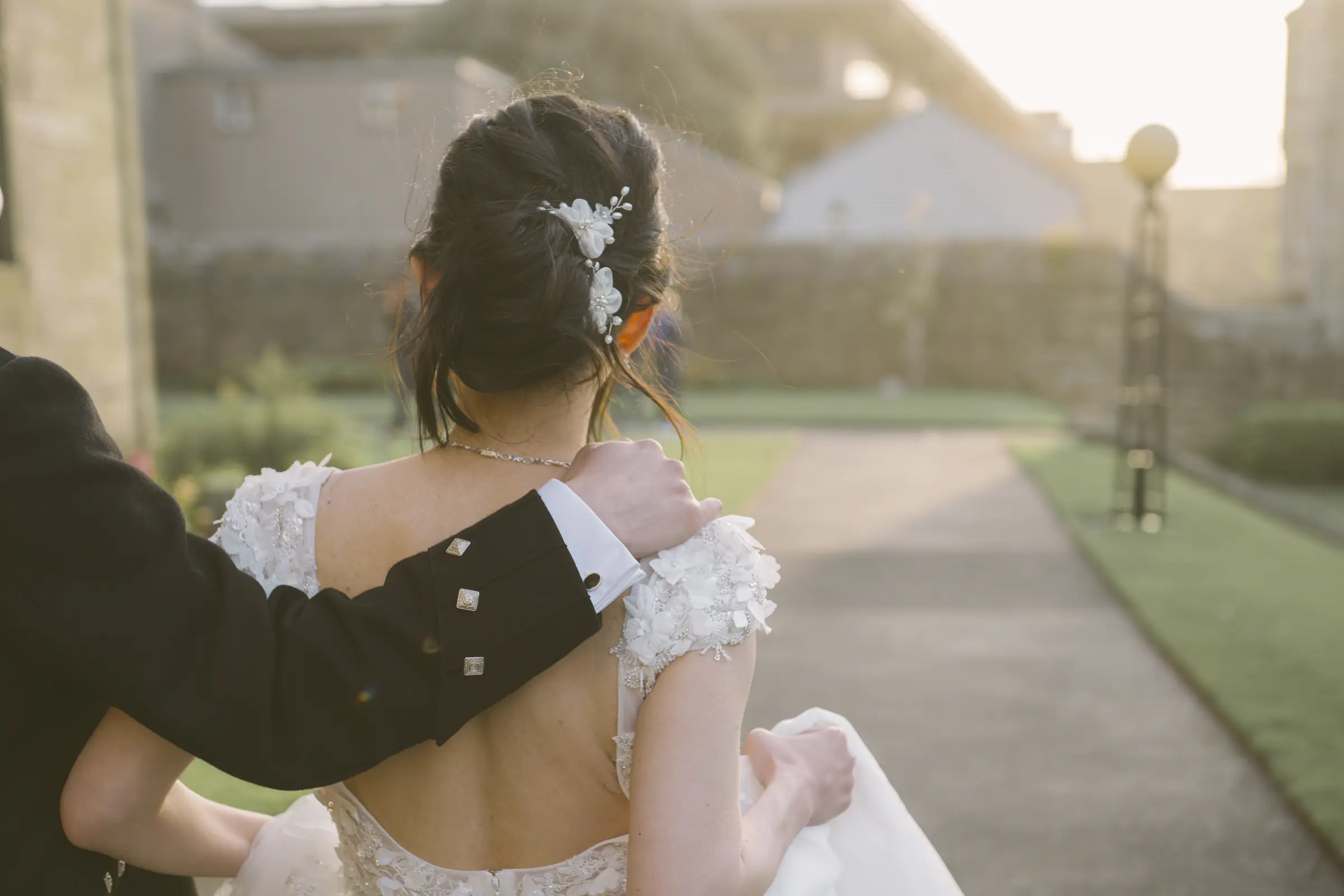
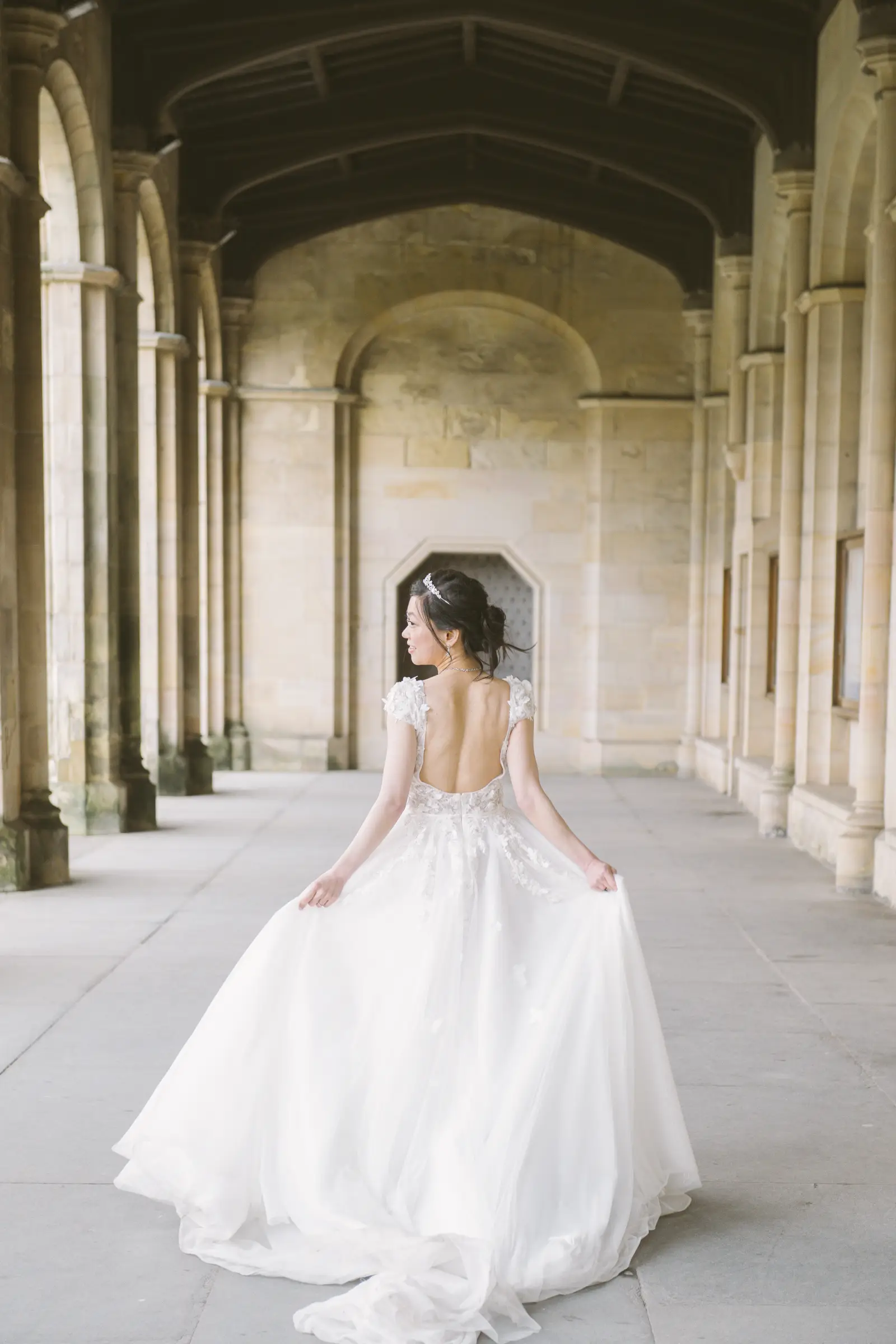
Stone architecture works well for portraits because it gives clean lines and a strong sense of scale, but it can also become repetitive if every photograph is made against another façade. I mix closer photographs with wider frames and movement, and I use the spaces between buildings as much as the buildings themselves.
When a university or historic site is part of a wedding route, access and crowds can change from one date to another. I would always confirm what is possible for the actual wedding rather than assume that a photograph made years ago guarantees the same access now.
04
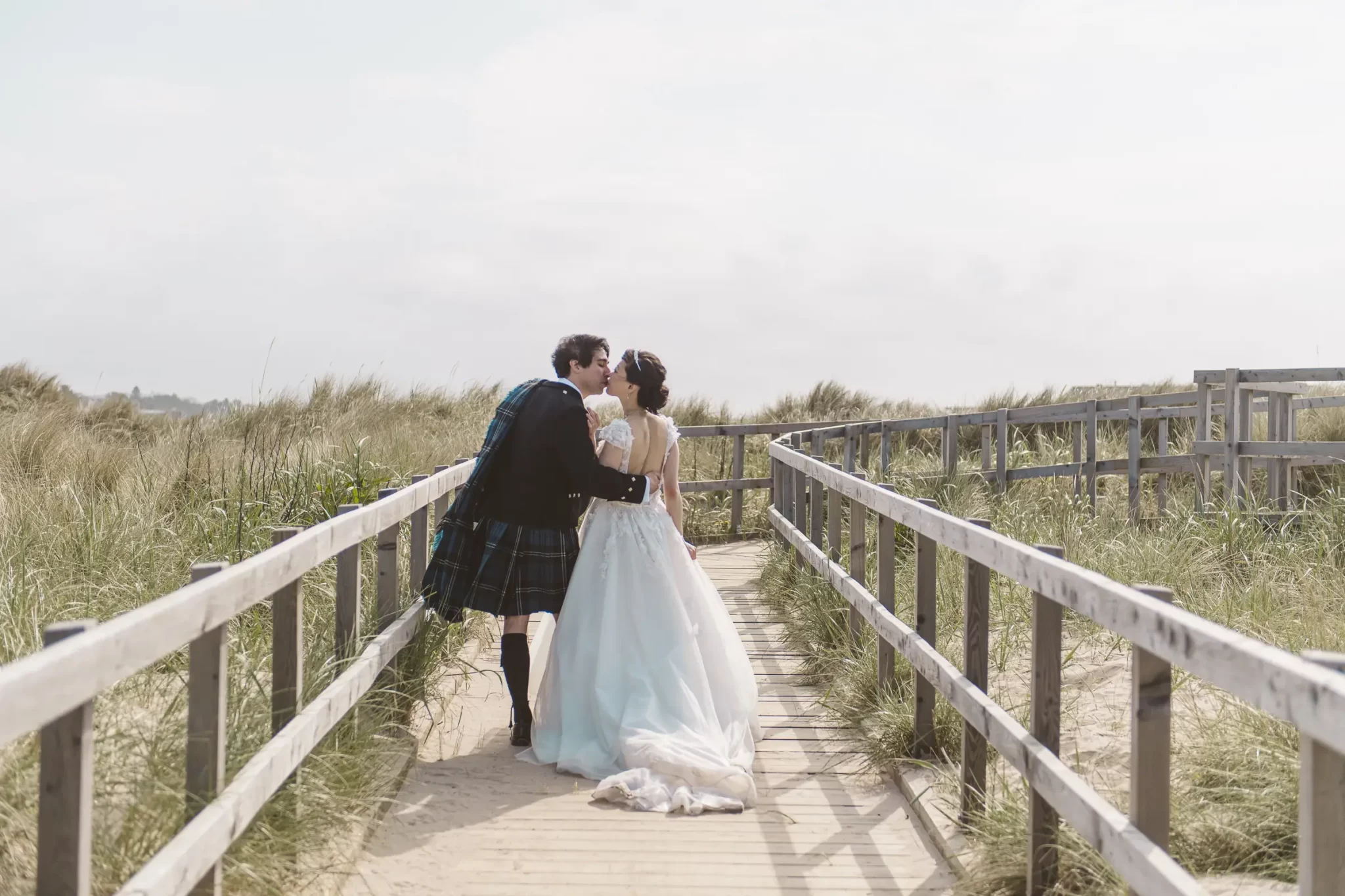
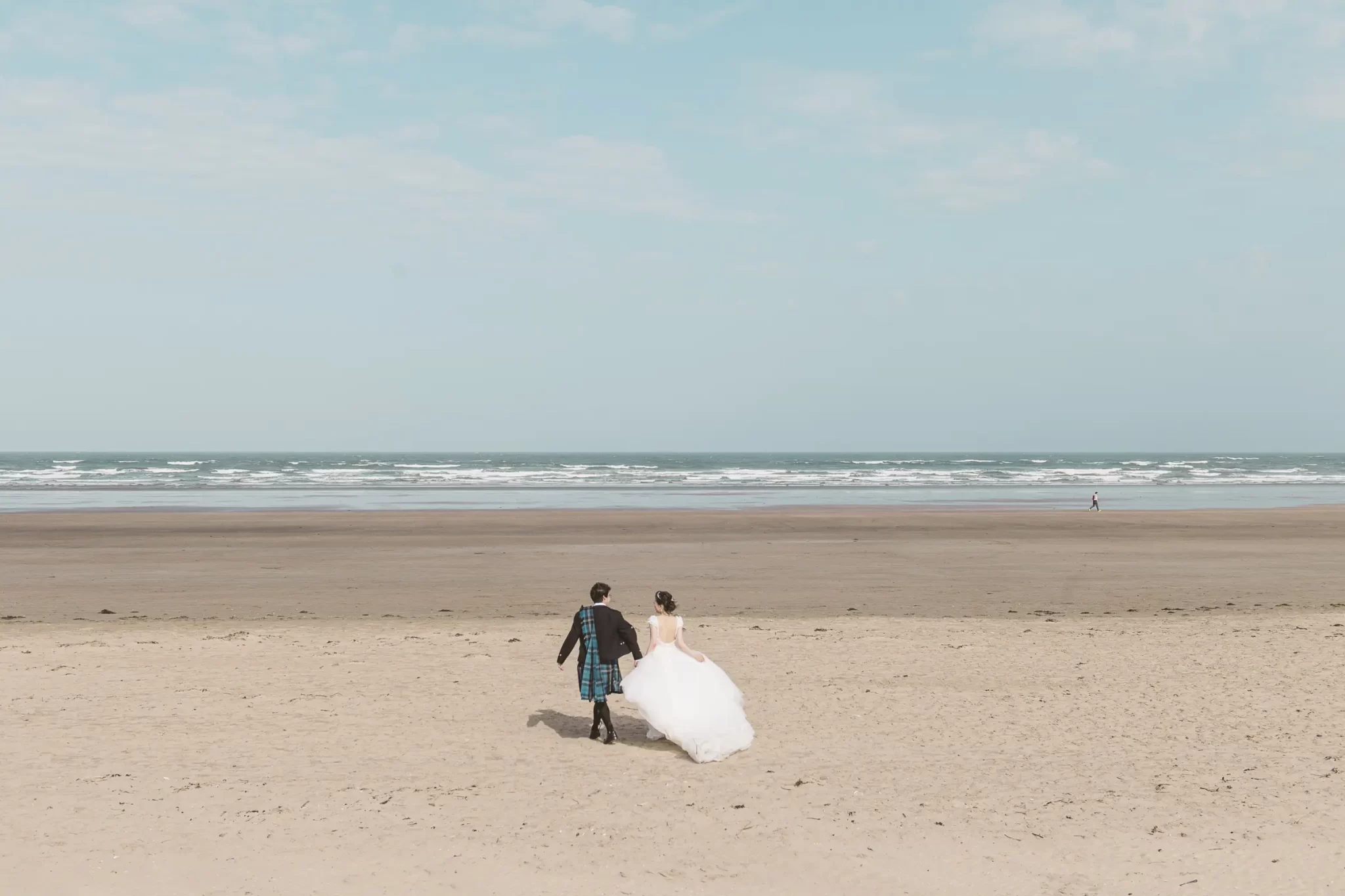
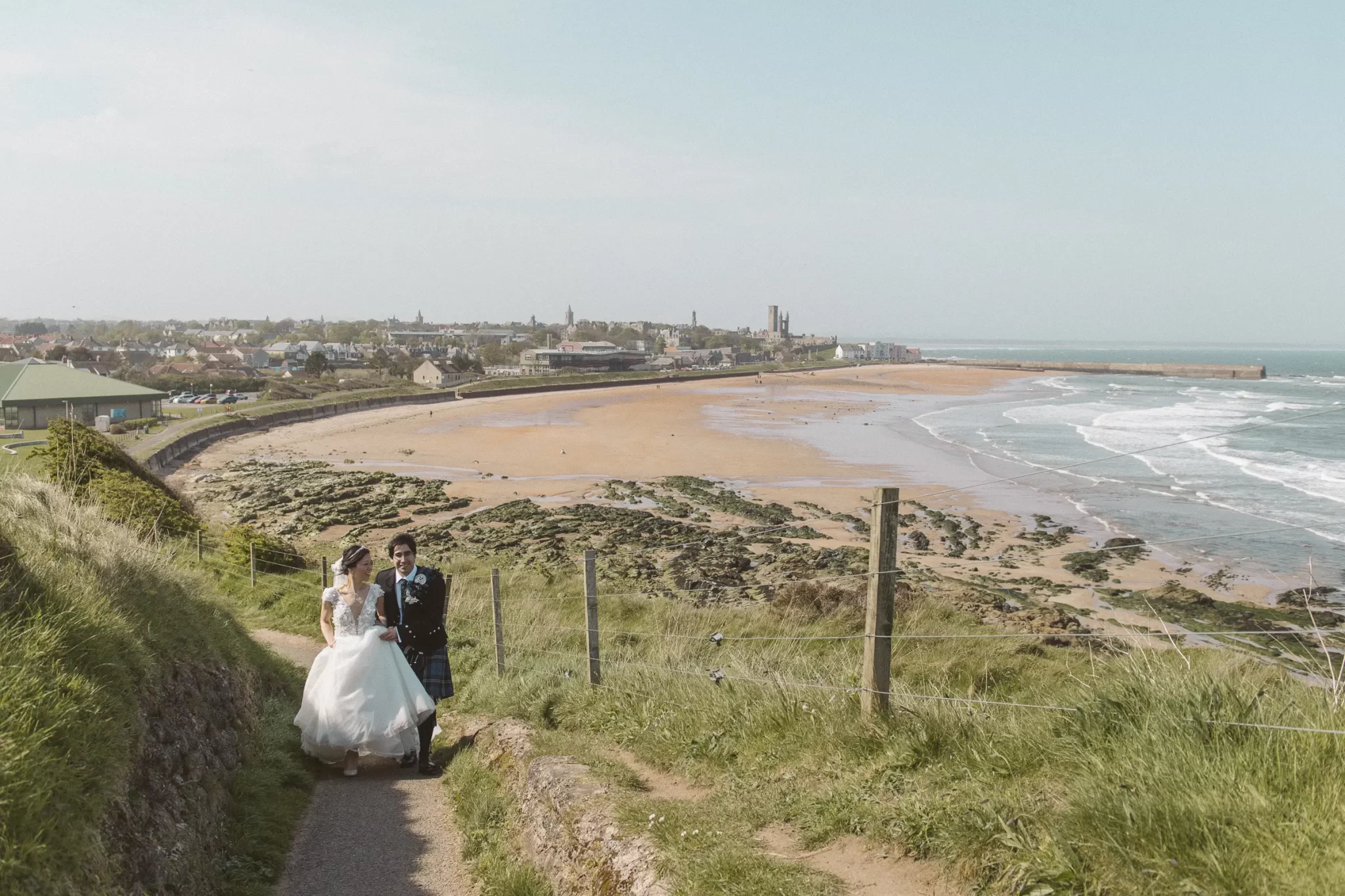
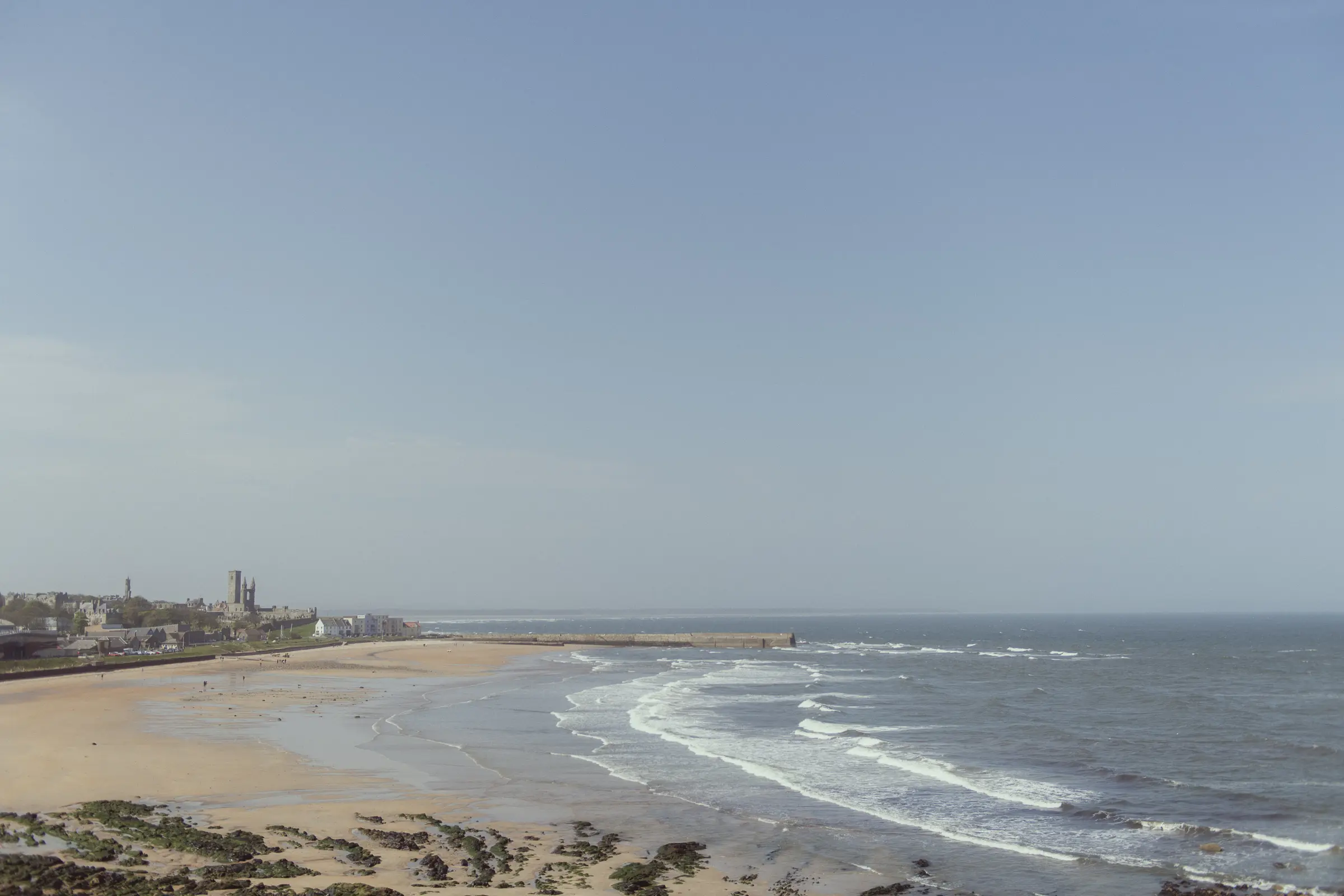
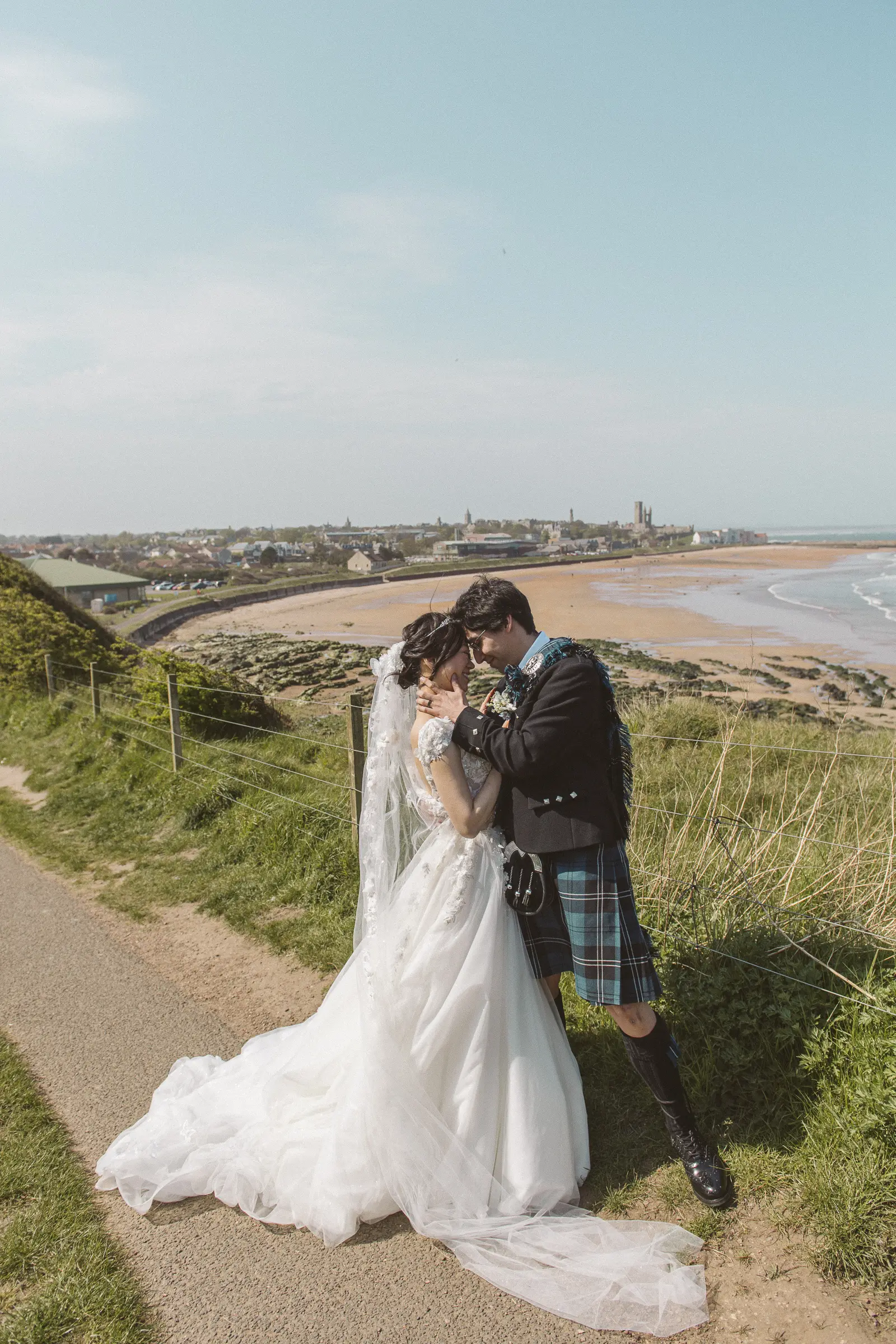
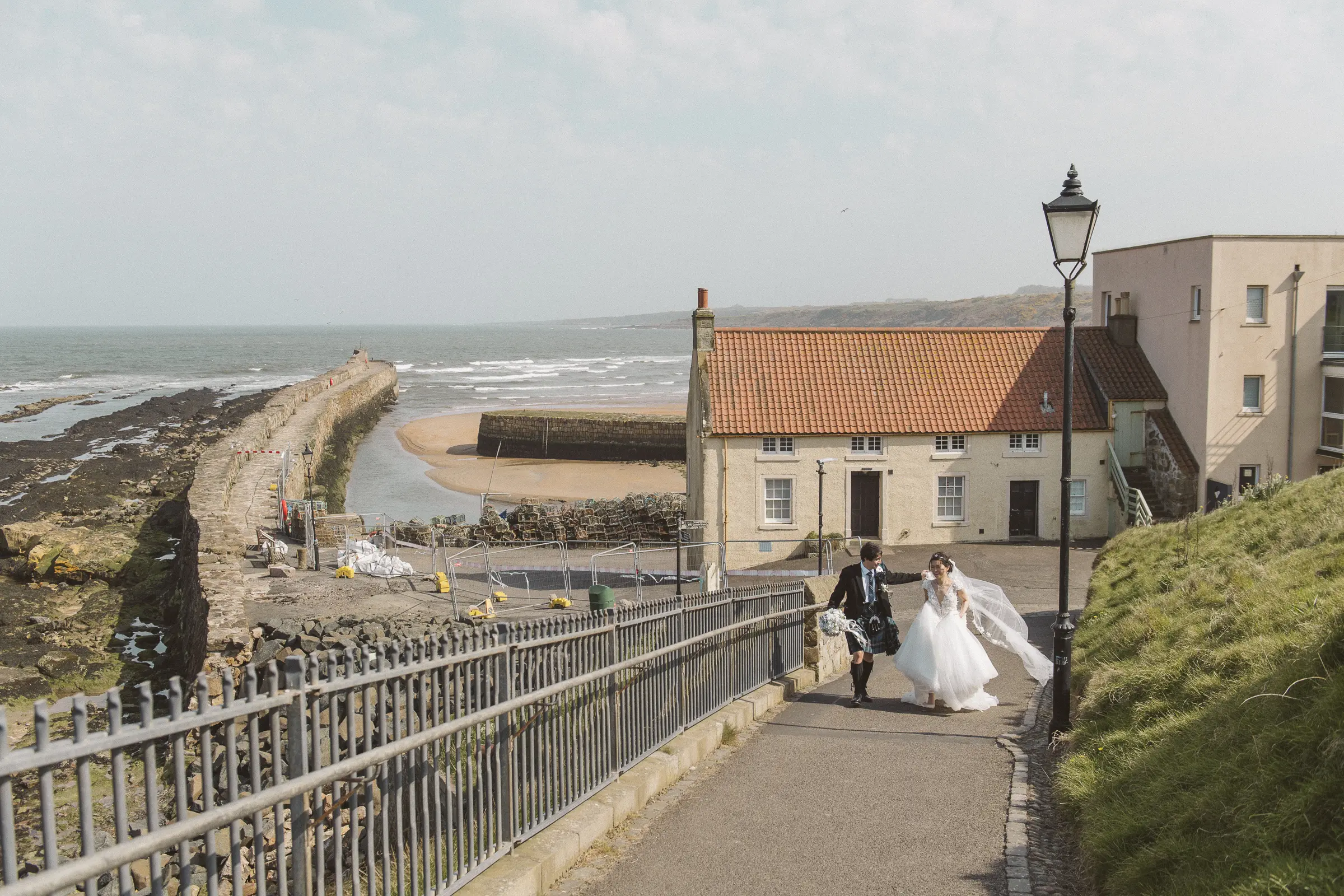
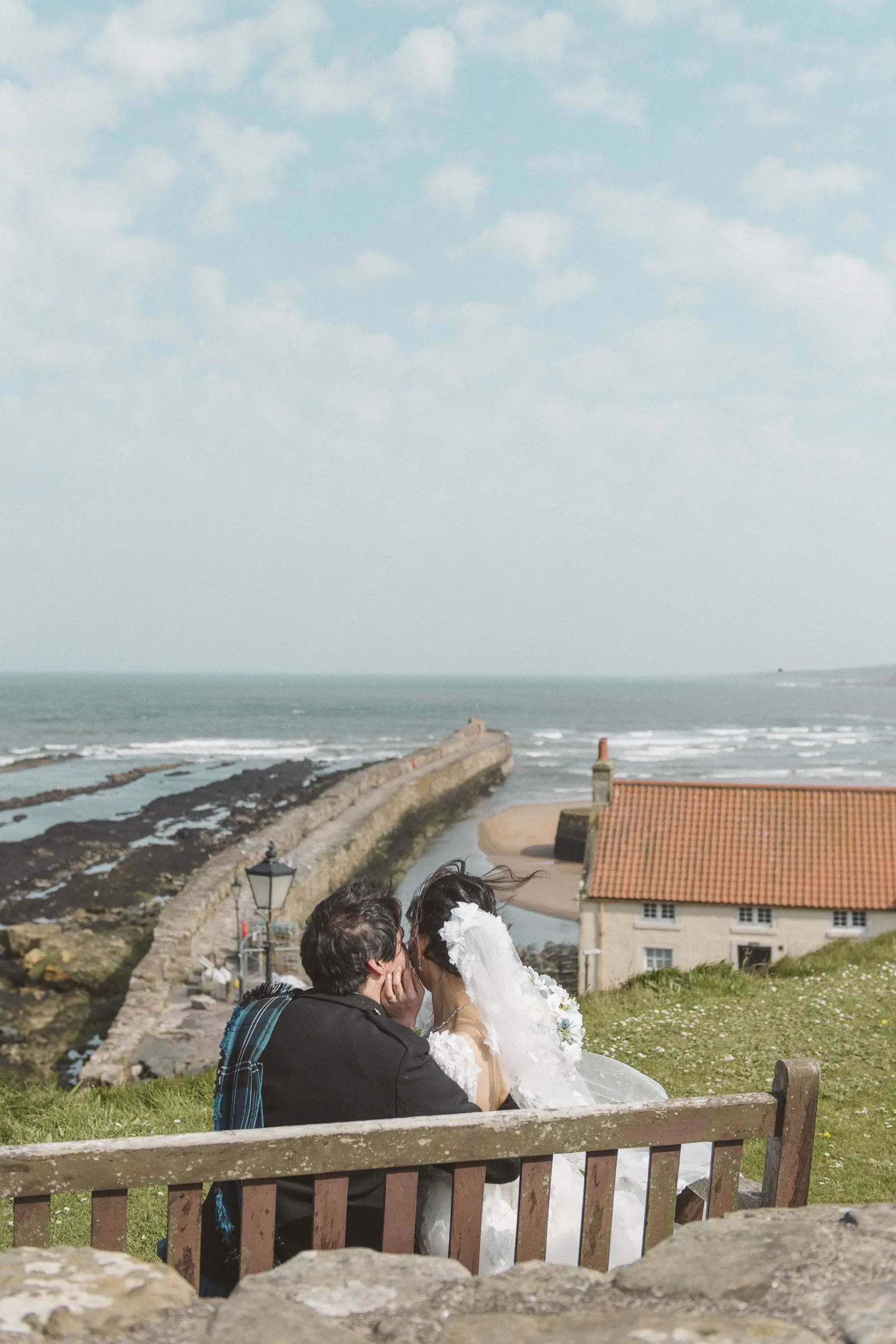
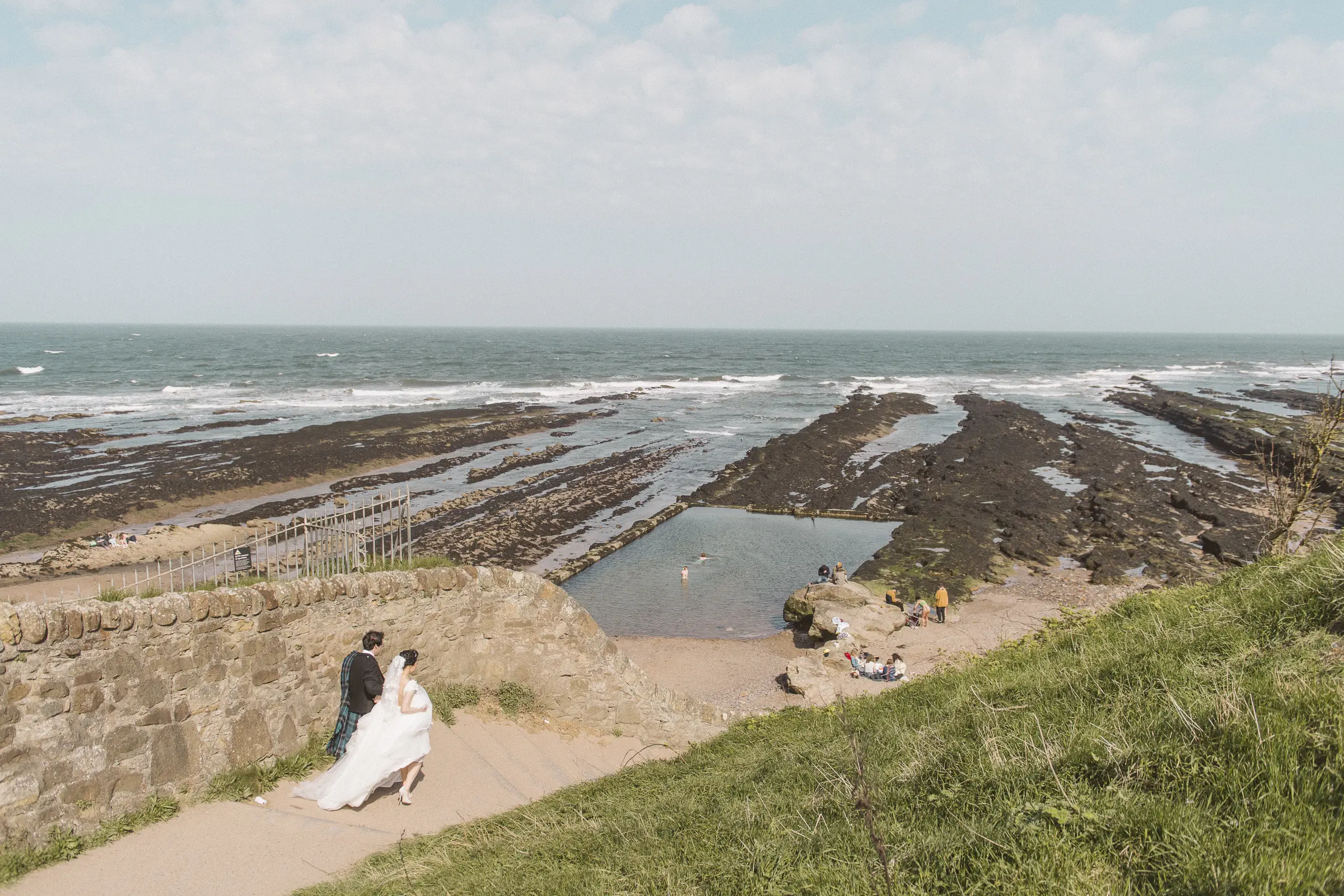
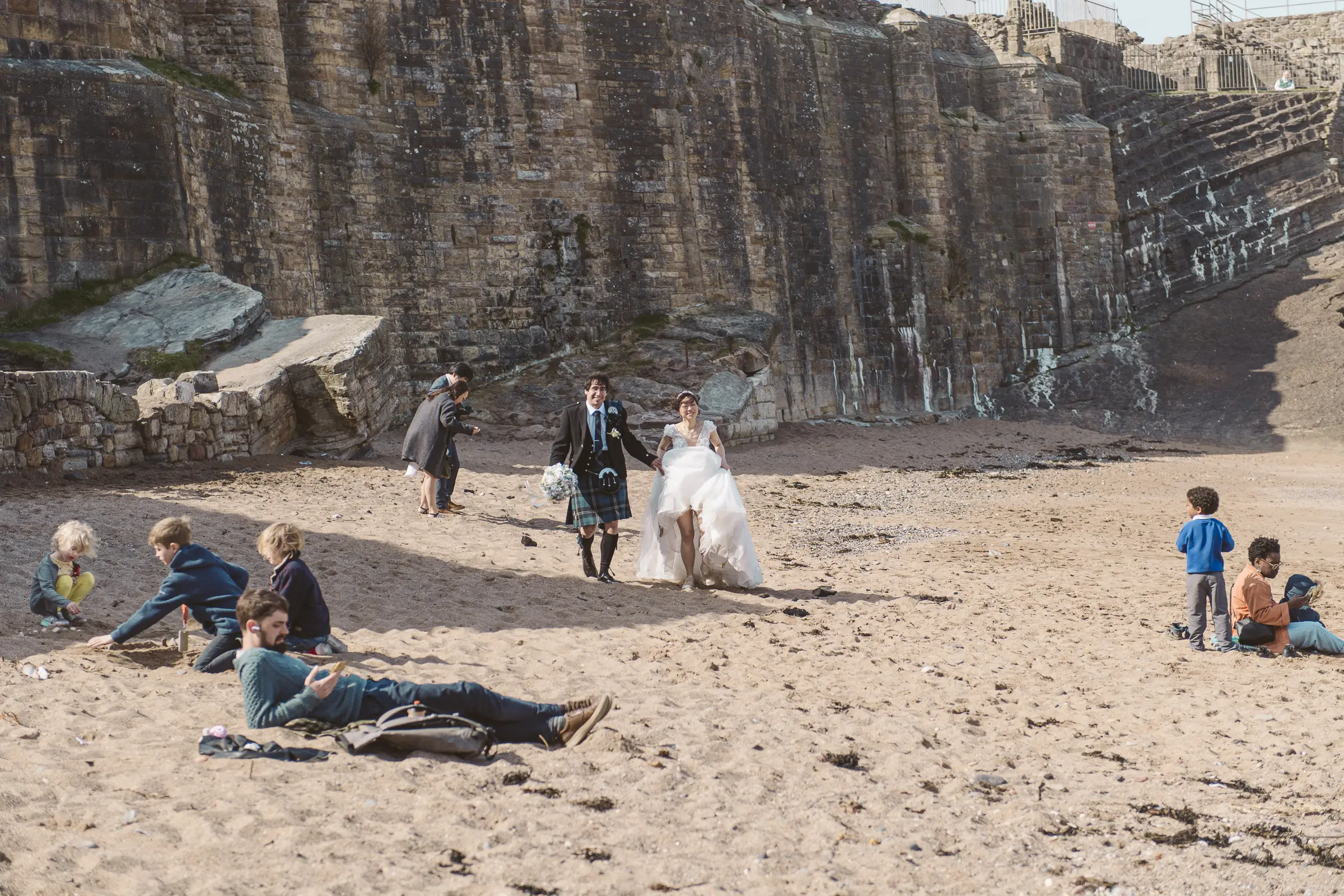
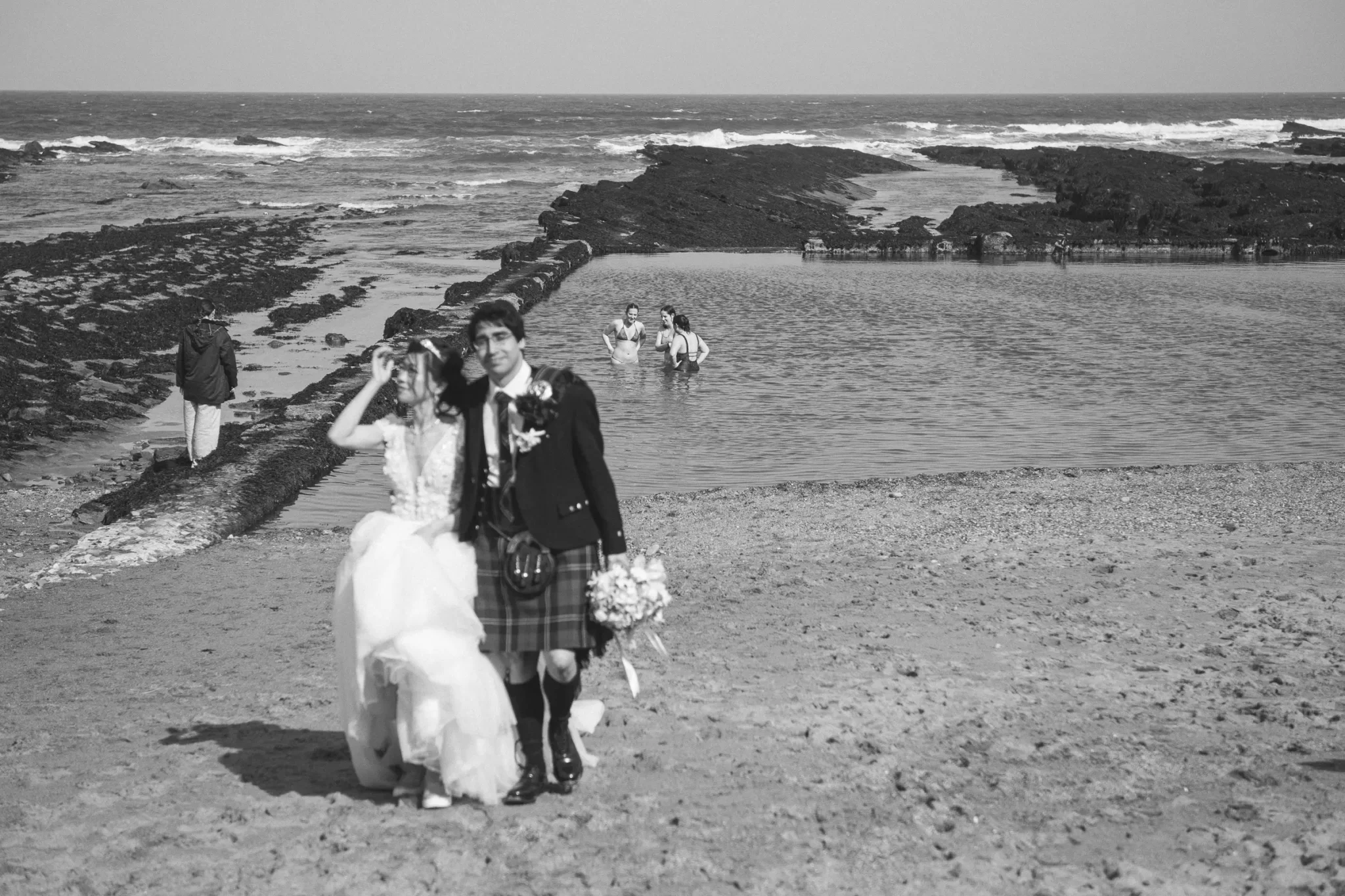
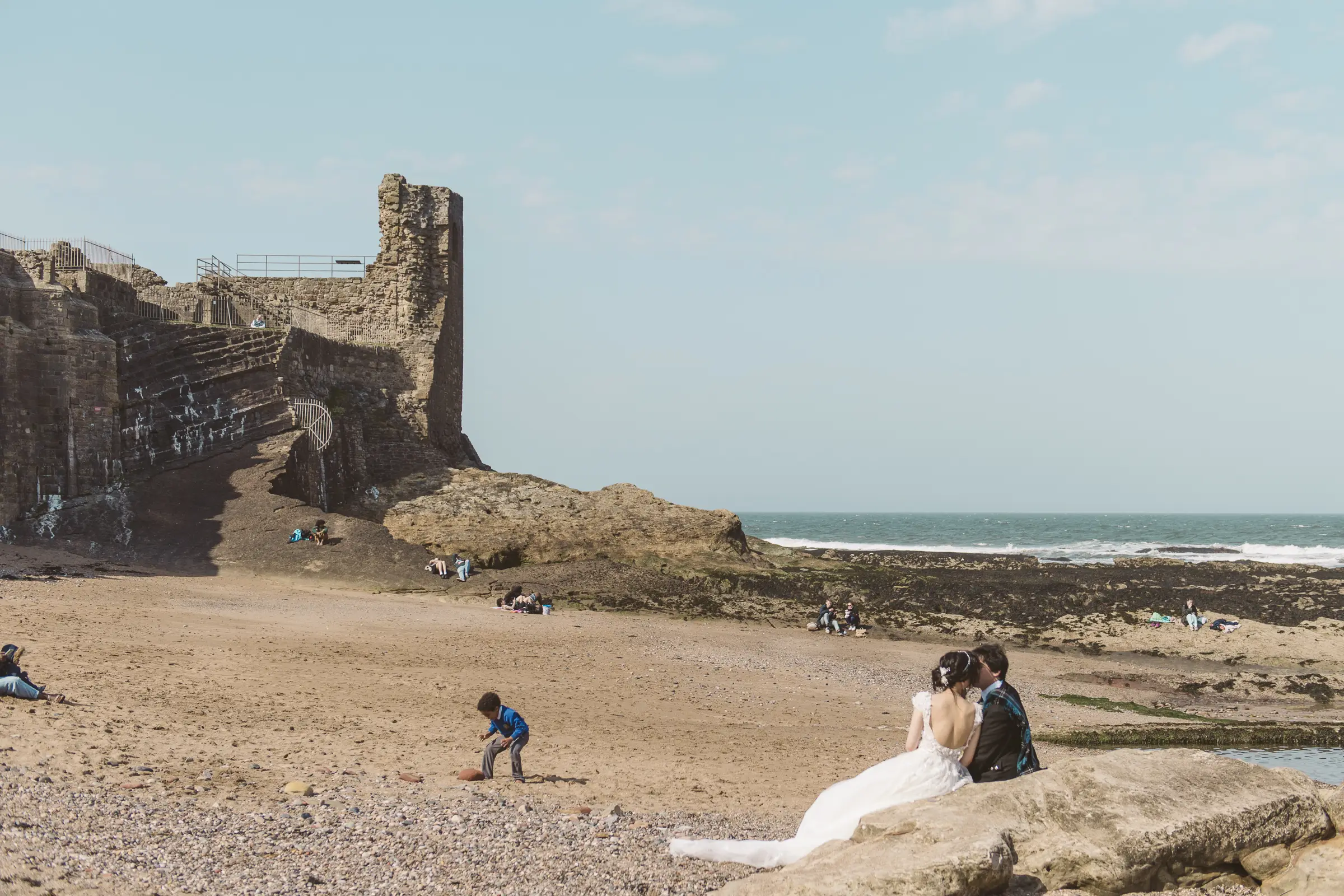
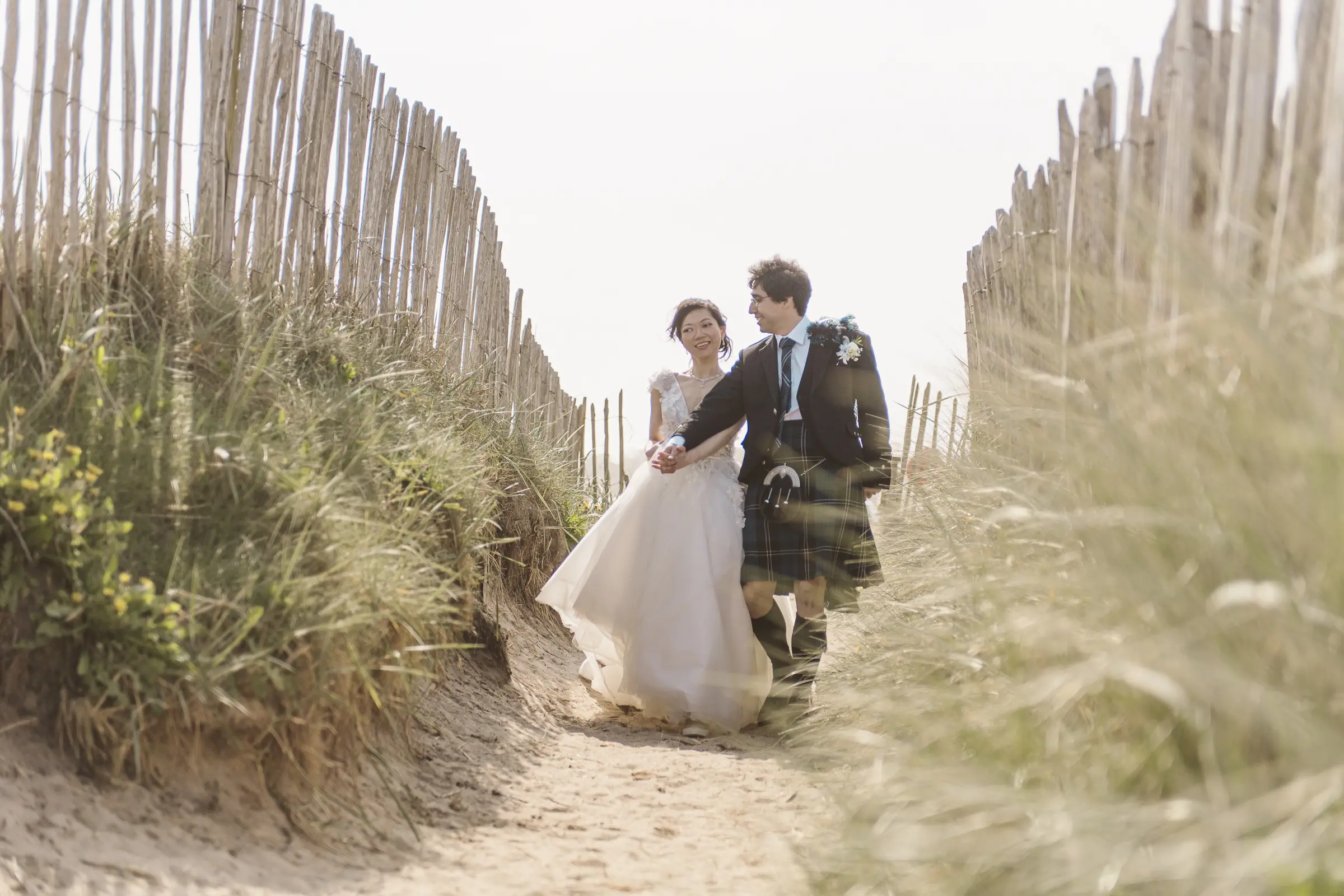
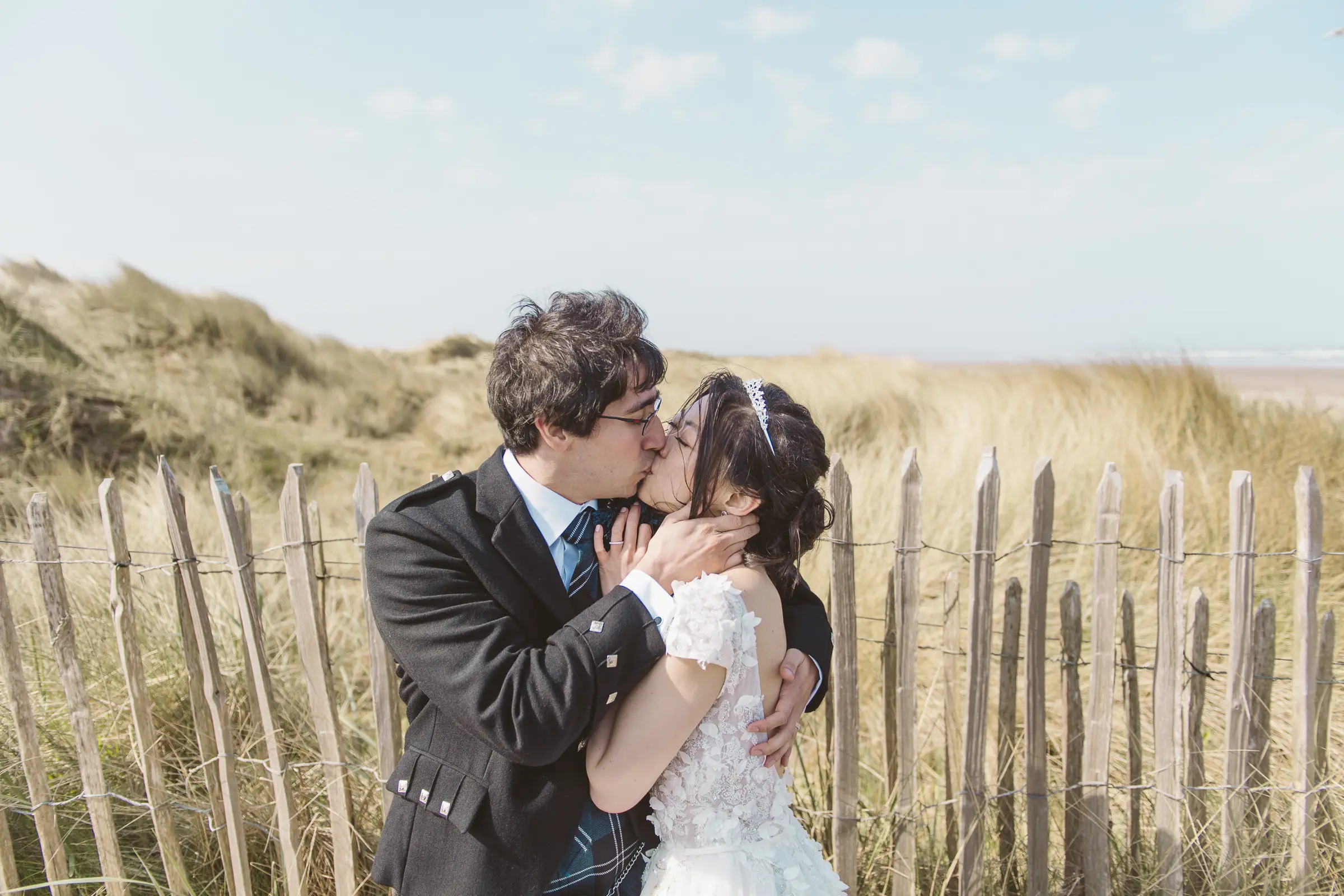
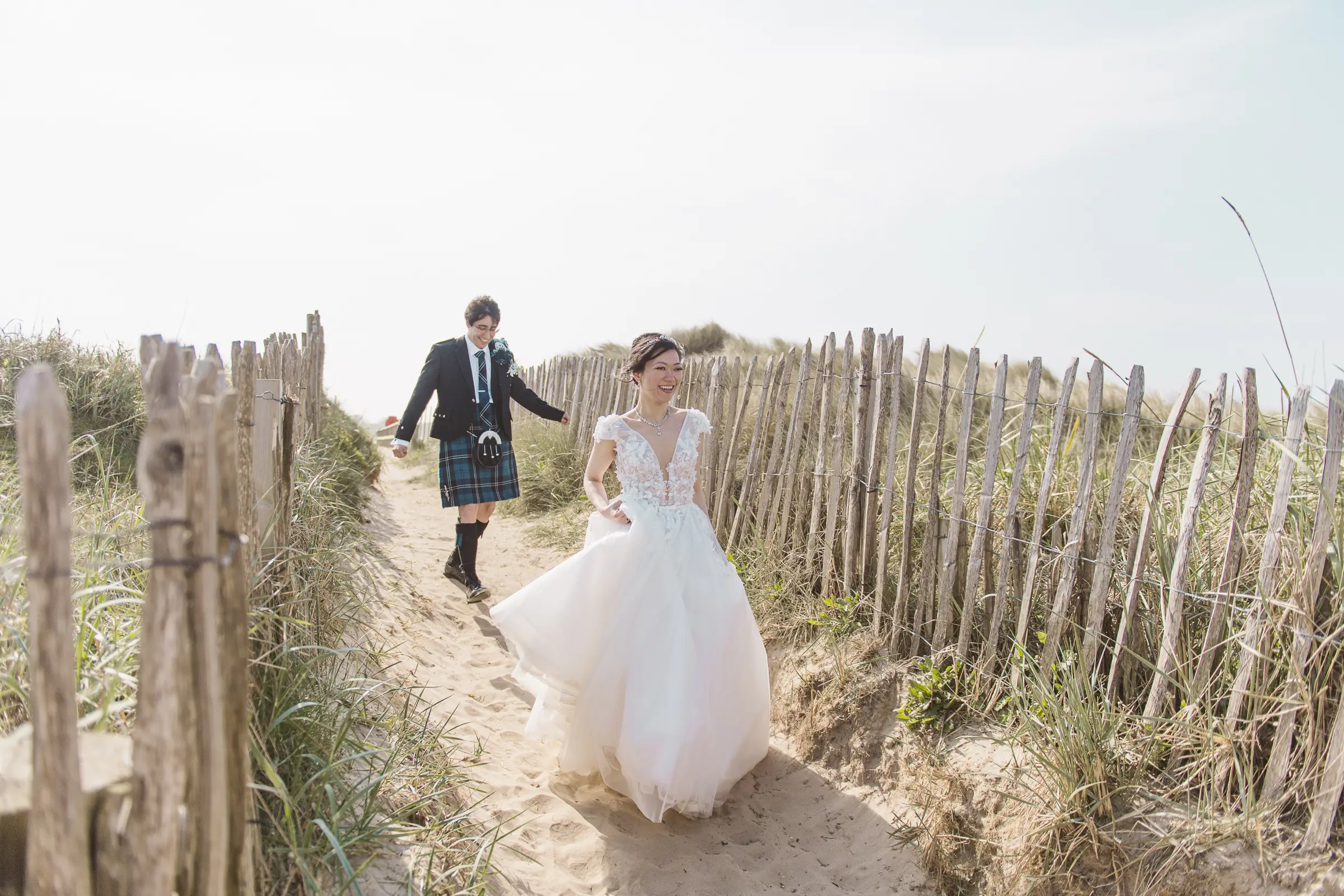
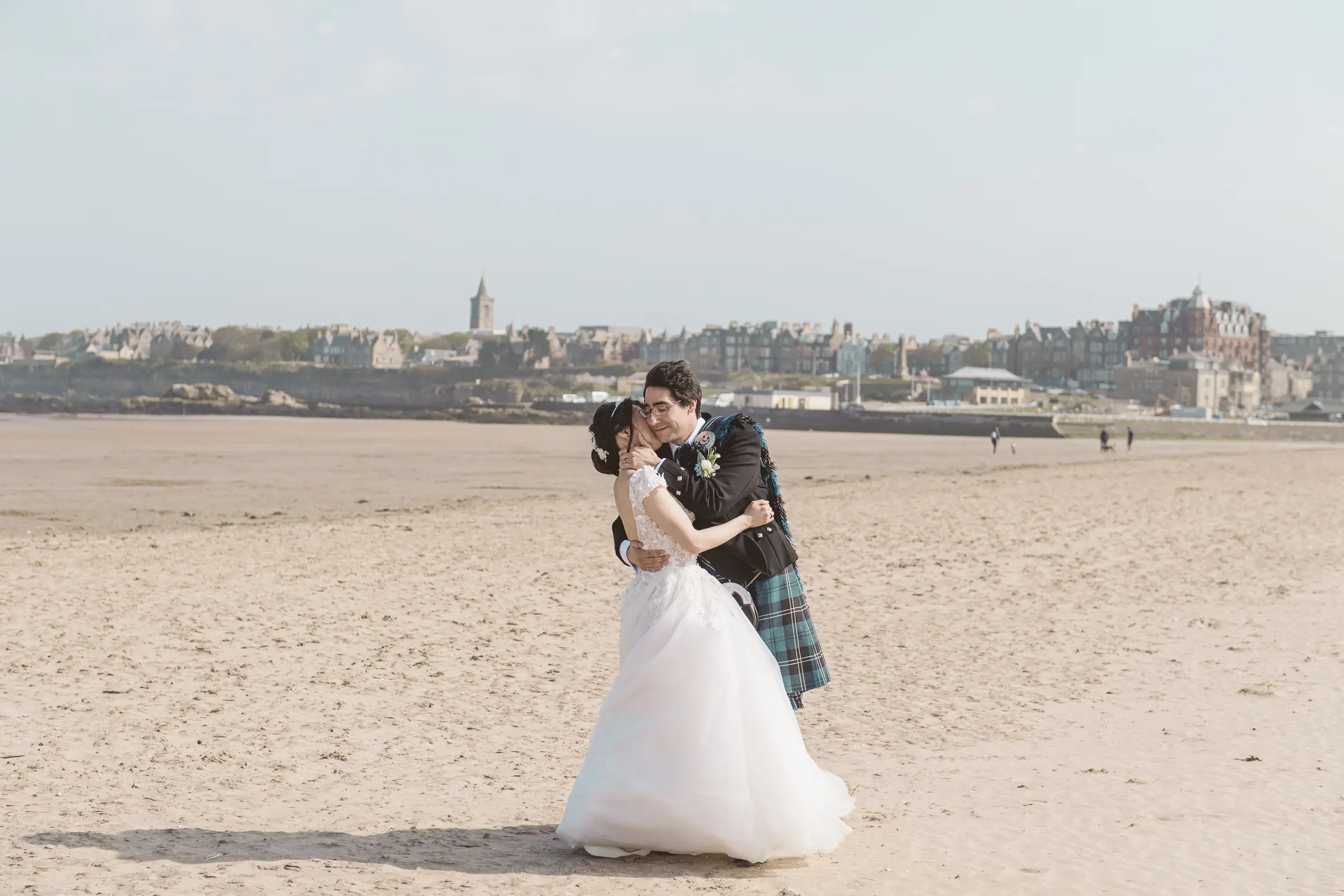
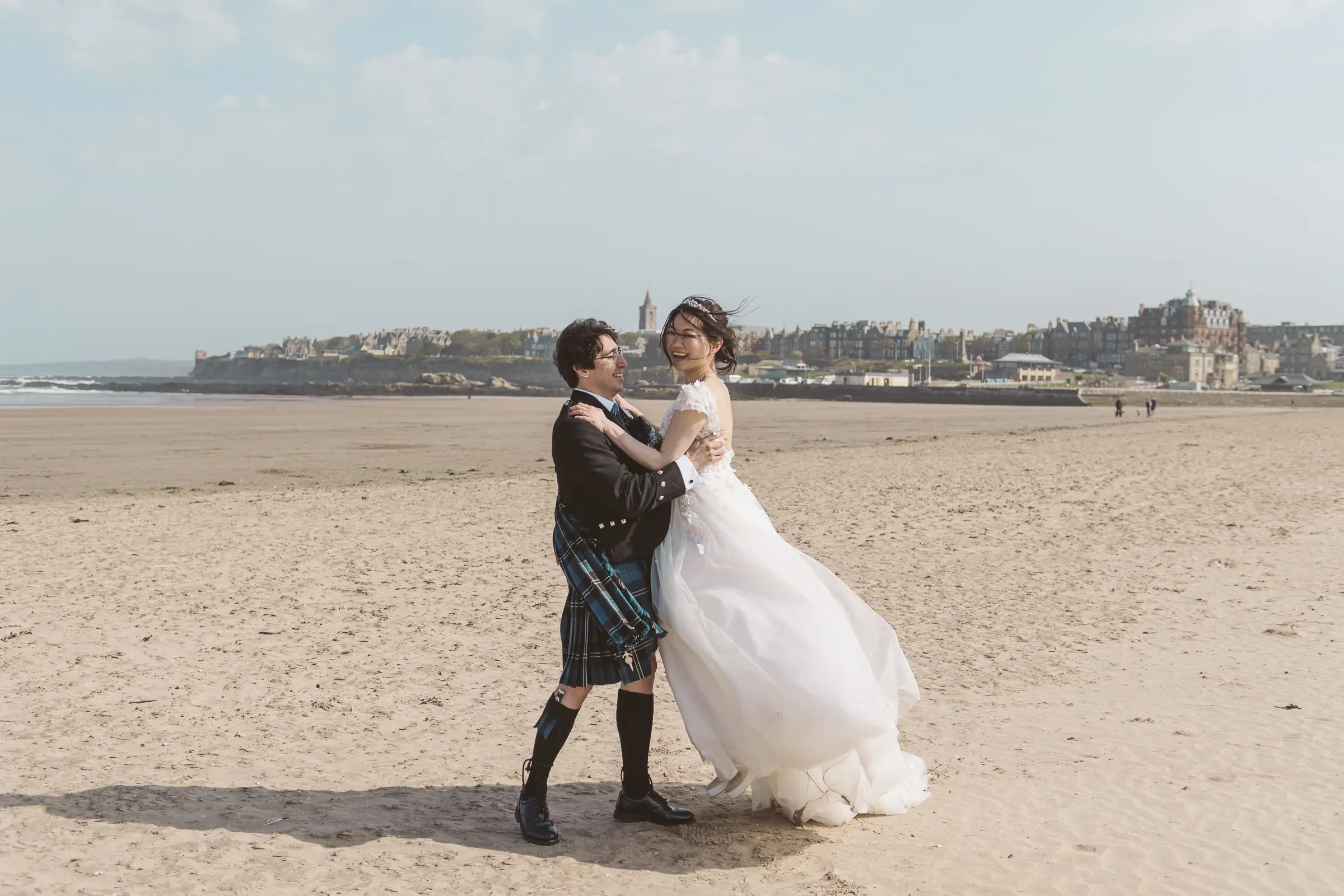
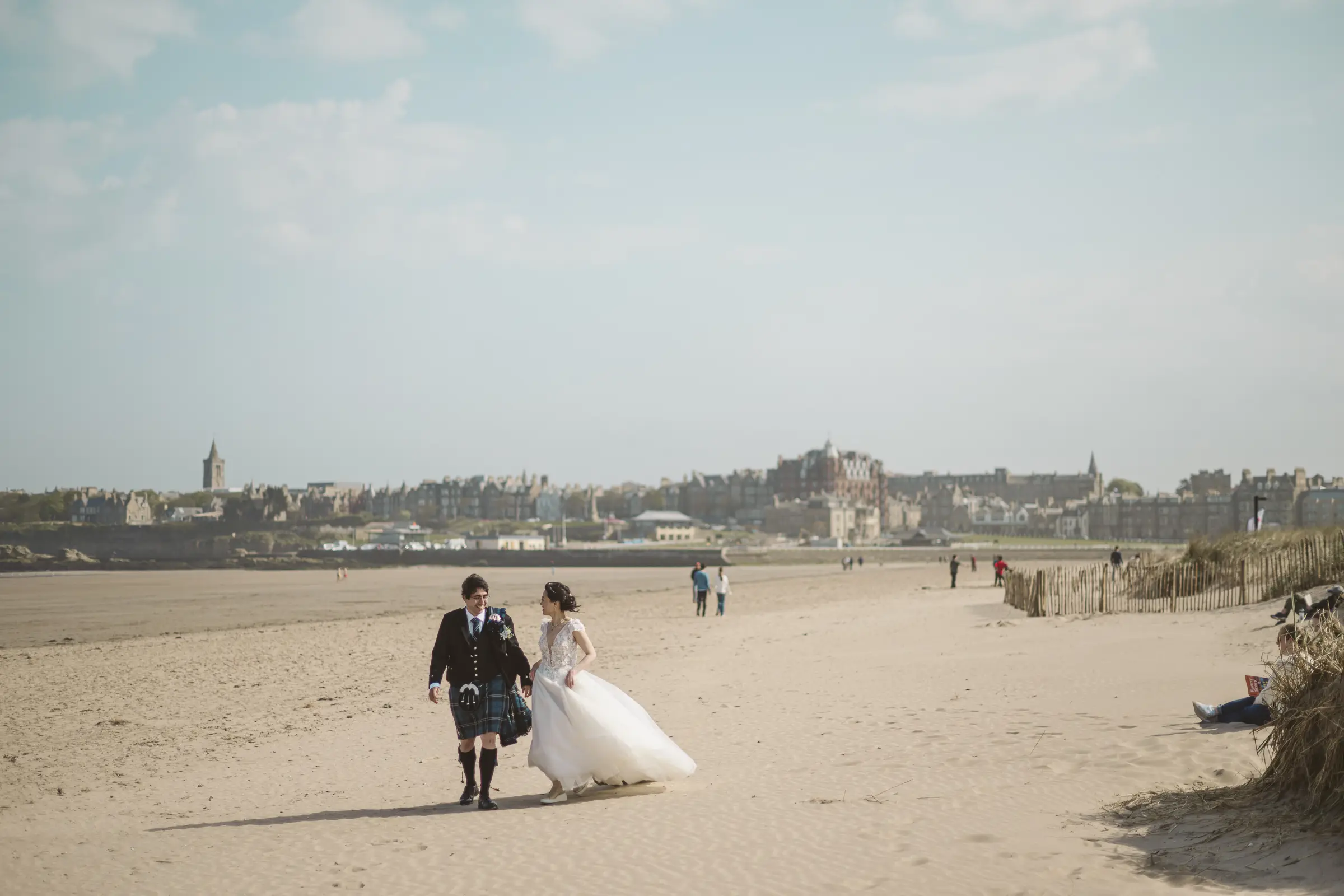
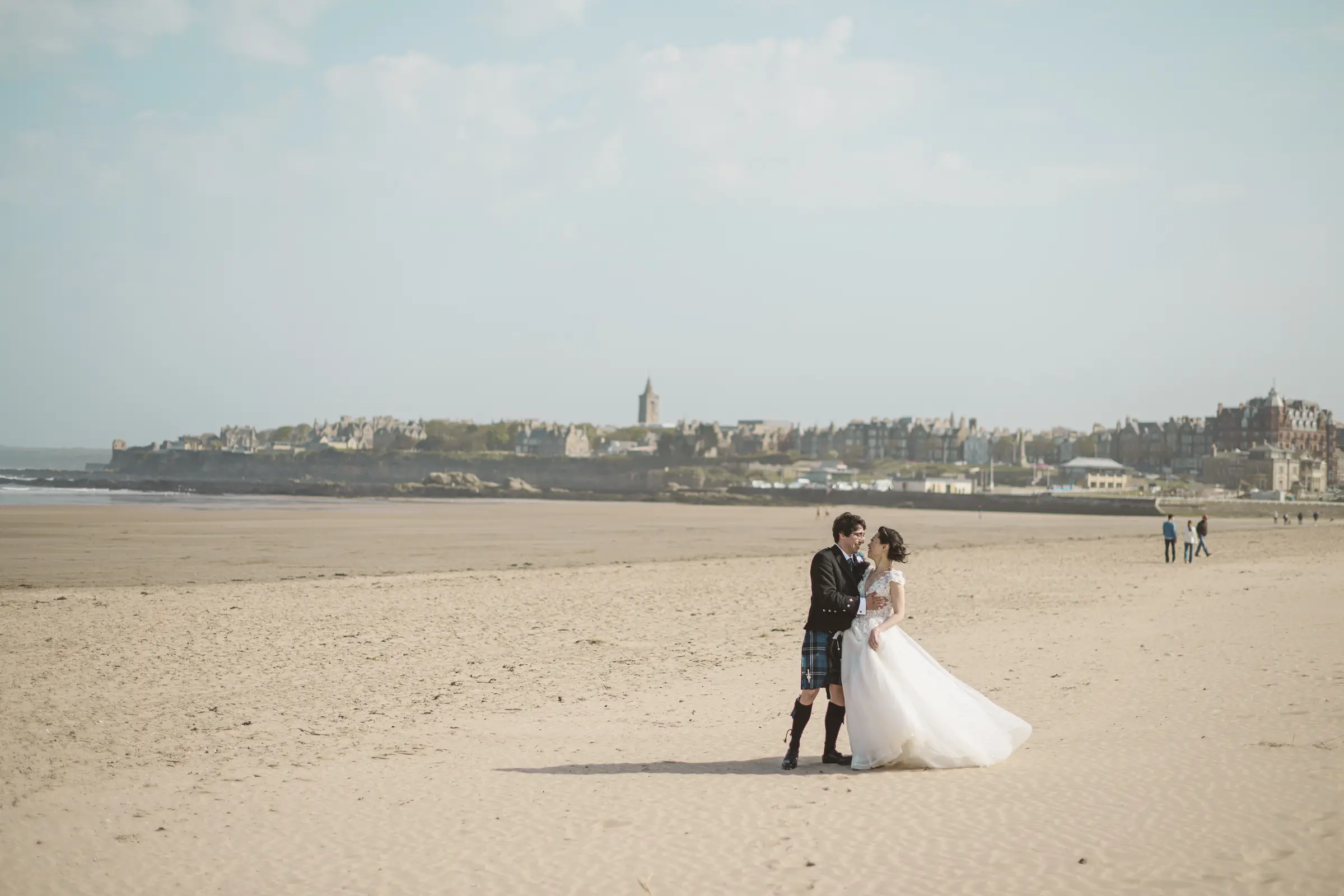
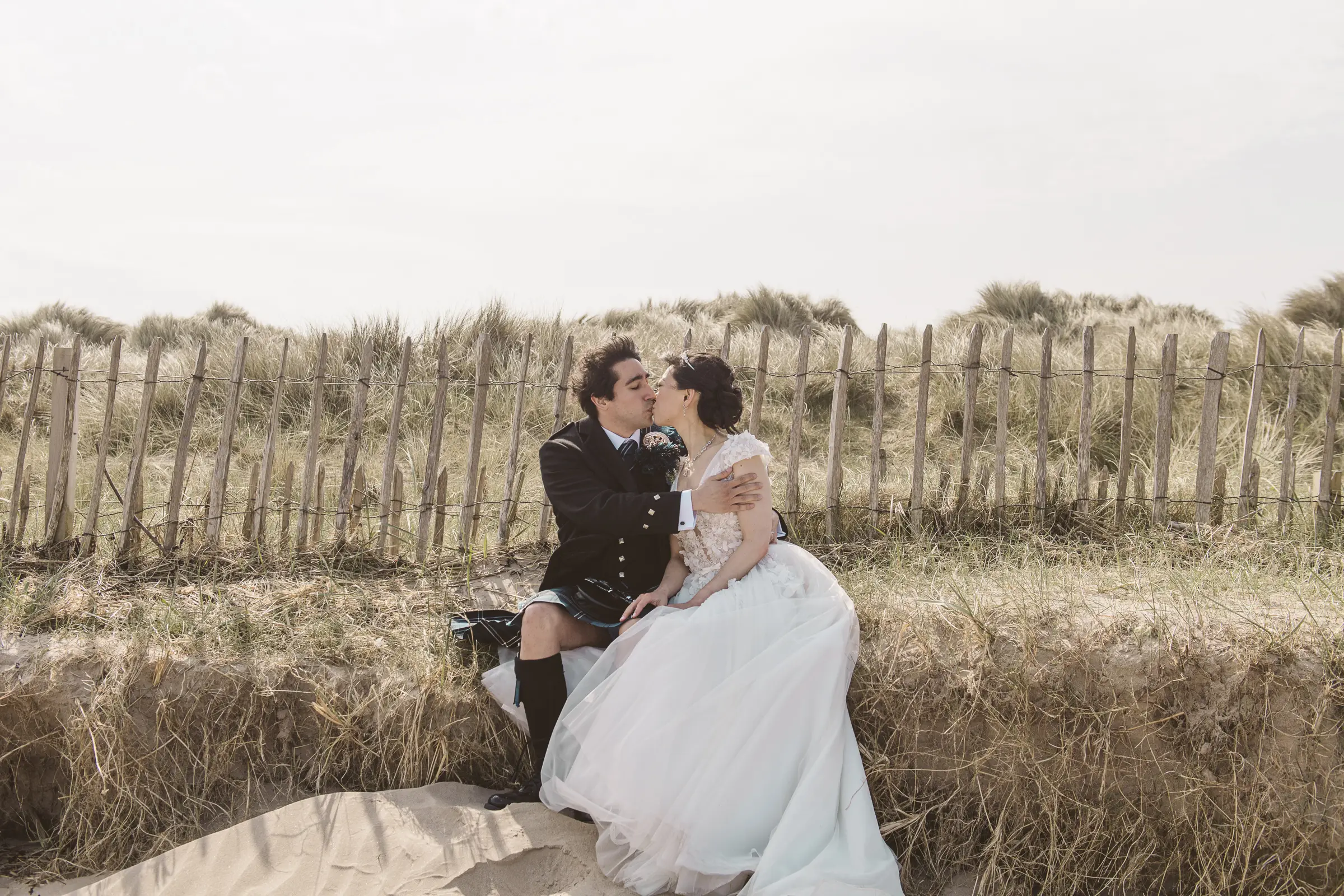
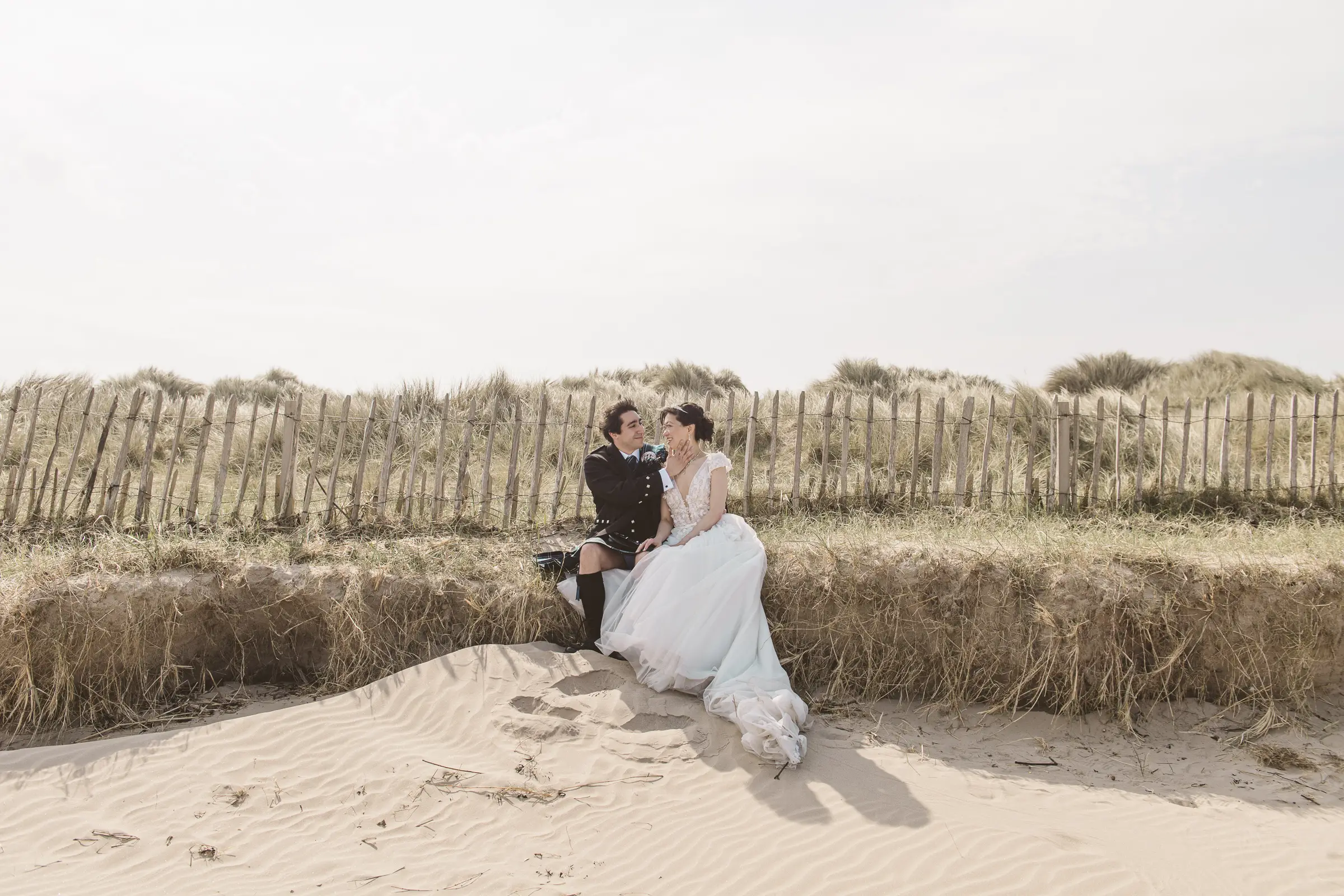
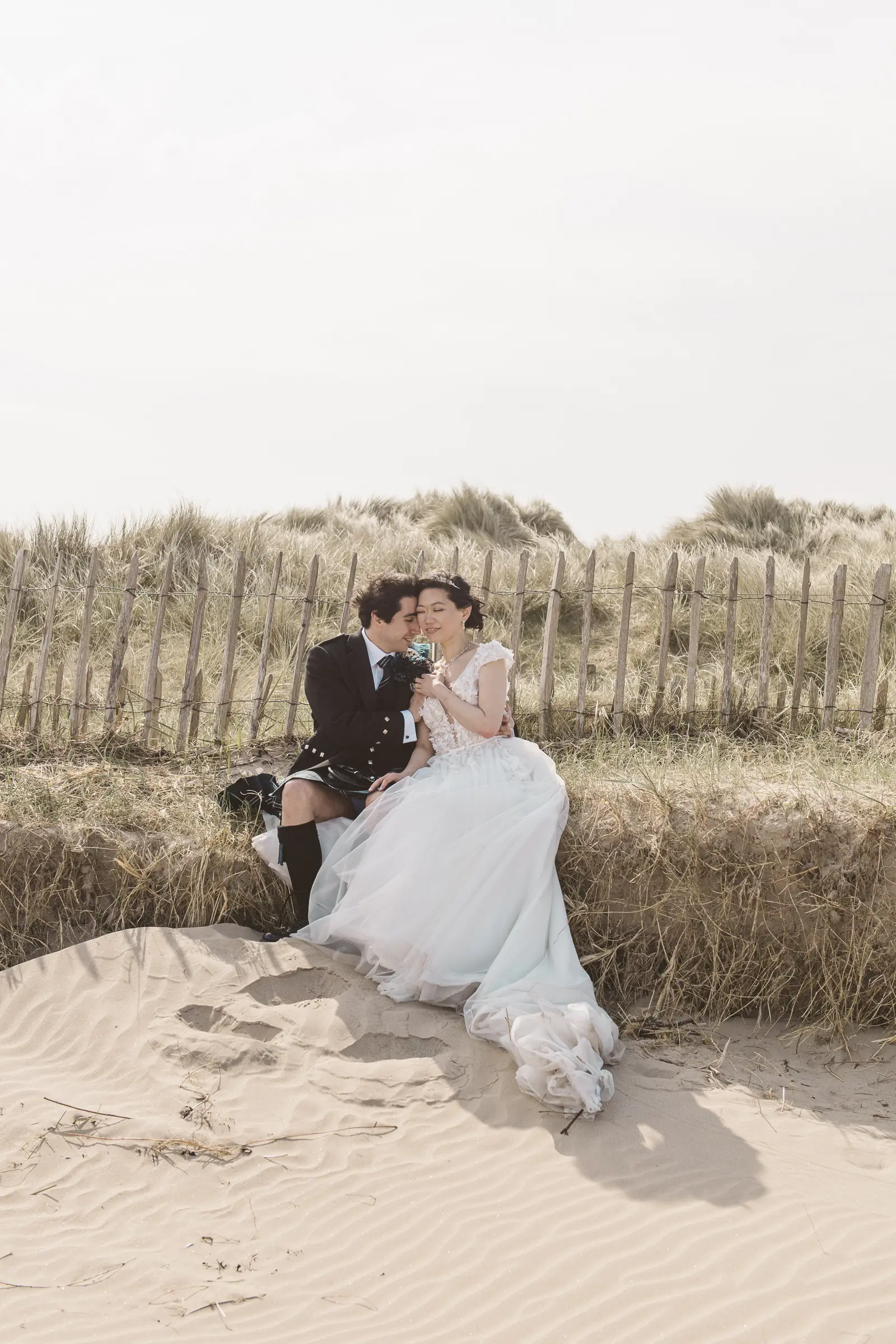
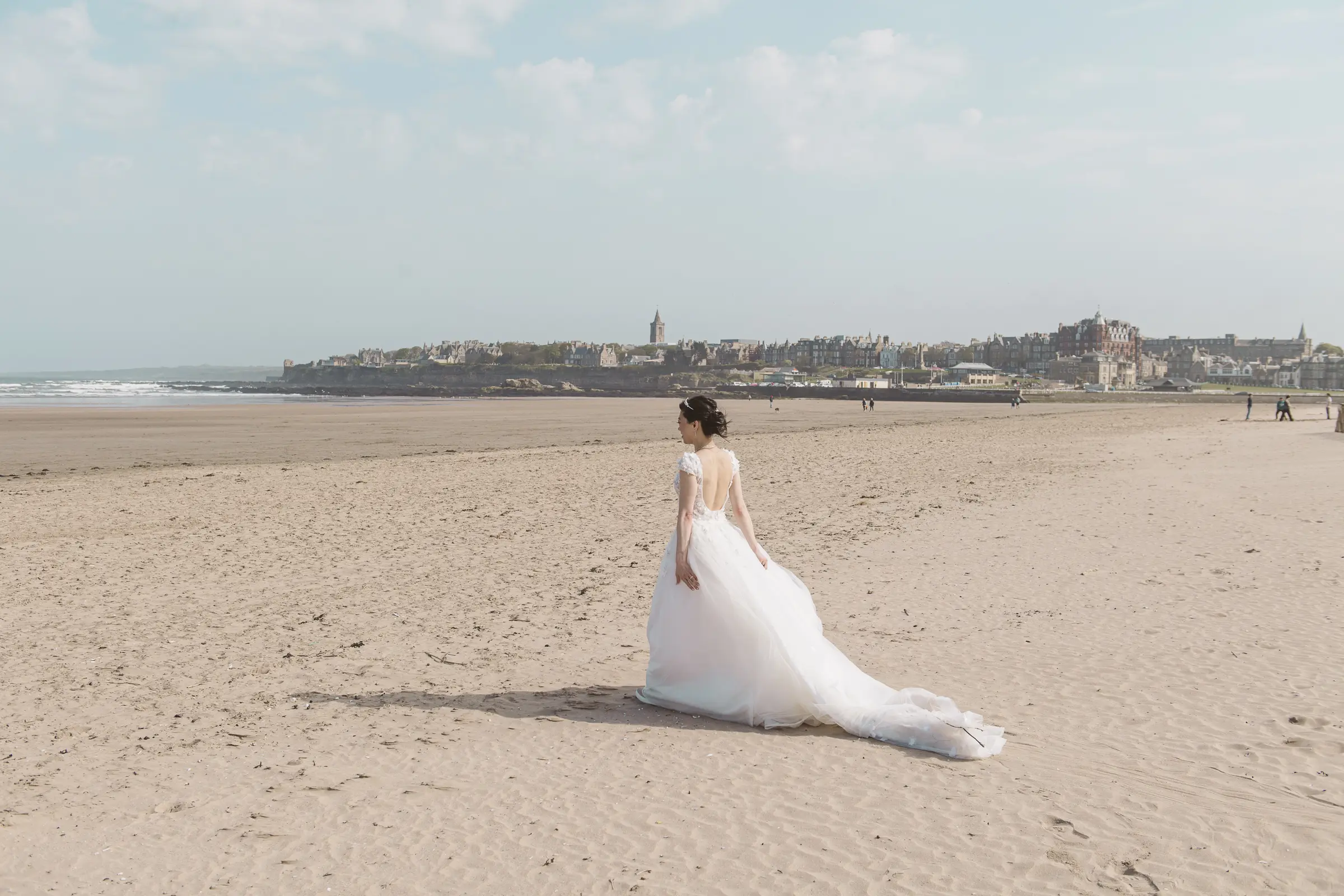
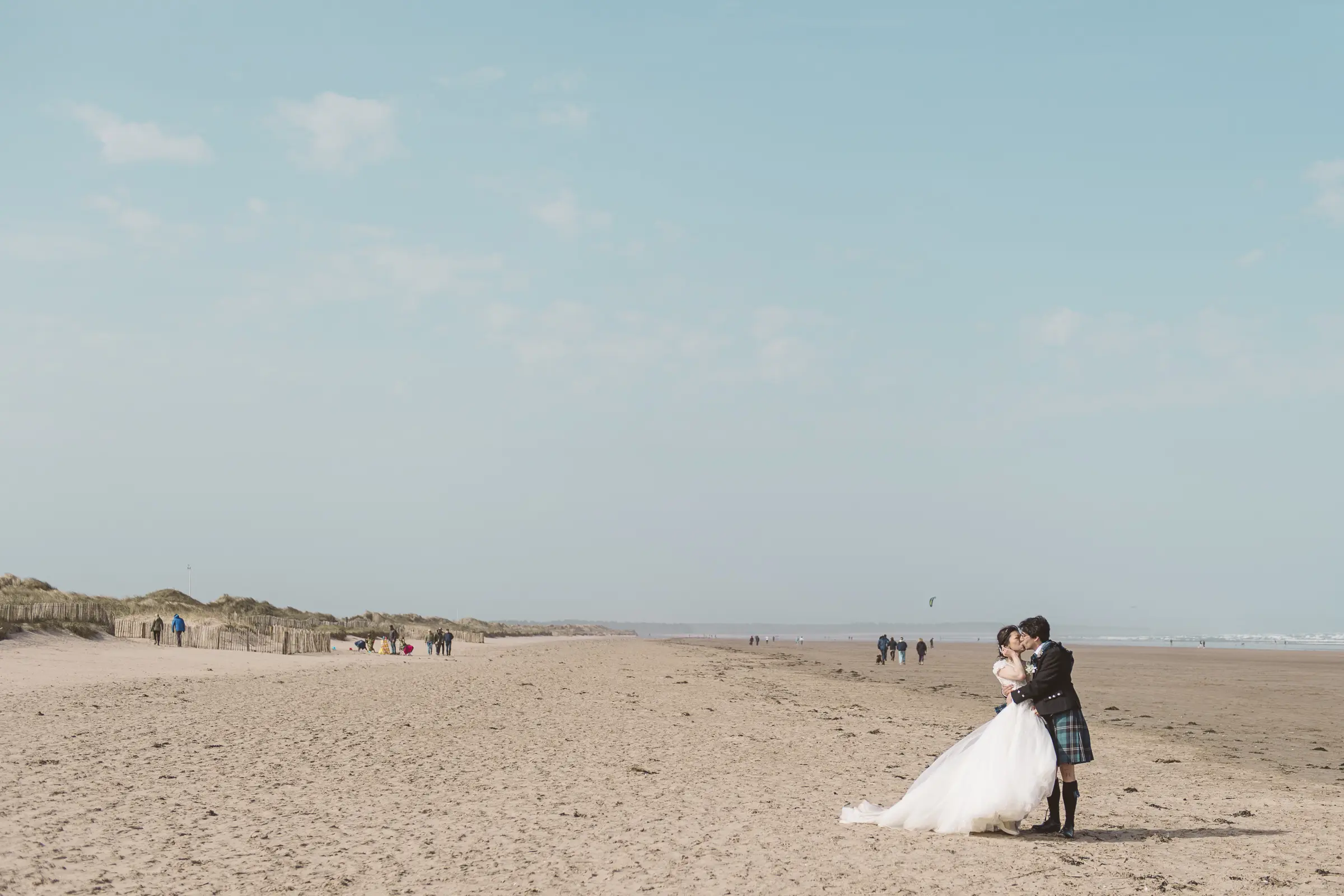
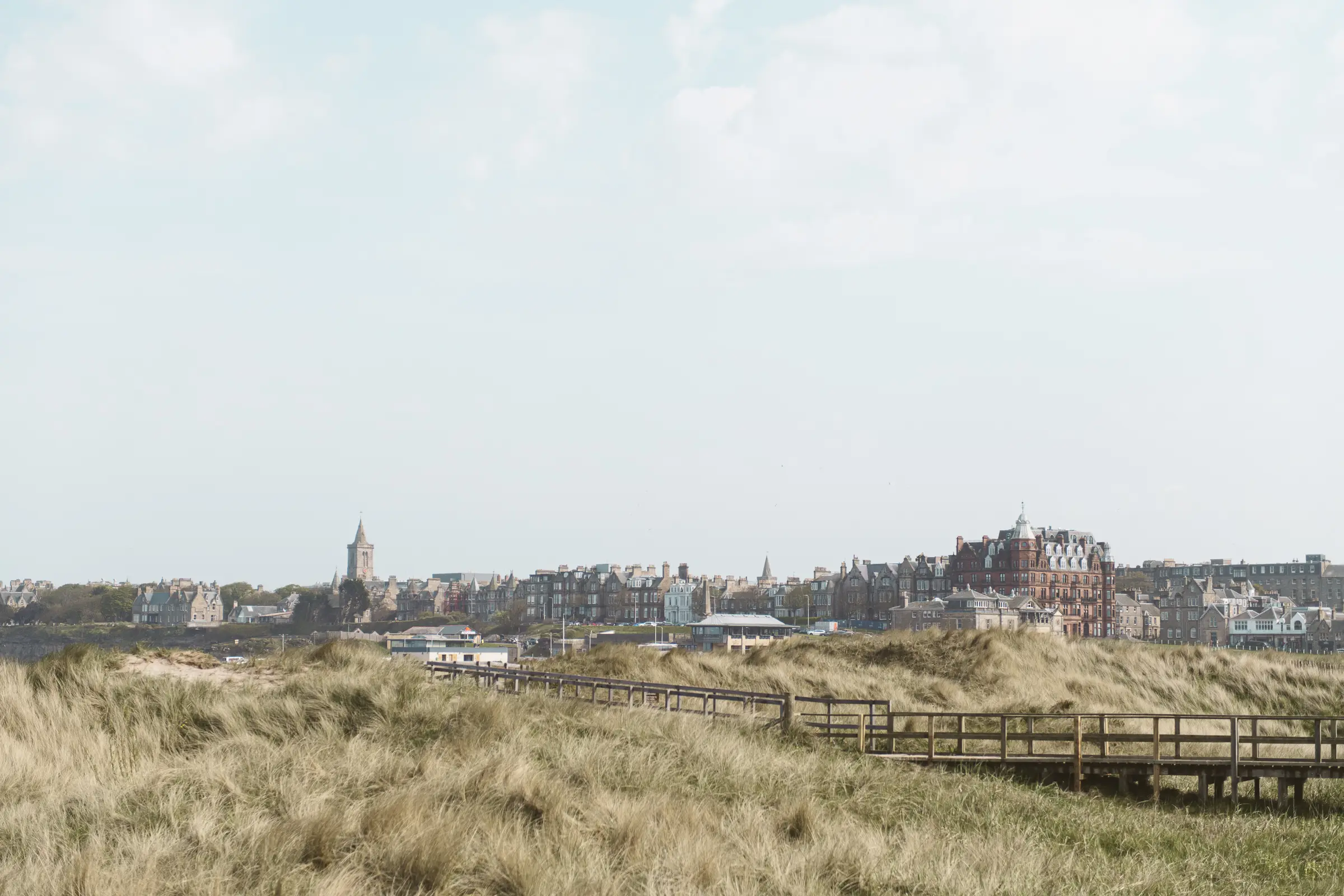
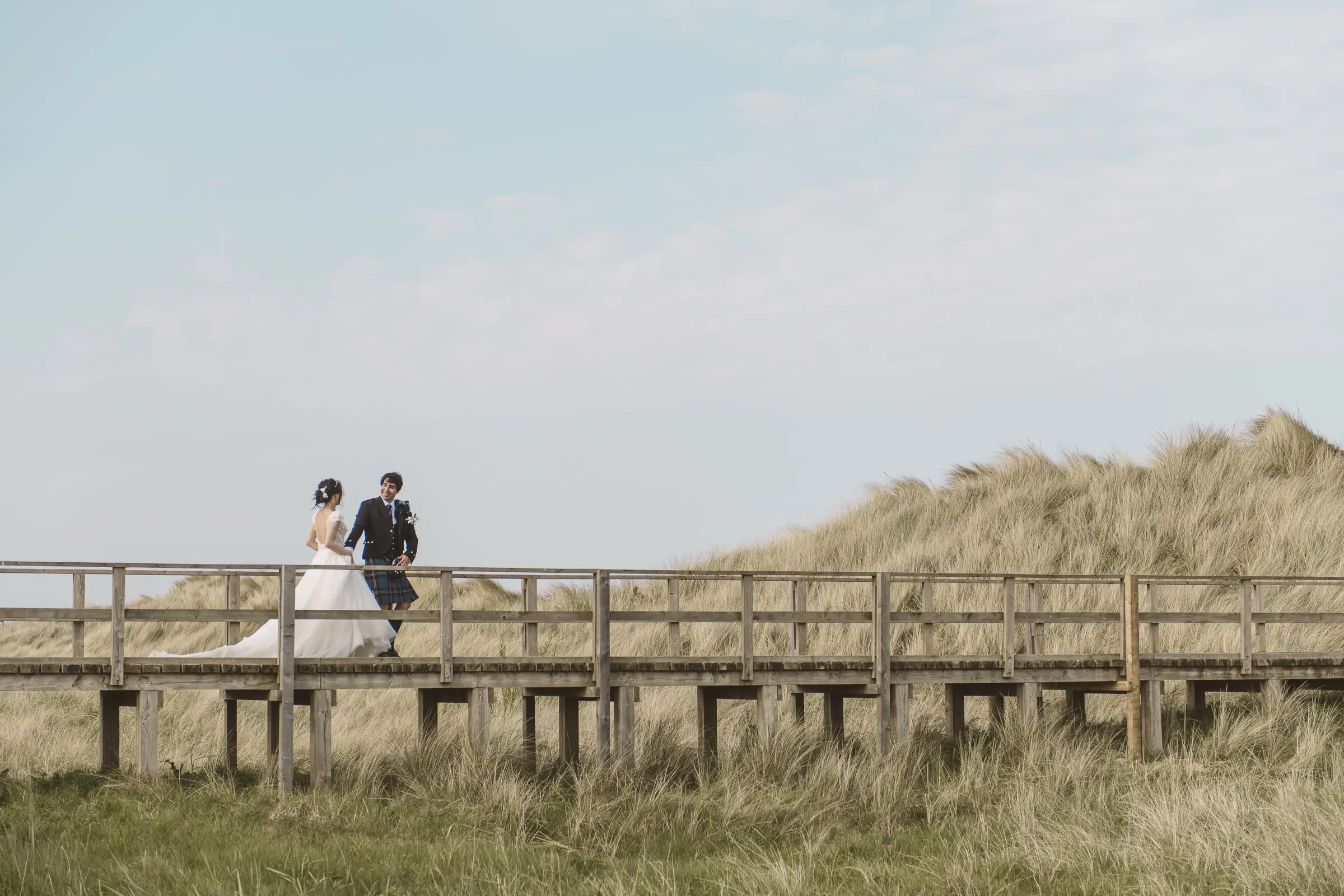
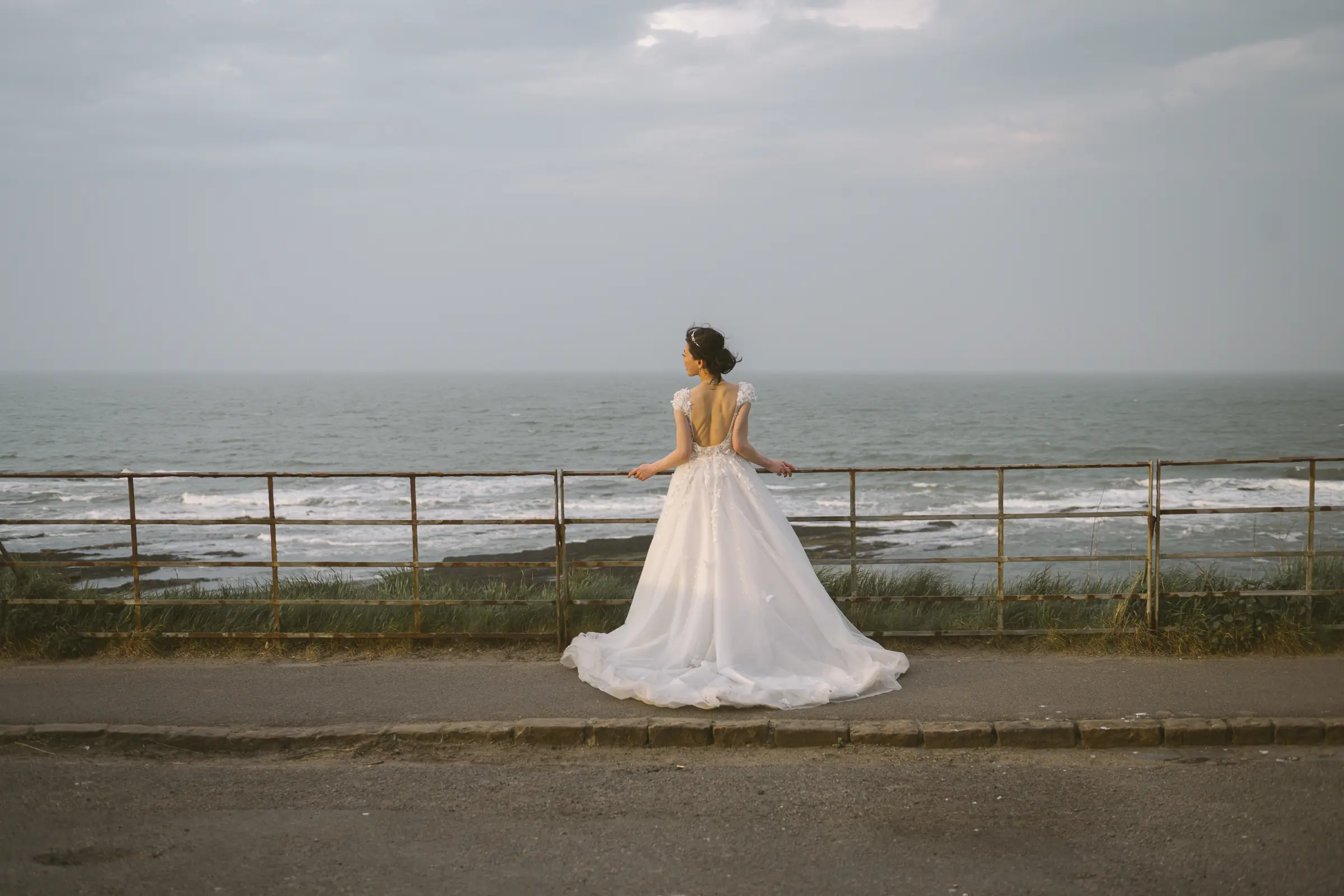
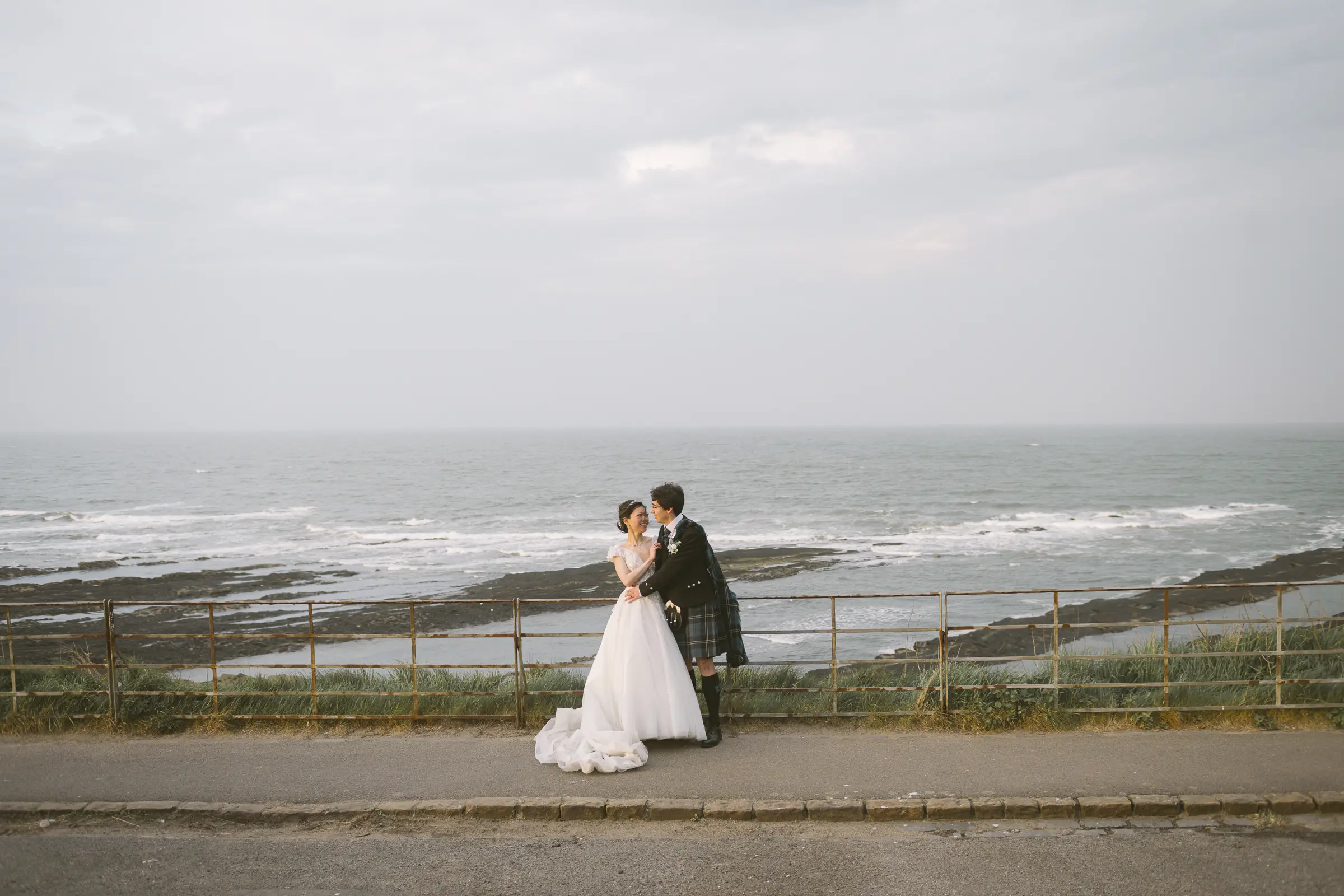
The coast gives St Andrews a completely different visual language
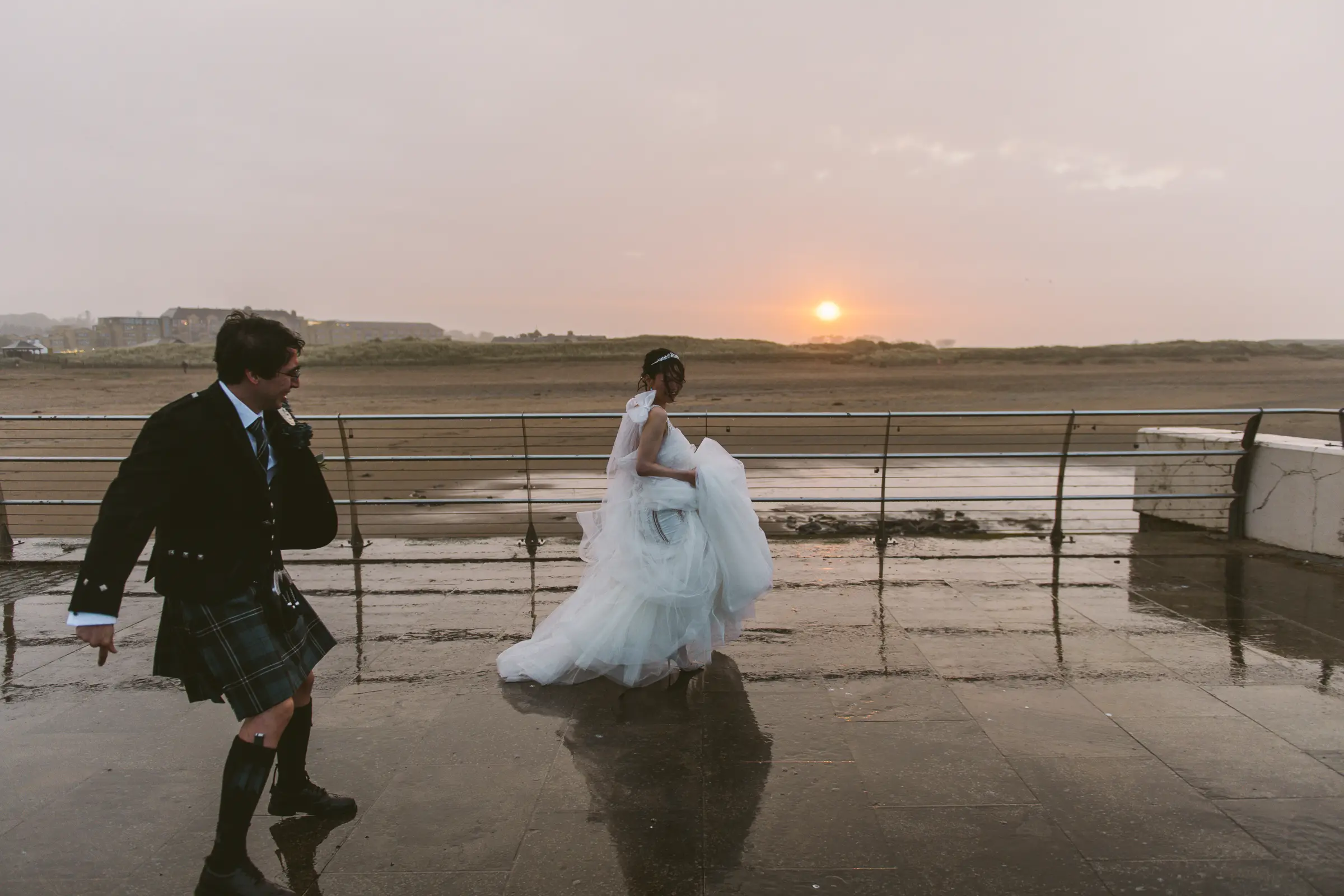
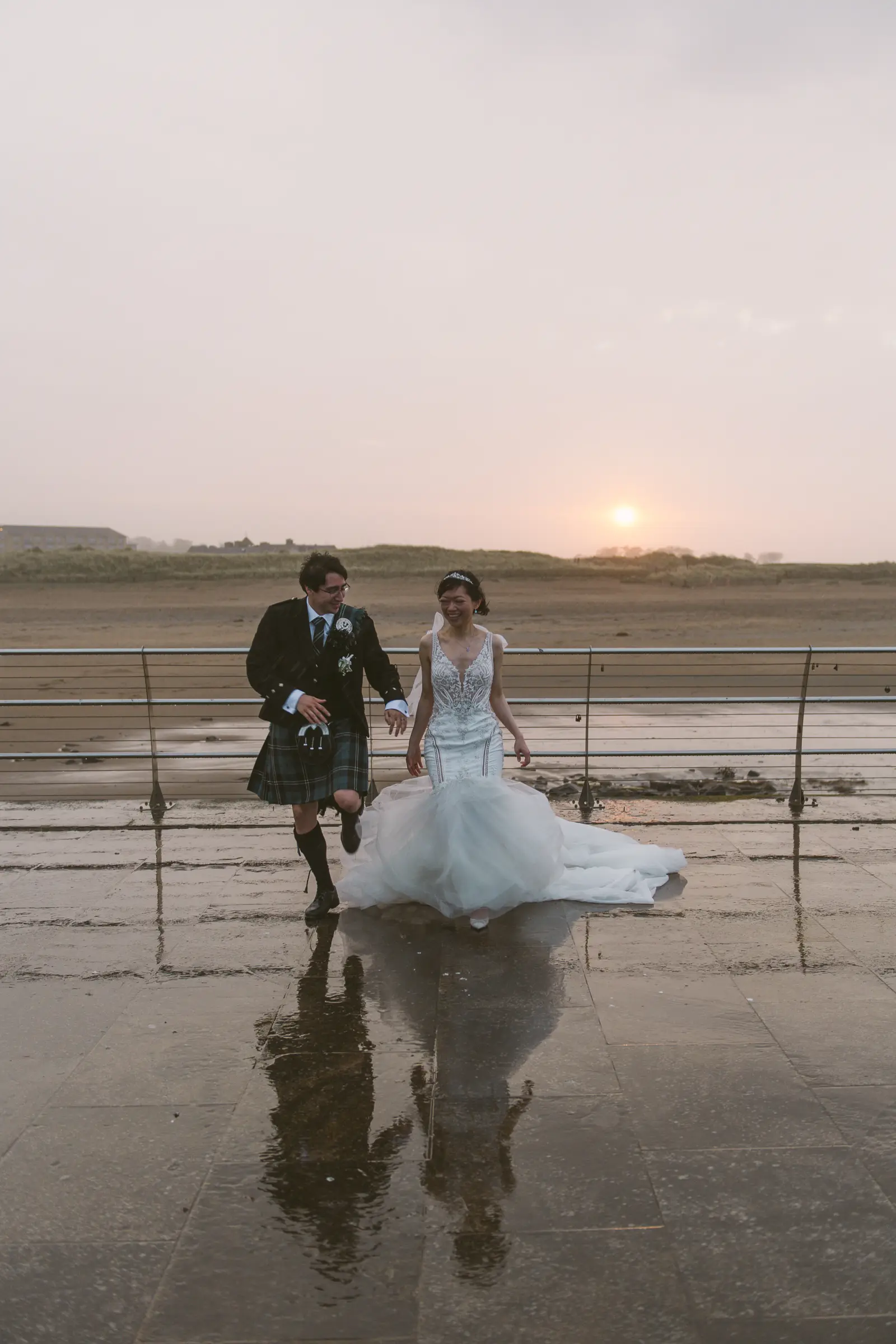
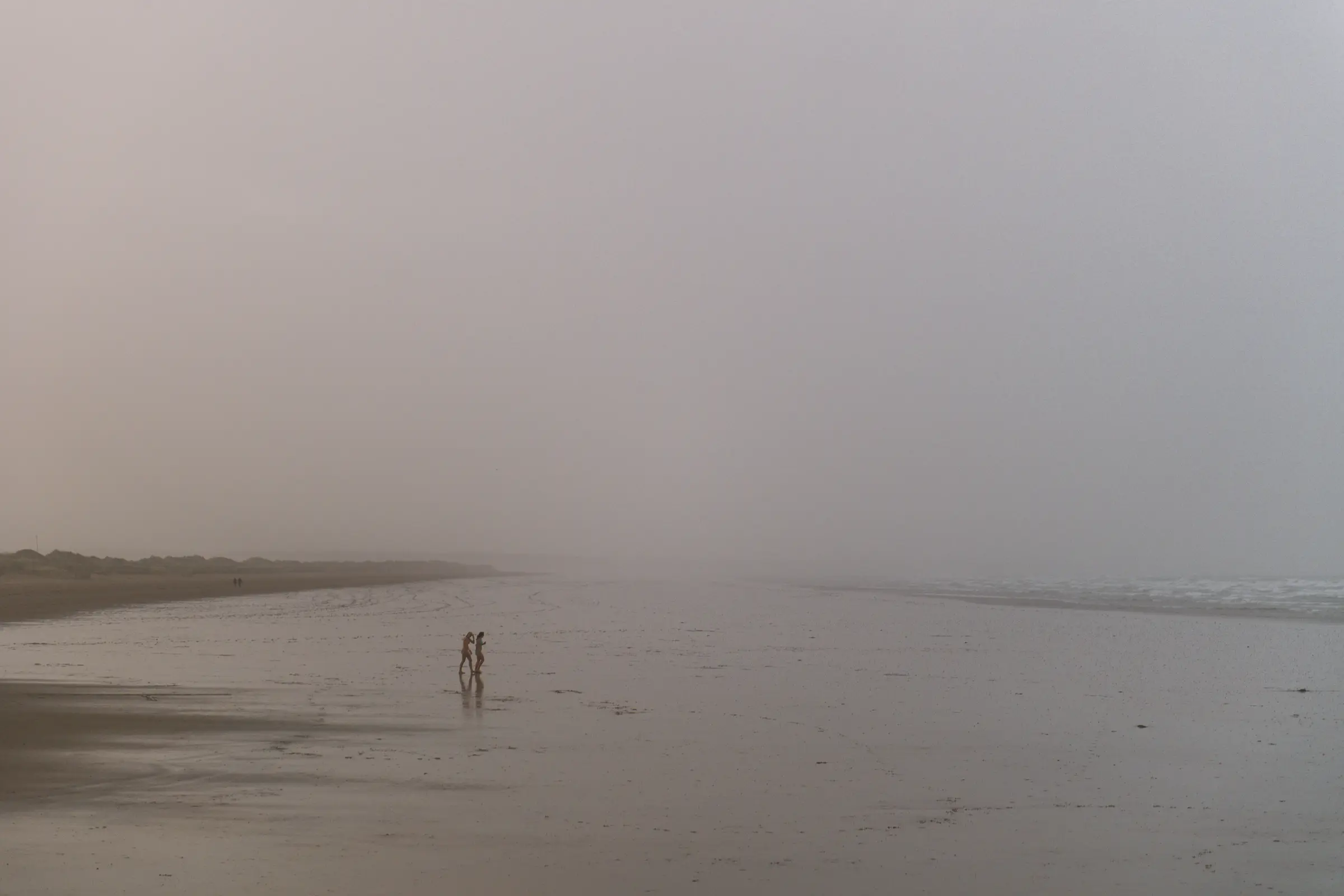
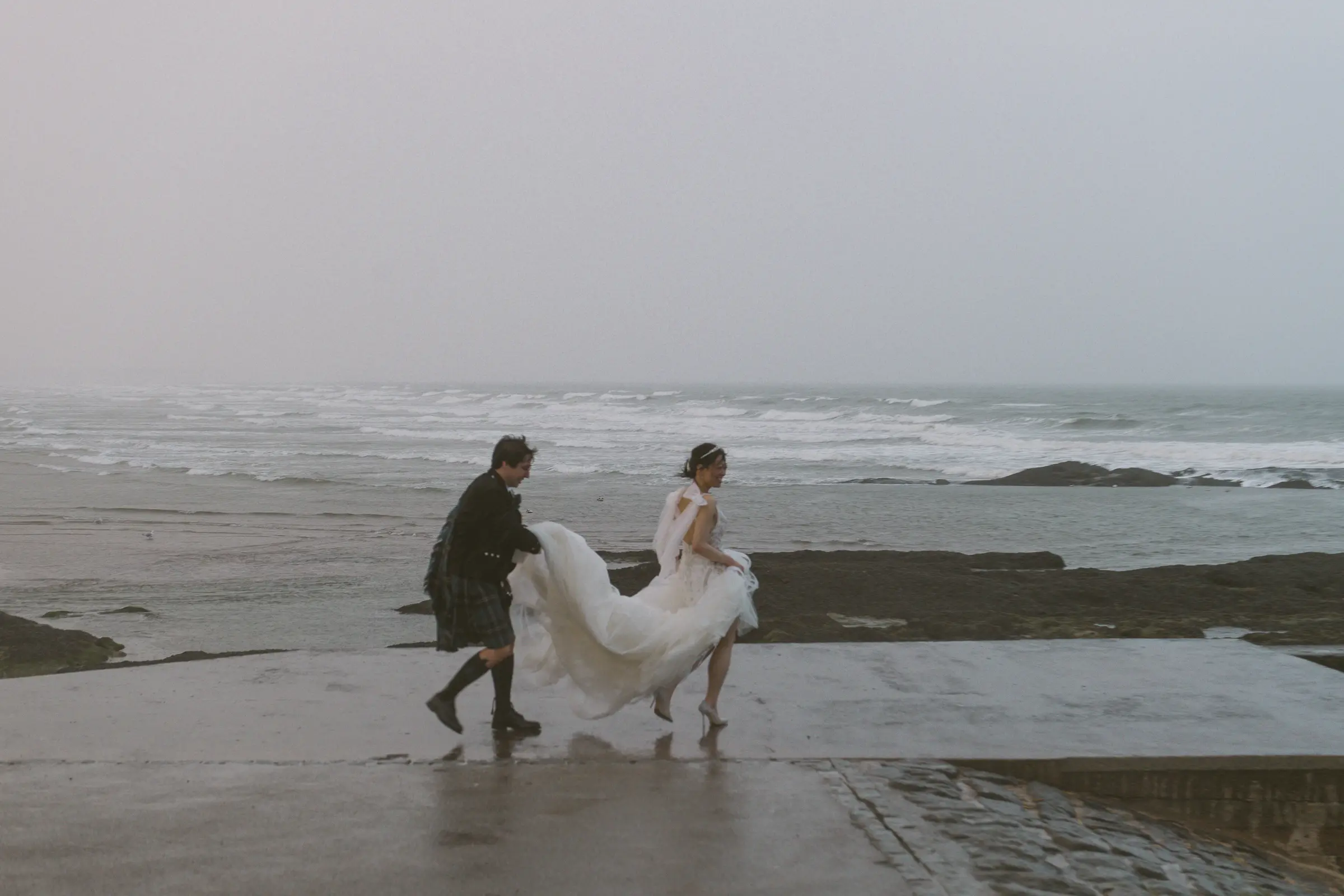
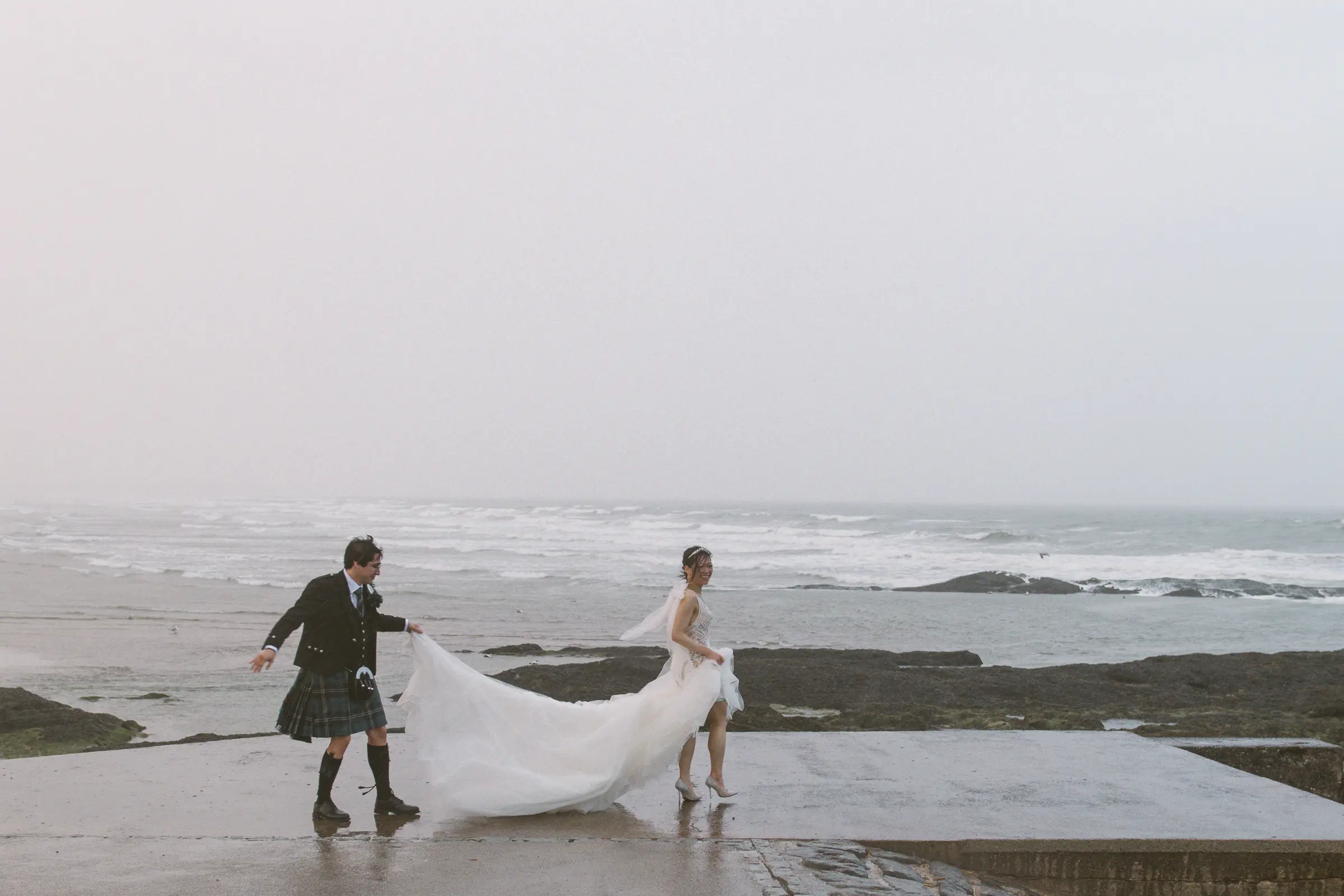
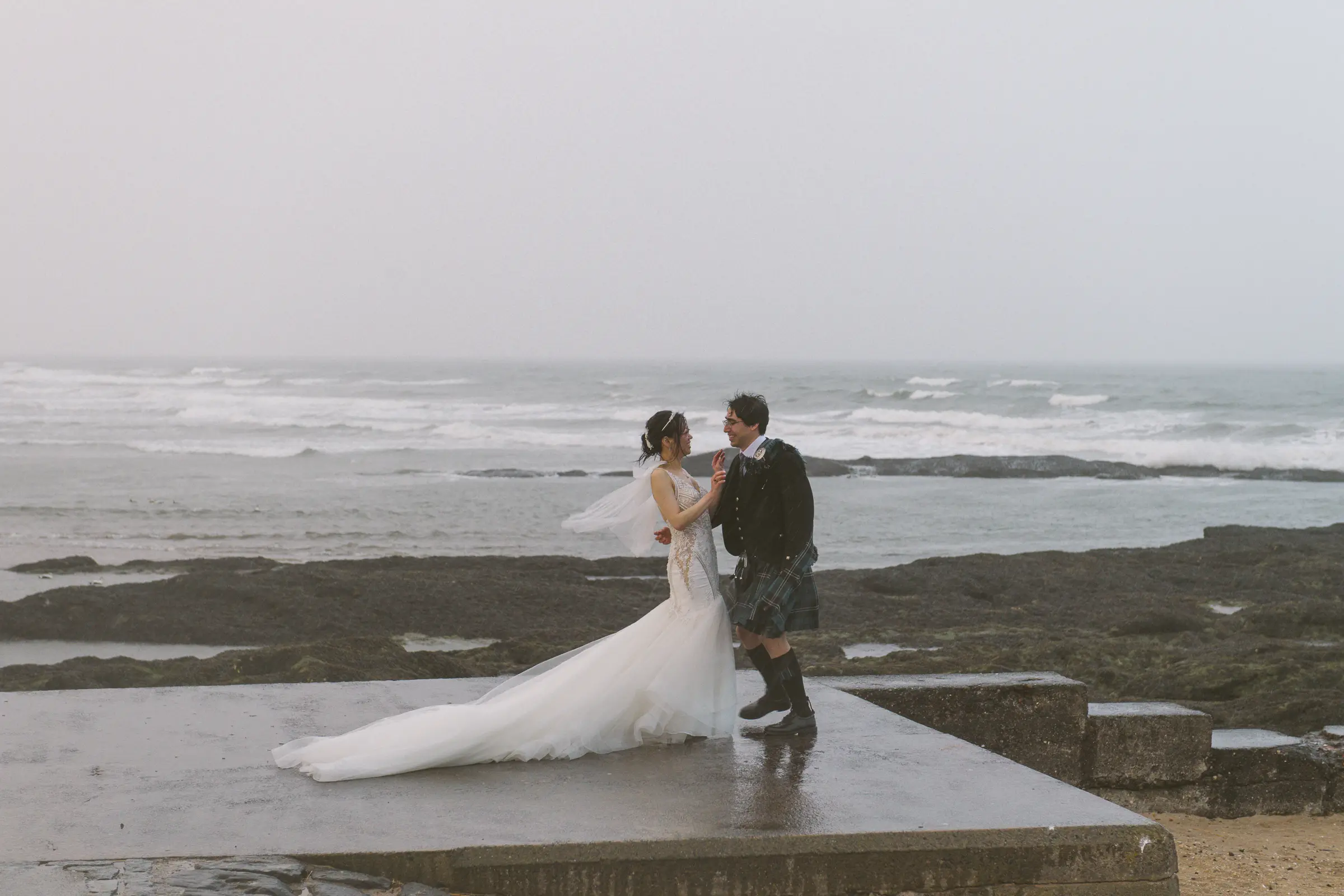
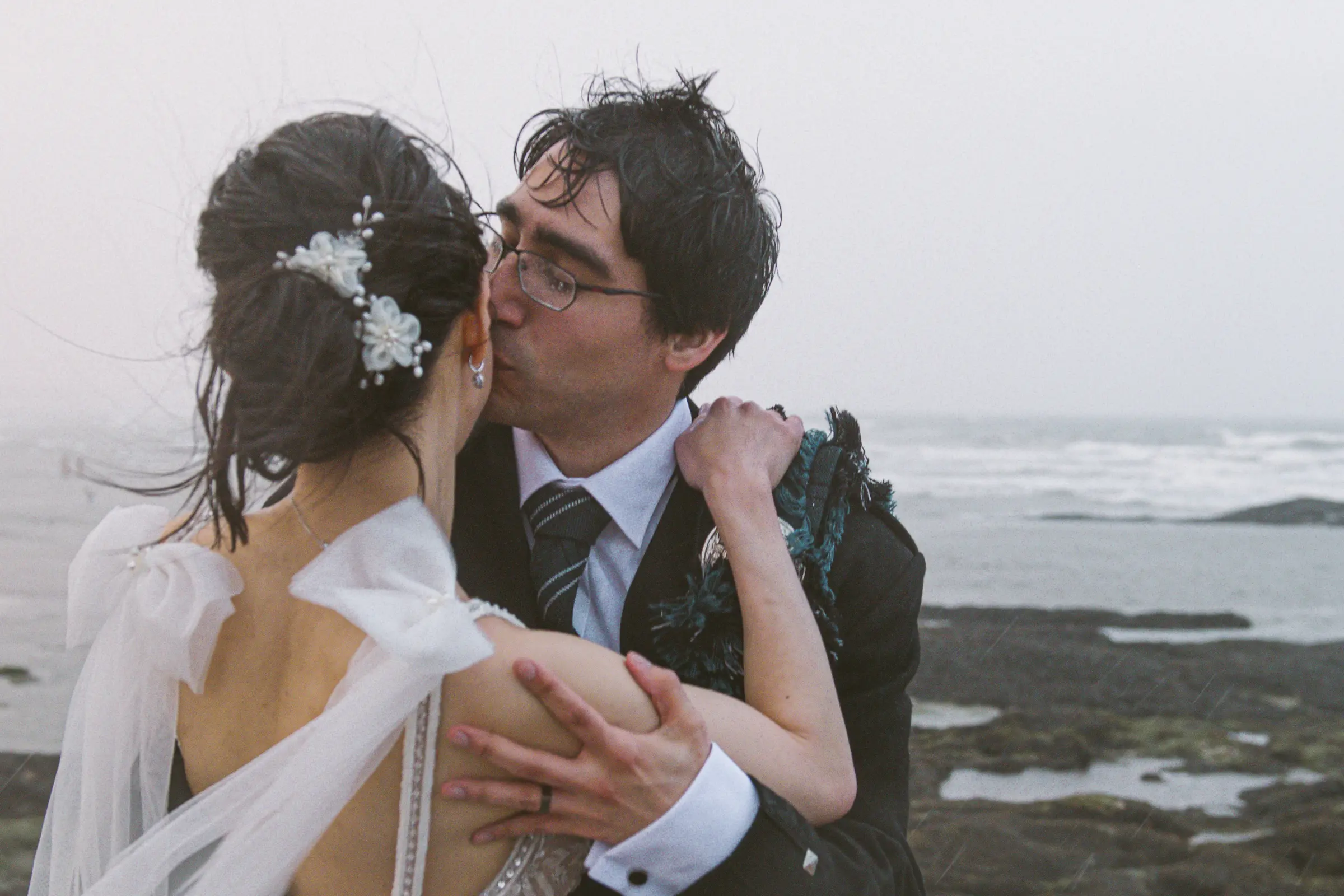
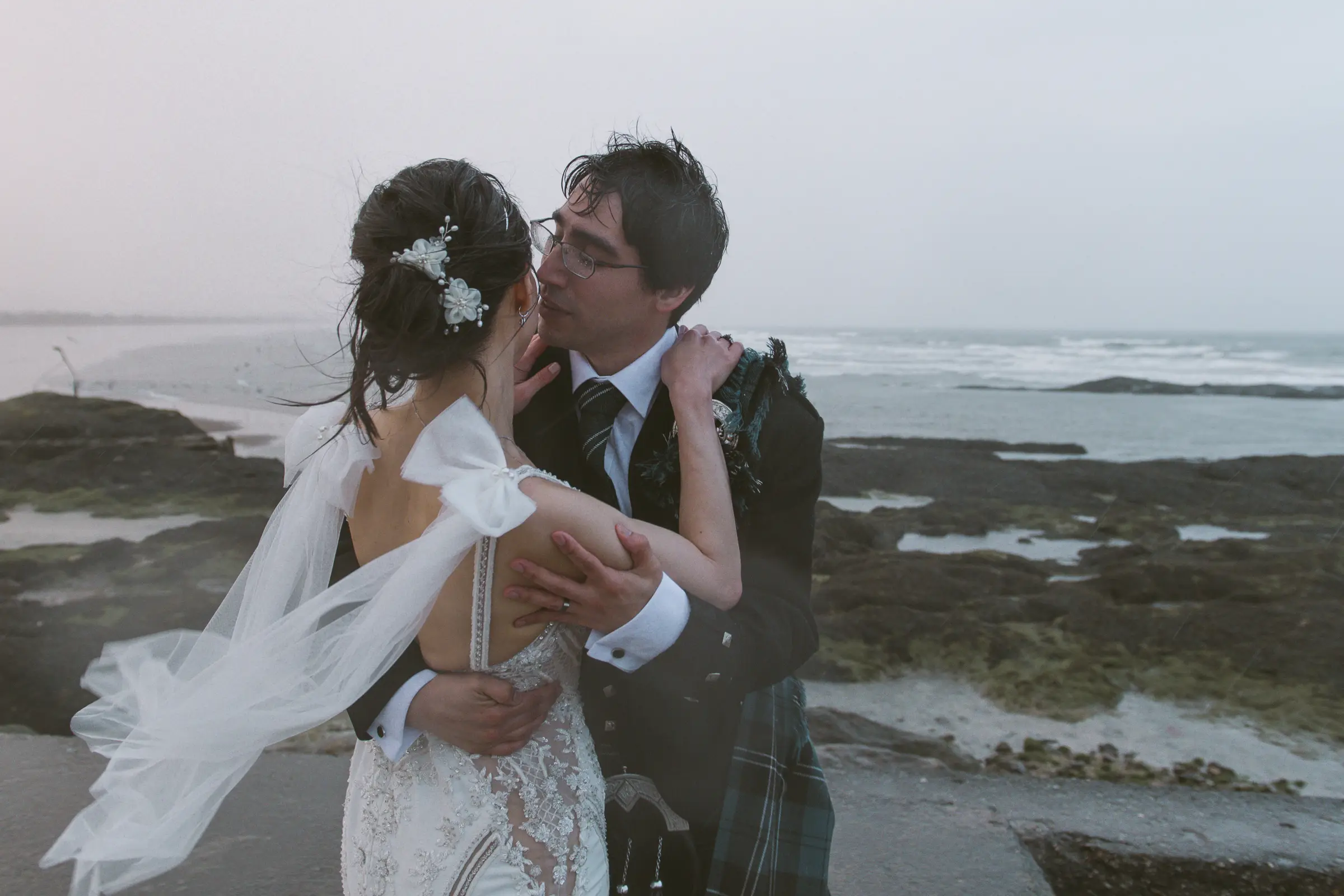
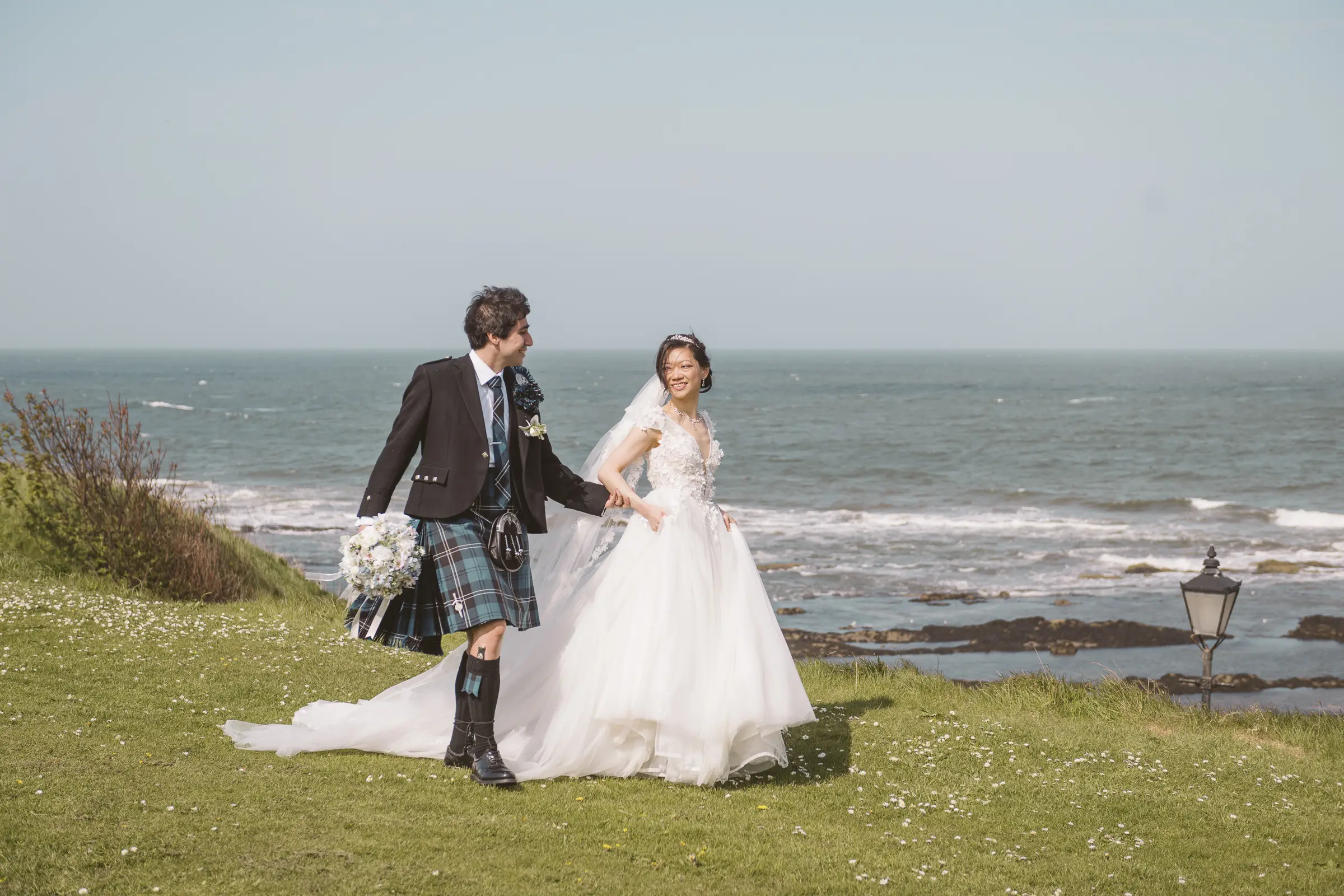
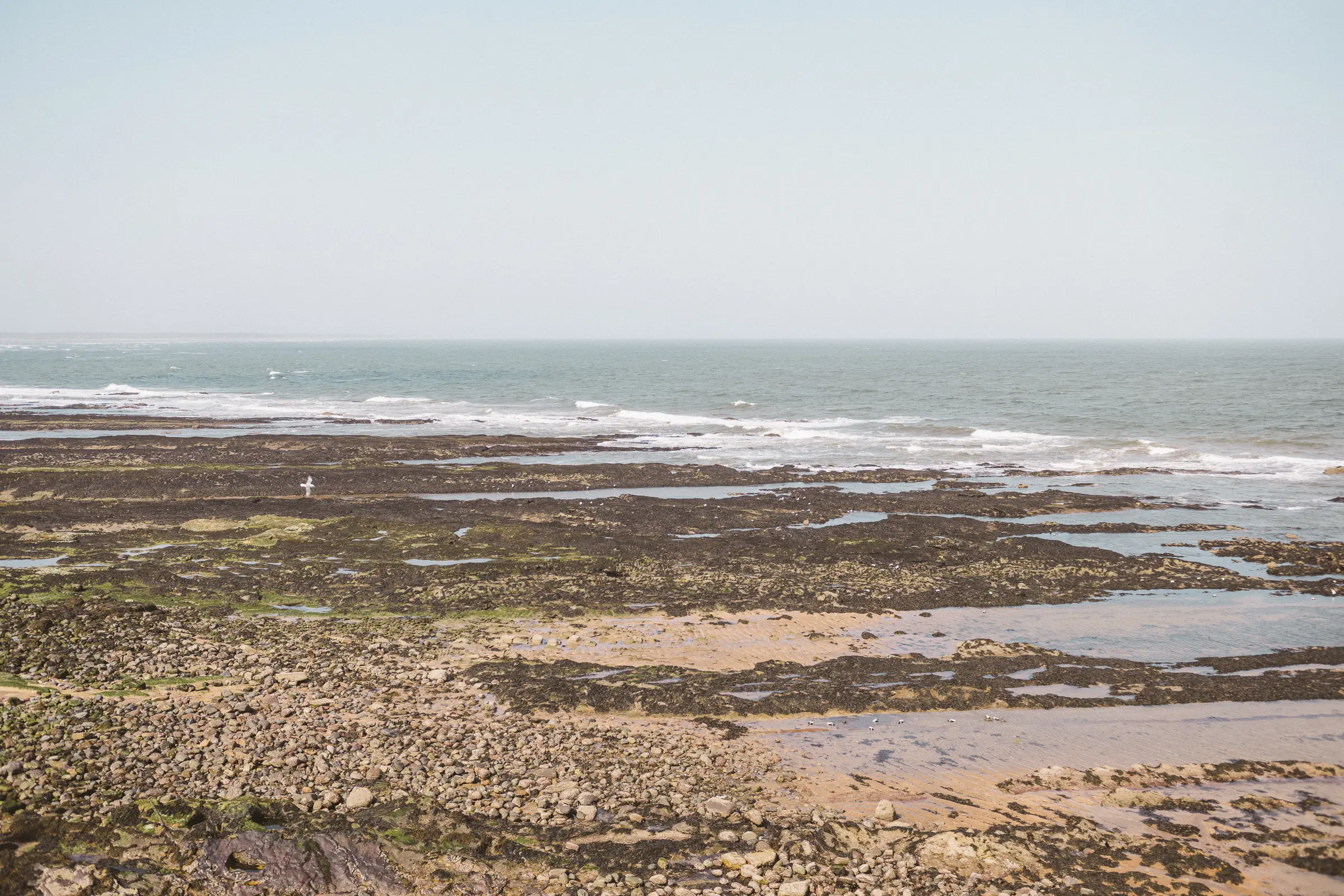
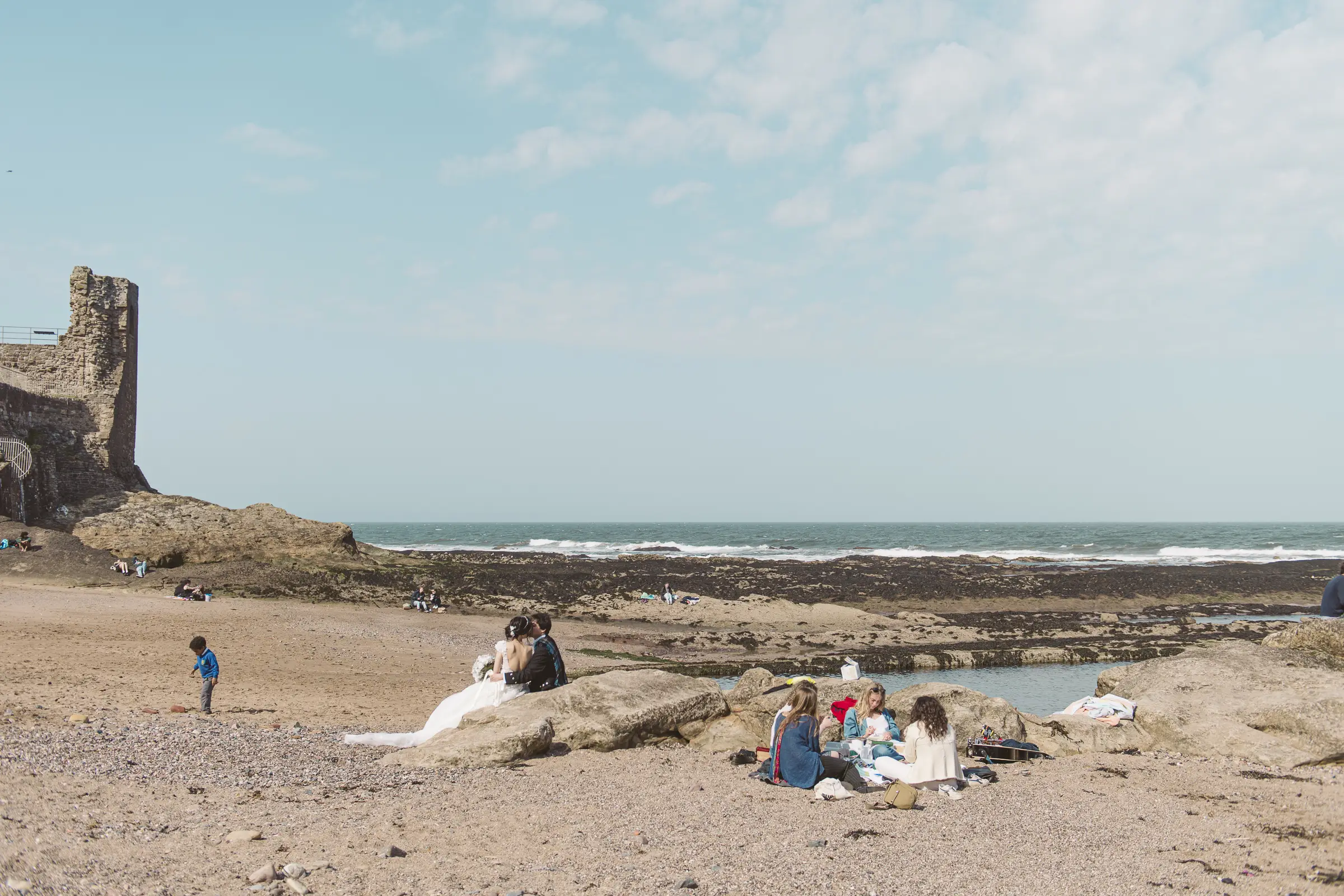
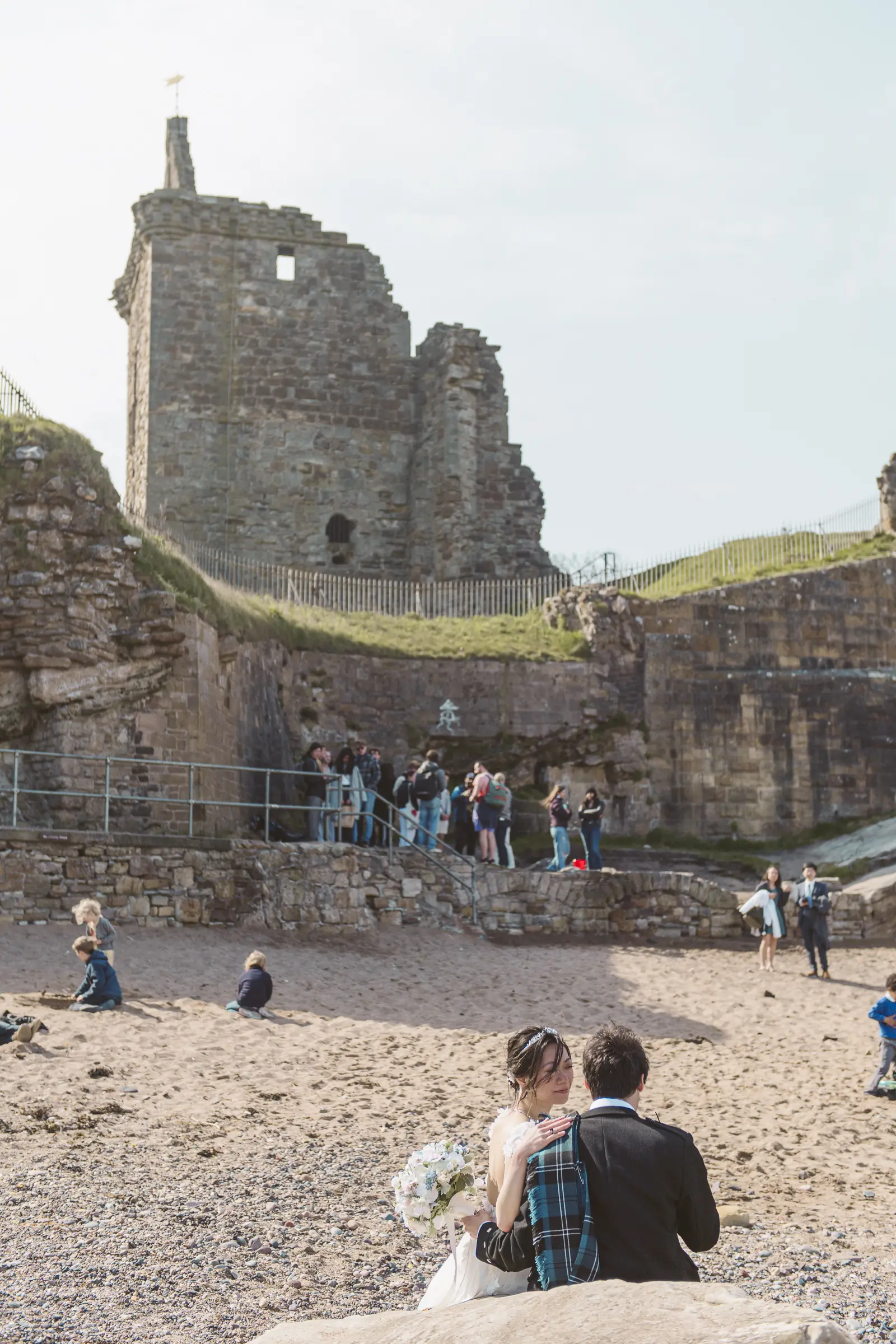
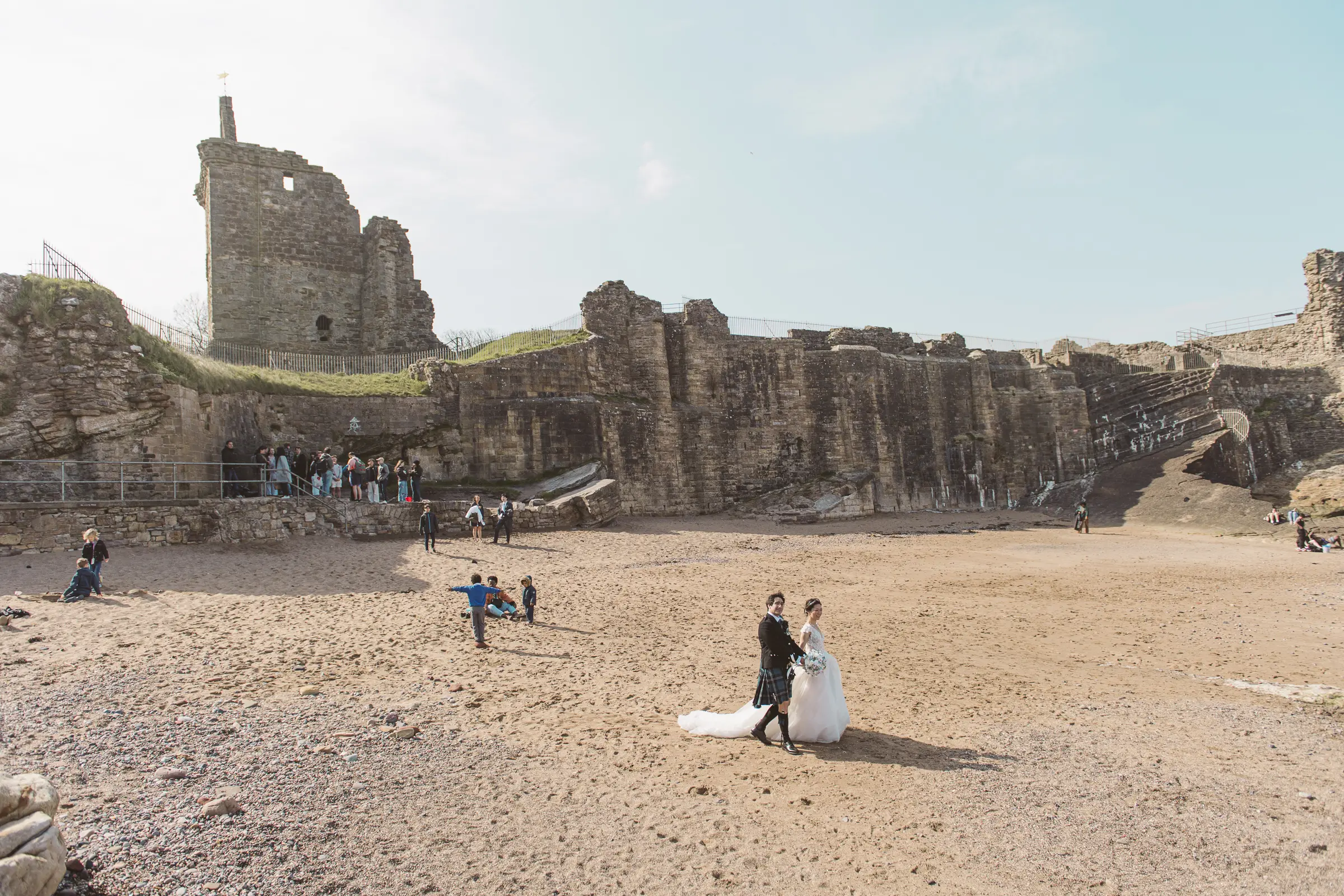
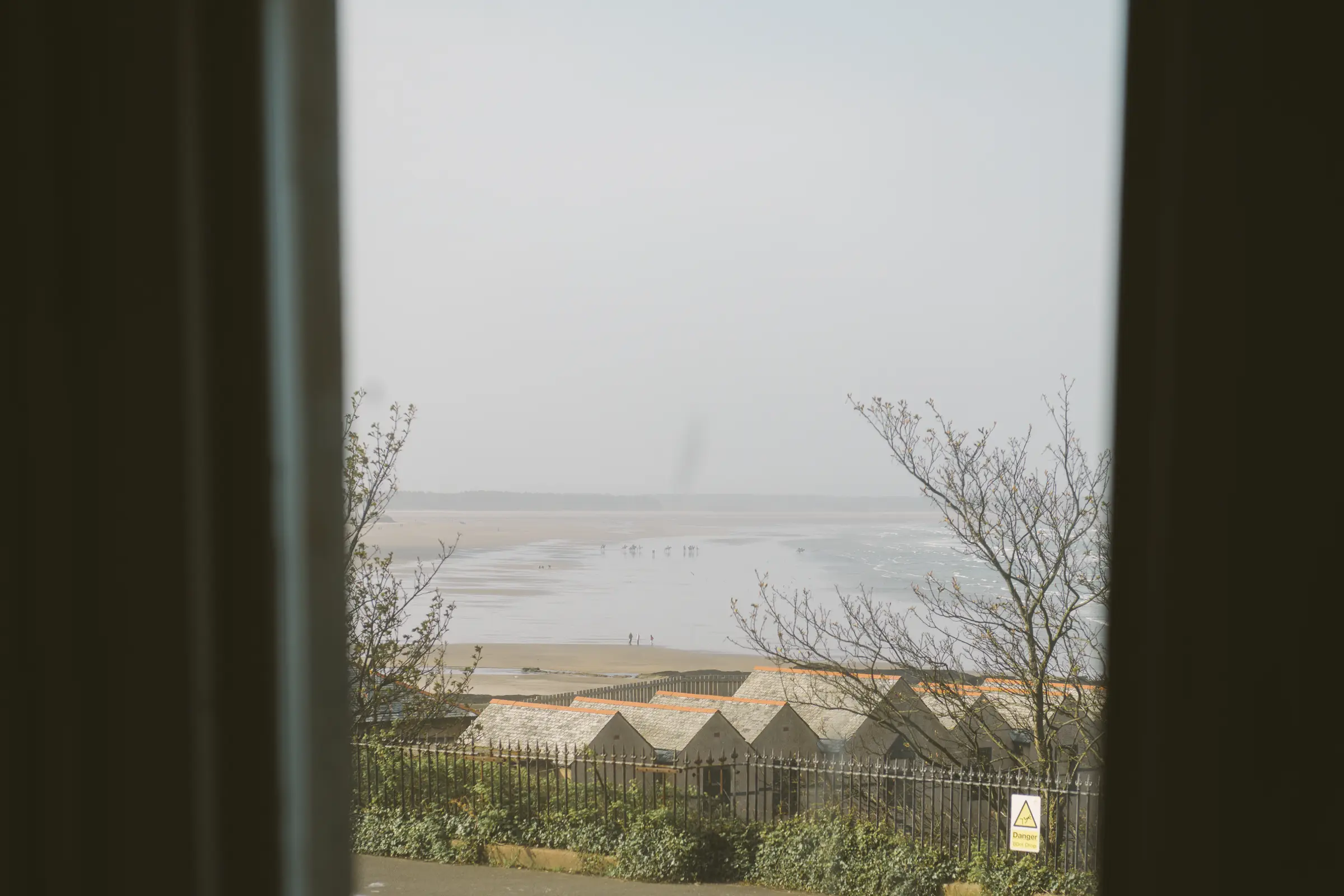
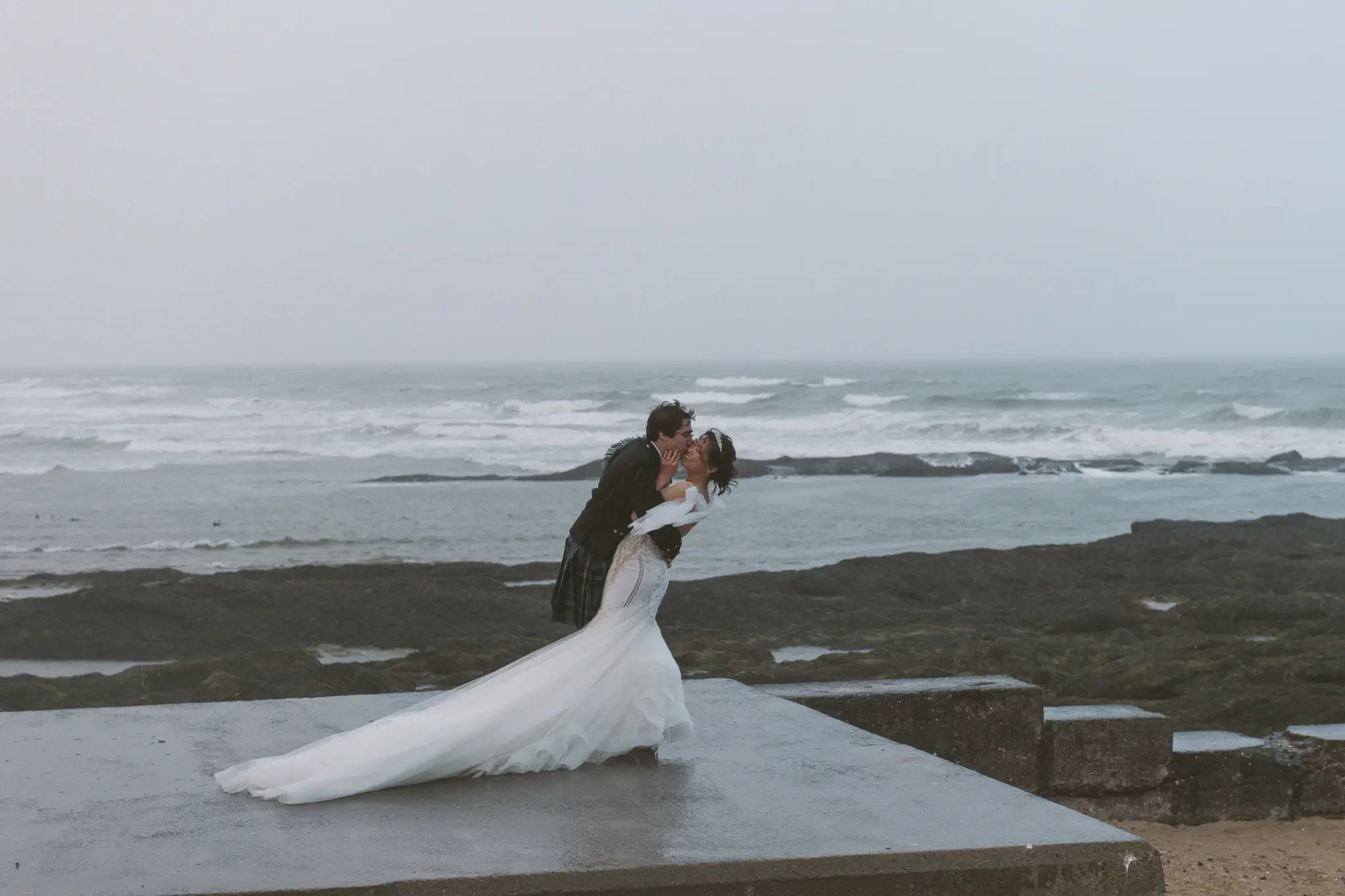
Moving from the university to the coast changes almost everything in the photographs. The background opens, the horizon becomes important and wind starts to affect posture, clothing and pace. The images become less architectural and more about movement and space.
I do not need a long beach session to show that change. A short walk can be enough, especially on an intimate wedding day. The couple can move, talk and react to each other while I work from farther back, then we can return to the town without losing an hour to photographs.
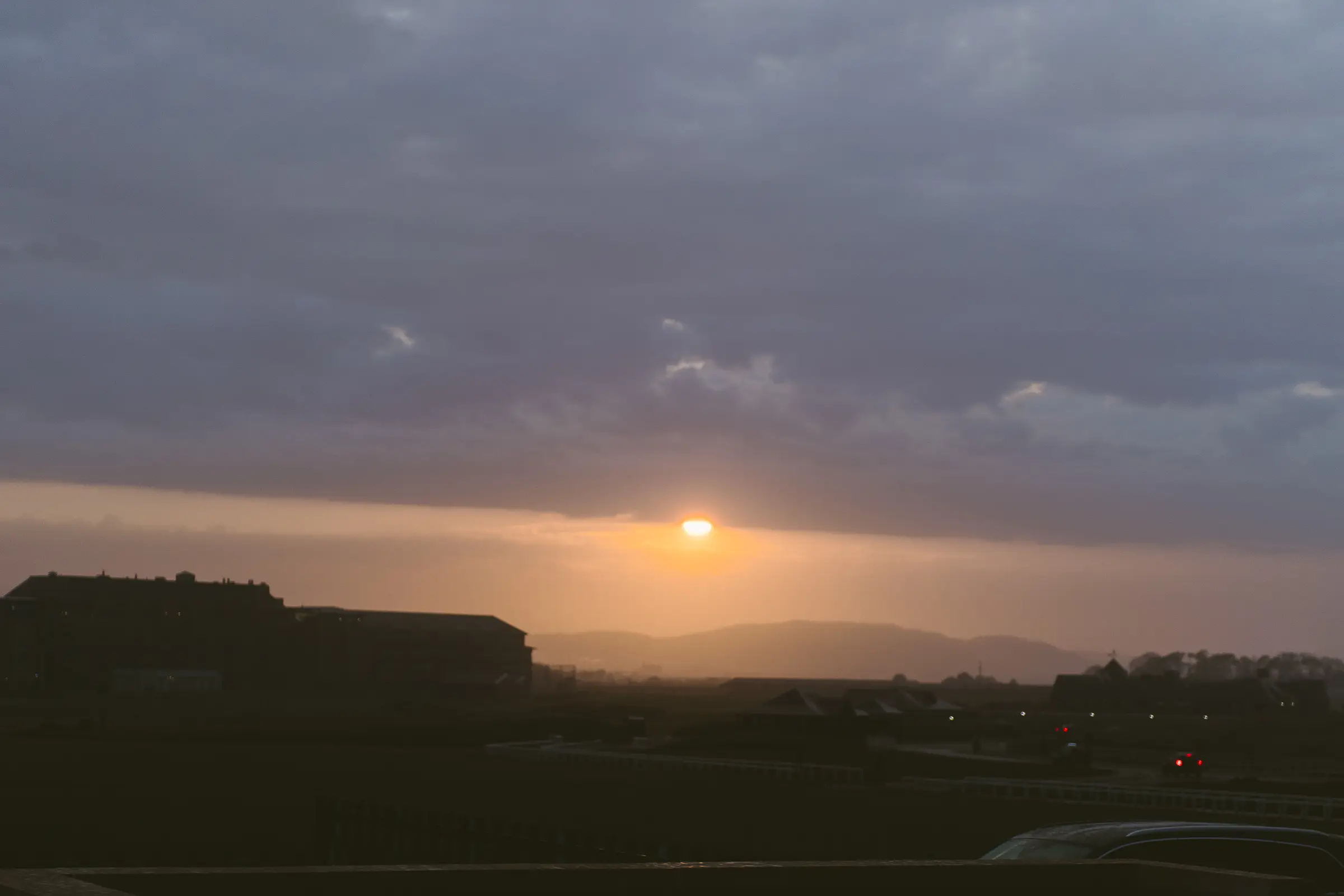
Coastal light is also less predictable than it appears on a map. Bright sky, low cloud and reflected light from the sea can change exposure and colour very quickly. I work with what is there rather than promising one specific look.
05
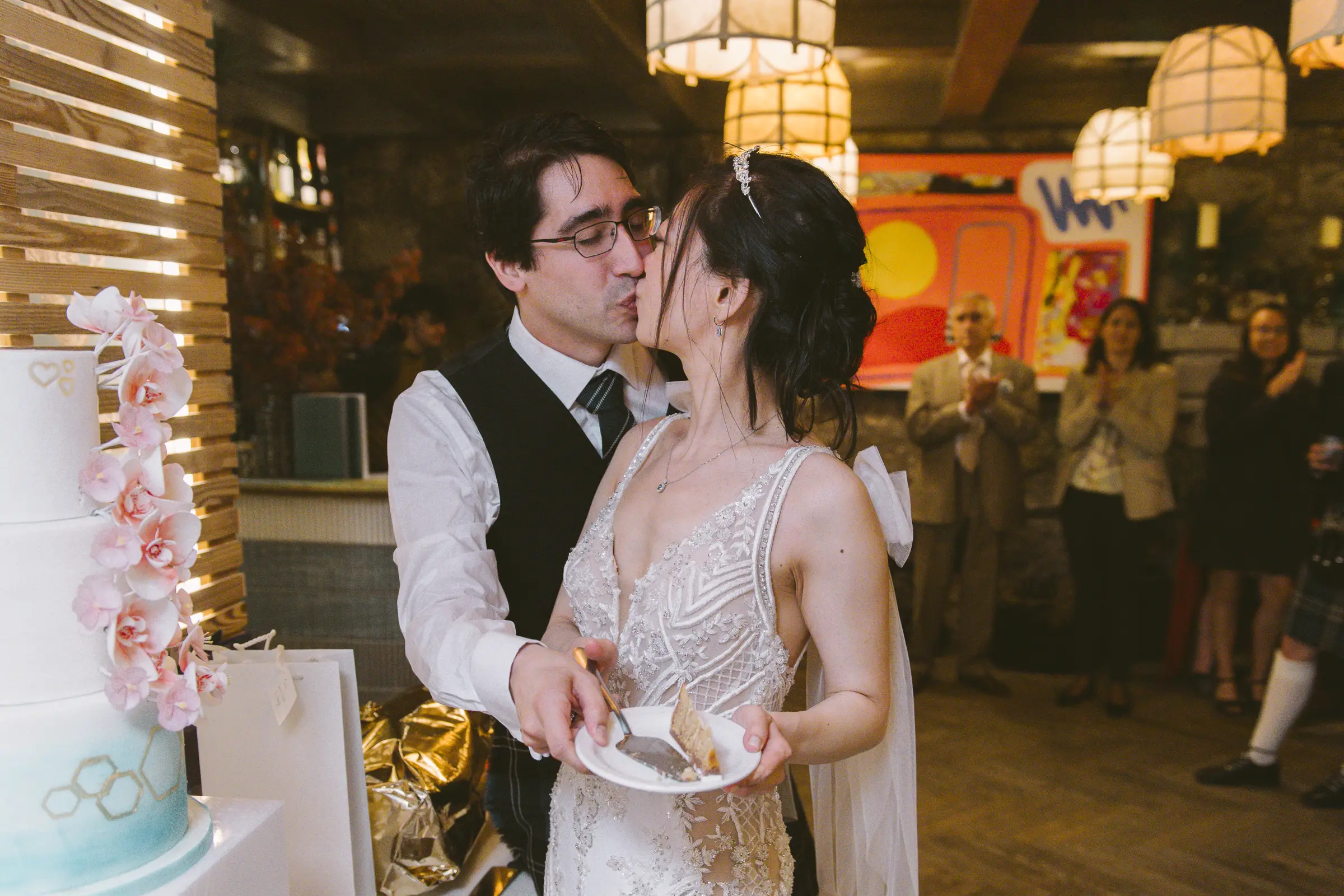
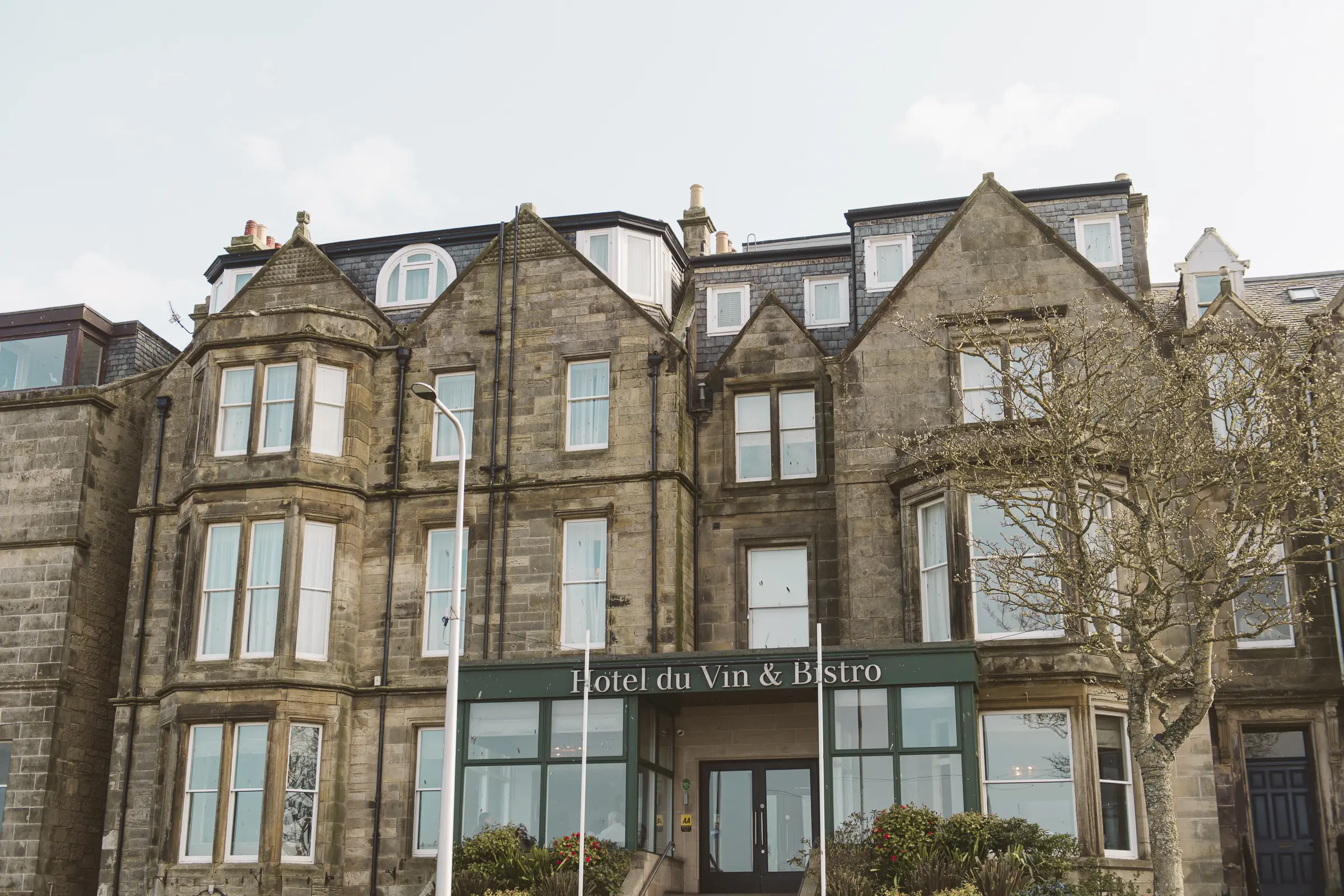
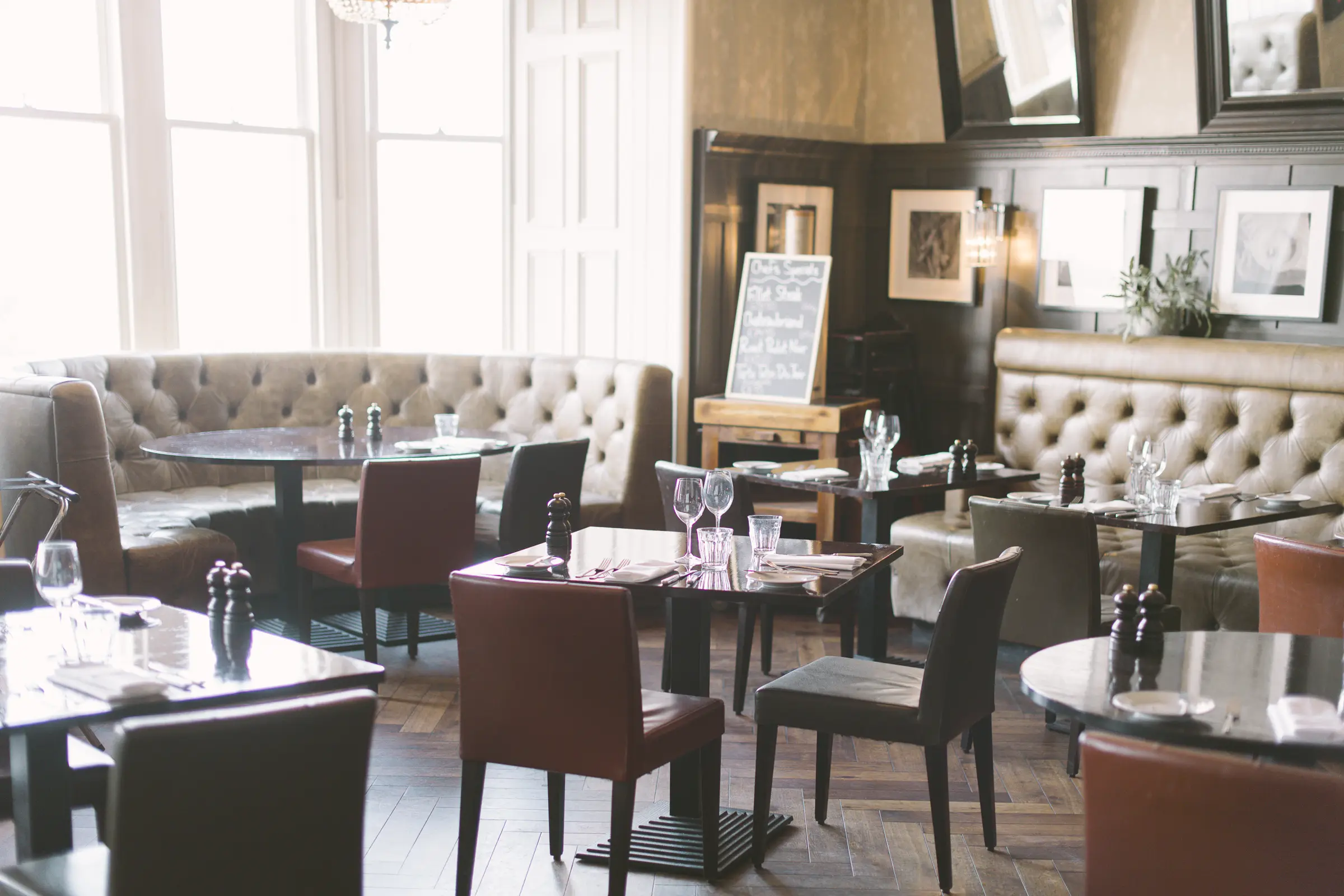
An intimate reception at Hotel du Vin
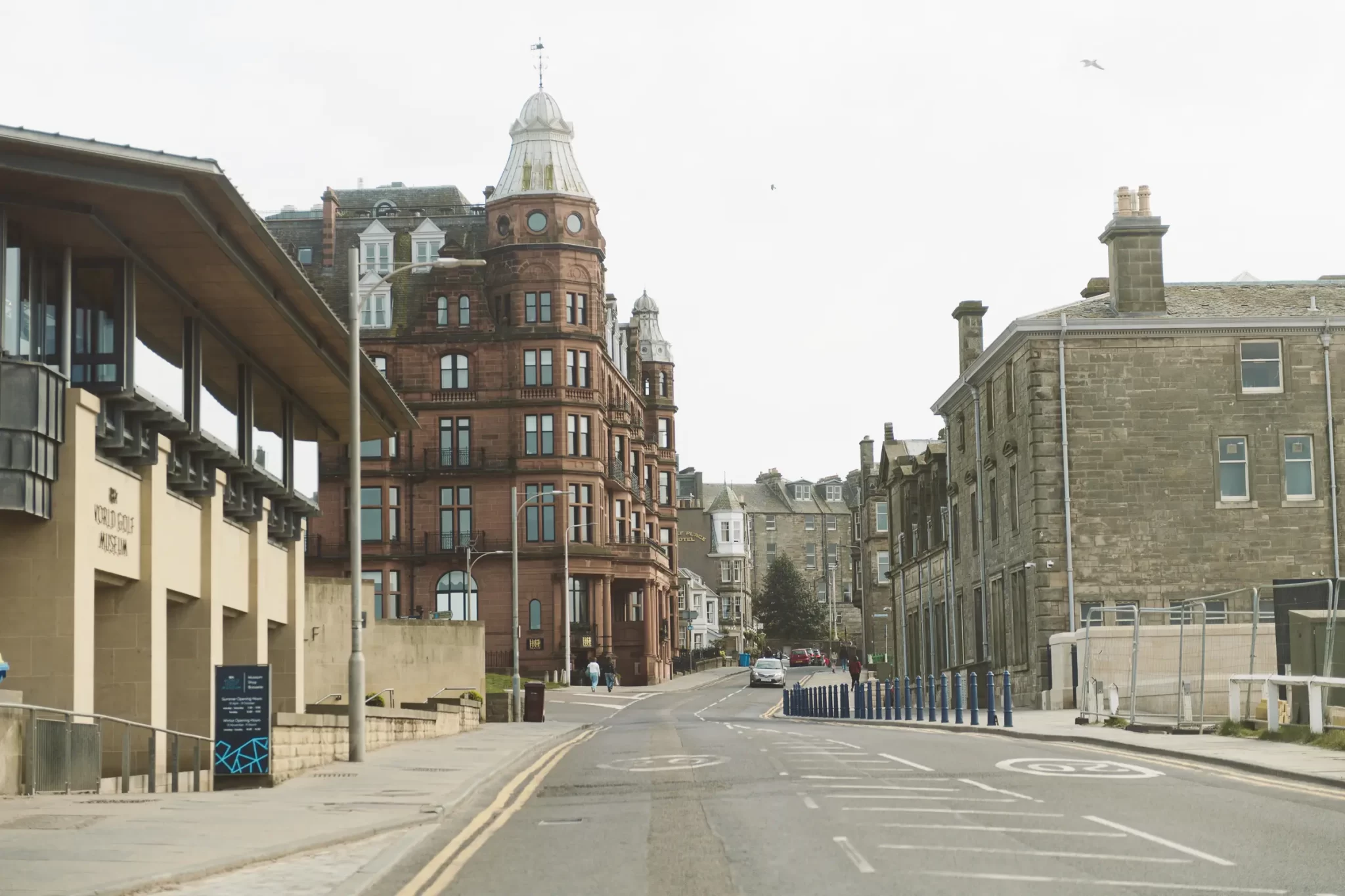
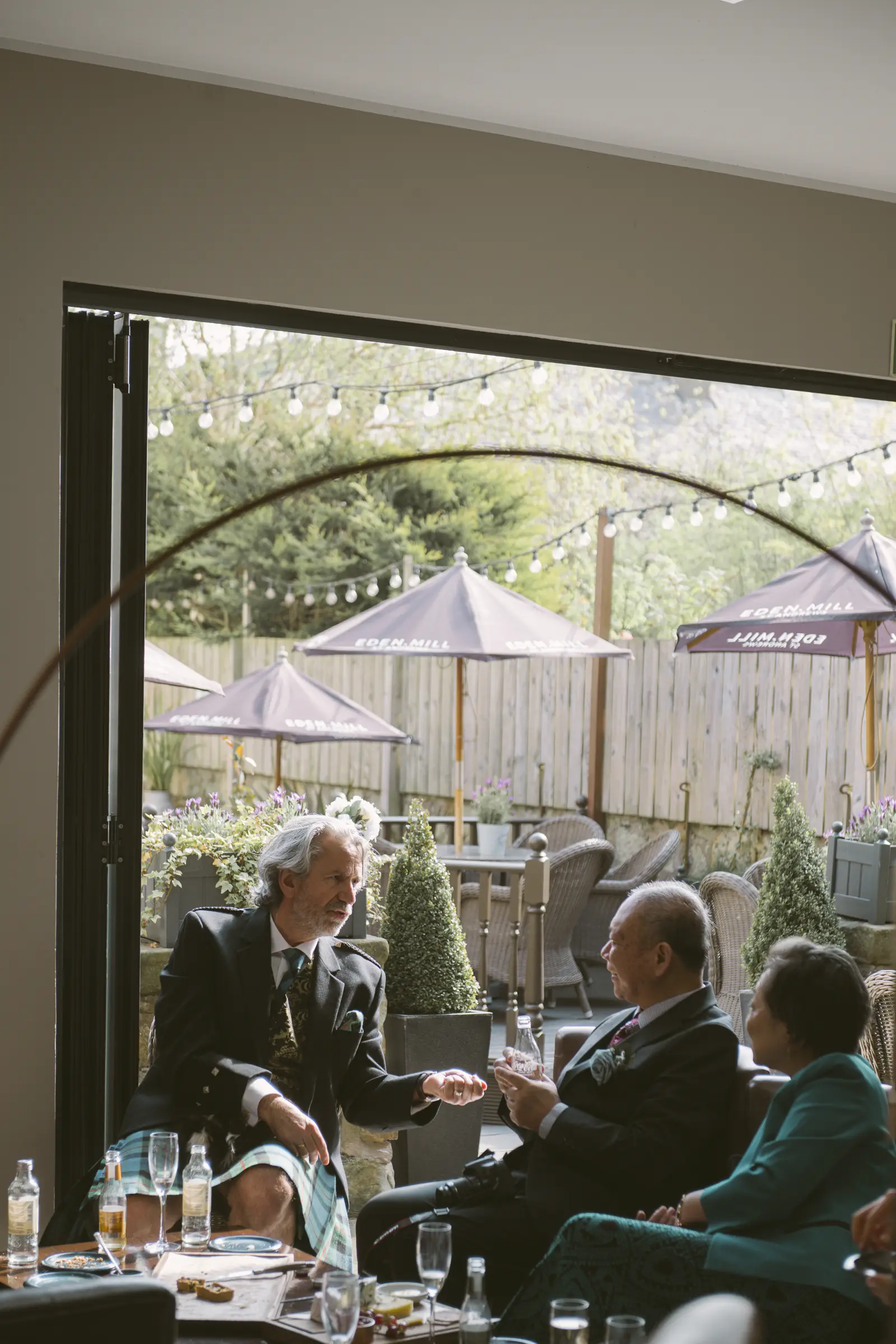
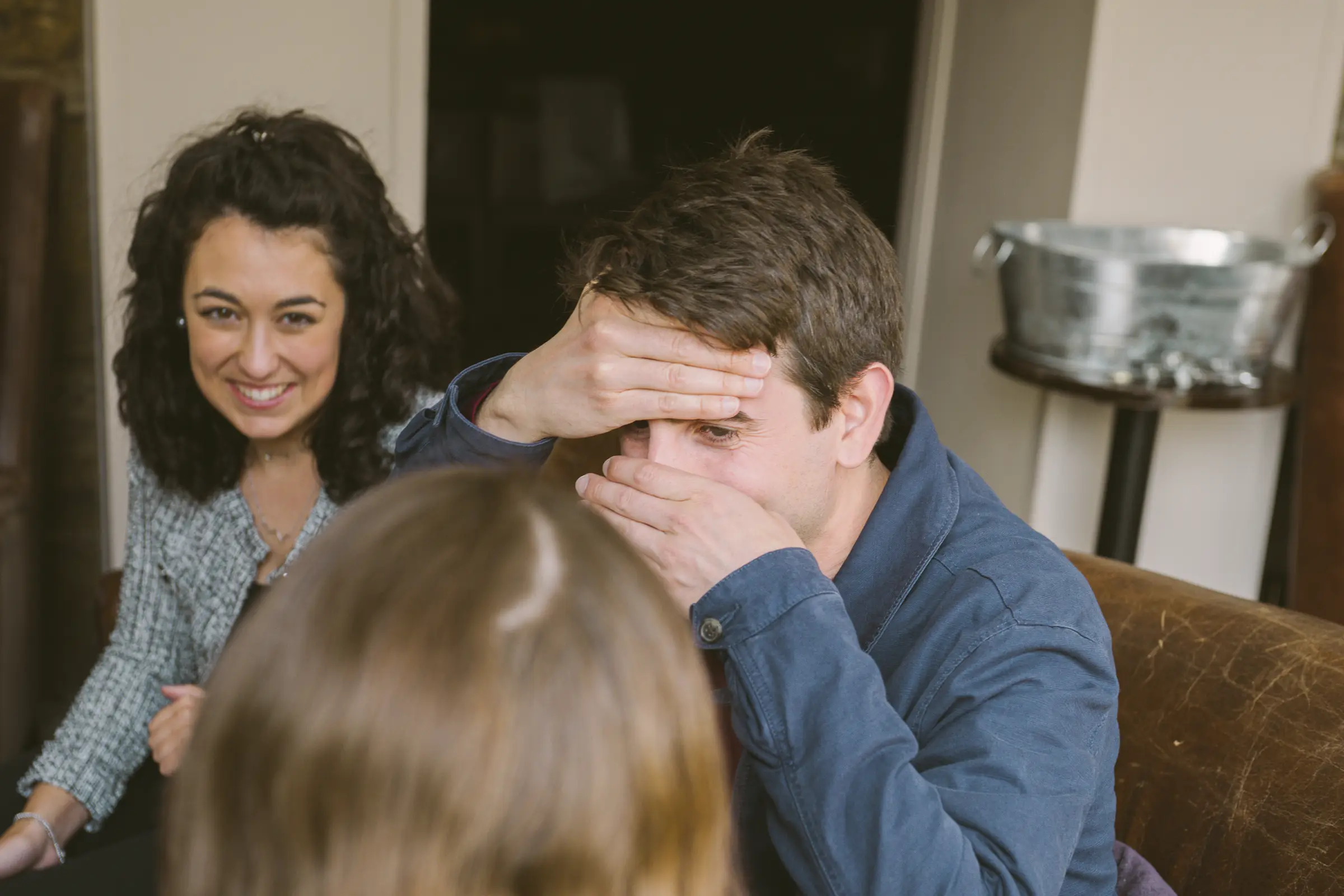
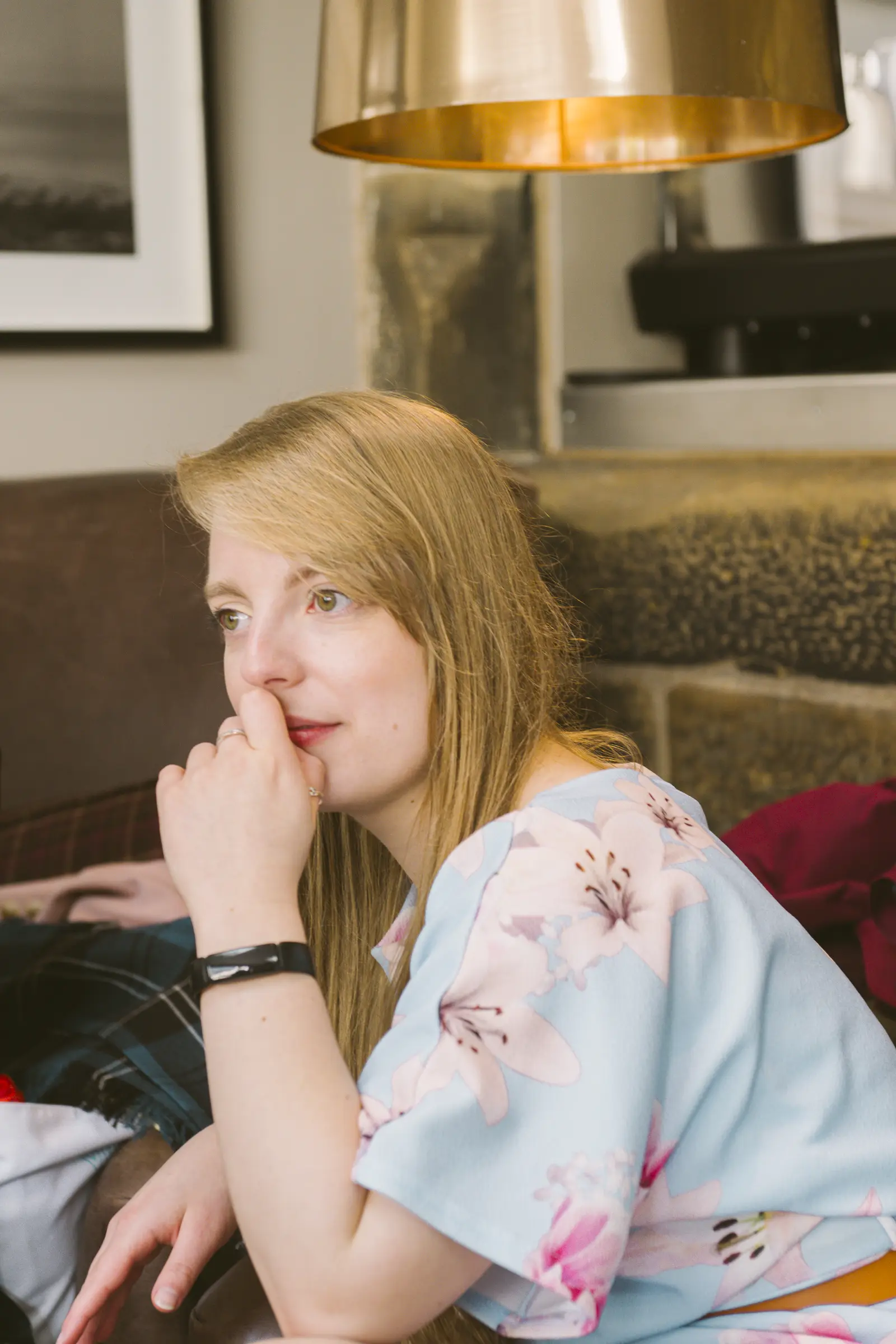
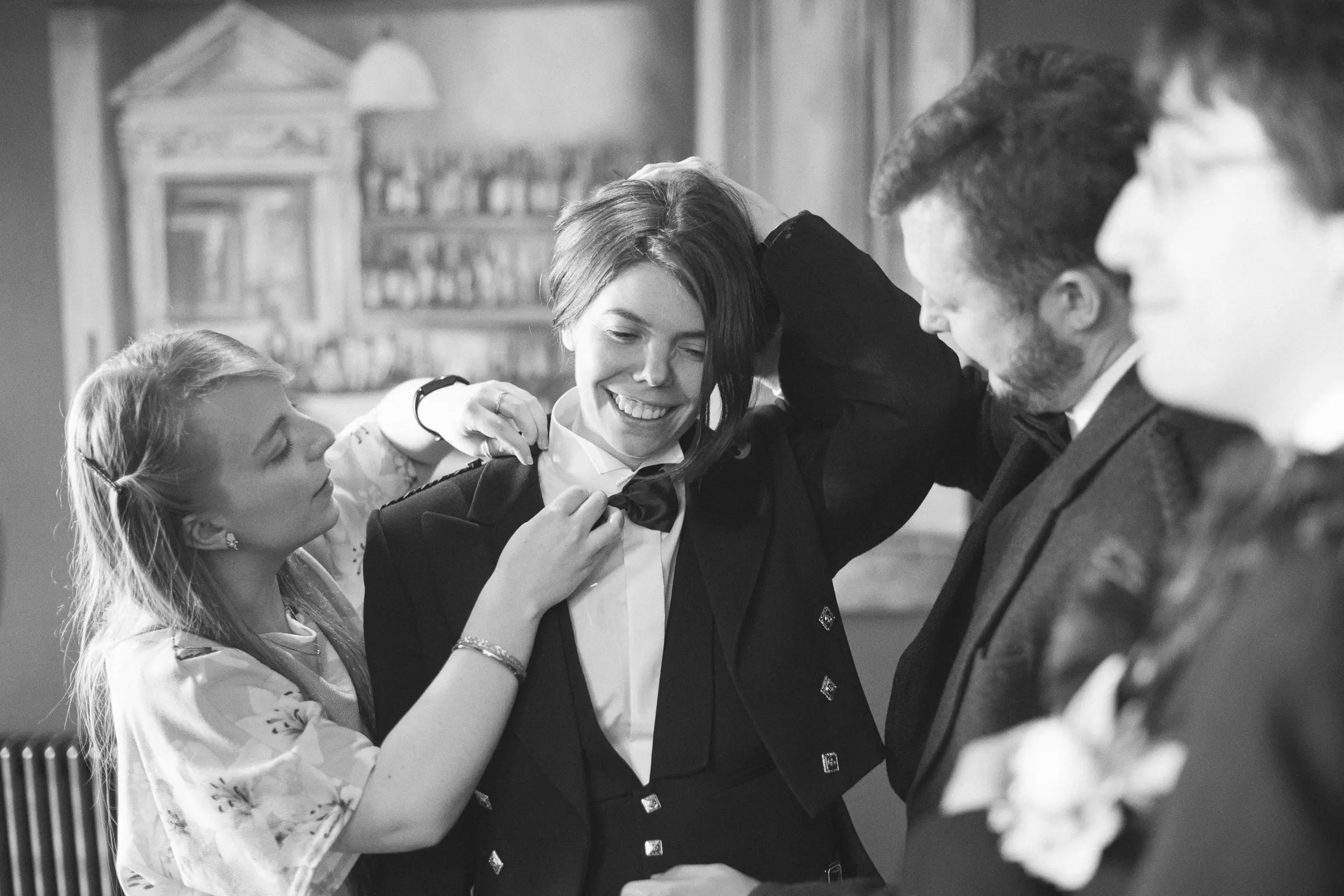
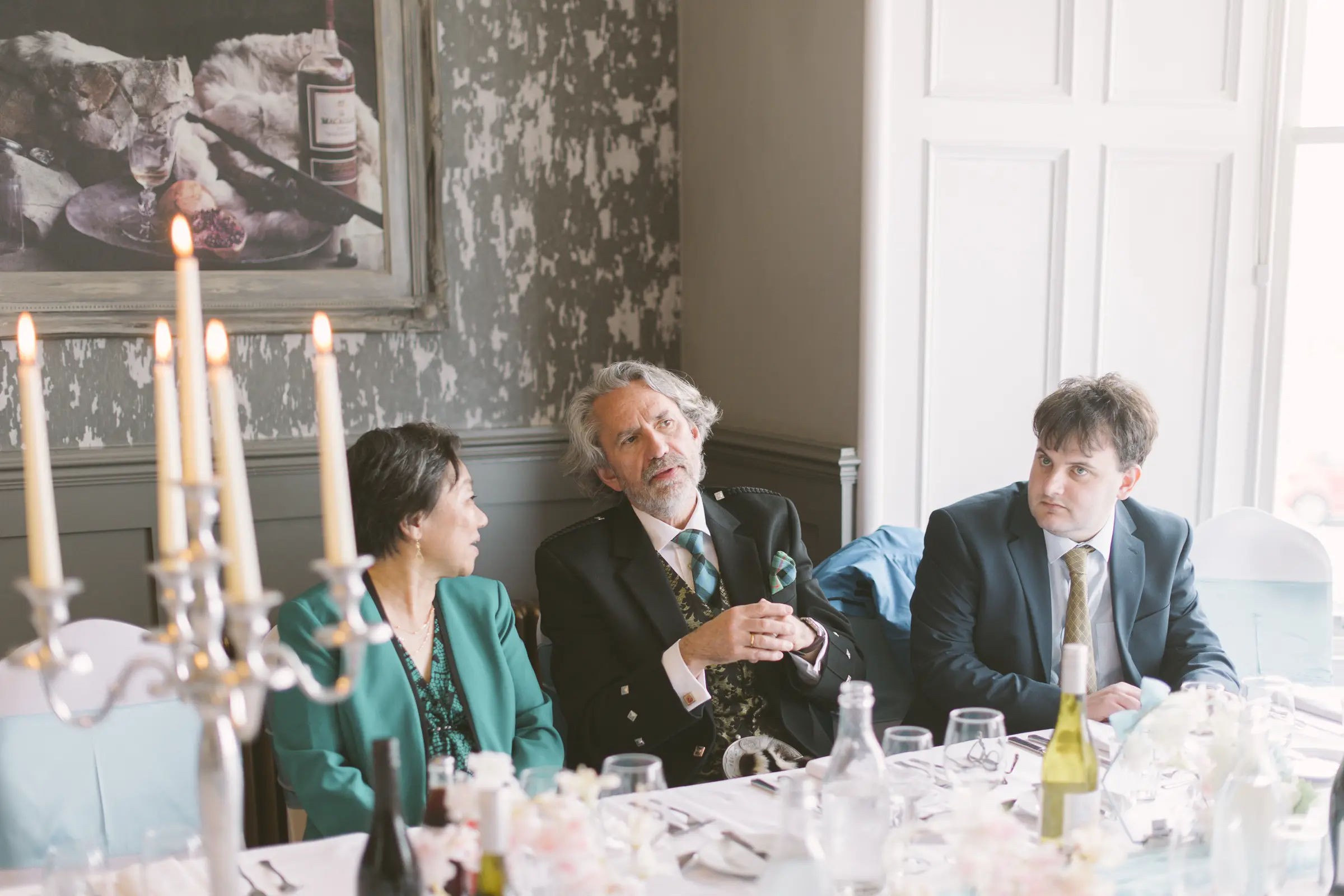
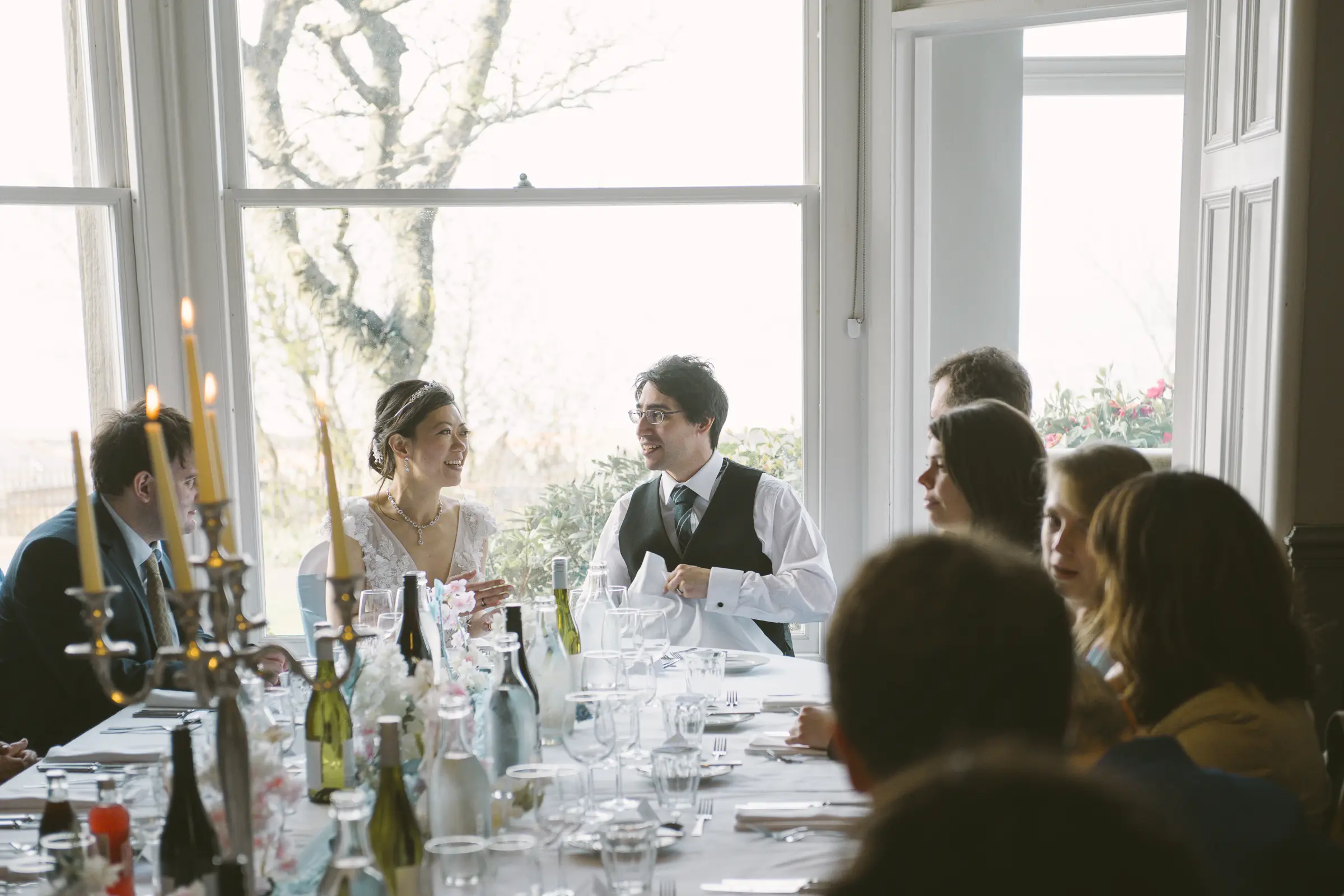
Doris and Andre finished the main part of the day with an intimate lunch at Hotel du Vin. That scale suited the rest of the wedding. There was no abrupt switch from a quiet civil ceremony into a huge formal reception; the story stayed close to the people who were actually there.
Smaller receptions need attentive documentary coverage because the meaningful moments can happen without announcement. Conversation, reactions, short speeches and family interactions become a larger part of the gallery. I do not need to fill the room with artificial events to make the reception photographically complete.
For another St Andrews wedding using a town-centre reception, I would protect the transition back from portraits carefully. The couple should arrive with enough time to settle before food or speeches begin, rather than walking into the room already late because the portrait route became too ambitious.

06
Weather and timing in a walkable Scottish town
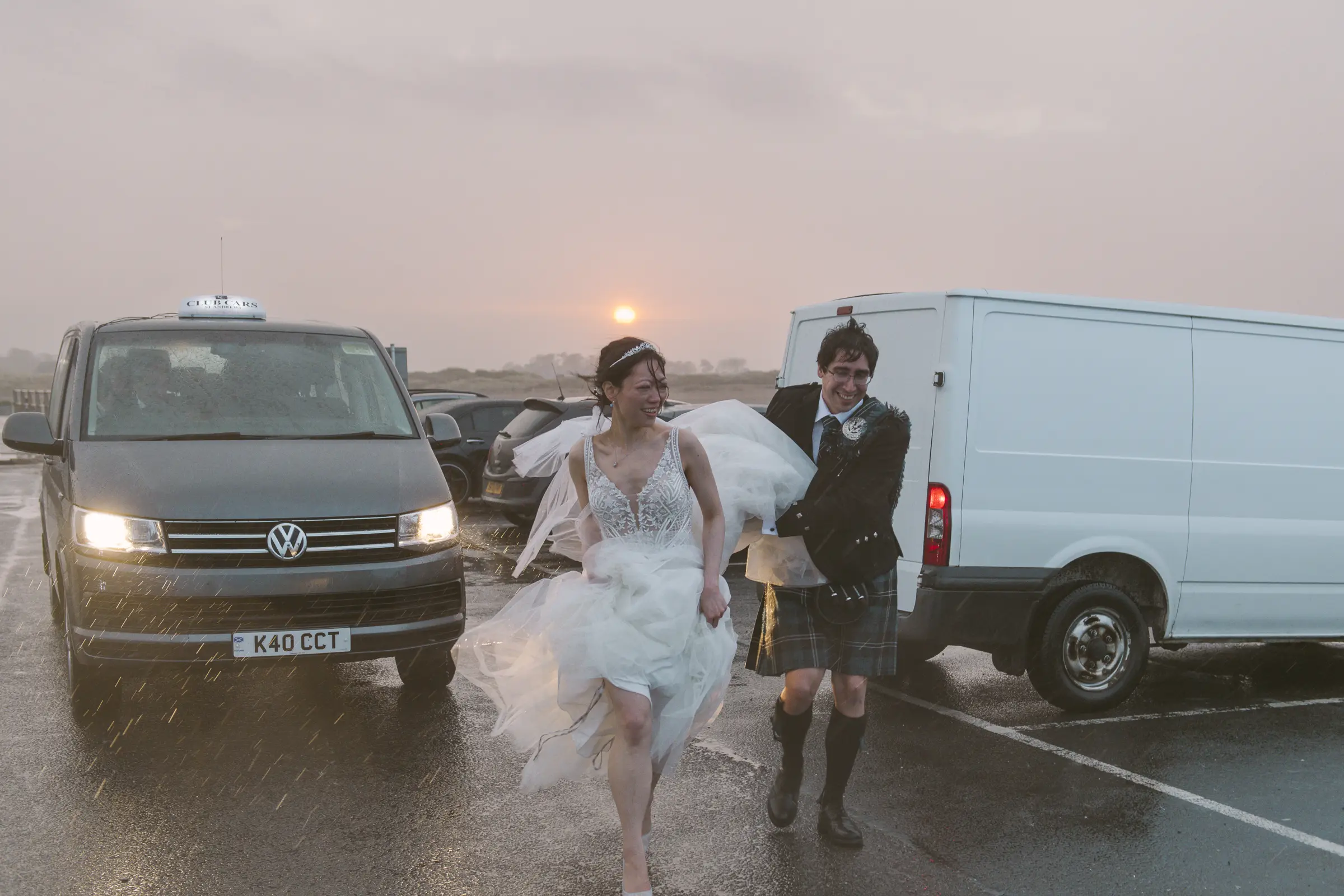
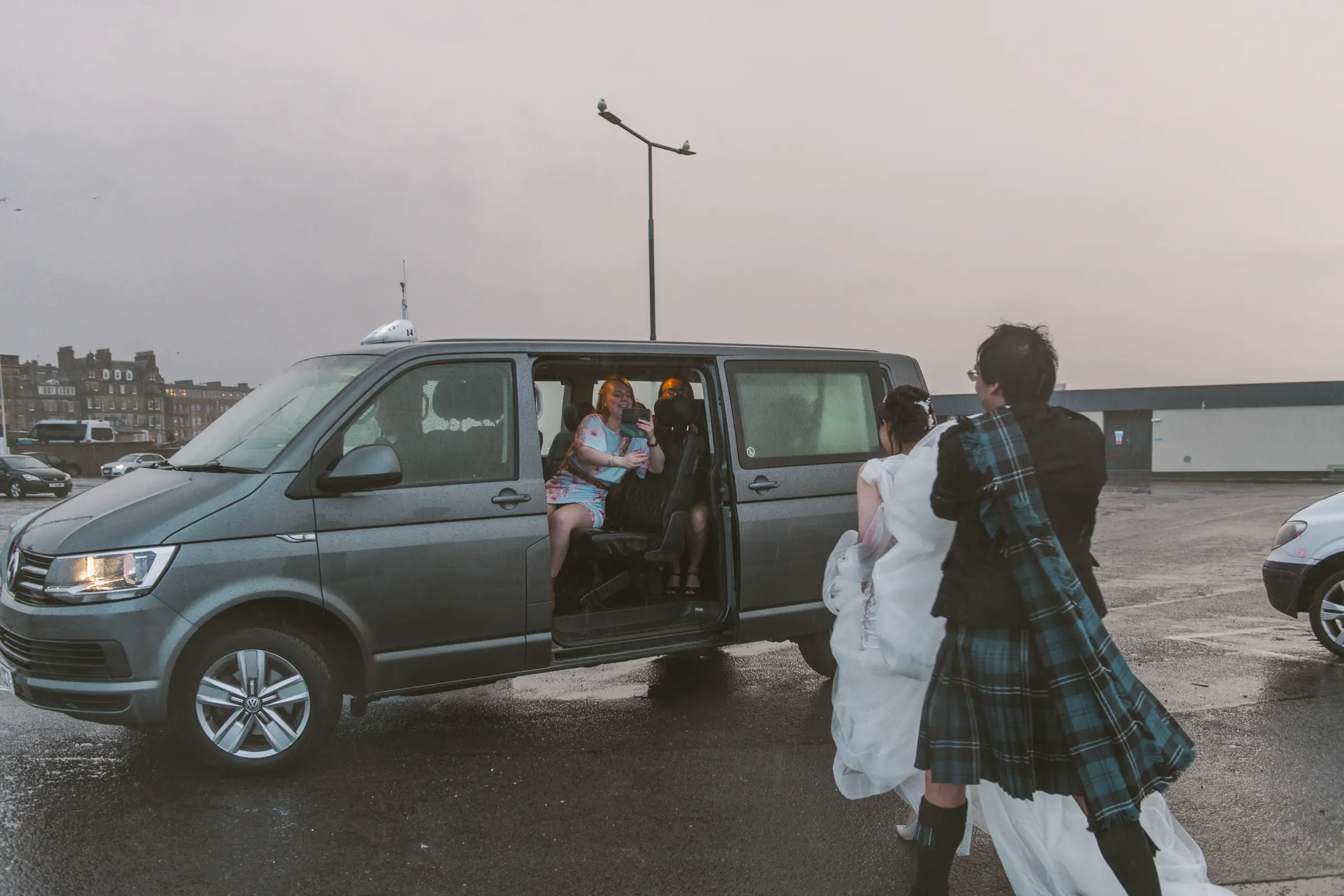
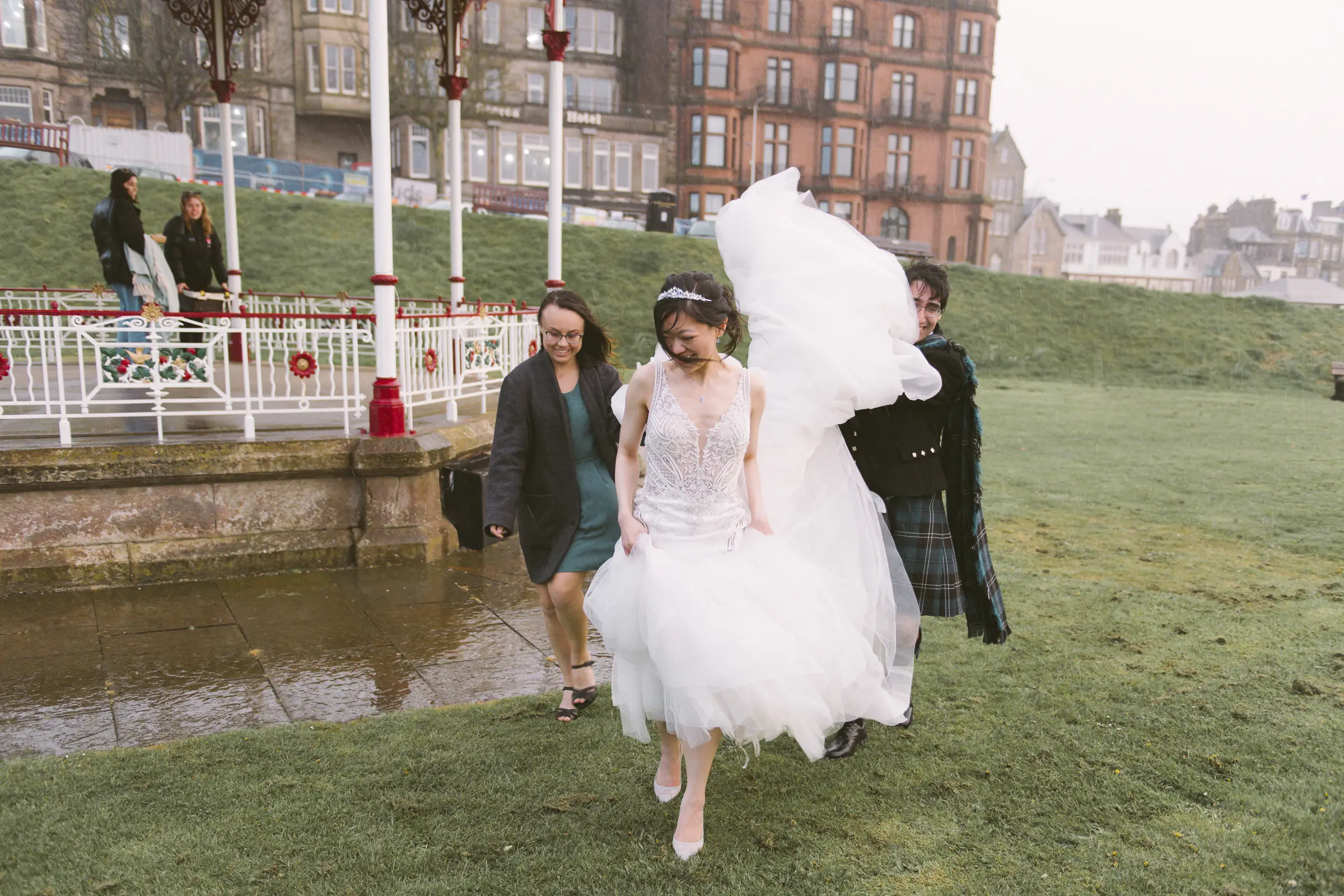
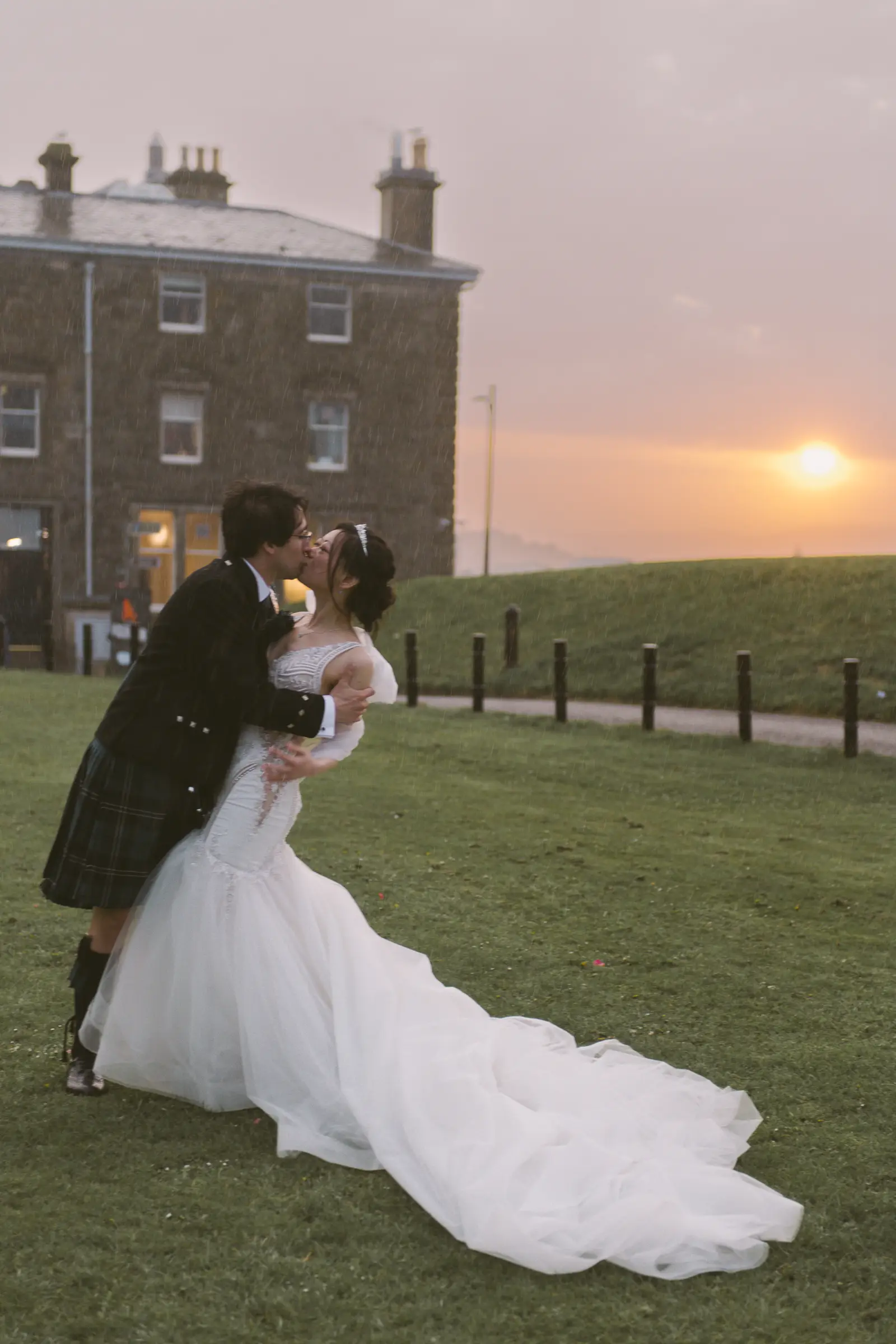
St Andrews is easier to plan than a remote Highland route because many useful locations are close together, but the weather still matters. Wind on the coast can be much stronger than it feels between buildings, and rain can make the best order of locations change within minutes.
I prefer a flexible route rather than a rigid list. If the coast is uncomfortable, we can use the university first. If rain passes quickly, we can move outside when it clears. The wedding does not need to stop while everyone waits for a forecast to become true.
Seasonal daylight should be checked against the ceremony and meal times. In summer there is room to move portraits later; in winter there may be very little daylight after an afternoon ceremony. That is a planning issue to solve before the wedding rather than something to discover when the ceremony ends.

07
How I would photograph another St Andrews wedding
I would begin with the couple’s actual connection to the town. If the university matters, I would ask which part matters. If the coast matters, I would choose the nearest useful section rather than assume a long scenic detour is necessary. The route should reflect the couple’s day, not a standard St Andrews checklist.
For most weddings I would keep portraits in two short pieces: one immediately after the ceremony or during the move through town, and another only if the later light gives us something genuinely different. Family groups can be handled efficiently near the ceremony or reception venue.
The aim is a complete wedding gallery with a clear sense of place. Doris and Andre’s photographs work because the Burgh Chambers, university, beach and lunch all belong to one story. That is more useful than a collection of disconnected St Andrews views.