01
White gown before the first busy period
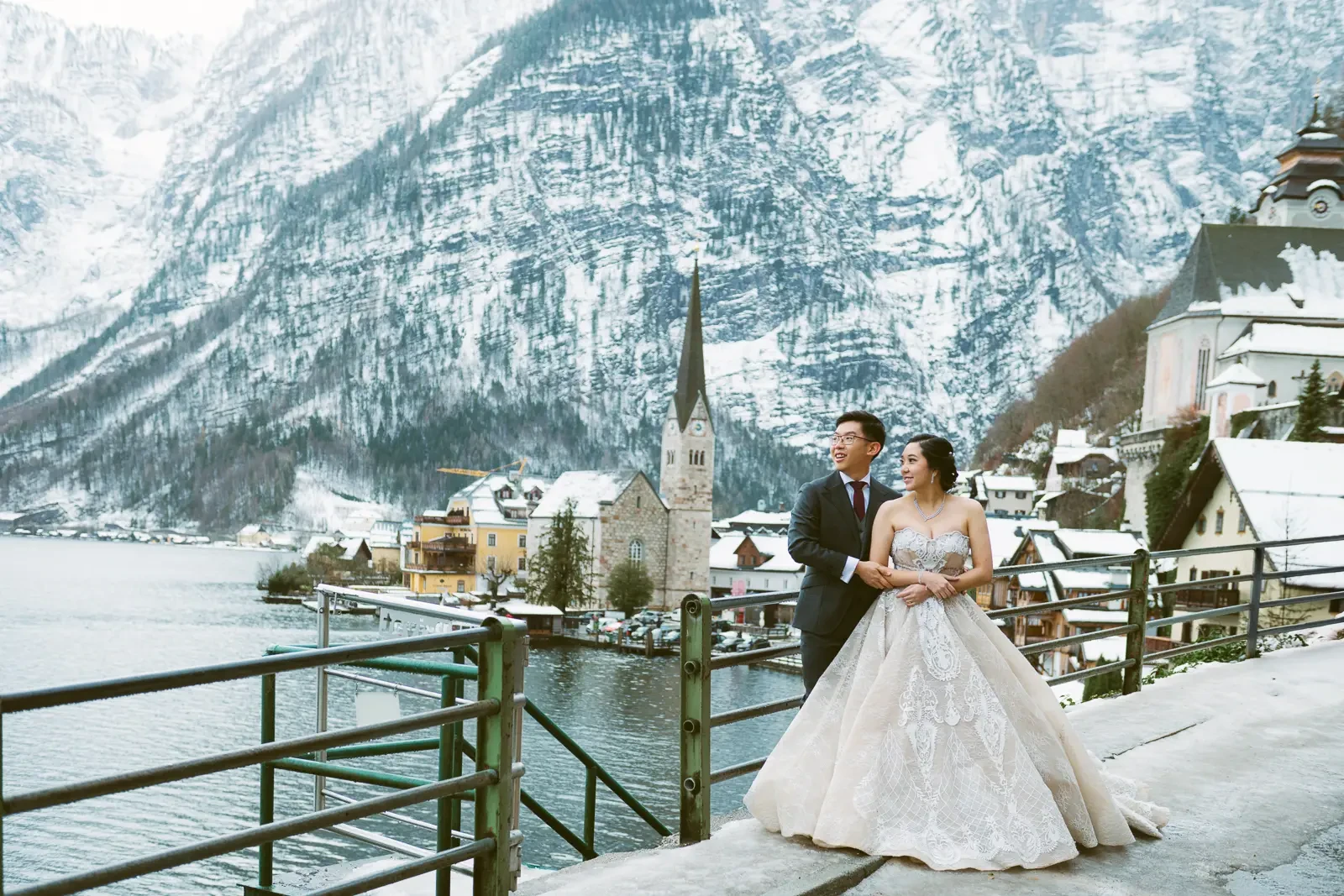
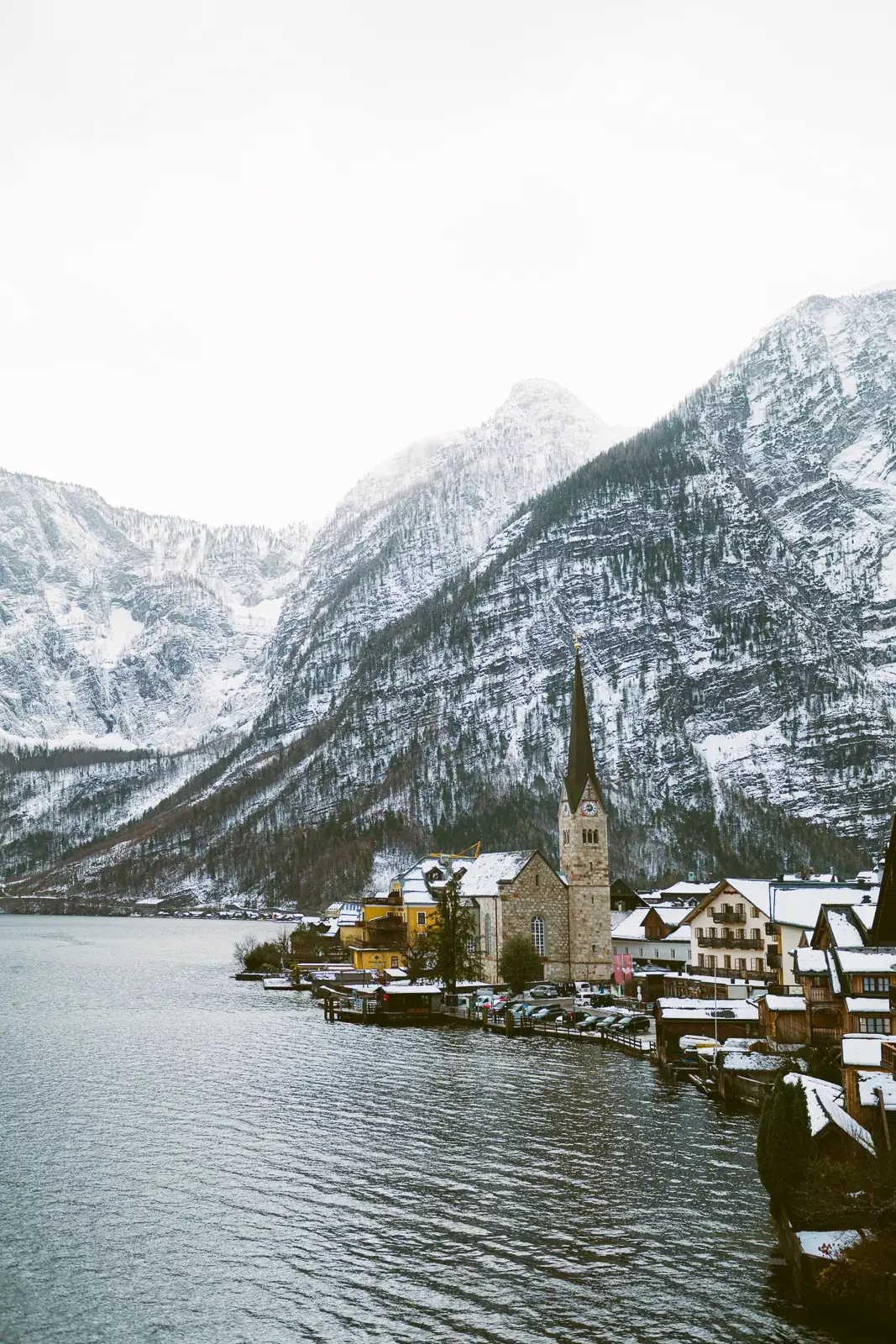
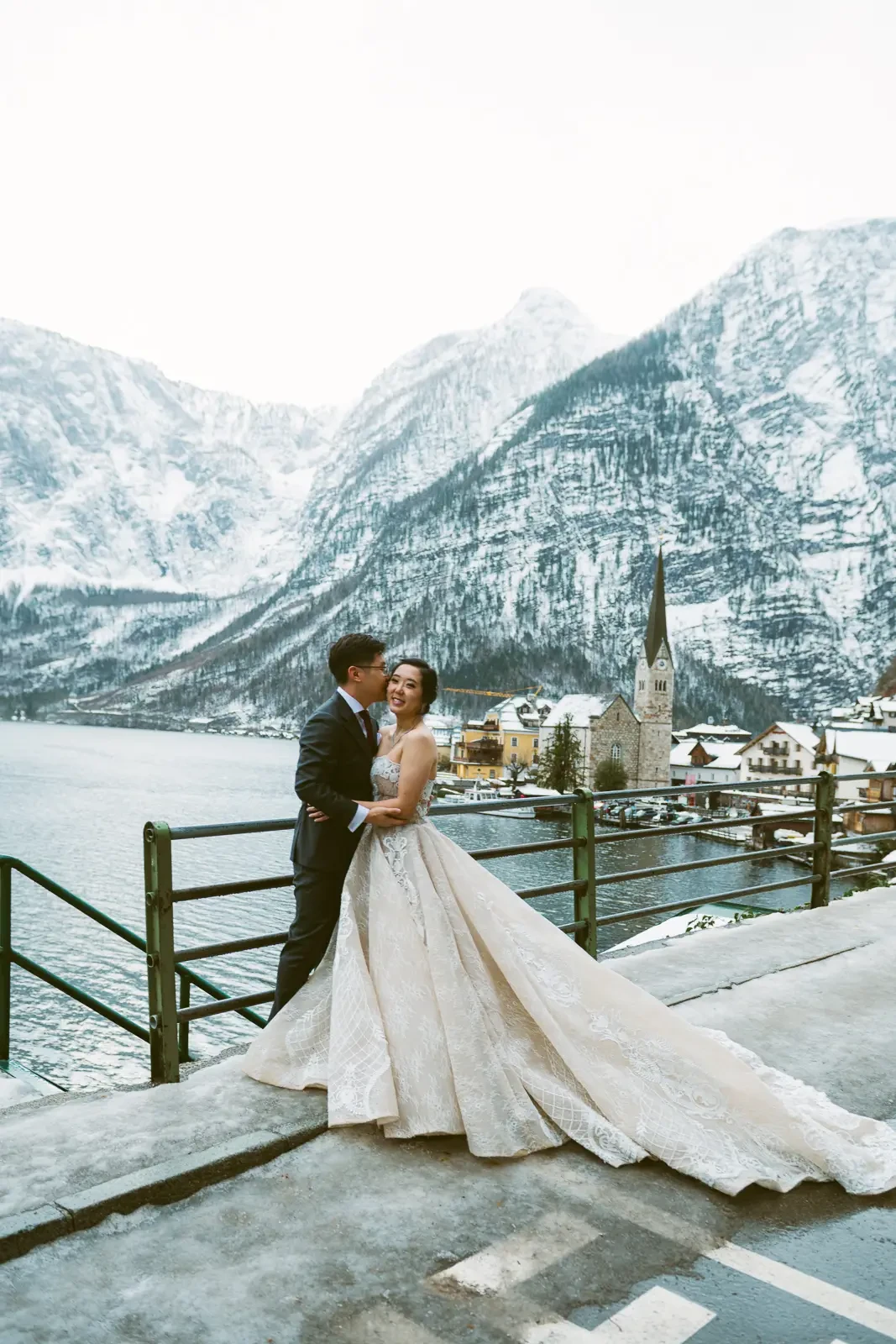
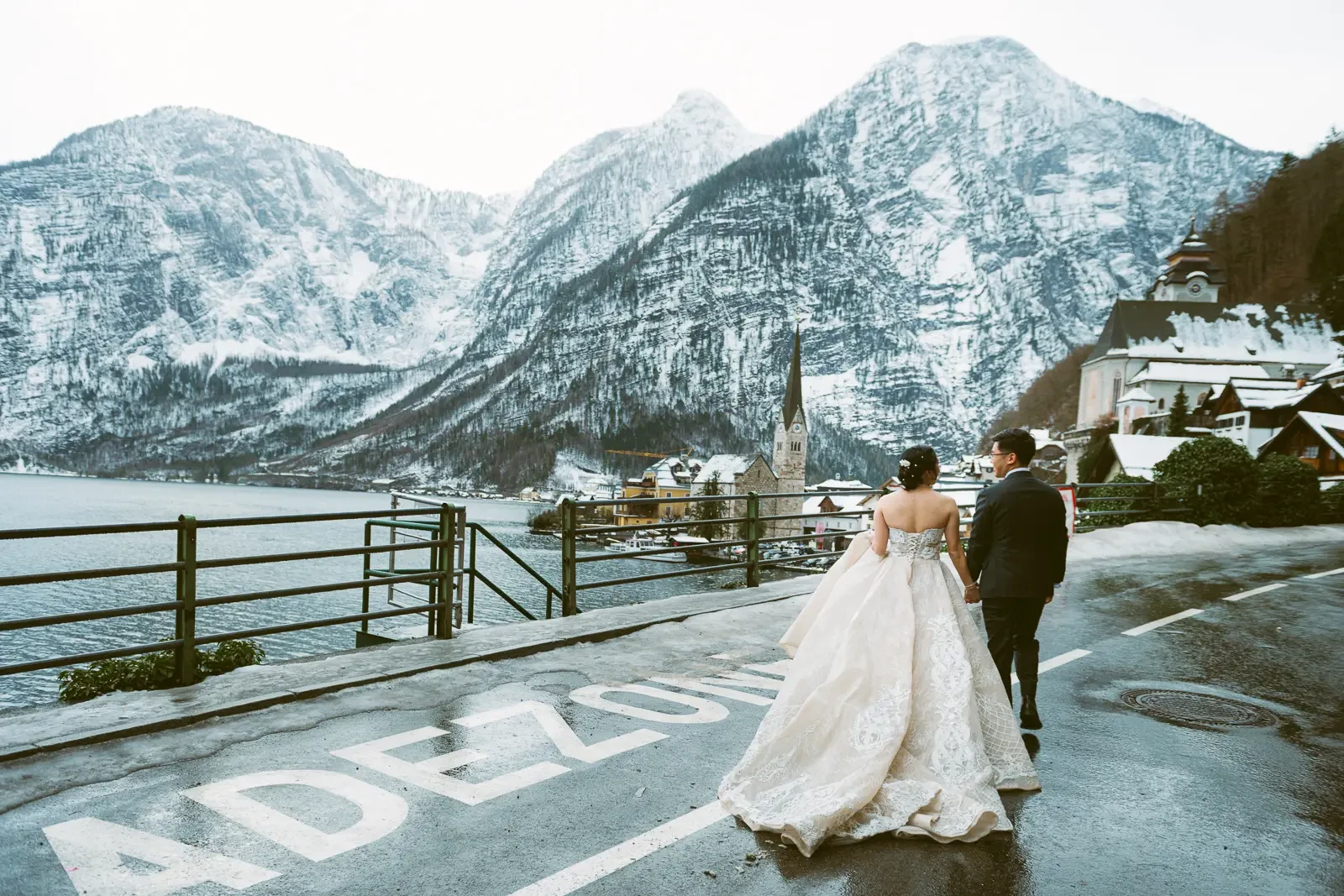
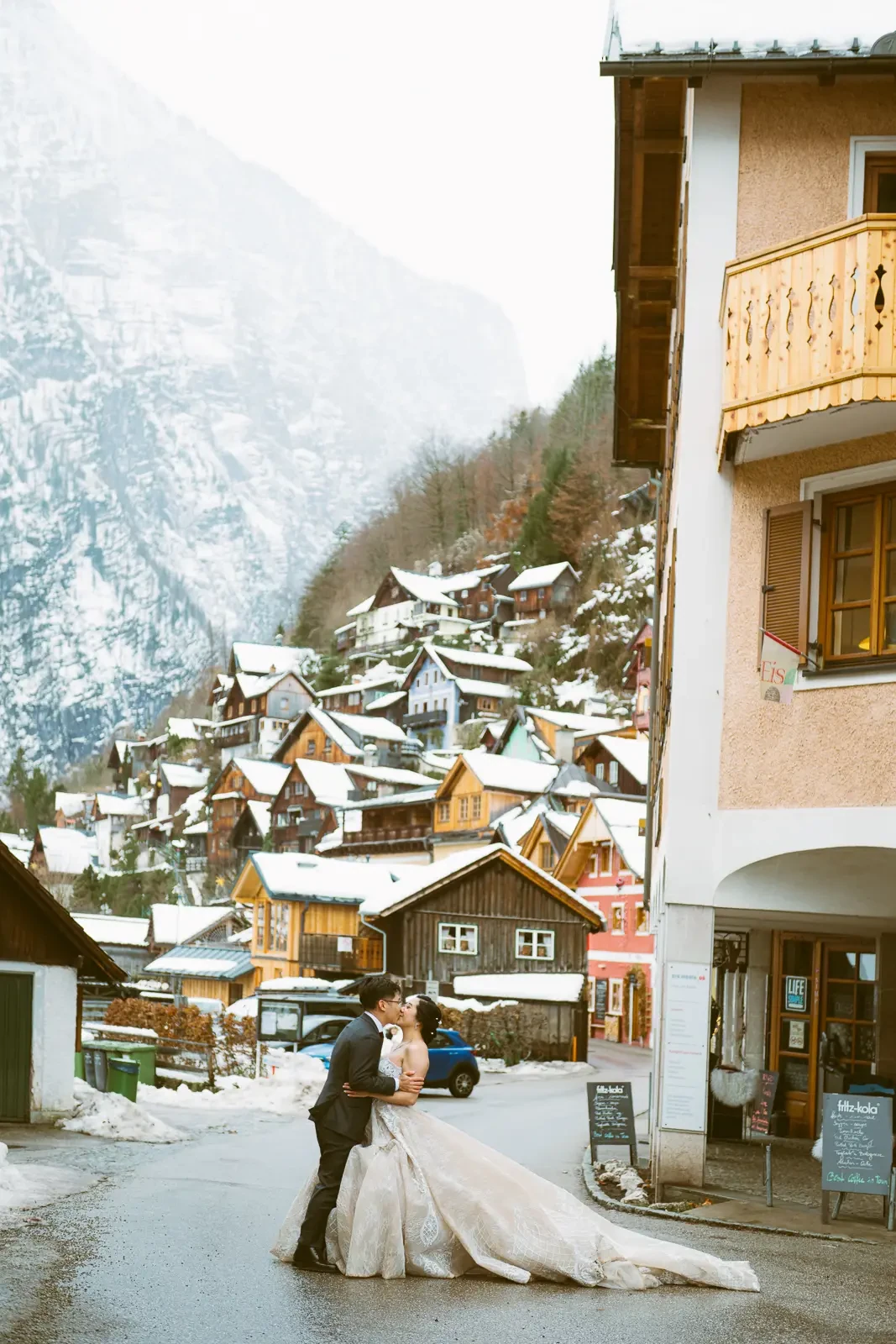
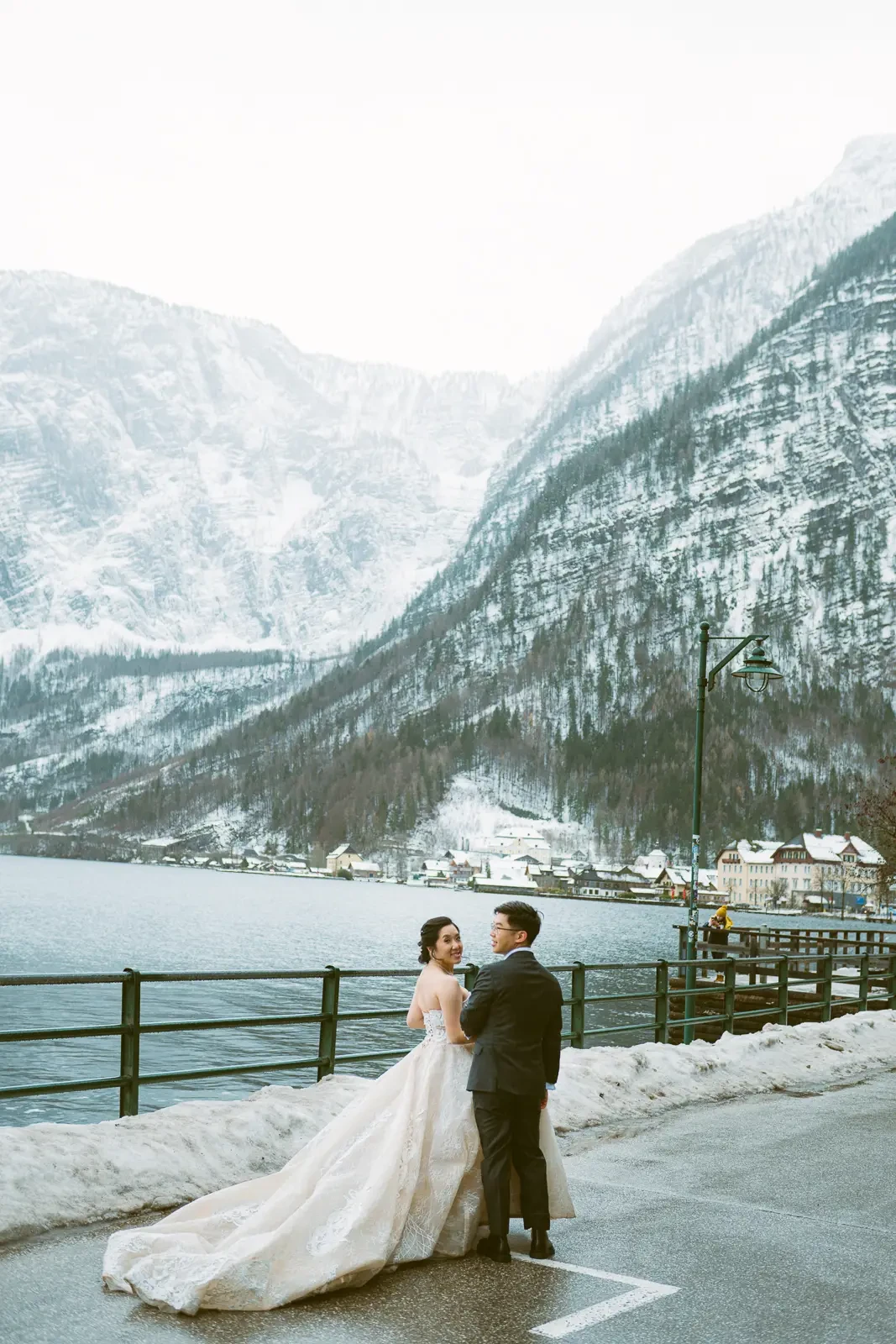
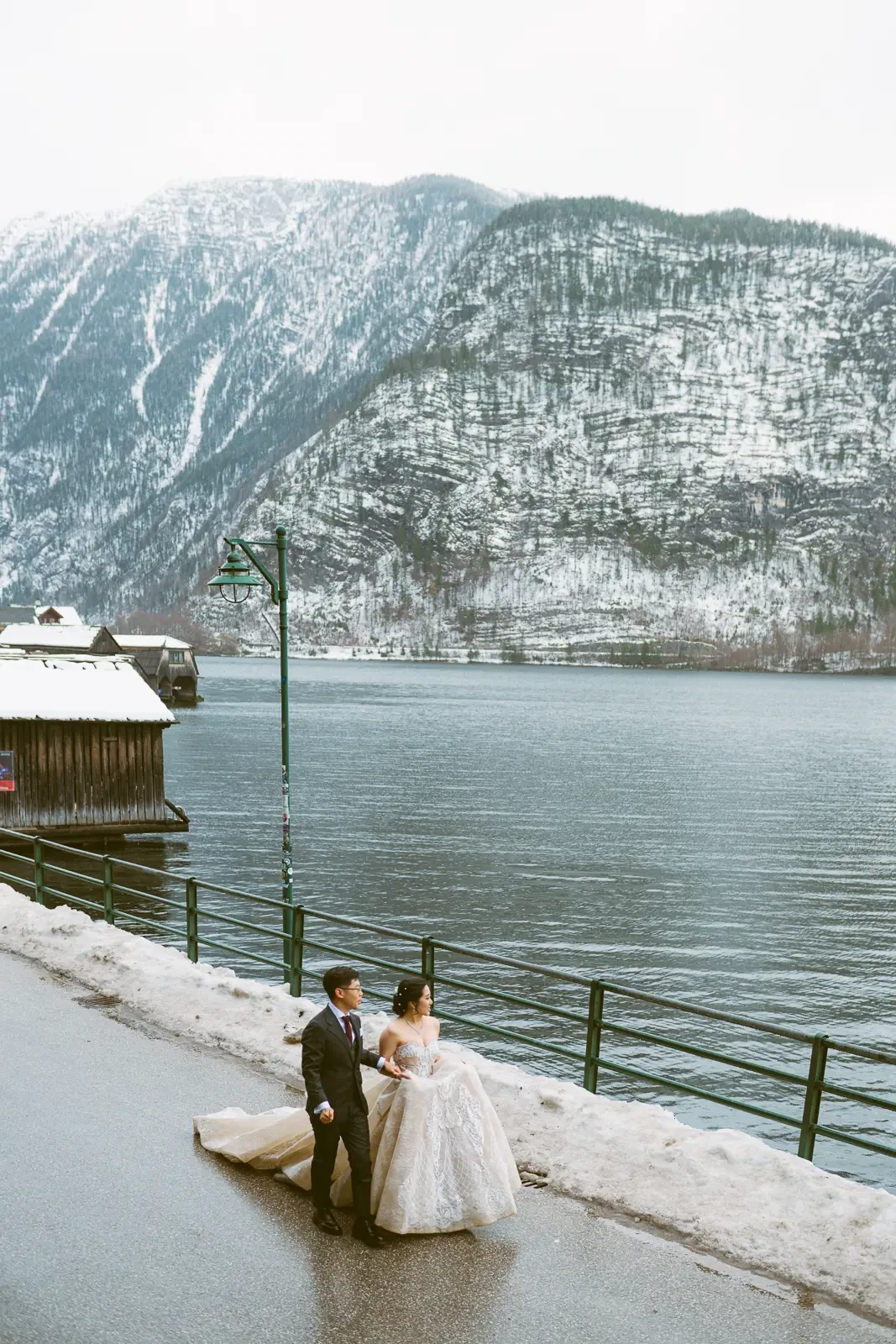
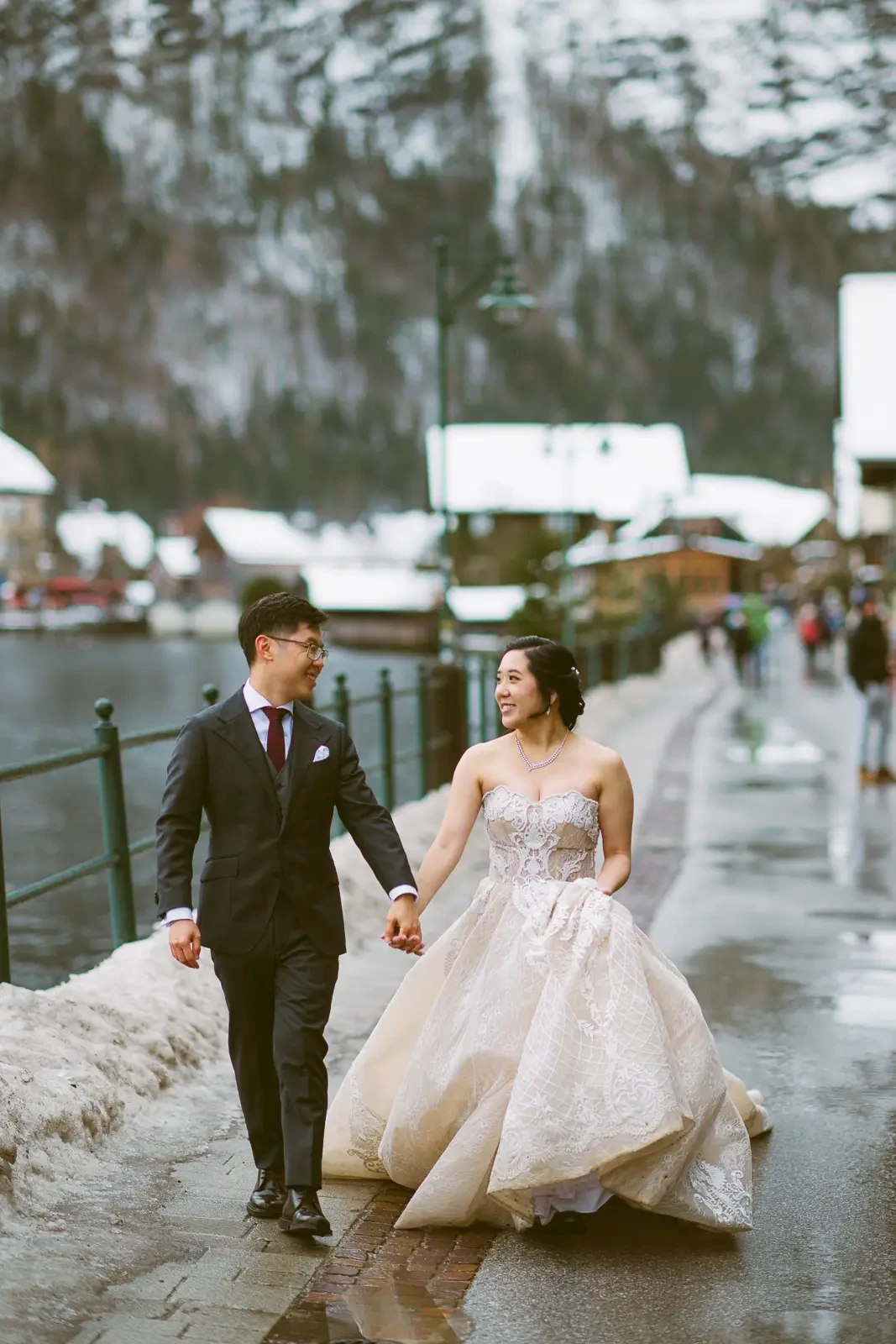
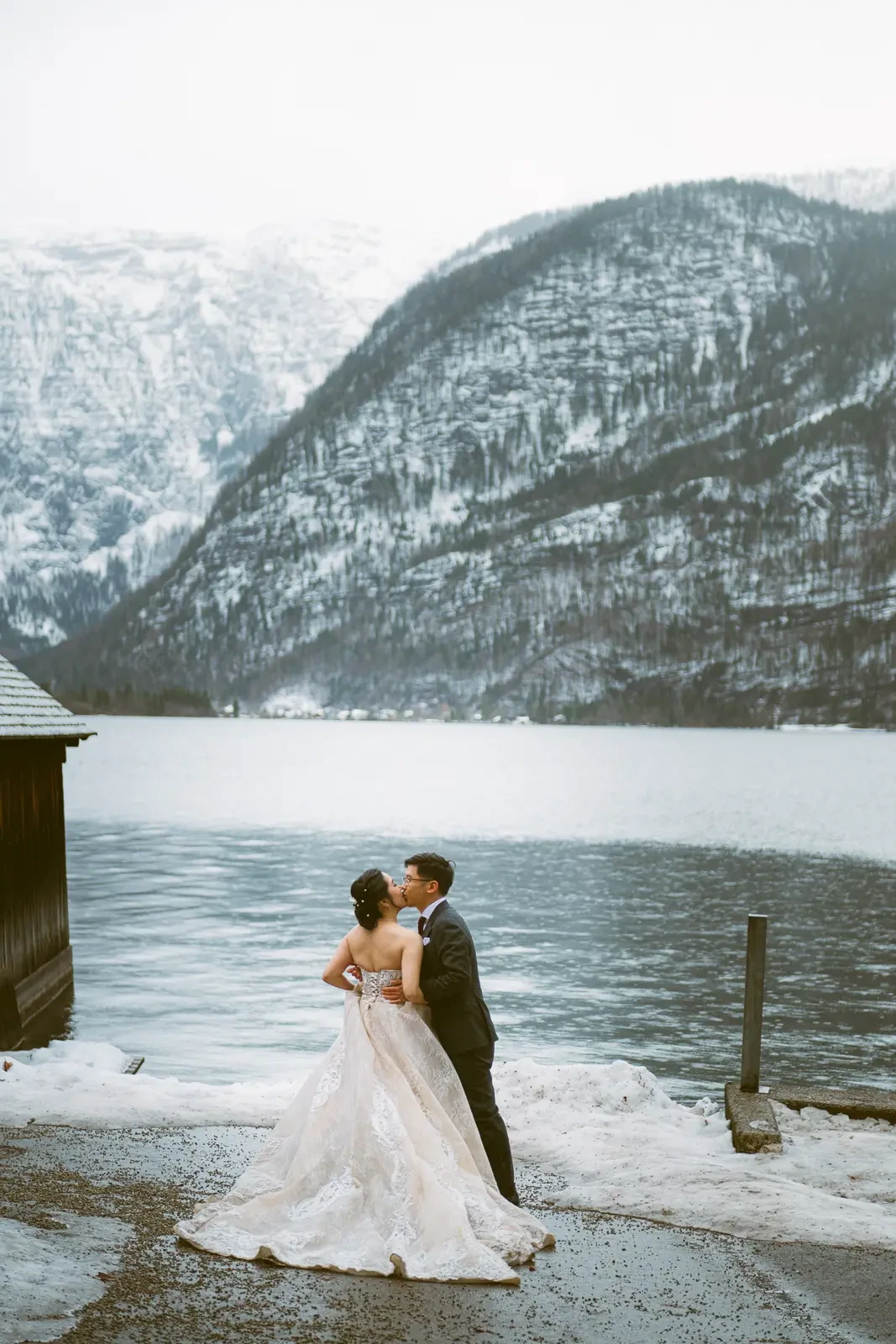
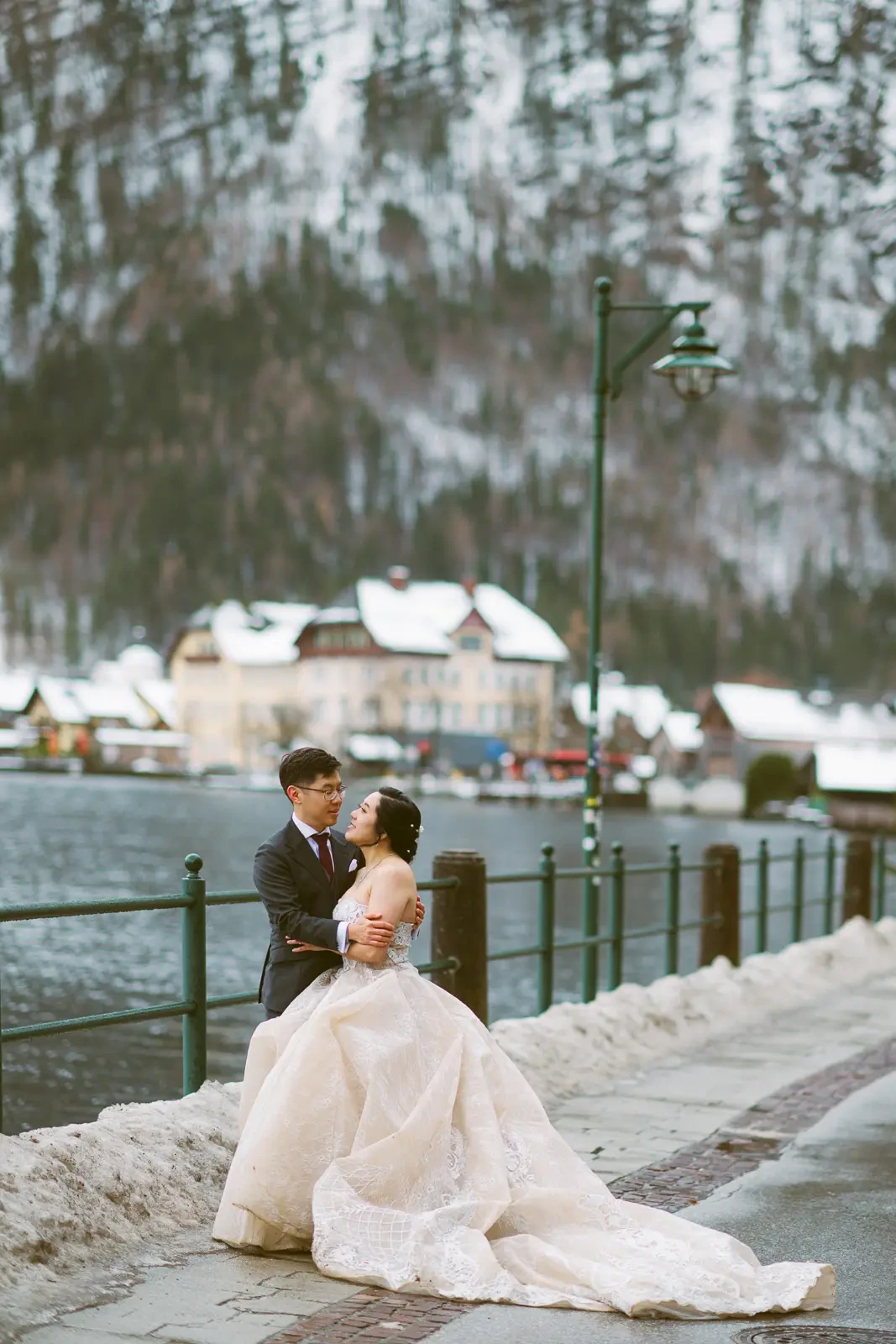
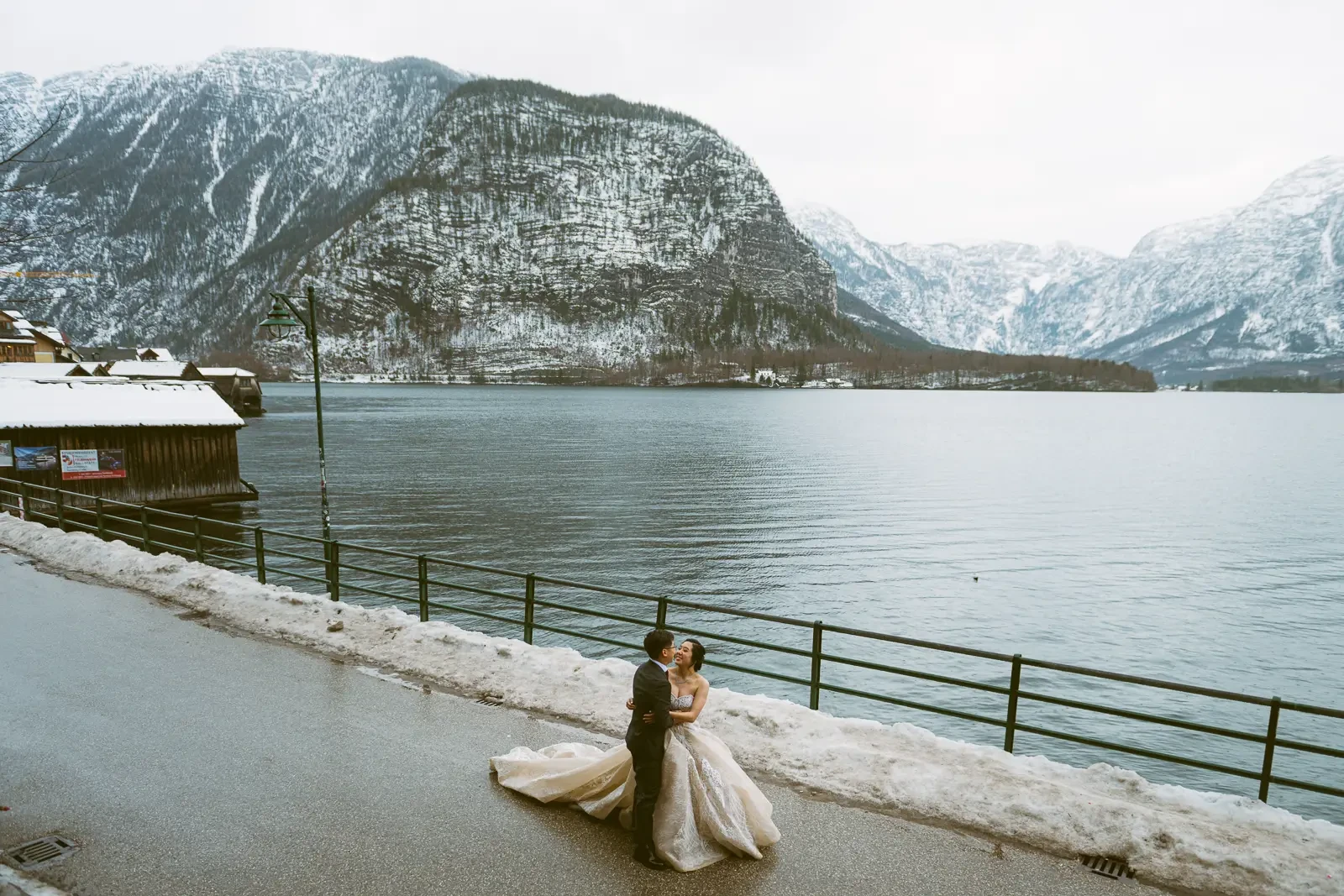
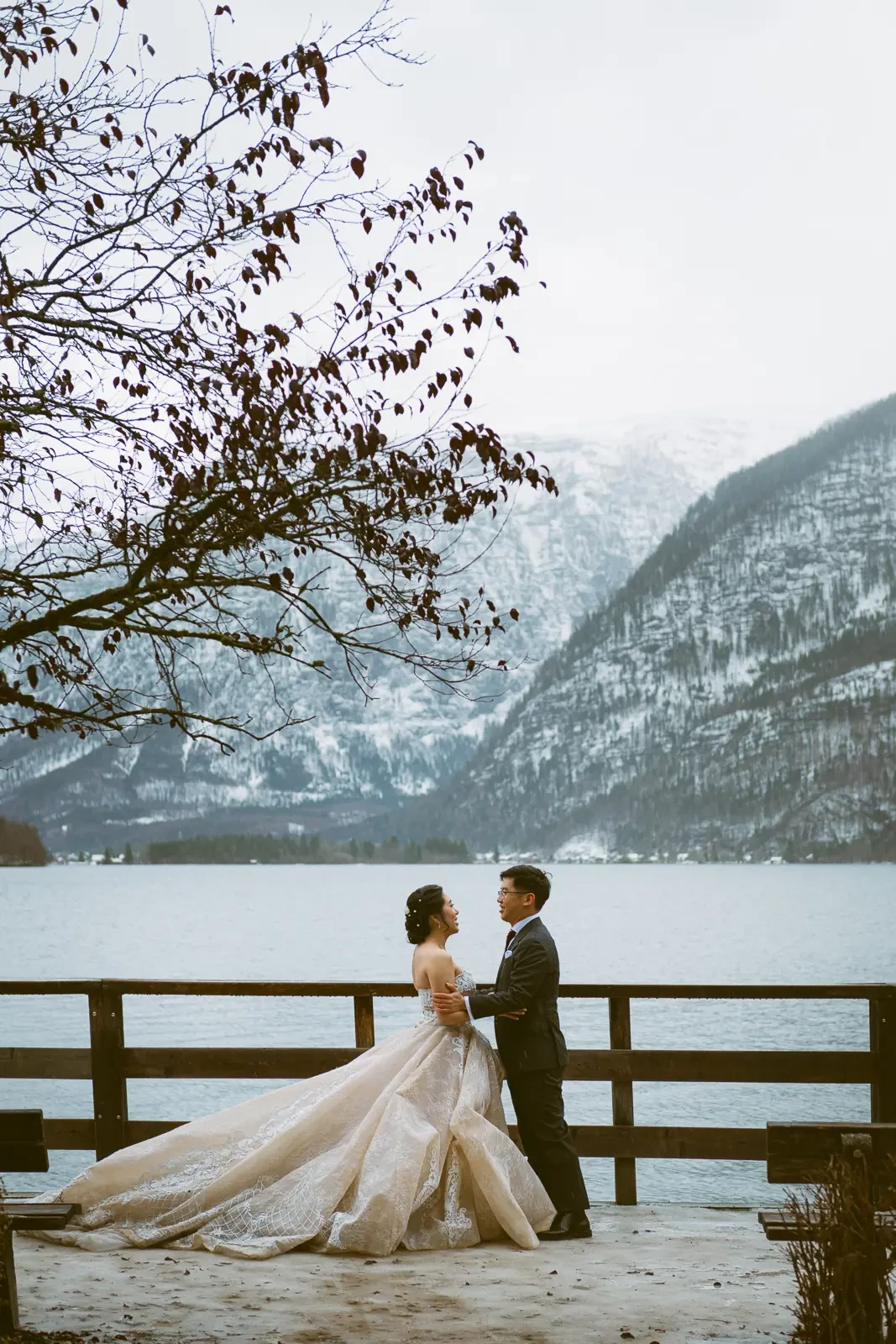
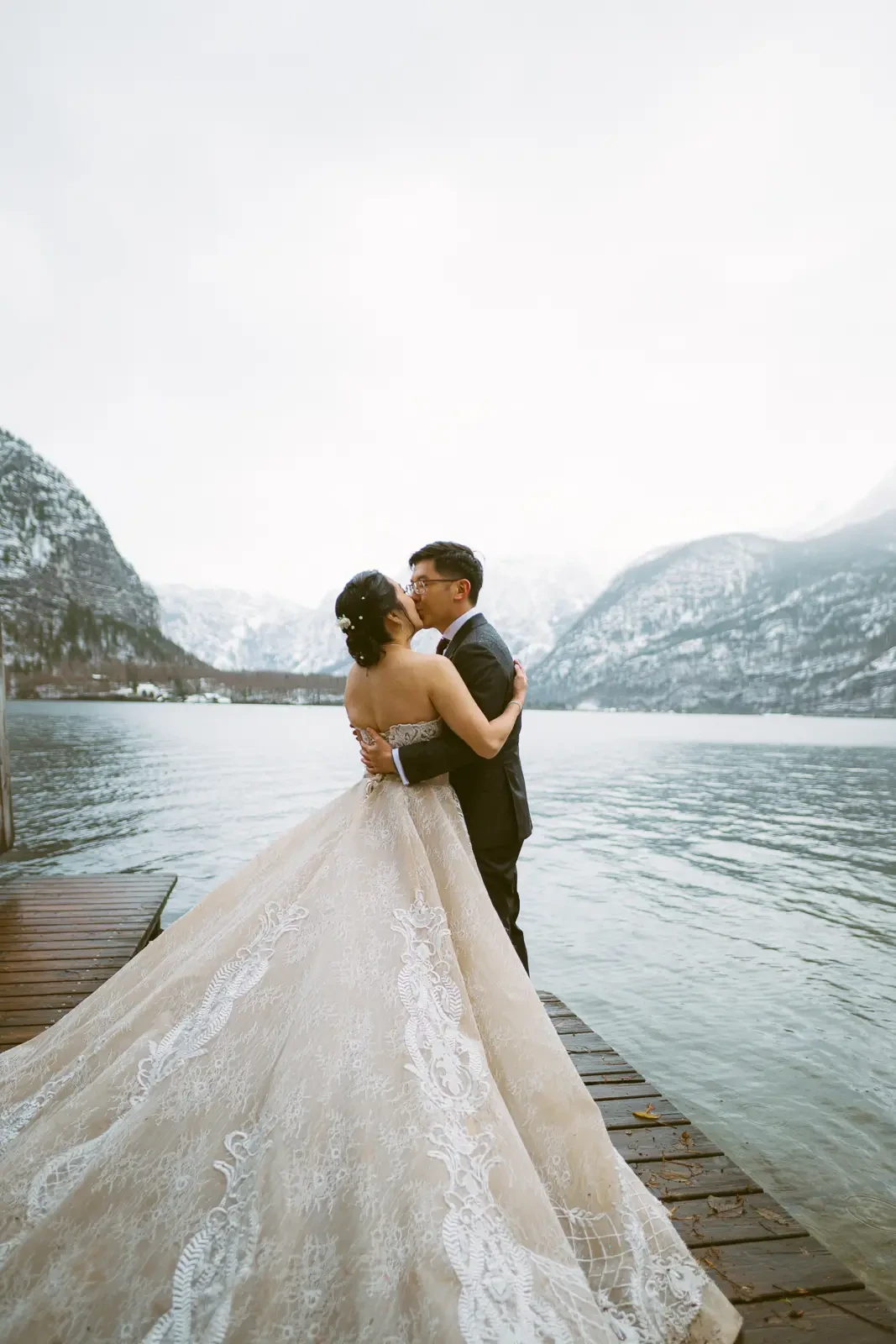
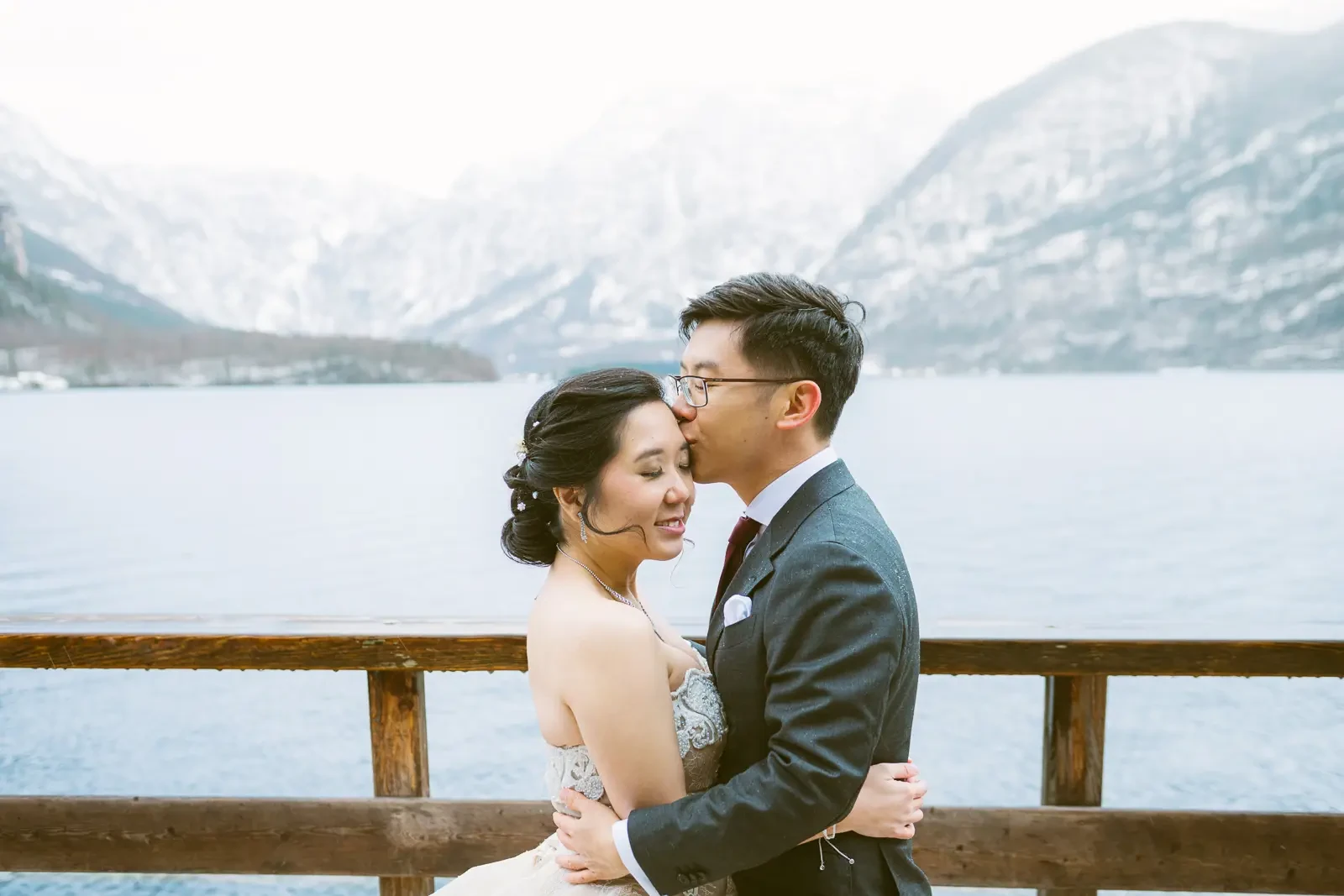
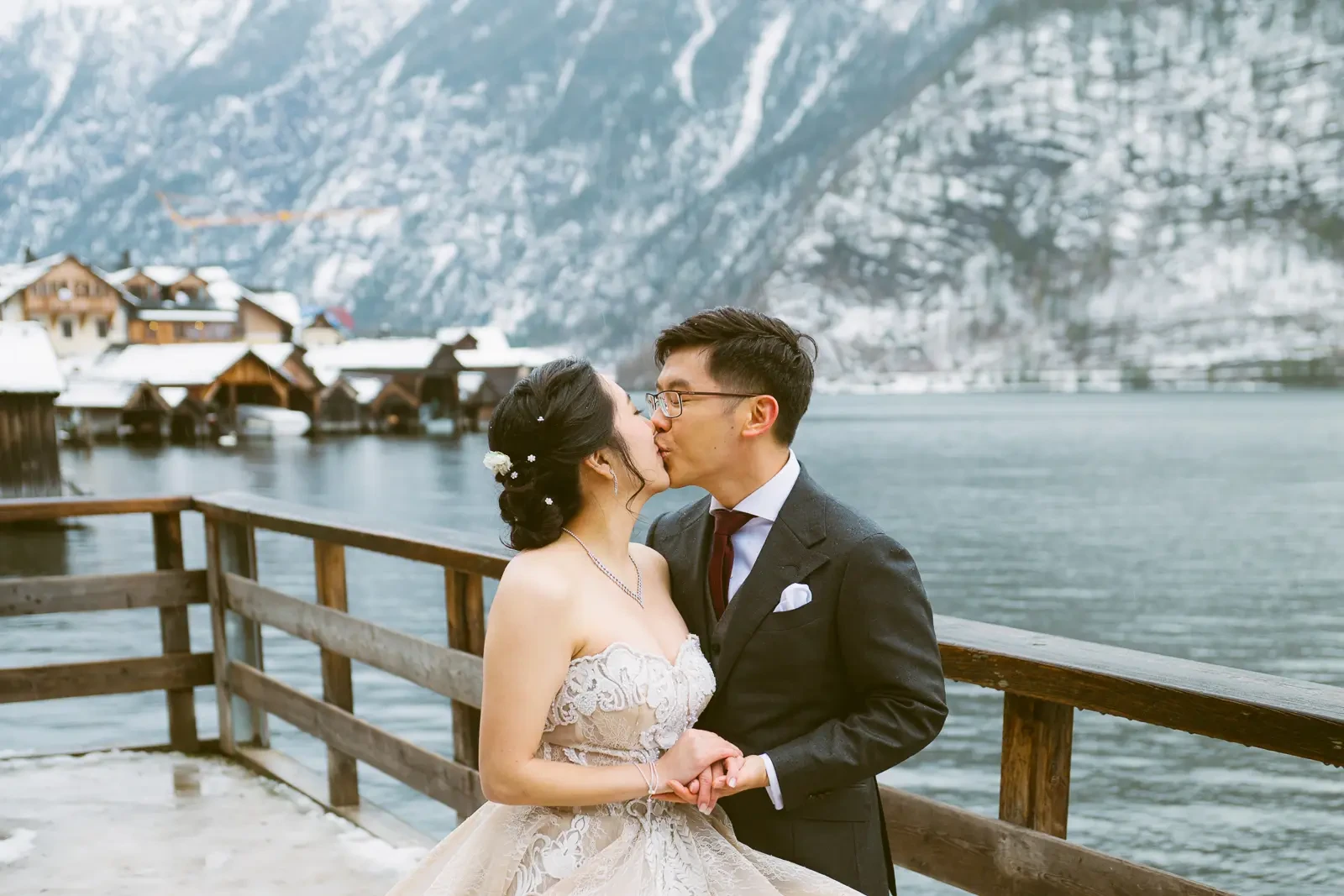
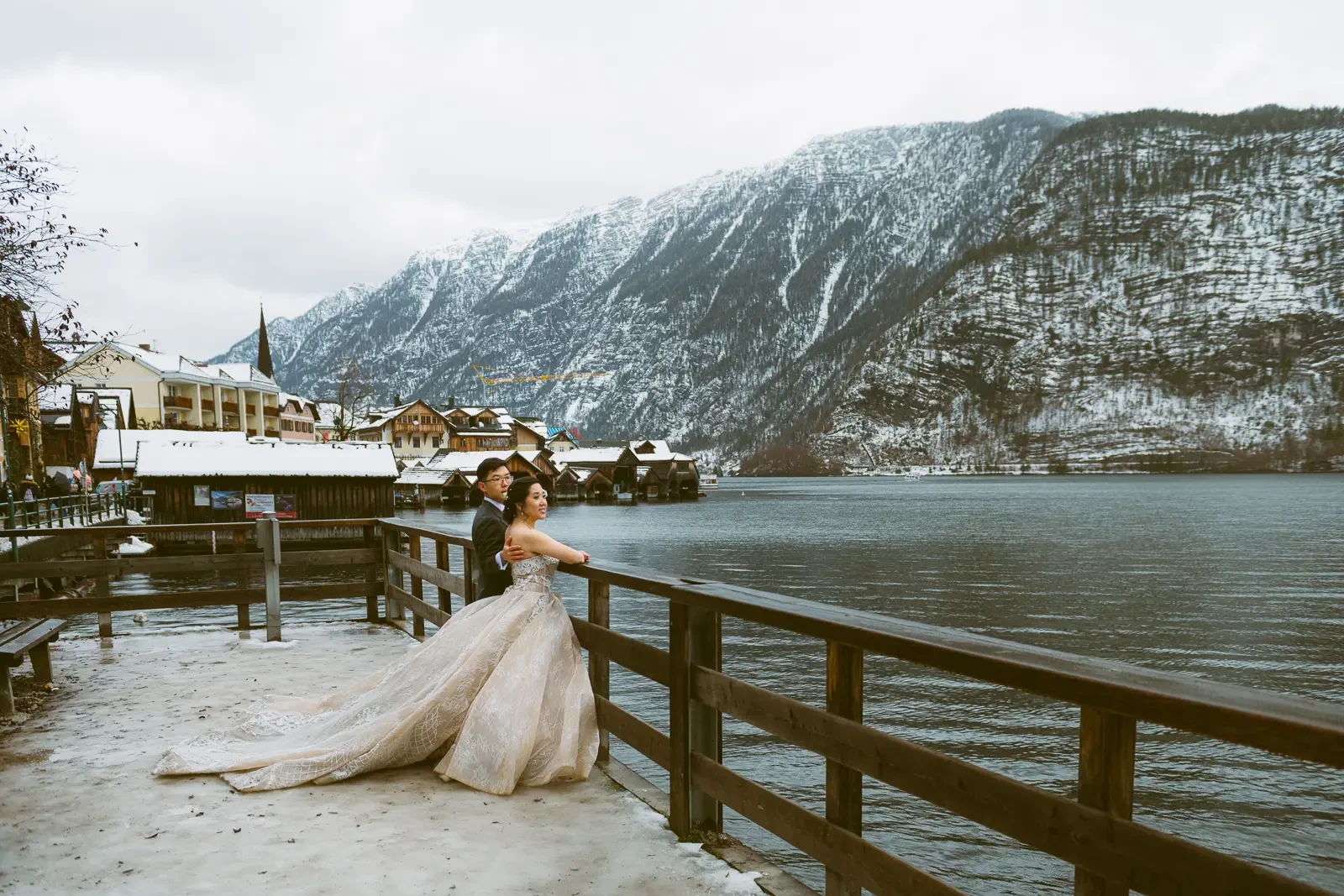
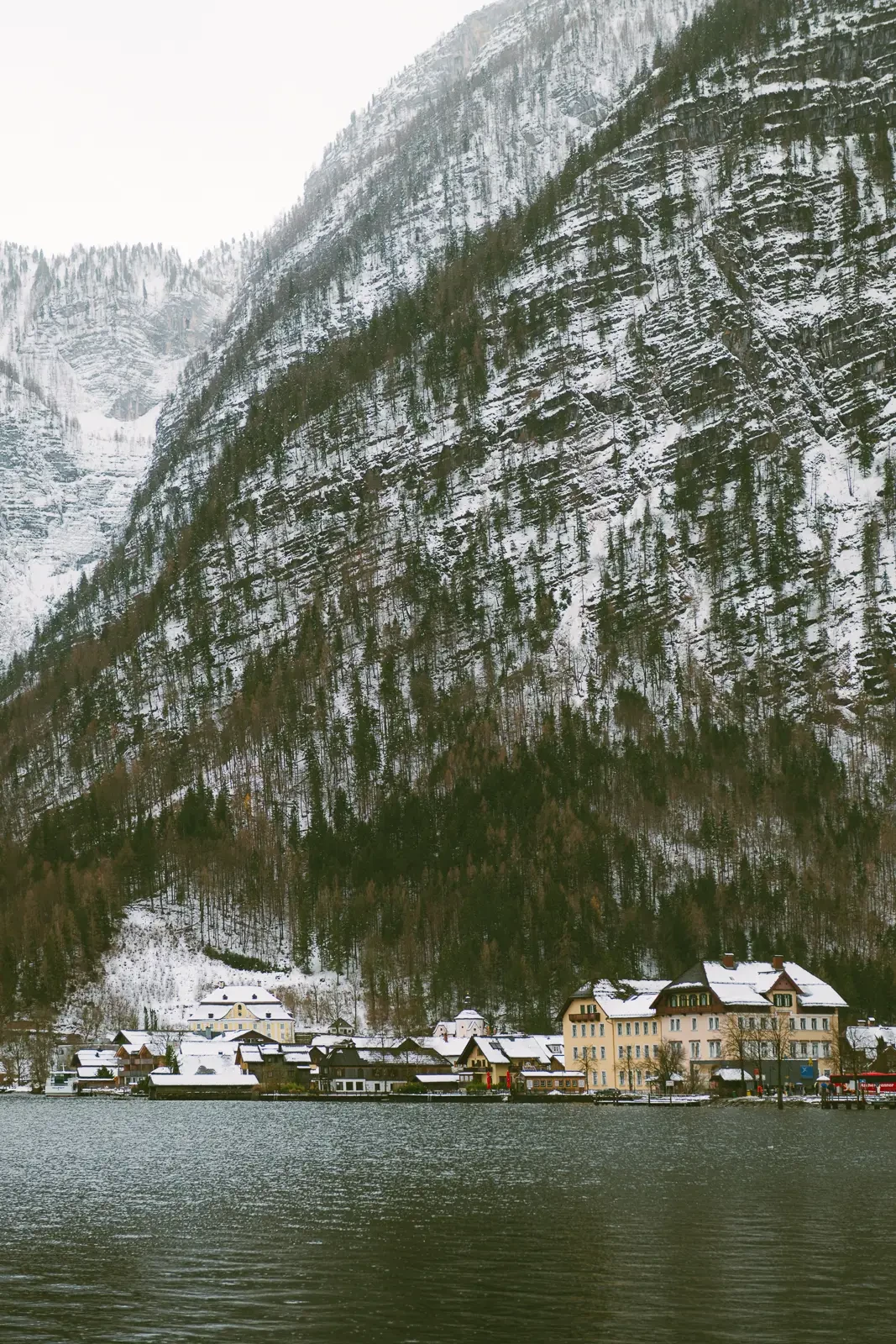
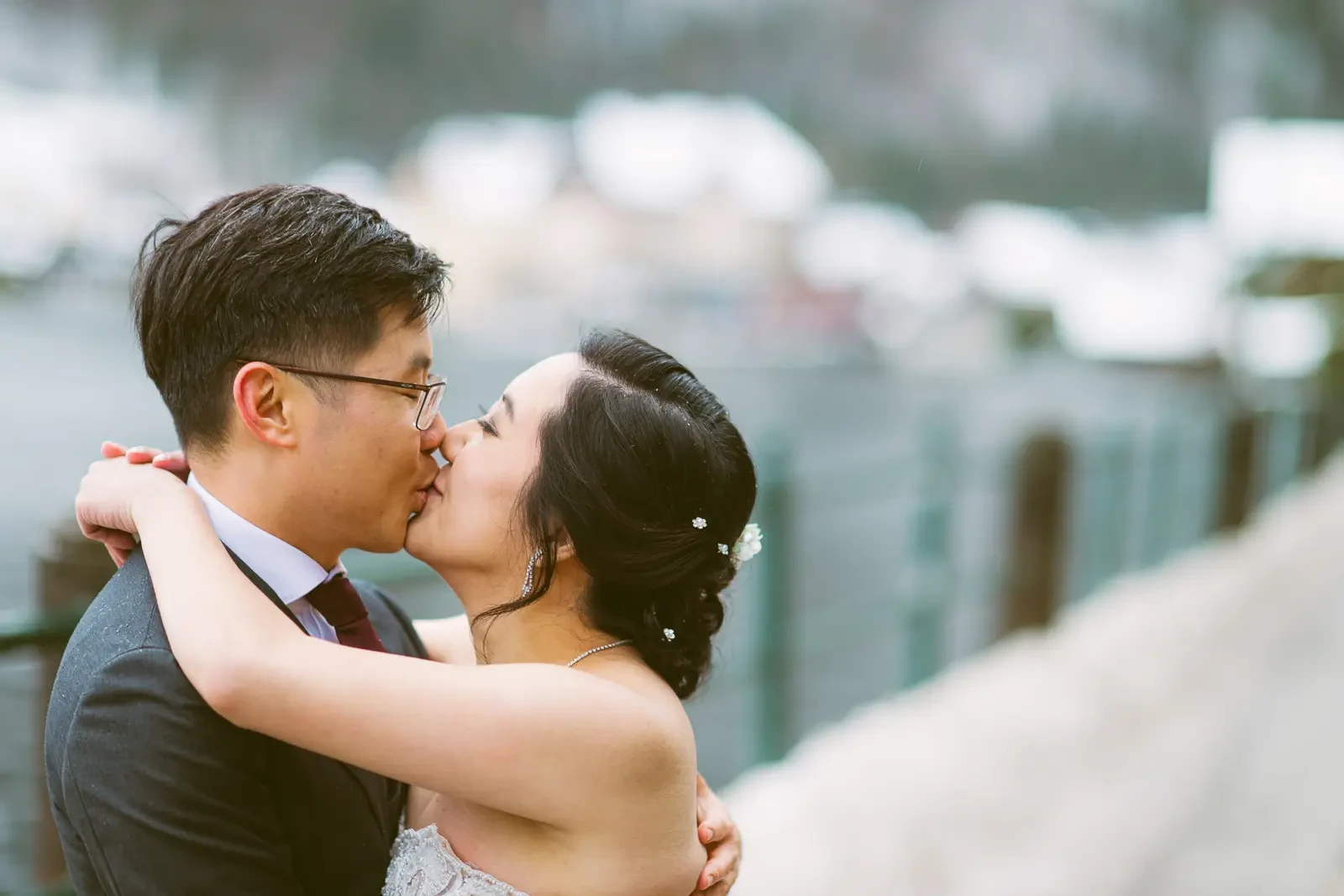
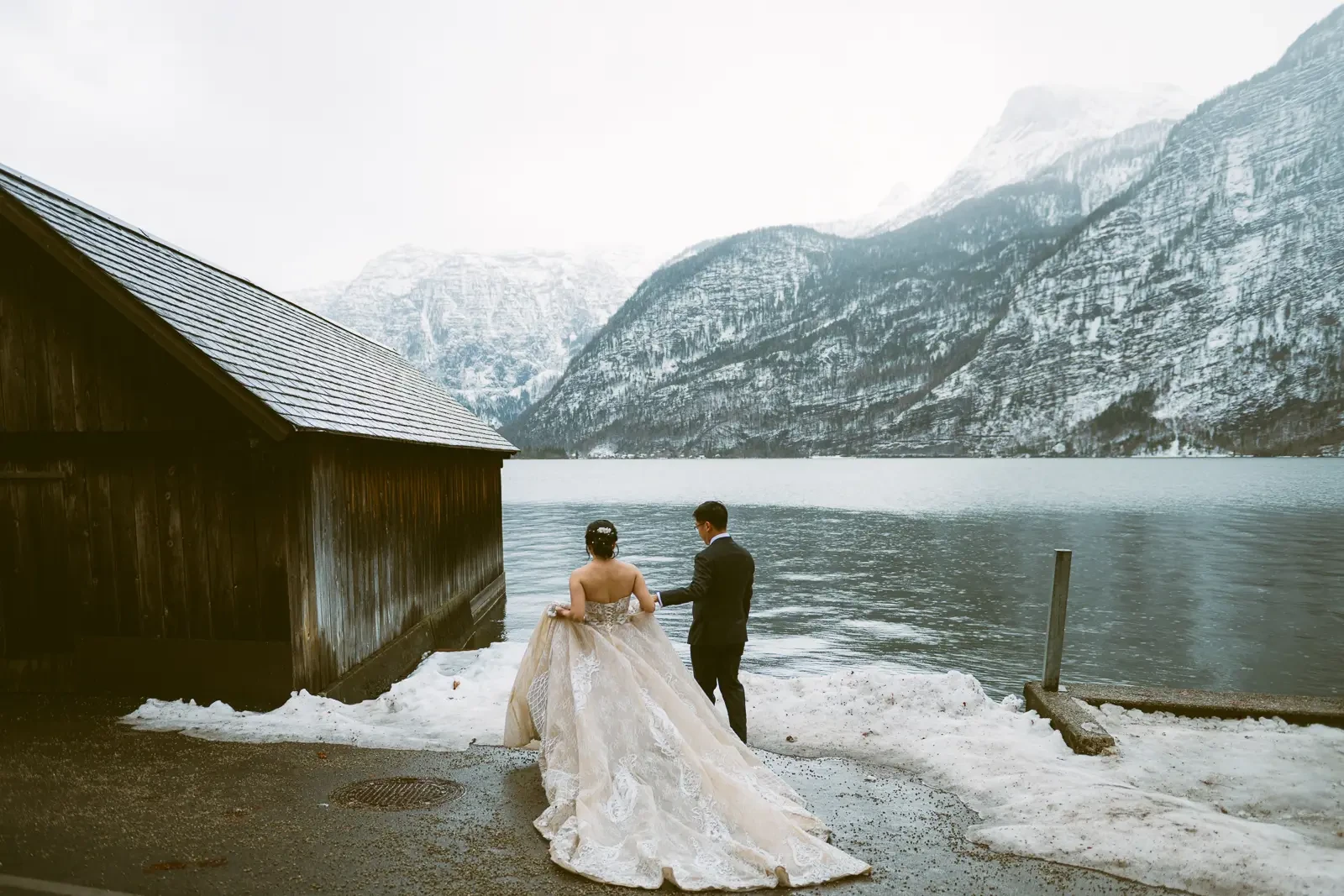
We began at the hour when Hallstatt is most useful to me photographically. The village was still quiet, the waterfront was open and mist was lifting from the mountains. Jocelyn started in a large white bridal gown, Jonathan in a classic suit.
A dress with that much volume is wonderful when there is room around it. At dawn I can use the train, let the couple move and make wide compositions without constantly stopping for people behind them. Once the village becomes busy, the same dress becomes a practical problem in the narrow streets.
It was properly cold. Winter Hallstatt looks calm in photographs, but the couple and photographer still have to function in it. Coats stay close, we work efficiently, and hands go back into gloves between frames.
02
When the visitors arrive, change the kind of photograph
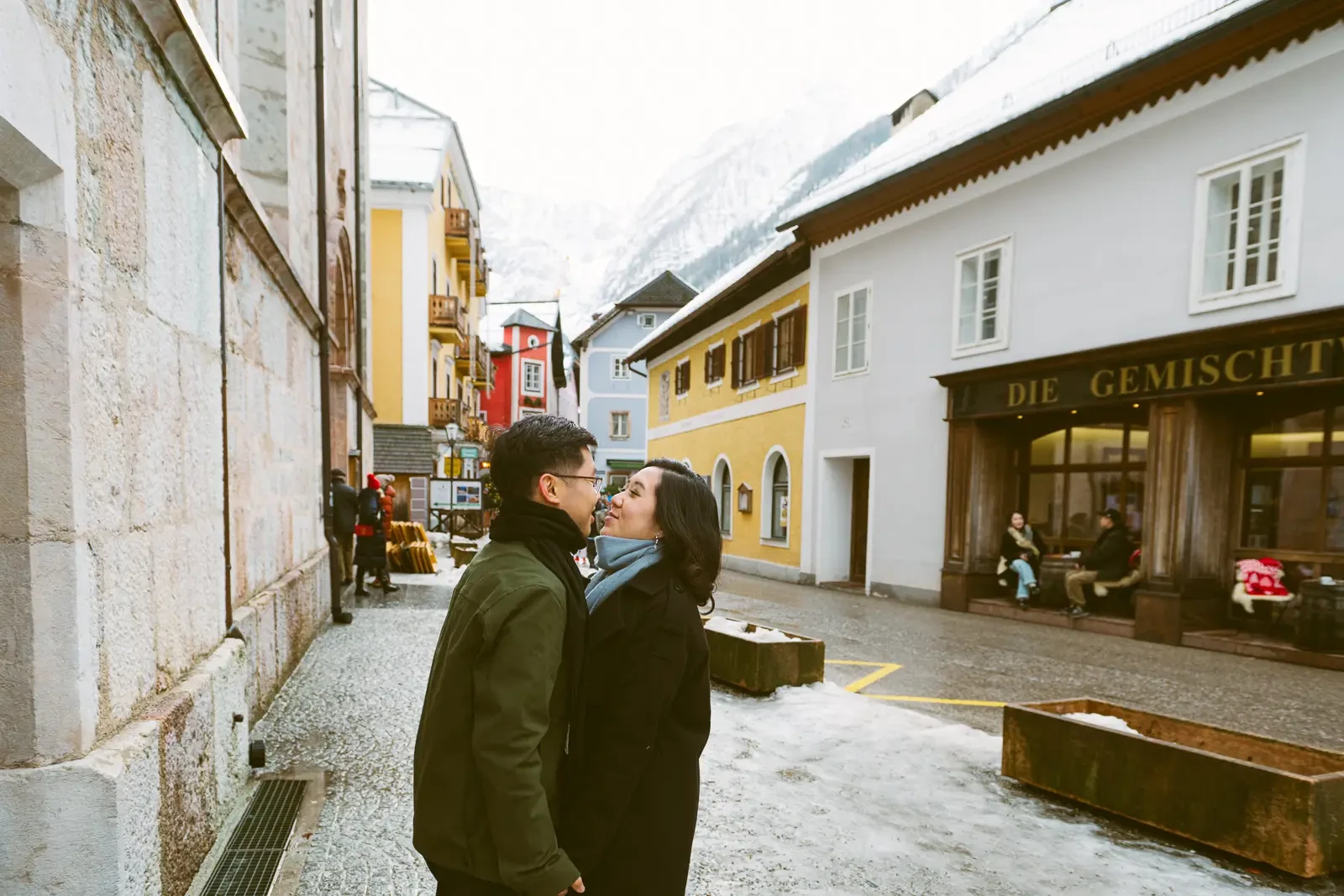
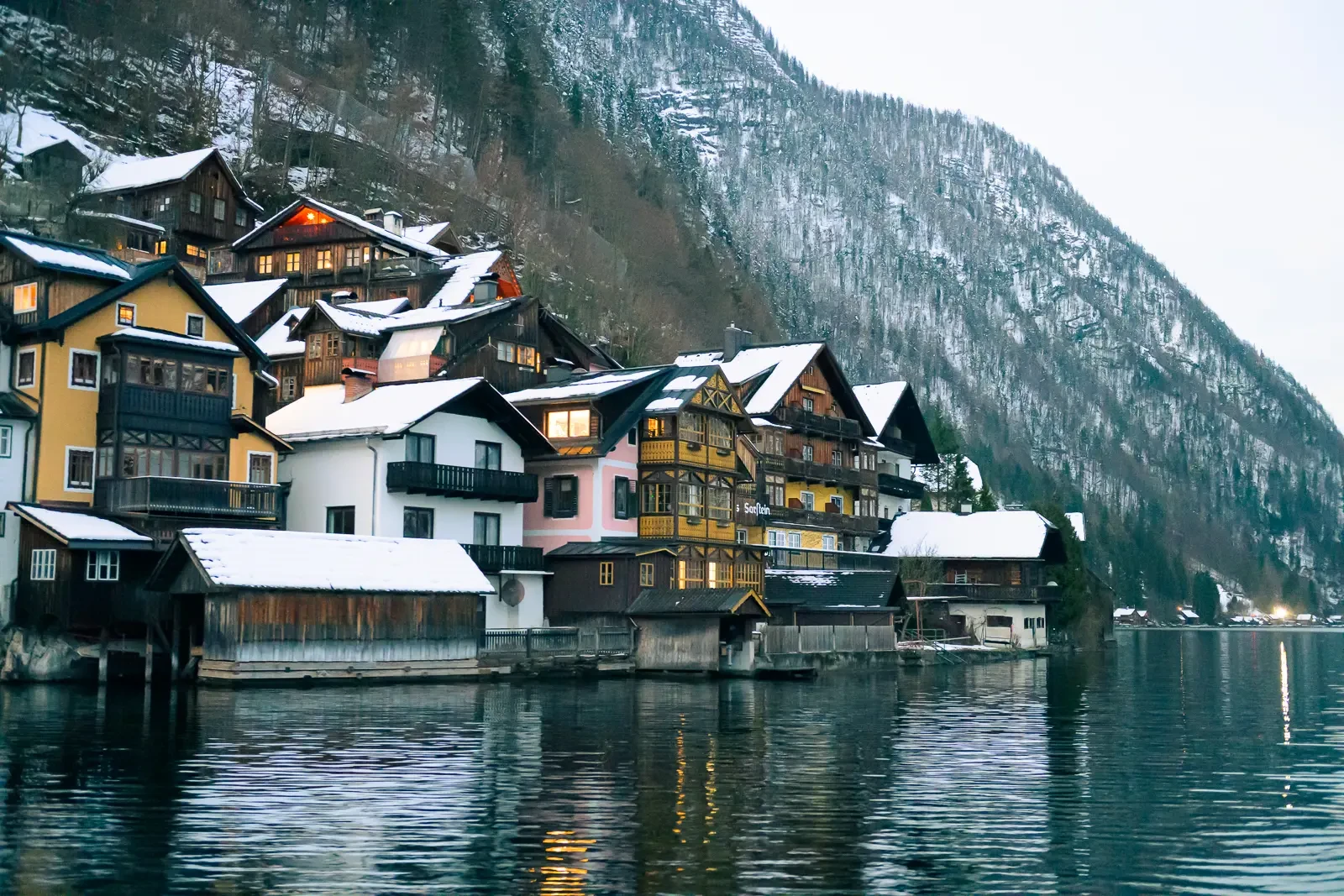
From about 09:30 the character of the village changed. More people arrived, the narrow streets tightened up and the huge bridal train stopped being the sensible outfit for moving around.
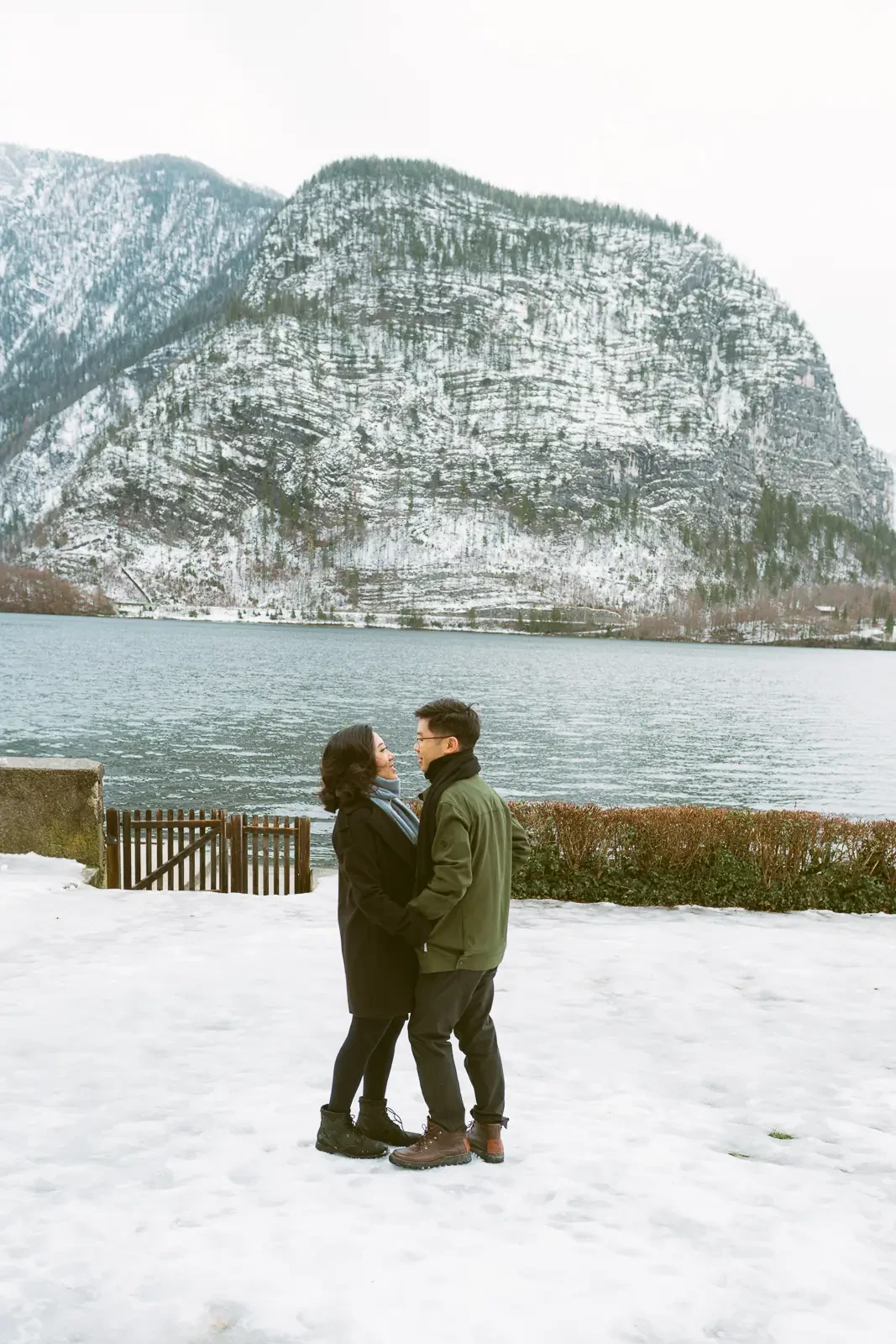
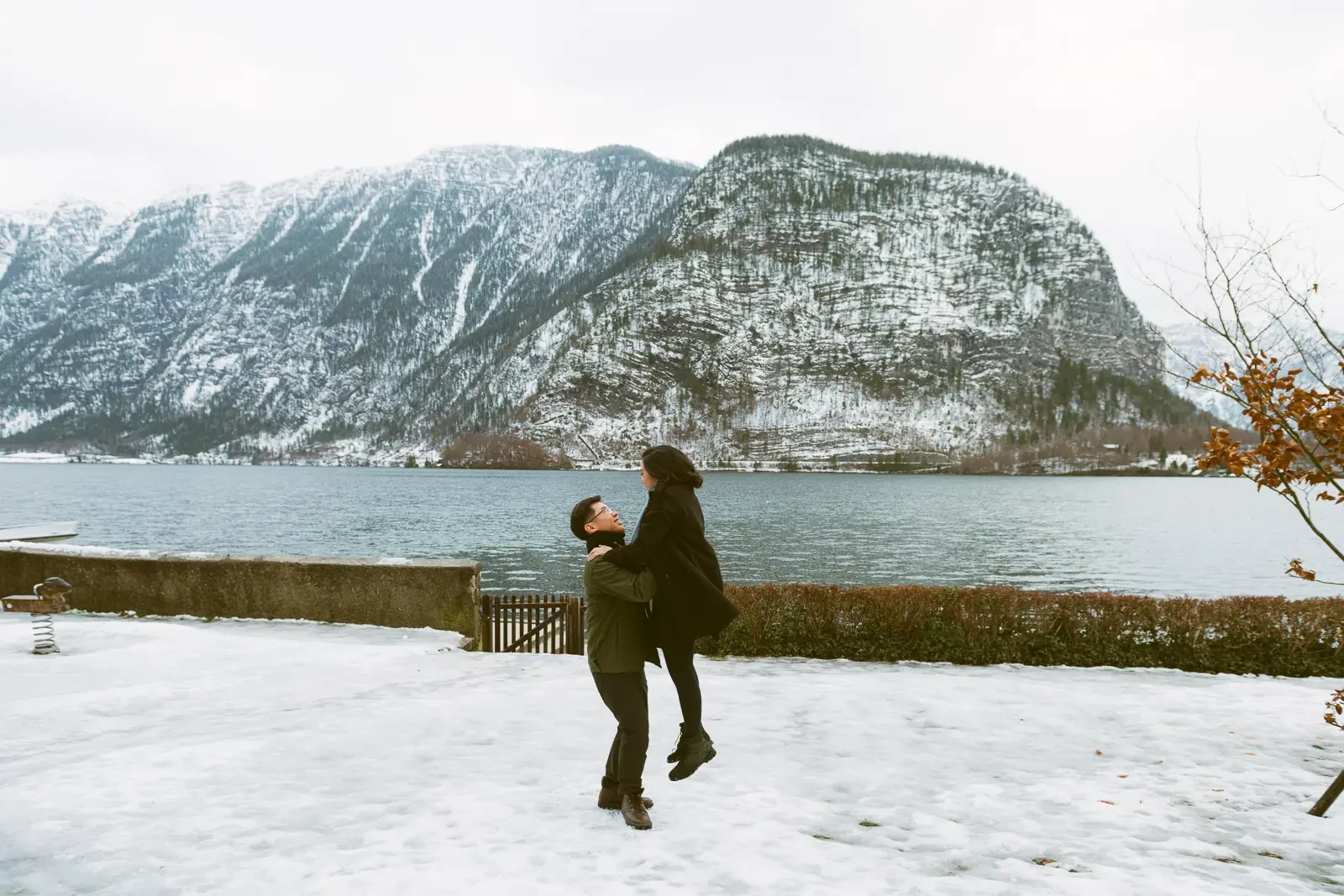
Jocelyn and Jonathan changed into warmer casual clothes. That was not a compromise. It gave me a different kind of picture: more walking, more movement, higher viewpoints and a looser relationship with the village around them.
We also photographed around the winter market. A hot Glühwein stop was genuinely useful after several hours outside, and it gave me the kind of candid frames that only happen when the couple is doing something real instead of waiting for the next pose.
03
The red gown against a nearly monochrome landscape
For the afternoon Jocelyn changed into a strong red gown. Winter Hallstatt is often a restrained palette: dark lake, grey and brown buildings, white snow, deep green or black mountains. Red does not disappear into that background.
I like bold colour when the environment can support it. Here the dress became the centre of the frame immediately. We moved to another side of the village, used the lake again and photographed with the swans when they came close enough.
This is also why several outfits can make sense on a full-day shoot. They should not be three versions of the same photograph. Each change should give us a different visual chapter.
04
Warm clothes, village lights and wet cobblestones
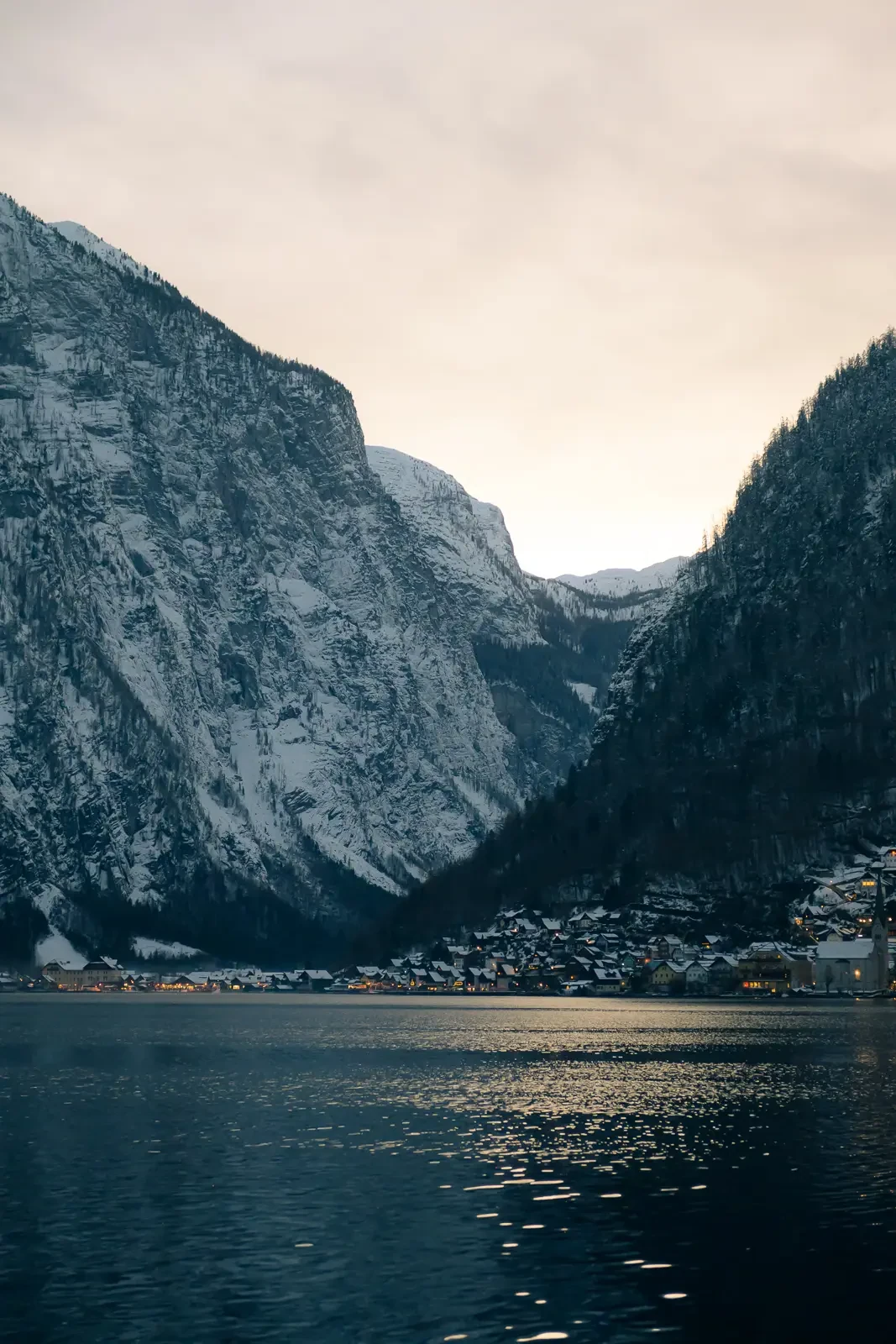
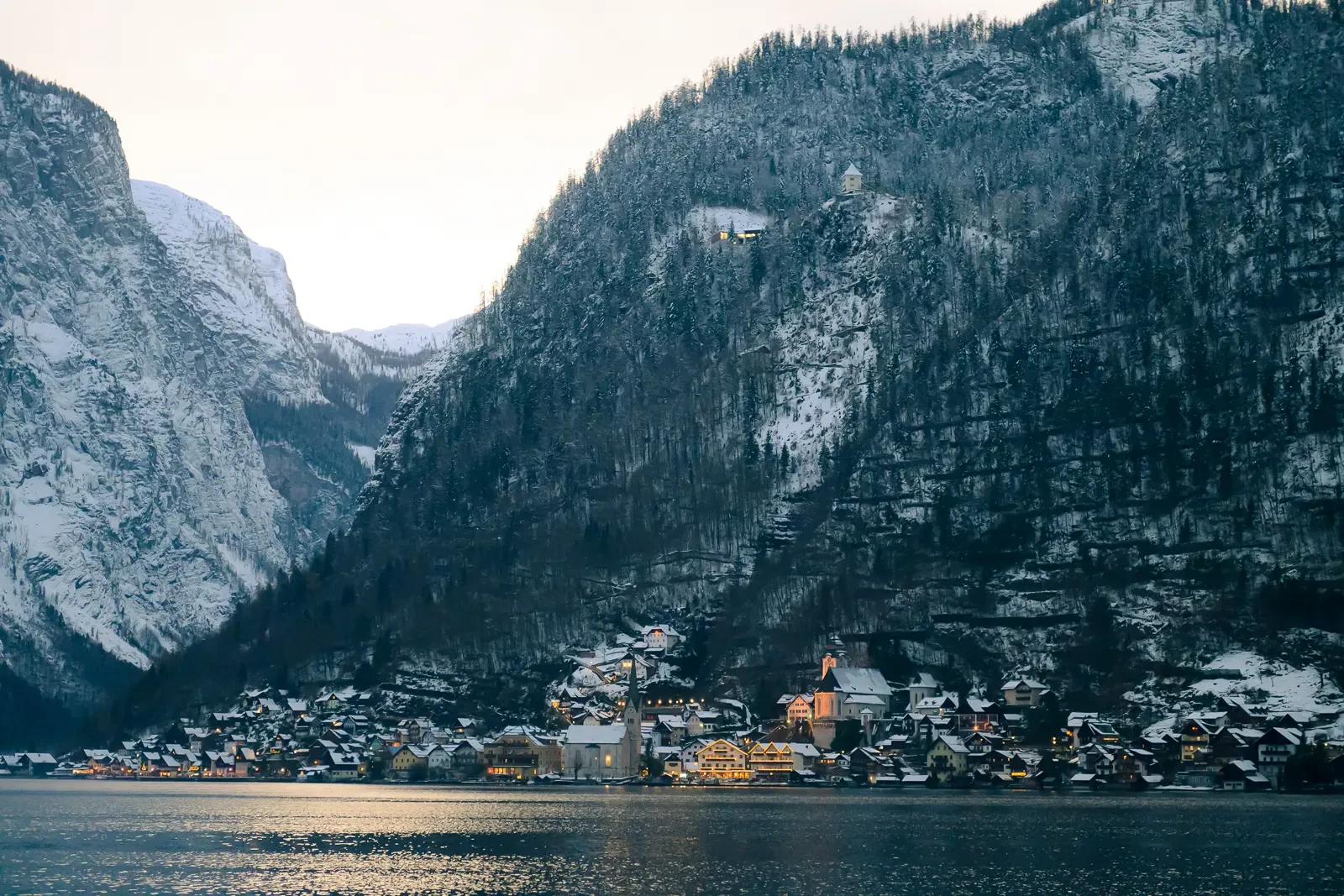
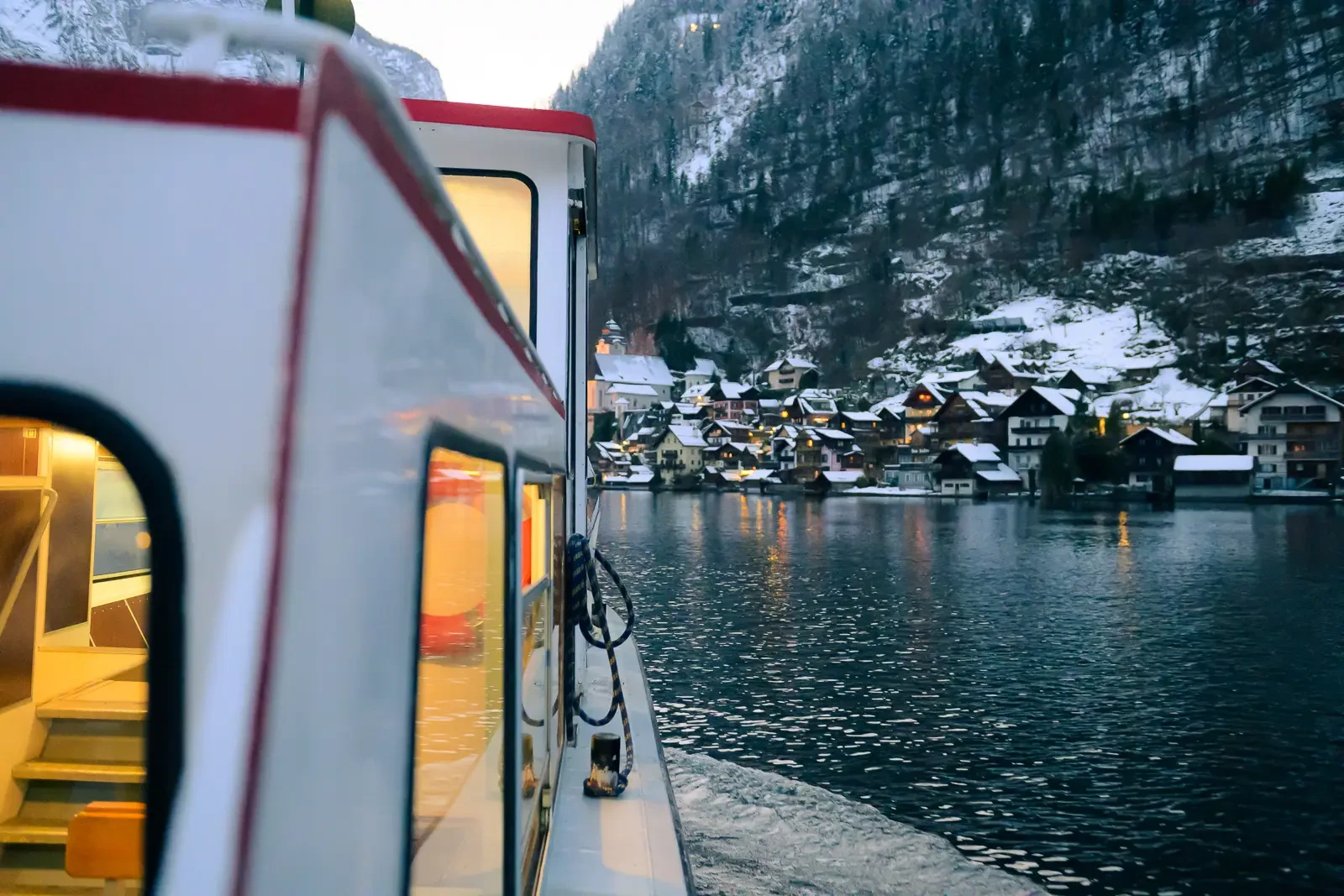
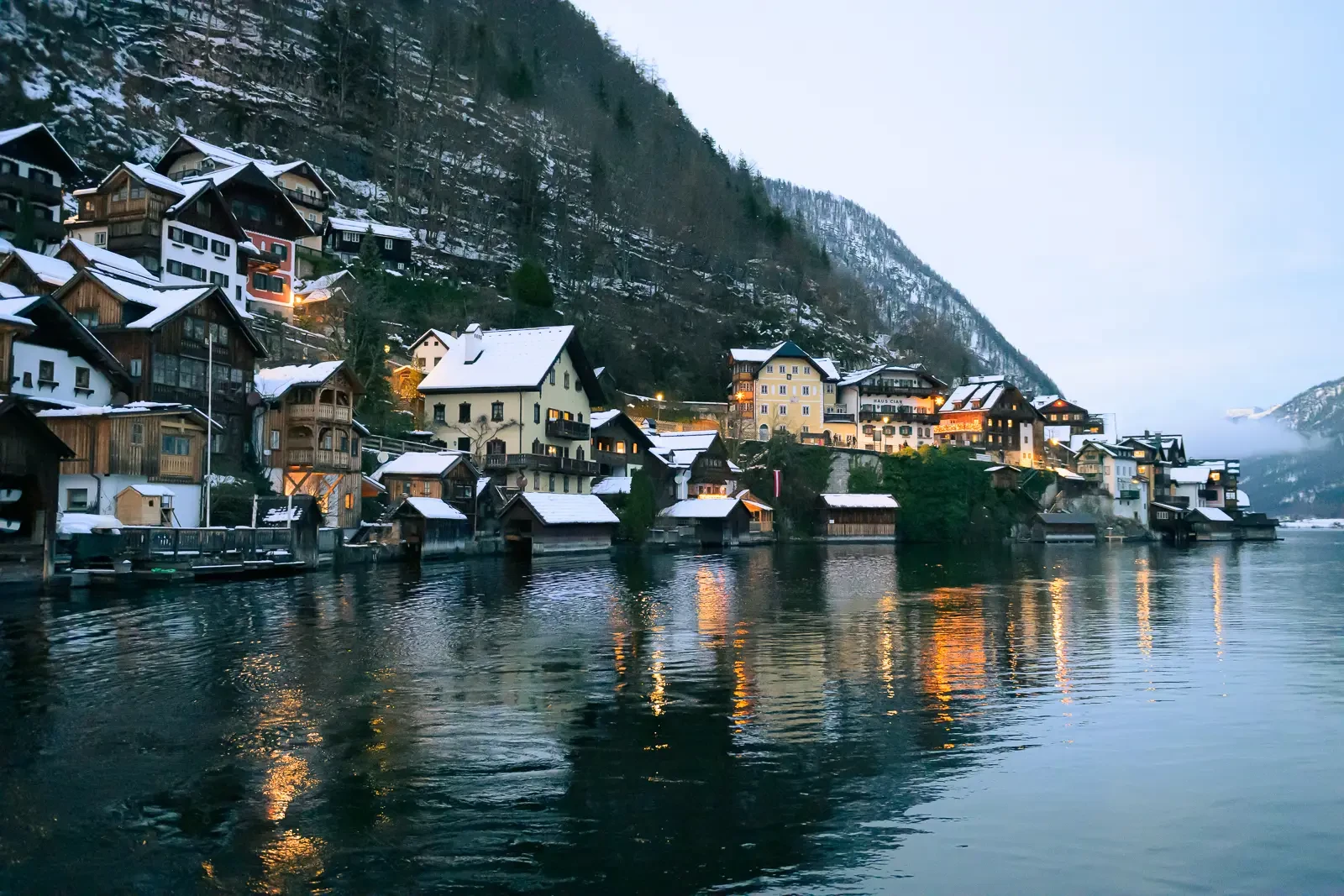
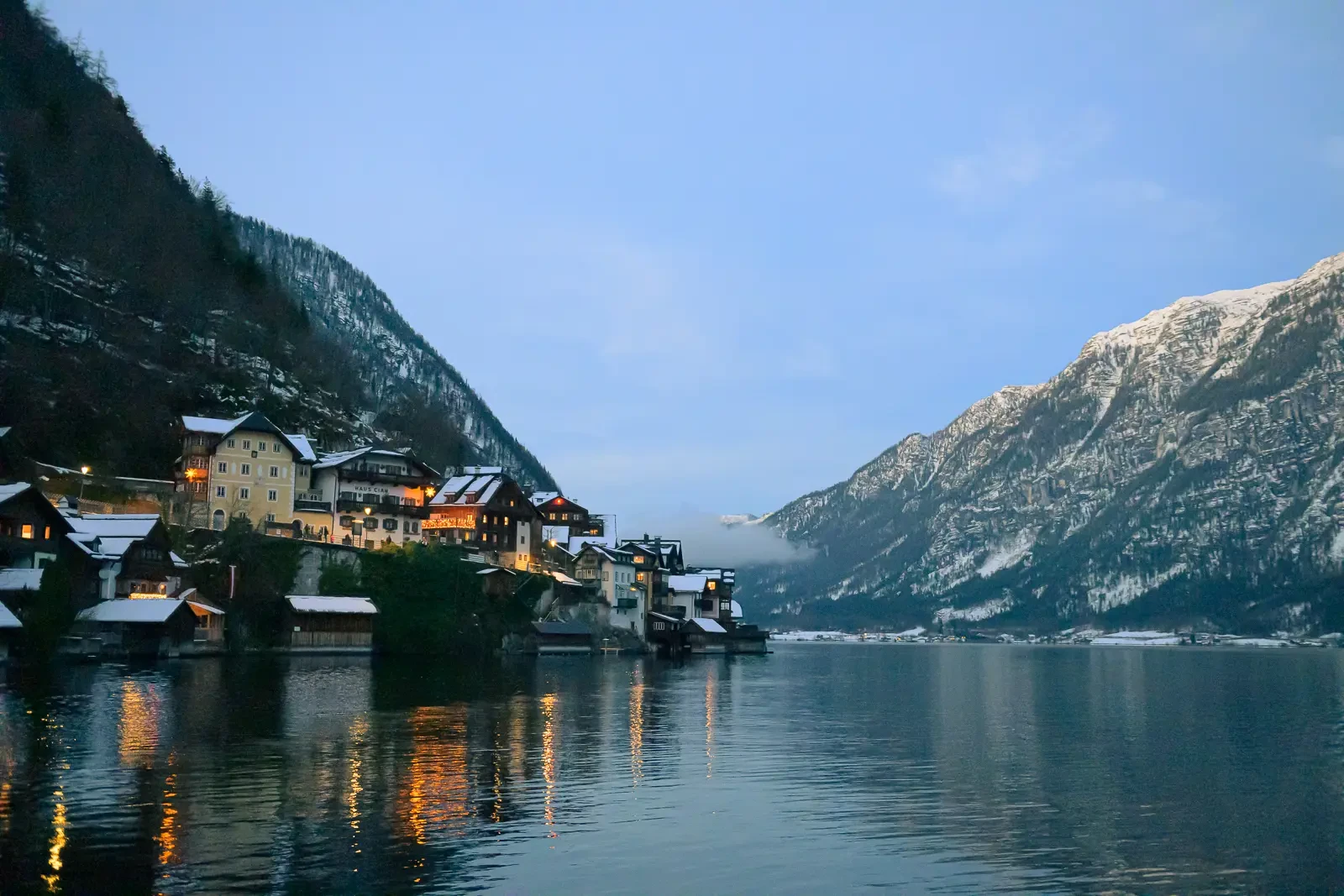
Winter darkness arrived early, which was useful. Jocelyn and Jonathan changed into their warmest clothes and we kept working after the village lights came on.
At night I stop trying to make Hallstatt look like the daytime postcard. Streetlights, illuminated windows and reflections on wet cobblestones give a much more intimate background. The frames become about small pools of light rather than a huge mountain view.
That last section completed the day. We had white bridal photographs, casual winter photographs, the red gown, then a completely different night set, all without pretending that the light and crowd level stayed constant for ten hours.
What made the day work
05
Warmth and outfit logistics are part of winter photography
The photographs only work if the couple can keep going. In winter I plan around warming breaks, coats just outside the frame, sensible shoes between setups and a nearby place to change. Trying to ignore the cold usually makes the shoot slower, not faster.
I also match the outfit to the crowd level. The largest gown goes first when the waterfront is quiet. Casual clothing works better once we are moving through a busier village. A bold gown can then have its own focused afternoon section, and warm clothes make the night finish comfortable.
That sequence came from the reality of the day, not from a generic four-looks package. It is the kind of practical decision I want the photographs to hide, even though it is essential behind the camera.
What winter changed for me
06
I photograph the conditions, not a summer itinerary with snow added
Jocelyn and Jonathan’s day made one thing very clear: winter Hallstatt needs its own plan. I cannot take a summer route, shorten the daylight and call it finished. The cold affects how long a couple can stay still, a large dress behaves differently on wet or snowy ground, and the village becomes harder to move through once visitors arrive.
That is why I use the quietest part of the morning for the least practical outfit. The white gown had room to breathe before the streets filled. Later, when moving quickly mattered more, casual clothes made sense. The red gown then became a separate visual idea rather than another version of the morning photographs.
I also learned to use winter darkness rather than treating it as the end of the shoot. Hallstatt’s lamps, illuminated windows and wet cobblestones can give me a completely different final set. In summer I may wait a long time for that atmosphere; in winter it arrives early enough to become part of a realistic full-day schedule.
For couples considering the same approach, I would rather plan fewer ambitious outdoor blocks with proper warming time between them than pretend we can work continuously for ten cold hours. The aim is to keep the couple comfortable enough that the photographs still look relaxed at the end of the day.
What I would keep today
07
The sequence is more important than copying the exact hours
I would still start before the first busy period, still give the largest gown that quiet window, and still keep a warm casual look available for the middle of the day. I would also still leave space for an afternoon colour change and a short night section if the couple enjoys that visual range.
What I would not promise from an old story is identical snow, mist, market activity or crowd timing. Those details belong to the conditions we had. For a new date I use the same photographer’s logic, then adapt it to the weather, daylight and what Hallstatt is actually doing that day.
Why the day had four visual chapters
The outfit changes followed the reality of Hallstatt, not a package template.
Jocelyn and Jonathan wanted a full winter day, and the easiest mistake would have been to treat that as ten continuous hours of the same kind of photography. Hallstatt does not stay the same for ten hours. The crowd changes, the temperature changes, the light changes and the practical value of each outfit changes with them.
That is why the white bridal gown belonged at the beginning. Around 06:30 the waterfront was quiet enough for me to use the full shape of the dress and the train. I could step back, keep clean space around Jocelyn and make the large compositions the gown deserved. Once tourist traffic began, that same dress became much harder to move through the narrow streets.
The casual clothes were not simply a warm break. They changed the body language of the photographs. Jocelyn and Jonathan could walk faster, climb towards the panoramic viewpoints and move through the market without worrying about a train behind them. The pictures naturally became looser and more candid.
The red gown then gave me a reason to become formal again in the afternoon. It was not another white-gown set with a different colour. I used the colour itself as the visual idea, placing it against the winter palette of dark water, pale snow, old buildings and mountain shadow.
Winter photographs only look effortless if the logistics are doing their job.
It was genuinely cold. That sounds obvious in a winter story, but it changes how I photograph. I do not want a couple standing still for ten minutes while I experiment. I decide what I need, bring them into position, make the frame and get them moving again.
Warm layers stay nearby but out of the photograph. Gloves go back on between setups. Comfortable shoes matter whenever we are not making the actual frame. A nearby place to change is far more useful than carrying every outfit around the village all day.
The Glühwein stop around the market was a perfect example of useful downtime. We needed warmth anyway, and instead of treating the break as lost shooting time I photographed the part that was real: hot drinks, steam, laughter and the relief of being warm for a moment after hours outside.
This is one of the reasons the winter gallery feels more documentary than a simple location shoot. Some of my favourite frames come from the transitions, not only from the moments when everyone is formally ready for a photograph.
Why strong colour works so well in winter Hallstatt.
By the afternoon the landscape had become almost monochrome. The lake was dark, the mountain shadows were deep, the buildings were grey and brown, and snow removed much of the remaining colour. Jocelyn's red gown cut through all of that immediately.
As a photographer I like that kind of decisive contrast. I do not need to search for a complicated background because the subject already separates herself from it. The red becomes the visual anchor and lets me make stronger, simpler compositions.
We moved to another side of the village for a different view and then returned to the water. The local swans appeared again, giving us one of those Hallstatt elements I can never guarantee but am always happy to use when it happens naturally.
What mattered most was that the afternoon did not look like a continuation of the dawn set. The colour, the crowd level and the part of the village had all changed. By then we had already made a substantial gallery, but visually we were still adding something new.
Winter darkness gave me a final set rather than ending the shoot.
One of the advantages of a winter full-day shoot is that darkness arrives while everyone still has energy to work. Jocelyn and Jonathan changed into their warmest clothes and we stayed out as the village lights came on.
I stopped thinking about the famous postcard view at that point. Night Hallstatt is smaller and more intimate. I looked for streetlights, illuminated windows, reflections and pools of light on the wet cobblestones. Instead of using the mountains as the main background, I let the village itself create the atmosphere.
Technically, this is a completely different way of photographing from dawn. I am exposing for artificial light, watching how faces fall into shadow and using the wet ground to carry light back into the frame. It gives the gallery a natural ending because the visual language changes with the day.
Jocelyn and Jonathan had already dealt with the cold, several changes and hours of walking. Finishing in comfortable clothes meant the last photographs could still feel relaxed rather than looking like two people who had simply endured the schedule.
What this shoot changed in my Hallstatt planning
A winter day should be designed around transitions.
Before this shoot it would have been easy to think of a full-day Hallstatt session as more time in Hallstatt. Afterwards I saw it differently. The value came from using the changes in the day: empty dawn, busier streets, a warmer casual period, a strong-colour afternoon and early night.
That is what I would carry into another winter shoot. I would not promise identical snow, mist, swans or market activity. I would preserve the structure that allowed us to respond when those things appeared.
The photographs are stronger because we did not fight the conditions. We changed with them.
Use this story for the reality, the guide for the planning.
If you like the winter look, the main Hallstatt page explains how I would plan a new session today. This page stays focused on what actually happened with Jocelyn and Jonathan.