
Hallstatt · Austria · Destination Pre-Wedding
Hallstatt Pre-Wedding Photographer
I have photographed Hallstatt in quiet morning light, golden hour and full winter. This page brings those real shoots together so you can see what the village actually looks like at different times of day and in different seasons.
It is both a Hallstatt photoshoot guide and a collection of real stories, including one shoot that continued from Hallstatt into the Dolomites.
Quick answer
01 · The destination
Why Hallstatt works so well for a pre-wedding photoshoot
Hallstatt works because a lot of visual variety is compressed into a very small place. You have Hallstätter See, dark mountain walls, timber houses, narrow streets, church towers and several clean views across the water. From a photographer’s point of view, that is useful: we can change the feeling of the photographs without spending the session driving between locations.
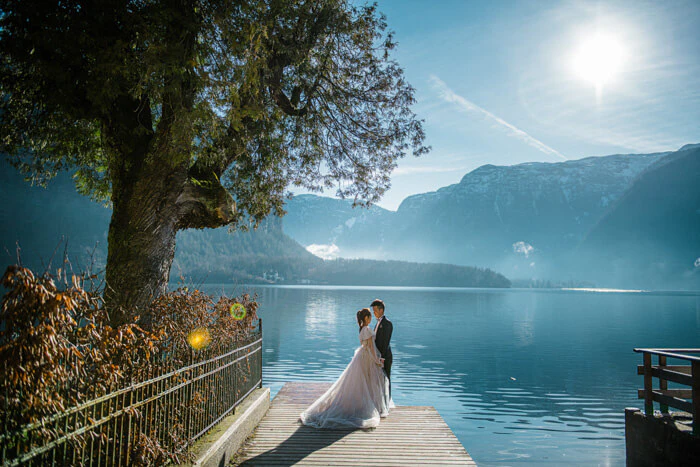
My first Hallstatt shoot was with Sherry and Pete in 2020. Since then I have photographed the village at golden hour, at dawn and through a full winter day. The biggest lesson is that Hallstatt does not need a long list of “photo spots”. It needs good timing. I would rather use four or five views properly than hurry through fifteen tourist landmarks.
The village itself is compact. On my early shoots I could walk from one end to the other in roughly twenty minutes, so the route can stay flexible. If one waterfront angle is busy, we can move into the streets, wait for the light to change, use the lake edge, then return. That flexibility is one of Hallstatt’s strongest advantages for a pre-wedding shoot.
02 · Timing
Early Hallstatt is a different place from midday Hallstatt
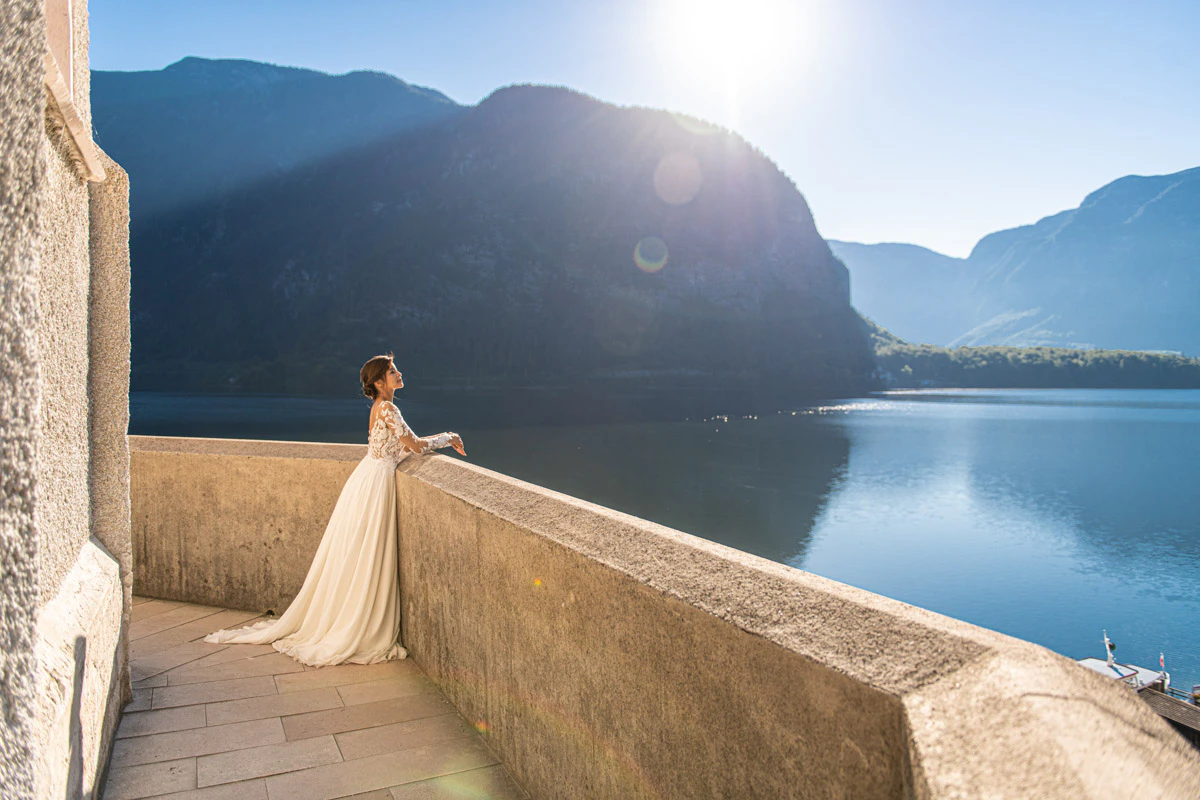
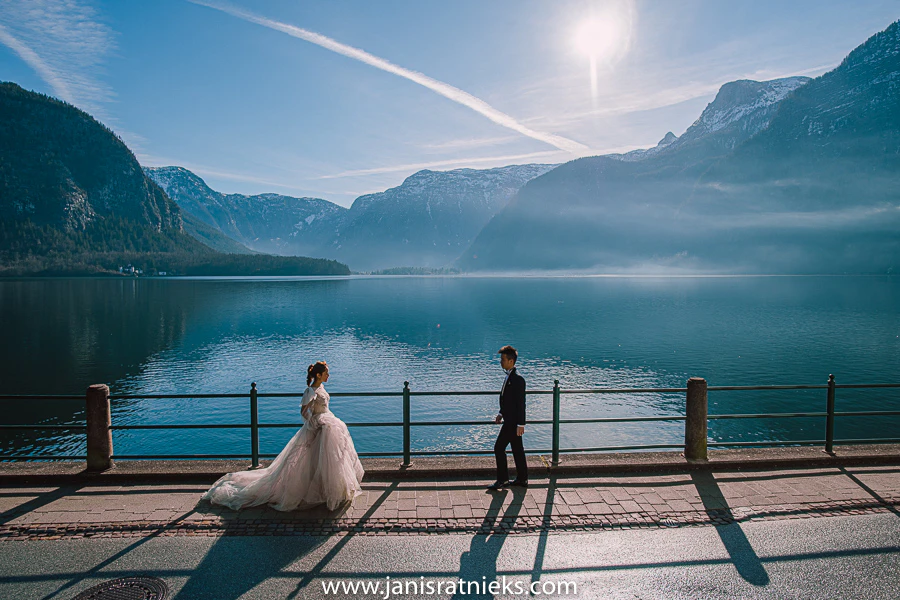
If you want the classic Hallstatt views without a crowd behind you, I would build the shoot around the beginning of the day. Sherry and Pete’s 2020 shoot was unusually empty because Europe was about to close down, but the photographic lesson survived that exceptional moment: I still prefer Hallstatt before the village fills up.
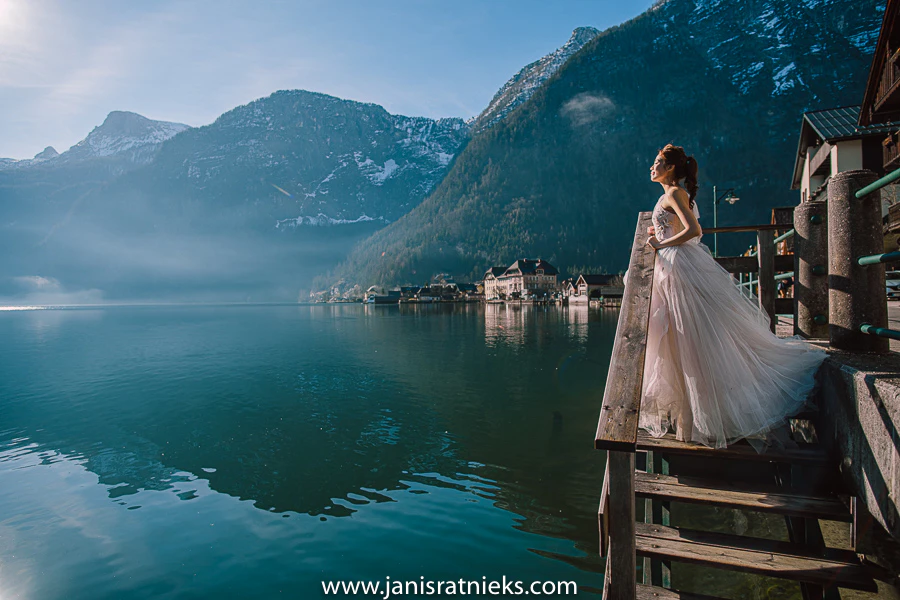
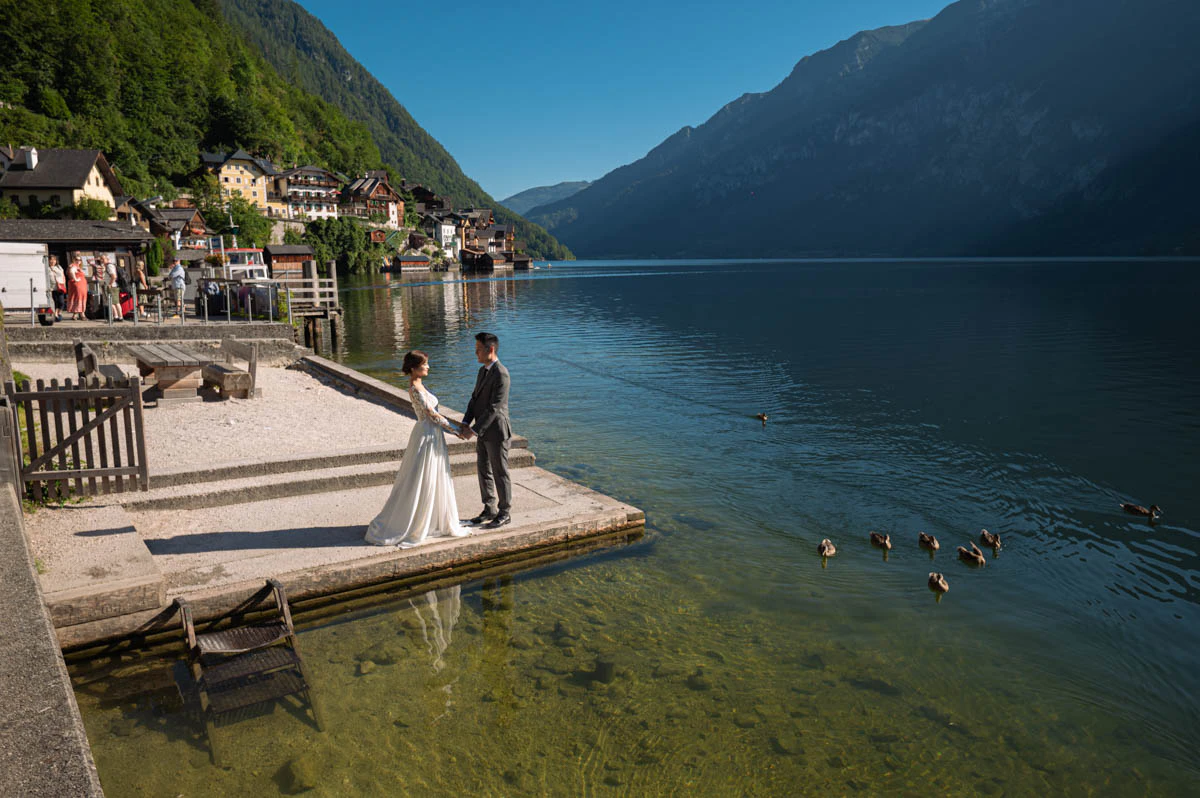
Carmen and Leo gave us a useful comparison because we photographed Hallstatt twice. We used around four hours at golden hour on day one, then came back for roughly two hours at dawn the next morning. The evening had warmer colour; the morning had quieter streets and cleaner backgrounds. They are different looks, not substitutes for each other.
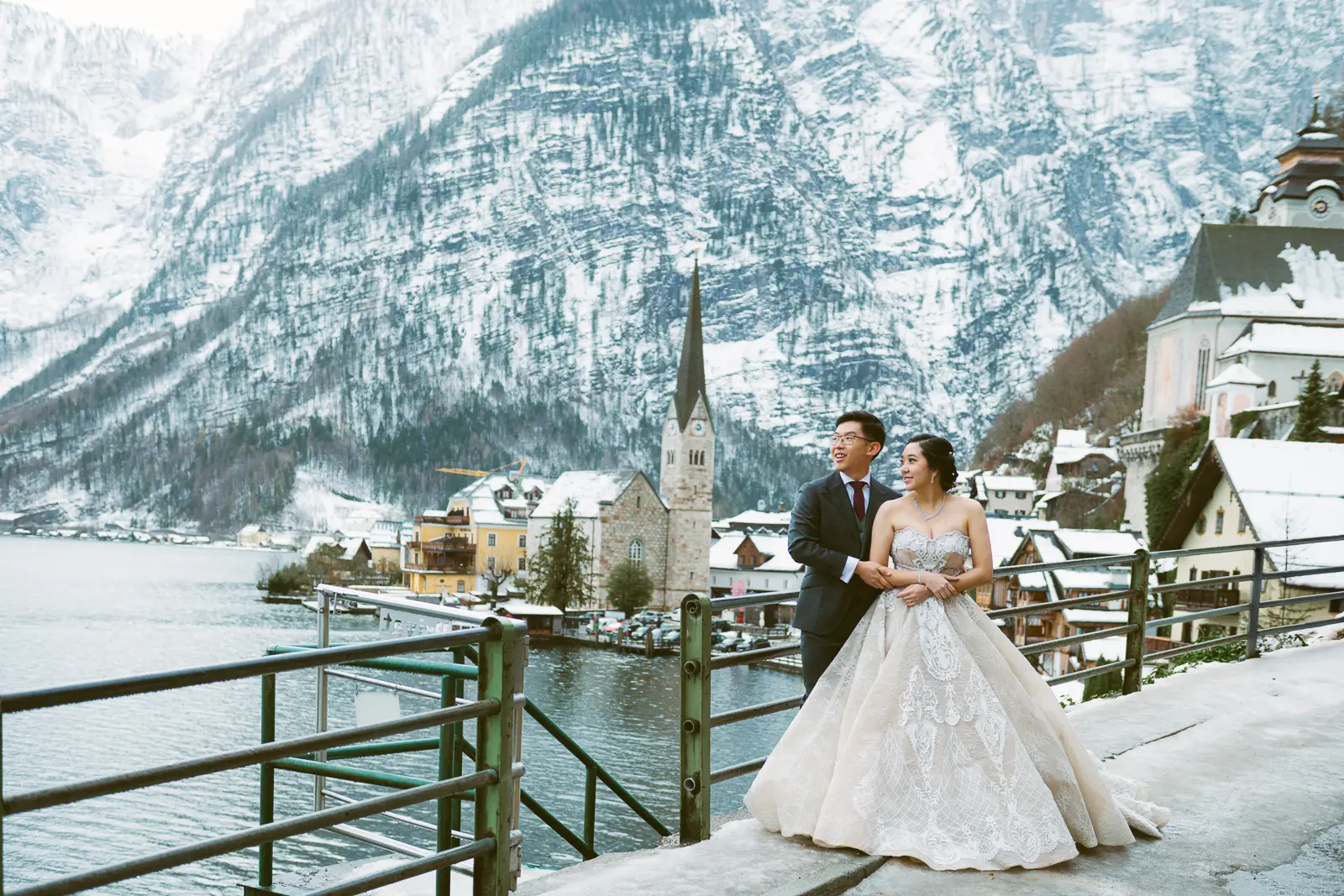
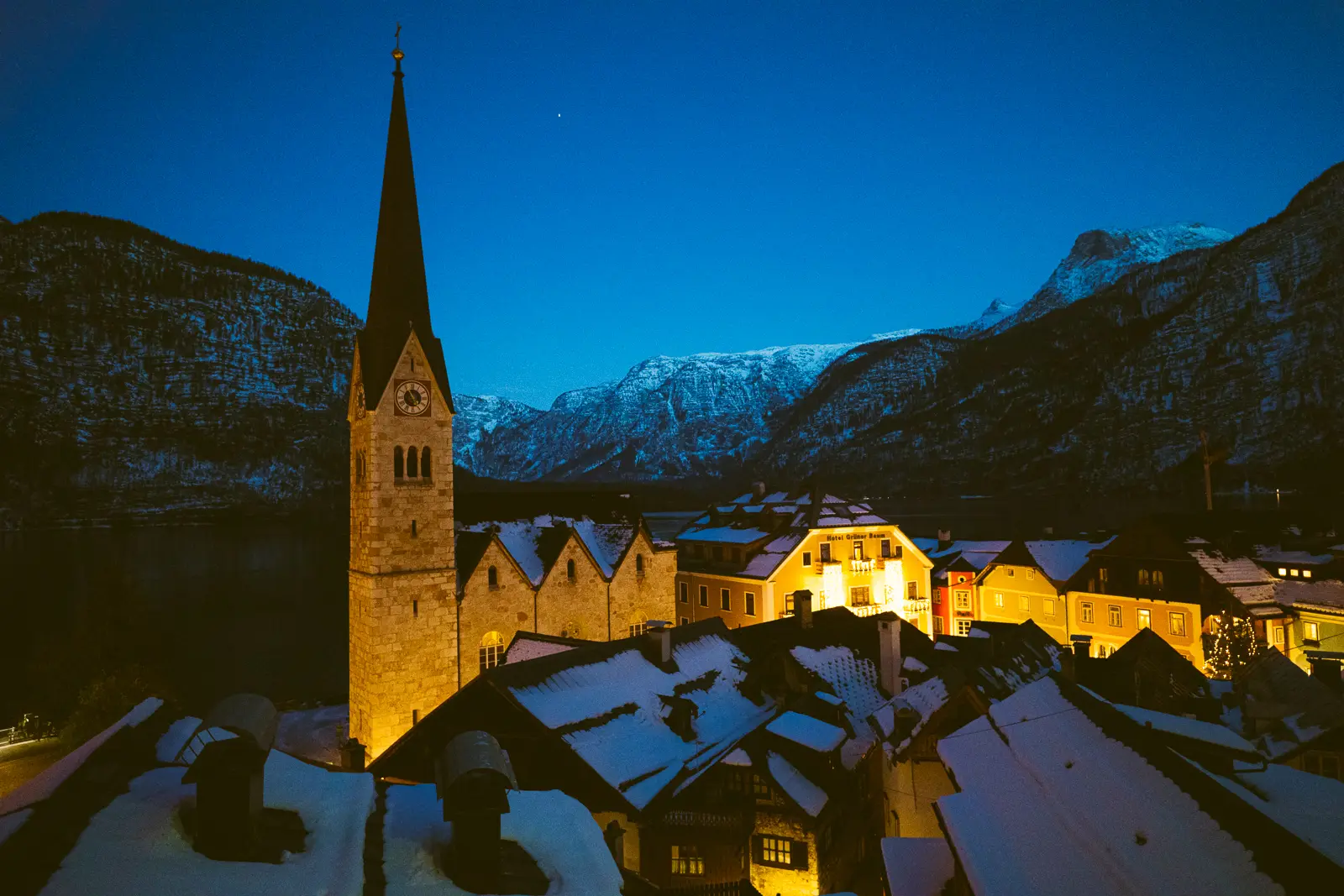
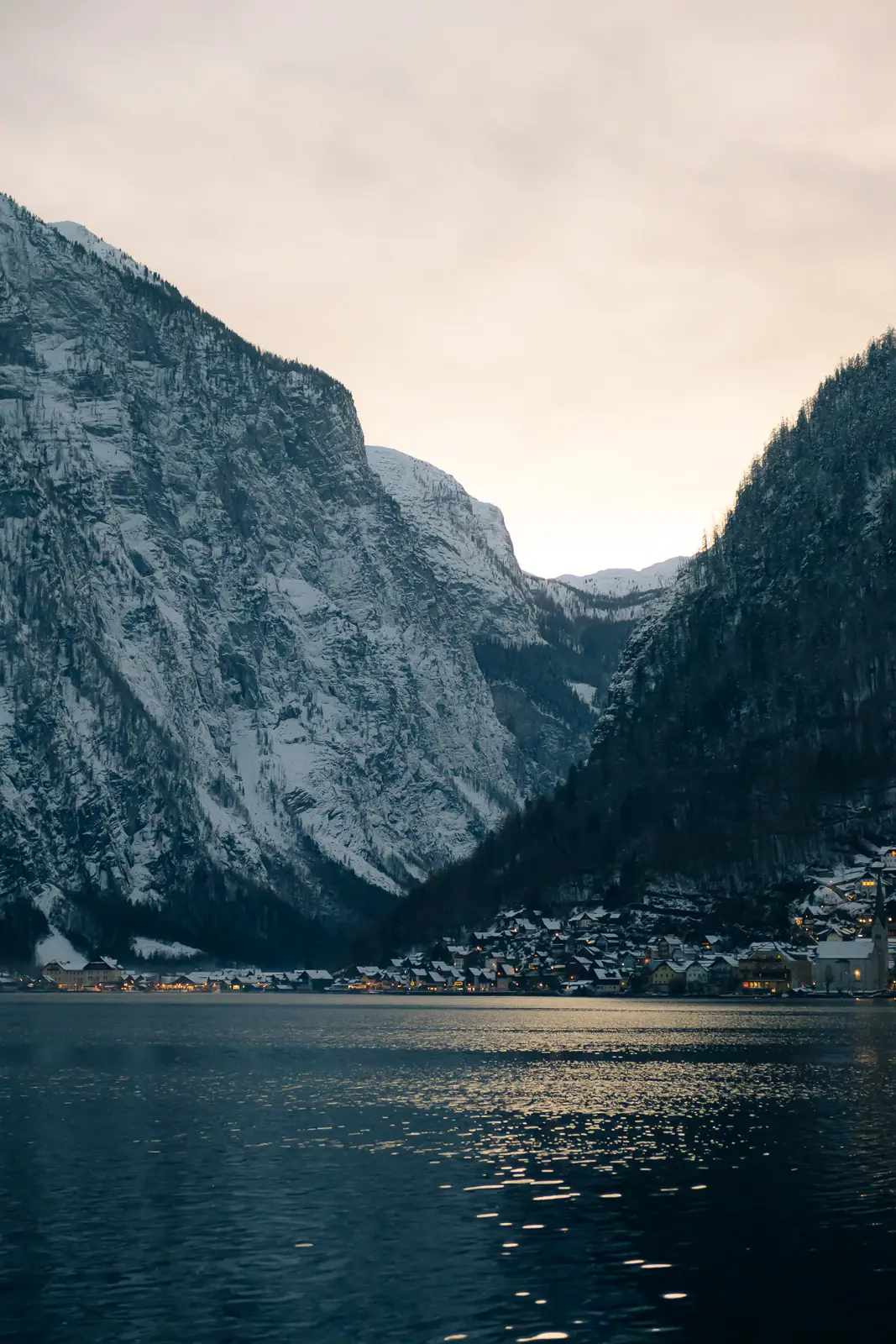
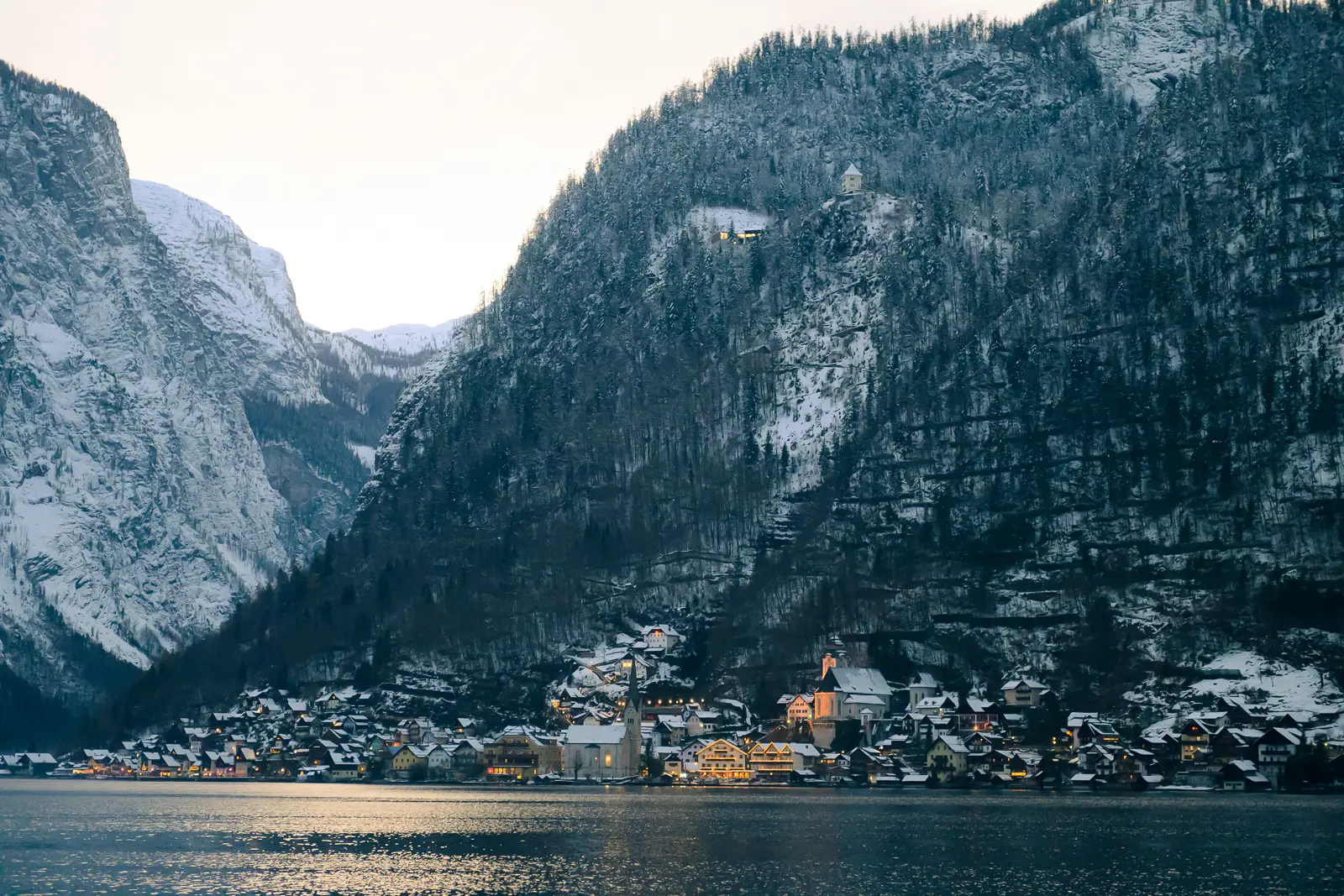
Winter has its own clock. With Jocelyn and Jonathan we began around 06:30, had the waterfront almost to ourselves, then watched the village become much busier from about 09:30. The short winter day also gave us something summer does not: we could finish with village lights and wet-cobblestone reflections without waiting until very late.
03 · Real story one
Sherry & Pete: the original Hallstatt story
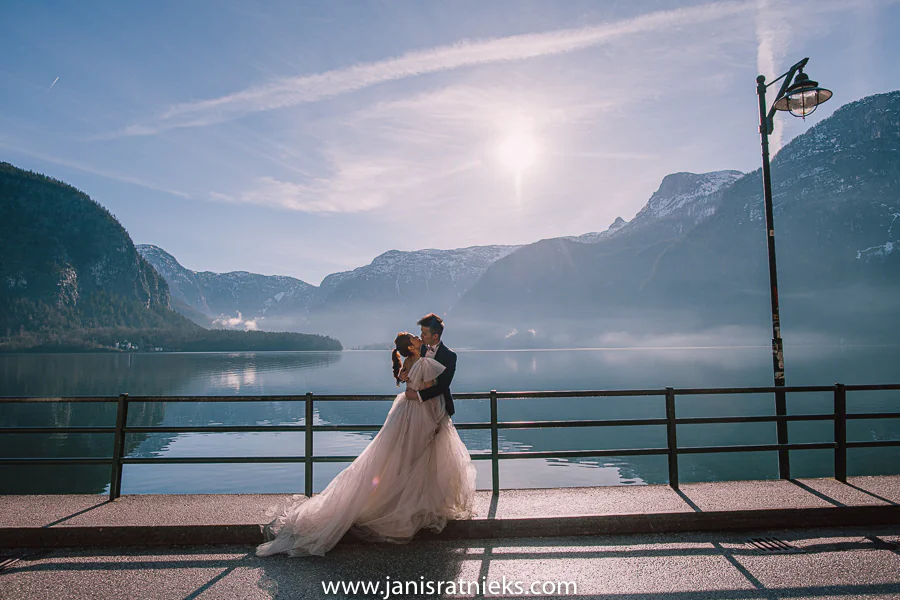
Sherry and Pete travelled from Hong Kong for a European pre-wedding trip that included Hallstatt in Austria and Neuschwanstein in Germany. We arrived from Germany by rental car and photographed Hallstatt early in the morning.
This happened immediately before the first Covid border closures in 2020. Within days, airports and borders across Europe were closing. During the shoot, Hallstatt was almost empty. We walked the lake edge and village streets for a few hours with very few people around us.
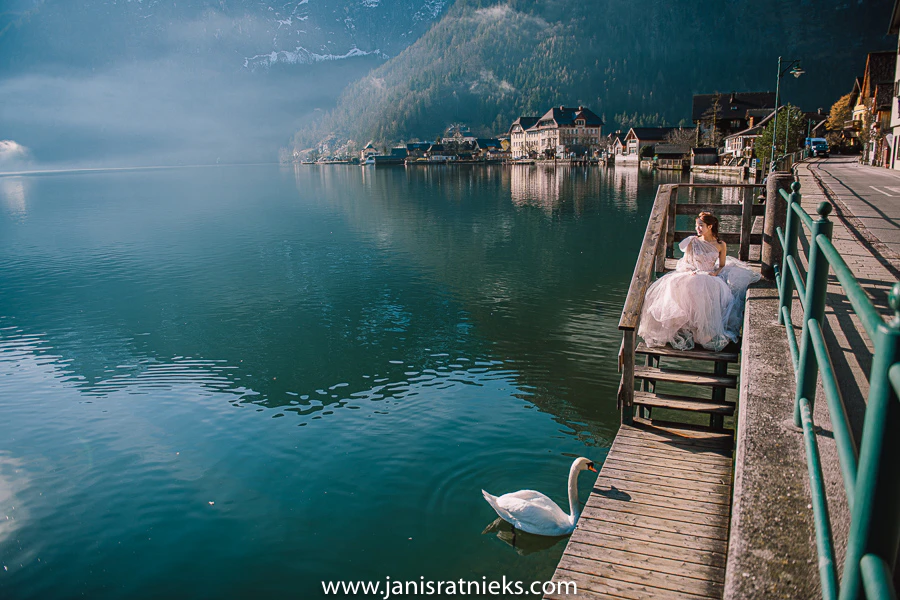
That shoot also gave me my first practical Hallstatt lesson. You do not drive normally through the historic centre, so parking, luggage and dresses have to be organised before the best light begins. Once we were on foot, however, the absence of cars made the photographs much cleaner. The lake, mountains, narrow streets and the local swans did the rest.
04 · Real story two
Carmen & Leo: Hallstatt first, then the Dolomites
Carmen and Leo, also from Hong Kong, wanted a proper Alpine adventure rather than one location and one afternoon. Their full shoot took three days and crossed from Austria into Italy.
Hallstatt was the first chapter only. We photographed for around four hours at golden hour on day one, then returned for another two hours at dawn on day two. After that morning session we left Austria, drove towards the Dolomites and continued at Seceda. Day three was Lago di Braies.
I keep the complete journey on one Carmen and Leo story page because it makes sense as one photographic narrative. On this Hallstatt destination page I only use their Hallstatt experience as evidence of what evening and morning can look like here. The Dolomites destination pages should do the same with the Italian half rather than reproducing their entire story.
05 · Real story three
Jocelyn & Jonathan: winter Hallstatt from dawn to night
Jocelyn and Jonathan travelled from Hong Kong for the most demanding Hallstatt schedule I have photographed: a full winter day with several outfits, starting before the first busy period and finishing after dark.
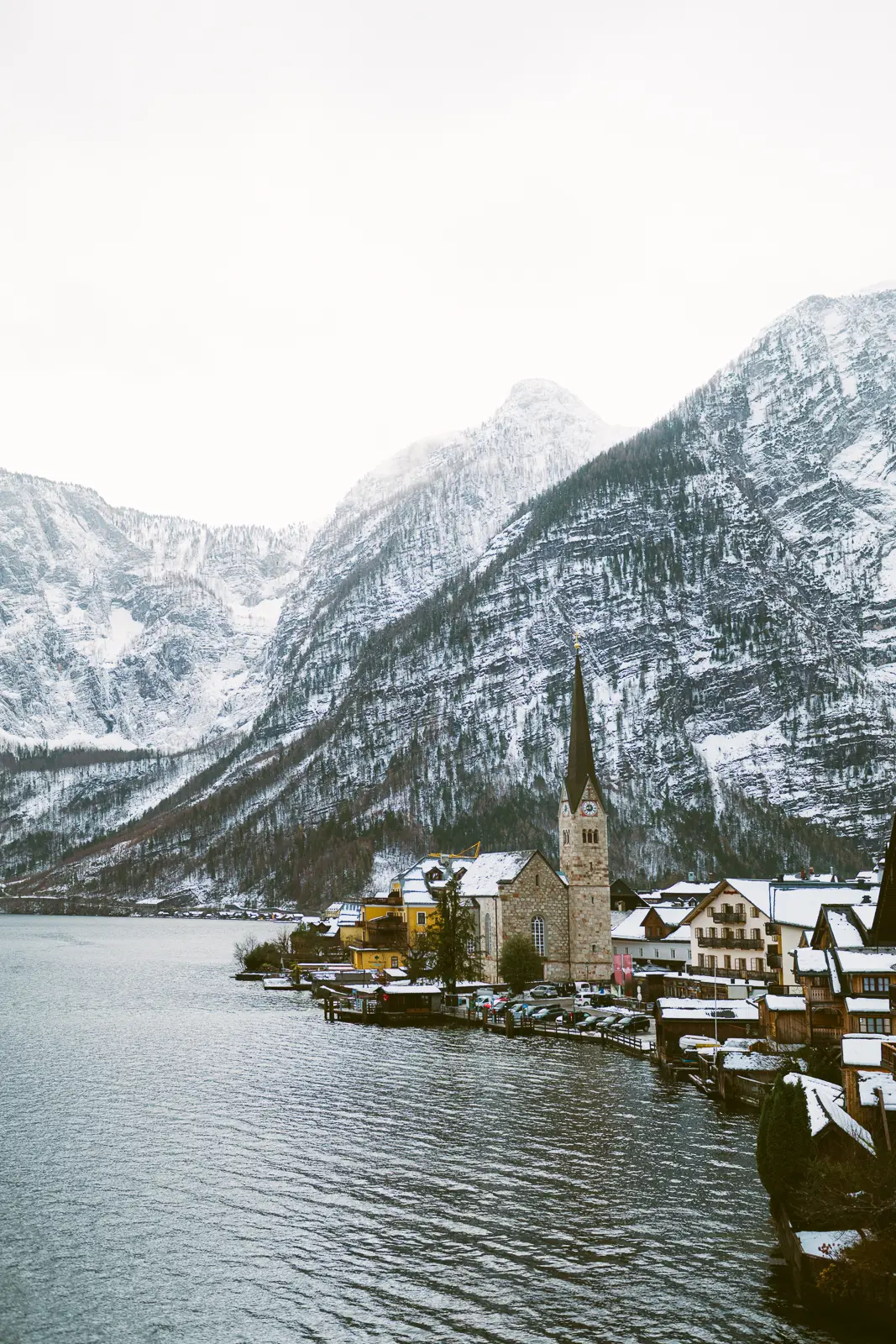
We began around 06:30 with Jocelyn in a large white bridal gown and Jonathan in a classic suit. Once the first groups of visitors arrived, the narrow streets became much less practical for a dress with a long train, and it was genuinely cold. They changed into warmer casual clothes, we used the higher views and the village, and a hot Glühwein stop became part of the day rather than dead time between photographs.
In the afternoon Jocelyn changed into a strong red gown. Against winter Hallstatt’s grey buildings, white snow, dark mountains and blue-black lake, the colour worked extremely well. We photographed by the water and with the swans, then changed once more into warm clothes and finished under the village lights. That final night section is one of the reasons I like a full winter schedule.


Three shoots, three versions of Hallstatt
I would plan your route from the photographs you want
Sherry and Pete gave me the quiet-morning Hallstatt story. Carmen and Leo showed how well Hallstatt works as the Austrian beginning of a larger Alpine adventure. Jocelyn and Jonathan showed how much variety a full winter day can create inside one village.
That is more useful to me than a generic list of twenty photo spots. Choose the season, light and pace first. The route follows from that.
06 · Hallstatt only
A simple 2–4 hour Hallstatt photoshoot route
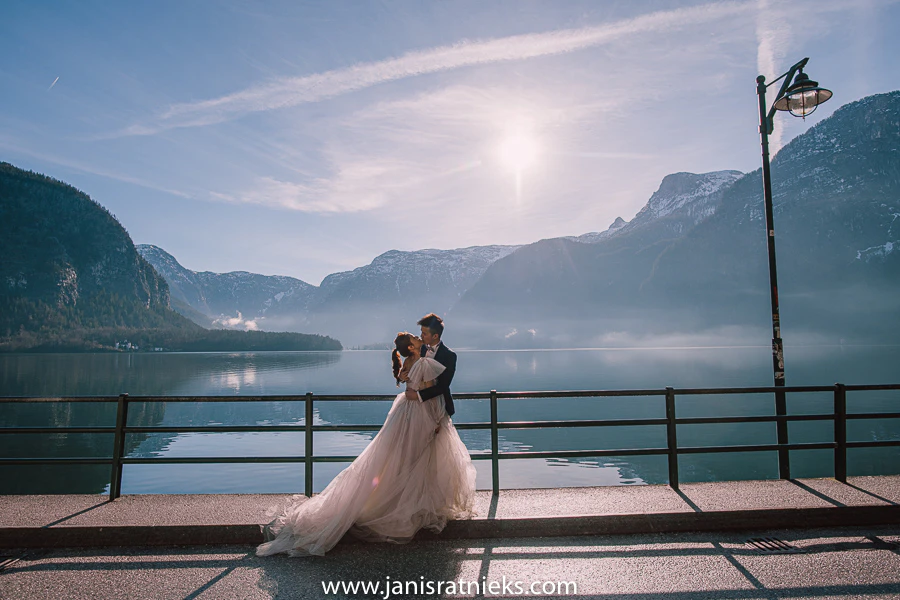
For a Hallstatt-only shoot I would normally plan two to four hours and keep the route compact. Start with the lake-and-village view while it is clean, move through the historic streets, use the lake edge for movement and closer portraits, then return to a second wider view when the light changes.
One or two outfits fit this rhythm easily. The most important practical detail is footwear. Elegant shoes can go on for the frame, but comfortable shoes between locations save time and make the cobblestones much easier. If the dress has a long train, I would schedule that look for the quietest part of the day rather than trying to move through busy streets later.
I also like to leave a little unused time in the plan. Hallstatt weather can change quickly, mist can move across the mountains, ferries and visitors alter the background, and sometimes the best thing we can do is wait ten minutes instead of forcing the next frame.
07 · Austria + Italy
Hallstatt + Dolomites is better as a multi-day pre-wedding
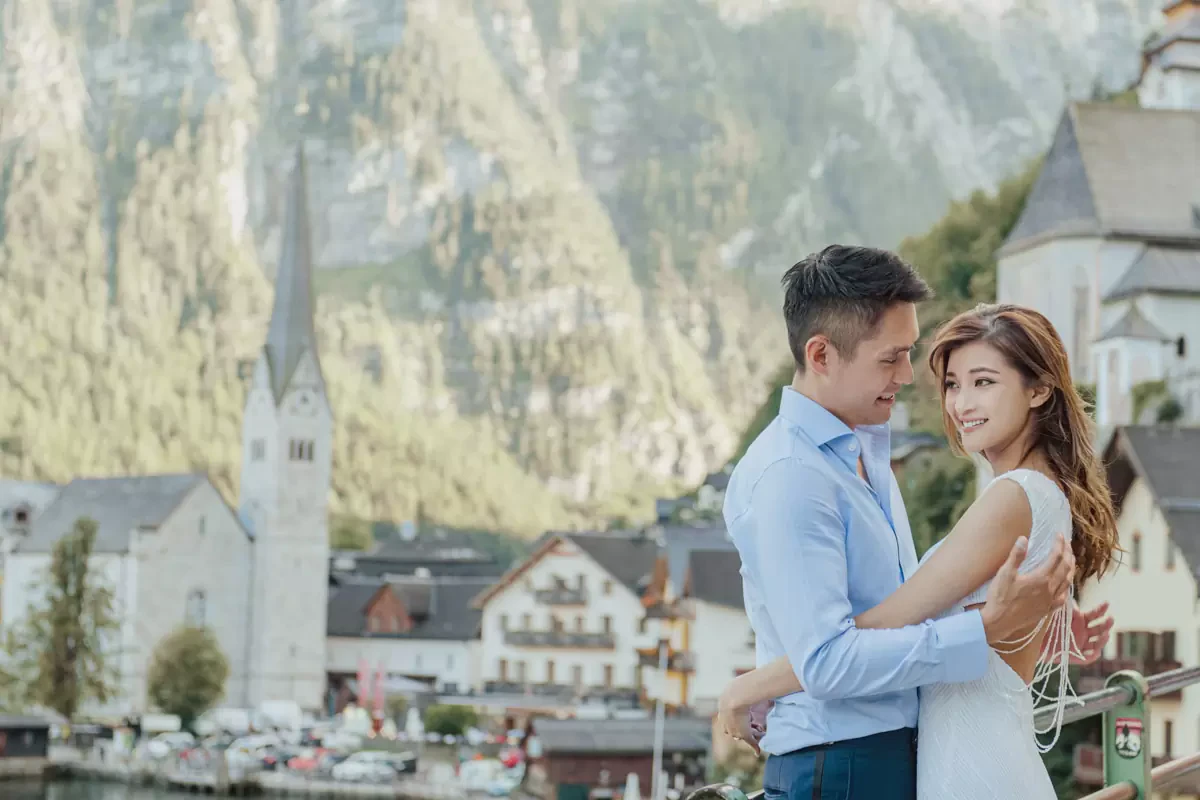
Carmen and Leo’s route convinced me that Hallstatt and the Dolomites belong together only when there is enough time to let them look different. Hallstatt gives a compact Austrian village, lake and architecture. Seceda gives exposed high-mountain scale. Lago di Braies gives another lake, but with Dolomite peaks and the boat-house setting.
On their shoot, day one was Hallstatt around golden hour. Day two began with Hallstatt at dawn before we drove into Italy and reached Seceda for the afternoon. Day three started early at Lago di Braies. That sequence worked because we were not trying to “collect” three locations in a day.
For a new couple I would use the same principle rather than copy the exact timetable. Lift schedules, road conditions, weather and access change. The route should be built around the current season, but the photographic logic remains useful: one strong light window for each major landscape.
08 · Seasons
Summer Hallstatt and winter Hallstatt photograph very differently
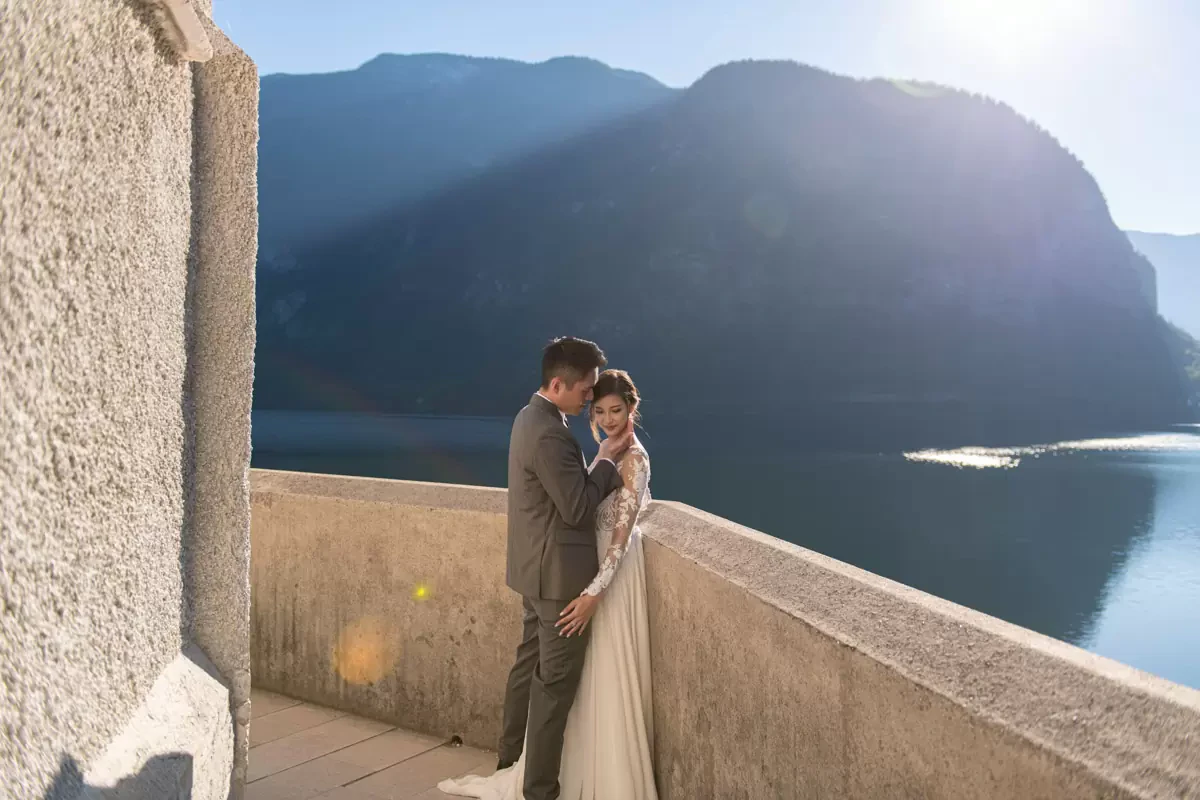
Warm-season Hallstatt is easier physically. Days are longer, outfit changes are simpler and there is more room to move around in light clothes. The trade-off is people. If you want clean streets and the classic waterfront view, the early start matters even more.
Winter asks more from everyone. The light window is short, hands get cold quickly and a large gown becomes hard work once the streets are busy. I plan warm coats off-camera, practical shoes, short warming breaks and a changing base close to the village. Those are not glamorous details, but they are what make a long winter shoot possible.
Winter also gives something I cannot manufacture in summer: snow if conditions cooperate, low mist, dark mountains, the Christmas-market atmosphere in season, and early night photography. Jocelyn and Jonathan’s gallery moved from white gown at dawn to casual clothes, red gown, then warm clothes after dark. It feels like several shoots, even though we stayed in Hallstatt.
09 · Practical planning
Stay overnight if the photographs matter
I prefer couples to stay in Hallstatt or very close to it. The village is small, so accommodation location matters less than practical access, a useful changing space and being able to walk out before the day visitors arrive. For several gowns, a nearby room is much more valuable than carrying everything through the streets.
Visitor cars do not simply drive through the historic centre, so parking and luggage should be solved the evening before. On my first trip we arrived from Germany with several roller cases, and the sound of dragging them through the narrow streets at night is not something I would build into a shoot morning again.
My old 2020 article also discussed drone photography. I used a Mavic Mini at Plansee, not in Hallstatt. I would not reuse the 2020 weight and permit advice today because Austrian and local rules change. For any new shoot I check the current restrictions for the exact location and date, and I treat a drone as optional rather than part of the core Hallstatt plan.
The same applies to transport schedules, private-property access and opening times. I keep the photographic ideas from previous shoots, but I re-check the logistics for every new couple instead of assuming that an old itinerary is still valid.
Hallstatt photoshoot FAQ
Useful questions before we plan the shoot
What time would you personally start a Hallstatt photoshoot?
For the cleanest version of the village, I prefer dawn and early morning. I have also photographed Hallstatt successfully at golden hour, but the atmosphere is different and there are usually more people to work around.
How long do we need if Hallstatt is the only location?
Usually two to four hours. That is enough for the lake, village streets, wider views and one or two outfits without turning the session into a race.
Is a full-day winter Hallstatt shoot realistic?
Yes. I have done it. The key is to treat warmth, footwear, outfit changes and breaks as part of the schedule. Winter can give several very different looks because the day moves from dawn mist to early night.
Can we combine Hallstatt with the Dolomites?
Yes, but I recommend several days. Carmen and Leo used Hallstatt at golden hour, Hallstatt again at dawn, Seceda later on day two and Lago di Braies on day three.
Do we need to stay overnight?
I strongly prefer it. An overnight stay makes dawn practical and removes parking, luggage and changing-room problems from the best light of the day.
What should we wear between photographs?
Comfortable shoes and warm layers matter more than people expect. Elegant shoes and gowns can go on for the photograph, but the route is much easier if you can walk normally between locations.
Can we use a drone in Hallstatt?
I do not treat drone photography as a guaranteed part of a Hallstatt shoot. My old 2020 trip used a small drone at Plansee, not in Hallstatt. Current Austrian and local rules must be checked for the exact location and date.
Plan yours
Hallstatt only, a winter day, or a wider Alpine route?
Tell me the month, how many outfits you have and whether Hallstatt is the whole photoshoot or the Austrian chapter of a longer European pre-wedding. I can build the route around light rather than a tourist checklist.
Check availability