
Best at sunrise
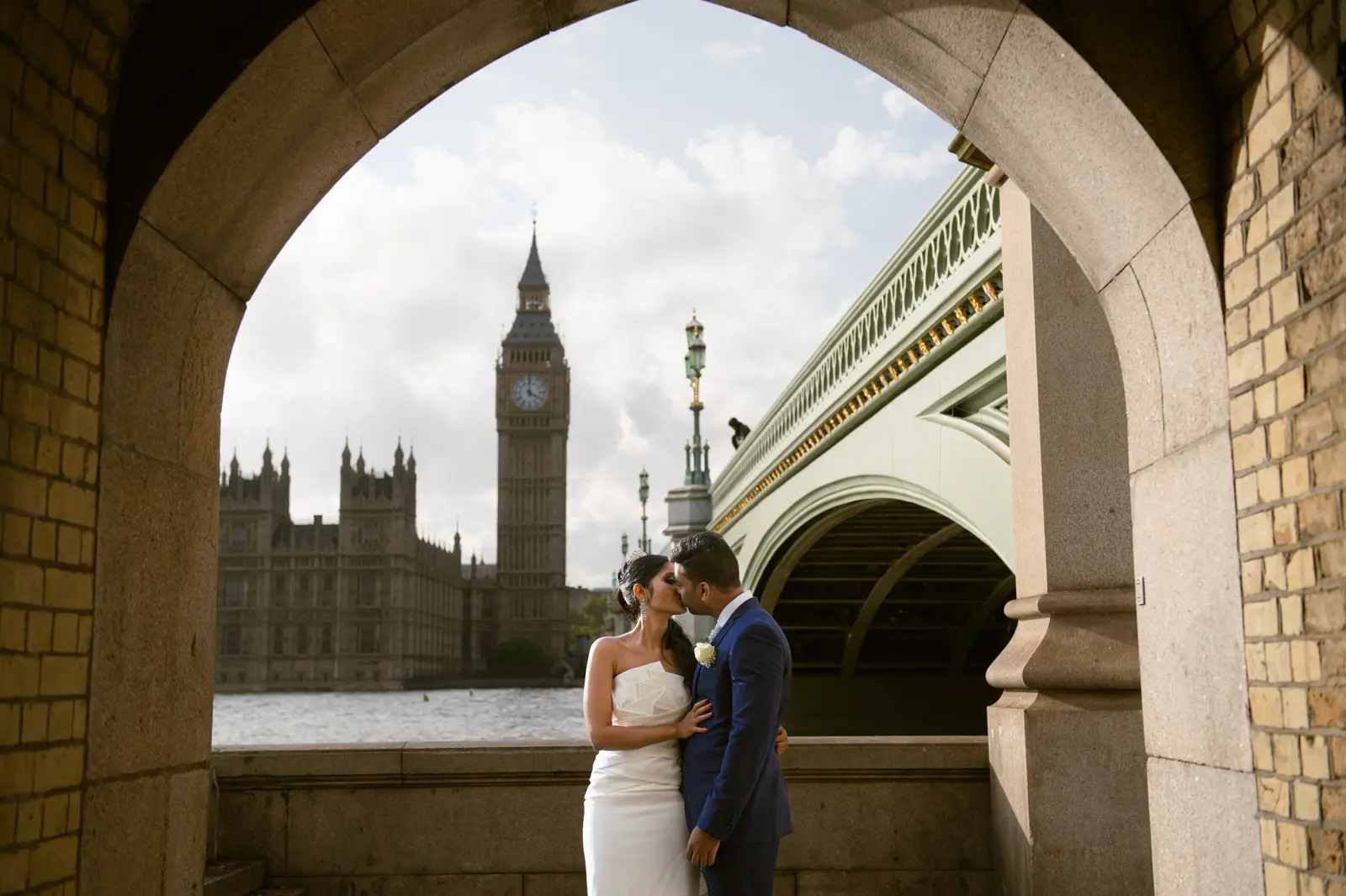
Big Ben & Westminster
Classic London identity, river views and a compact walking route.
Landmarks, quieter streets and practical routes
London works best as a sequence rather than a checklist. A strong pre-wedding session combines two or three connected settings, allowing the photographs to change from quiet streets to river views, architecture and evening light.
The route matters as much as the locations. Sunrise, walking distance, traffic, outfit changes and crowd levels determine whether the day feels calm or becomes a long transfer between landmarks.
The useful principle
The best route is not the route with the most famous places. It is the one with enough time to make different photographs while you still enjoy being in London.
Compare the options
Best at sunrise
Architectural and graphic
Sunrise or blue hour
Morning residential colour
Blossom and autumn
Easy hotel pairing
Dusk and evening
Greenwich architecture
Westminster at first light
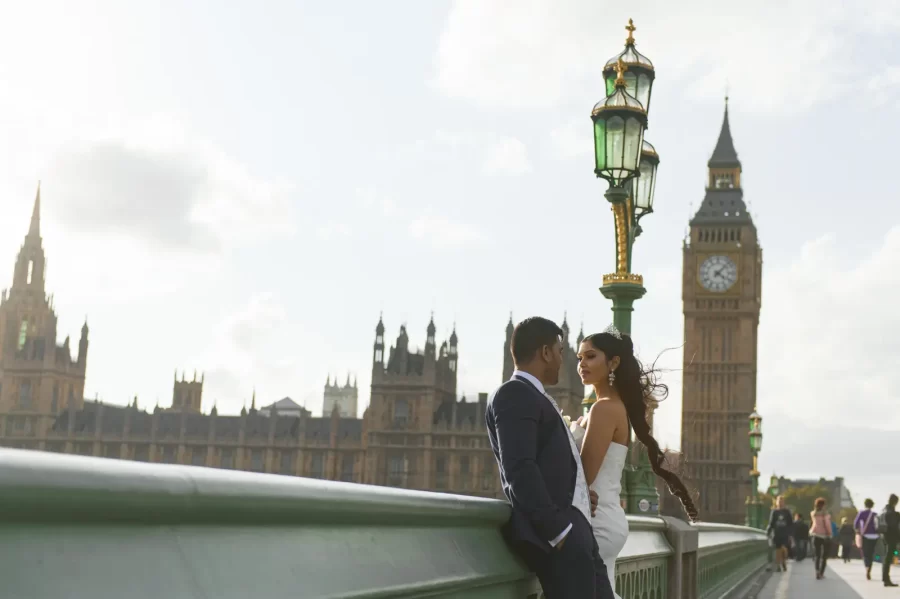
This is the clearest visual shorthand for London, but Westminster works best when the route stays compact. Big Ben, the Houses of Parliament, Westminster Bridge and the Thames all sit within a small enough area to create several different backgrounds without spending the session repeatedly getting into a car. The architecture is strong, the river opens the frame and the location immediately feels like London without needing every photograph to include the clock tower.
Early morning gives the most control here. The pavements are quieter, the light is lower and the background is easier to simplify. Later in the day the area becomes much busier, but that does not make it unusable. At that point I photograph it as a living city rather than waiting endlessly for a completely empty bridge. Buses, commuters and movement can become part of the atmosphere when they are used deliberately.
Westminster Bridge, the embankment and the London Eye can be connected on foot. That makes this one of the most efficient parts of London for a shorter session. We can make the obvious Parliament view, move closer to the river, use the bridge structure and then change direction toward the London Eye for a cleaner view back across the Thames.
If Westminster is only one part of a longer day, I prefer to treat it as one strong chapter and then move somewhere that looks genuinely different. St Paul’s can add stronger architectural lines, while Hyde Park, Chelsea or Notting Hill can soften the gallery. Two contrasting areas usually create more variety than five similar landmark stops photographed in a hurry.
City architecture
St Paul’s and Millennium Bridge give a more graphic, architectural version of London than Westminster. The cathedral creates a fixed visual anchor while the bridge gives long lines, open sky and movement toward the river. It suits couples who want a slightly more editorial city look without needing to rely on hotel interiors or formal posing.
Millennium Bridge is a working pedestrian route, so timing matters. I normally make a few deliberate frames where the architecture is strongest and then keep moving rather than waiting for the bridge to become completely empty. A small amount of city movement often looks more natural than trying to make central London appear deserted.
Tower Bridge is visually different enough to justify adding, but it should be treated as a separate stop. It is not beside St Paul’s, and the transfer takes time. If Tower Bridge is important, I would rather give it a proper sequence than squeeze it into the final ten minutes of a route simply because it is another famous landmark.
St Dunstan in the East can work as a quieter contrast between the larger City locations. The ruined church garden adds greenery, stone and a more intimate scale. It is useful when a session is otherwise dominated by bridges, glass and large architectural backgrounds.
For a longer session, a practical sequence is St Paul’s first, Millennium Bridge next and then either continue toward the river or transfer to Tower Bridge. Around blue hour the City changes again: reflections, bridge lights and darker skies create a second visual language without needing to add another large part of London.

Colour and residential London
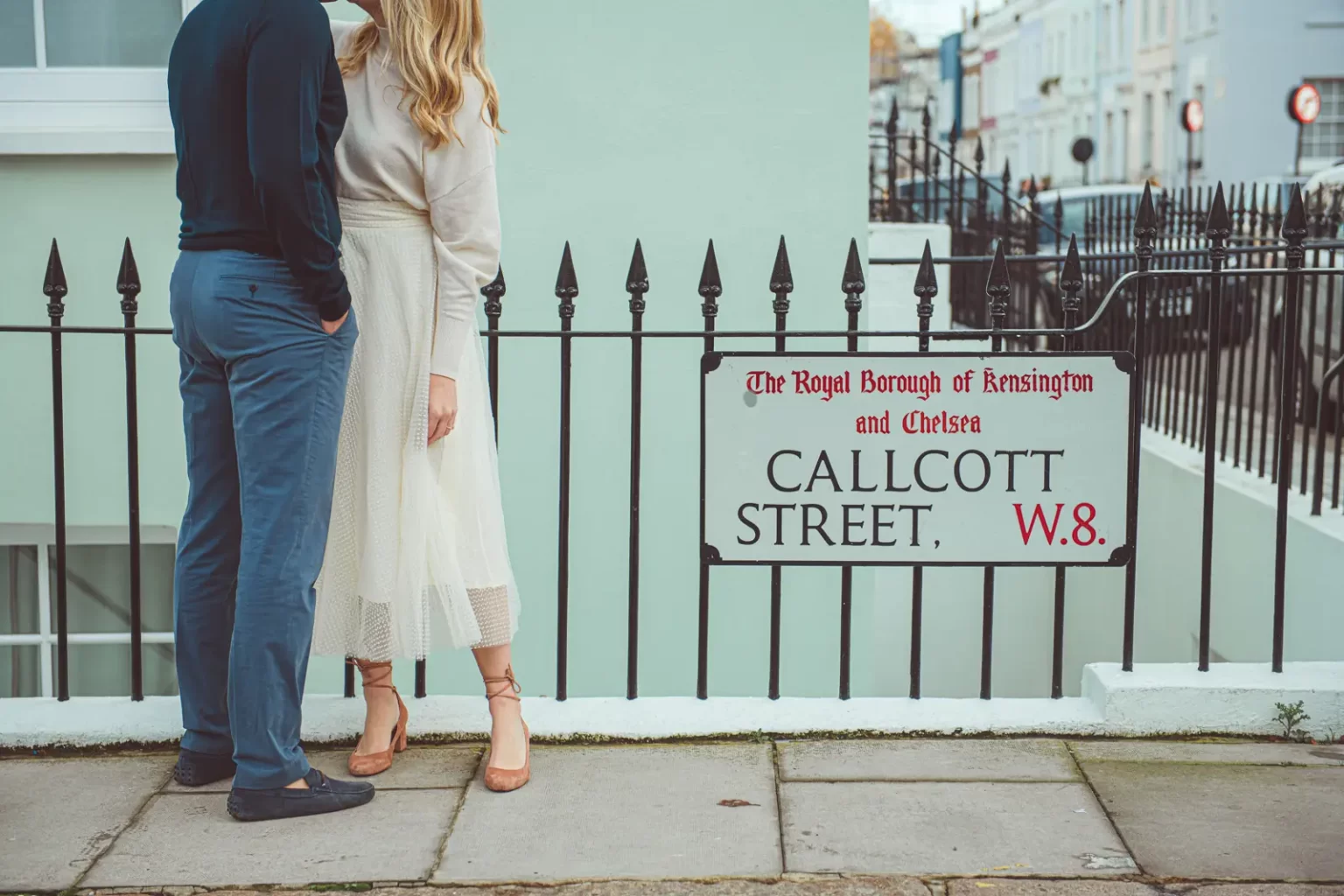
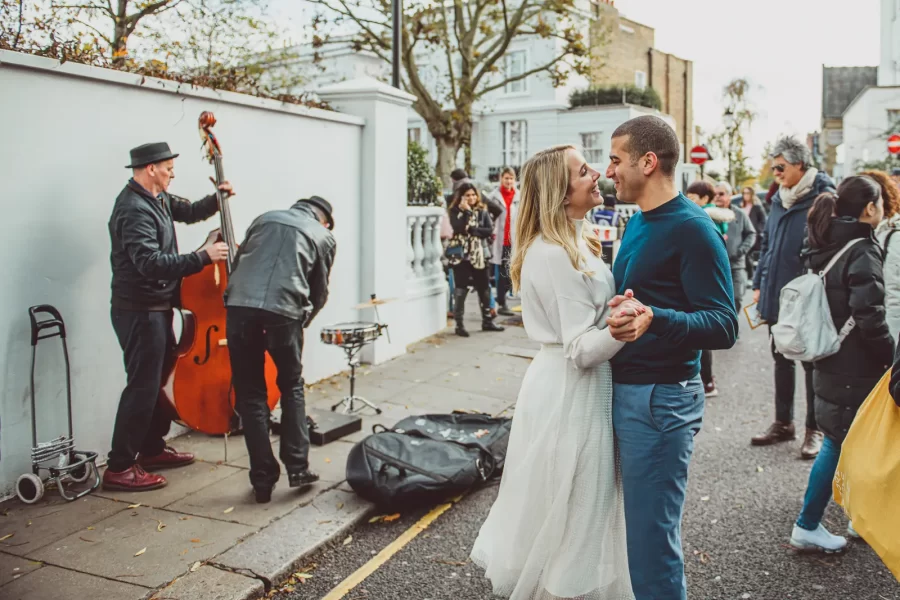
Notting Hill is useful when you want London without relying on monuments. Pastel facades, mews, doorways, shopfronts and Portobello Road give the photographs colour and personality, and the scale is much more intimate than Westminster or the City. It is one of the easiest places to let the session feel like a walk rather than a formal location shoot.
Morning is usually the cleanest time around the best-known streets. Portobello becomes busier as the day develops, but market activity can also add energy if that suits the photographs. For quieter portraits I move away from the busiest stretch and use the surrounding residential streets, where the backgrounds are simpler and the couple can move without constantly stopping for crowds.
Chelsea gives a related but more restrained version of west London. The architecture is elegant, the streets are quieter and the route can move naturally toward the river. It pairs well with Notting Hill when you want variety without crossing the whole city, but it also works with Hyde Park, Knightsbridge or a hotel-based start.
Albert Bridge is a strong finish for this side of London, particularly around dusk. The bridge lights and river create a completely different final chapter from the daytime streets. If Albert Bridge matters, I plan the earlier part of the route around reaching it at the right time rather than hoping we arrive before the useful light disappears.
For a more formal version of west London, The Ritz, St James’s and Mayfair can replace or complement the neighbourhood route. Hotel interiors and formal streets produce a polished look that is very different from Portobello. I would not normally try to combine every one of these places in a short shoot; deciding whether the session should feel colourful, relaxed, formal or intentionally mixed produces a much more coherent gallery.
Green space
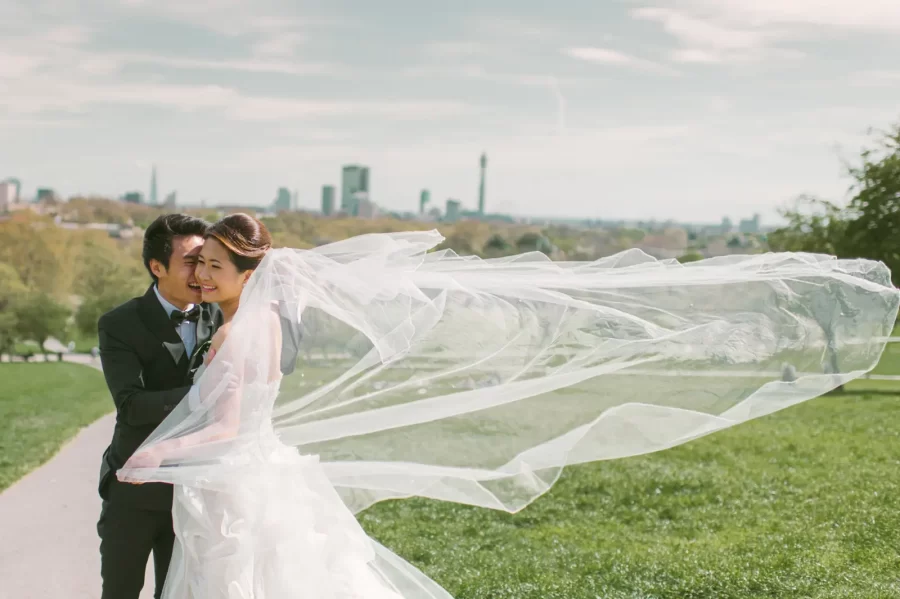
London’s parks are most useful when you want space, movement and softer backgrounds between stronger city locations. Regent’s Park and Primrose Hill work particularly well in spring and summer, when blossom and greenery become part of the photographs. They also give couples room to walk naturally without constantly stopping beside traffic, railings or busy pavements.
Primrose Hill is strongest when the skyline matters, while Regent’s Park gives more variety at ground level. The two are close enough to combine, but the exact route depends on season. Blossom, autumn colour and the position of the sun can change which part of the park is worth prioritising.
Hyde Park is practical because it sits close to Knightsbridge, Mayfair and several major hotels. The Round Pond gives open water, reflections and long sight lines, while the paths and trees create quieter frames. In autumn the colour changes the character completely; in winter the photographs become simpler and more graphic.
I would not normally combine Regent’s Park, Hyde Park and Greenwich in the same short session. They are different parts of London and the travel would consume too much photography time. Instead, I choose the green space that fits the rest of the day. Hyde Park makes sense with The Ritz or Knightsbridge; Regent’s Park works well with central or north-west London plans.
Greenwich should be treated as a destination rather than an add-on. The Old Royal Naval College, river and surrounding architecture provide enough visual variety for a substantial part of a session. If Greenwich is one of your priorities, it is usually better to build the route around it rather than photograph several central London locations first and arrive there rushed.
Make the route work
A London pre-wedding route is mostly a timing problem. Locations that look close on a map can take much longer to connect once traffic, walking, road crossings, outfit changes and waiting for transport are included. I plan the session as photographic chapters rather than a checklist: one strong city area, one contrasting location and, when useful, a final place chosen for evening light or night atmosphere.
For a shorter session, staying within one connected part of London nearly always produces better photographs than crossing the city several times. Westminster and the river can form one route. Notting Hill and Chelsea can form another. St Paul’s and the City can work as their own chapter. A longer session gives us the freedom to combine areas that genuinely look different.
Outfit changes should be planned before the day. Hotels are the easiest solution when you are staying nearby. Otherwise I keep the number of changes realistic and place them between route sections rather than interrupting the photography every thirty minutes. One relaxed outfit and one more formal look is often enough to change the character of the gallery.
London weather is variable, but cloud is not a problem for photography. Soft overcast light can be excellent for streets and portraits. Light rain can also work if the route includes covered areas, hotel interiors or nearby alternatives. The bigger problem is usually losing too much time travelling while the weather changes.
If the forecast becomes difficult, I do not try to preserve the original itinerary at any cost. We can change the order, start with interiors, use streets with shelter and move to open locations when conditions improve. A flexible route is more useful than a perfect timetable that only works in perfect weather.
As a planning principle, two visually different areas photographed properly are stronger than five famous places photographed in a hurry. The goal is a coherent gallery with real changes in pace, background and light—not proof that we visited every London landmark in one day.
Ready-made route ideas
These are starting points rather than fixed itineraries. The order matters because London travel time, crowds and changing light can affect a session more than the distance on a map. I normally choose one route and adjust it around your priorities, season, outfits and the time available.
Iconic London in a compact session
This is the most efficient route when the priority is unmistakable London. Start beside Parliament while the streets are quiet, cross or work around Westminster Bridge, then move toward the South Bank for wider river views and the London Eye. The order keeps almost everything walkable and changes the background without wasting time in traffic. It is especially useful for a shorter engagement or pre-wedding session.
Editorial architecture and stronger city lines
Begin around St Paul’s while the cathedral and surrounding streets are the main visual focus, then use Millennium Bridge for open river views and stronger geometry. St Dunstan in the East gives a quieter green-and-stone break before the final transfer to Tower Bridge. Tower Bridge works best as the finish because it deserves its own time rather than being squeezed into the middle of the route.
Relaxed streets followed by a dramatic evening finish
Start with the colour and smaller streets of Notting Hill, use Portobello while there is still daylight and then move south toward Chelsea as the light becomes softer. Albert Bridge is the natural final stop because the illuminated bridge and river feel completely different from the daytime neighbourhood photographs. This route gives the gallery a clear progression rather than four unrelated stops.
Formal outfits, hotels and classic London elegance
This route works well when the photographs should feel polished rather than tourist-led. Begin with the hotel or Mayfair streets while clothes and styling are at their freshest, move through St James’s for formal central London backgrounds and finish in Hyde Park for more movement and open space. The visual change from interiors and streets to the park stops the gallery feeling too formal from beginning to end.
Greenery, seasonal colour and a slower session
This is a deliberately simple route. Regent’s Park provides paths, planting and seasonal colour, while Primrose Hill gives a more open finish with the London skyline. Because the locations are close, most of the session can be spent photographing rather than travelling. It is particularly useful in spring, early summer and autumn when the park itself becomes an important part of the visual story.
Architecture, river views and a less rushed London session
Greenwich has enough variety to build a session around it without returning to central London. Start with the formal architecture of the Old Royal Naval College, move toward the river for more open photographs and finish in Greenwich Park if the light and season suit it. Treating Greenwich as one complete route is much stronger than adding it at the end of a long central-London itinerary.
Practical questions
For landmark locations, sunrise or early morning is usually the easiest time to work. Westminster, St Paul’s and the bridges become busy quickly. Evening is useful for Albert Bridge, Tower Bridge and city lights, so a longer session can be designed to use both ends of the day rather than forcing every location into the same light.
Yes, but the route should be built in clusters. Westminster and the London Eye connect naturally; St Paul’s and Millennium Bridge form another cluster; Notting Hill and Chelsea work well together. Three well-planned areas usually create more variety than a rushed list of ten stops spread across London.
Permit rules depend on the location, equipment and size of the crew. I work lightly and handheld, which keeps most street sessions simple, but private interiors, some managed estates and larger commercial-style productions may require permission. If a specific location matters to you, we can check it while planning the route.
We adjust the order rather than abandoning the session. Covered streets, colonnades, hotel interiors and sheltered areas can be used first, then we move back outdoors when conditions improve. Wet streets and softer light can photograph beautifully; flexibility is much more useful than trying to follow a rigid timetable.
For most London sessions, one relaxed look and one more formal outfit are enough to change the character of the photographs without losing too much time. If you are staying at a hotel, changes are easy to plan there. Otherwise I prefer to place an outfit change between two route sections rather than interrupting the photography repeatedly.
Start with the atmosphere you want rather than a list of famous places. Westminster and St Paul’s give unmistakable city architecture. Notting Hill and Chelsea feel more personal and residential. Hyde Park and Regent’s Park create movement and softer backgrounds. A strong route normally combines two different moods rather than repeating the same type of location.
Plan your London photographs
Share your dates, preferred locations and the style of session or celebration you are planning. I will reply with availability and a realistic recommendation.