
London · planning guide
London Pre-Wedding Guide
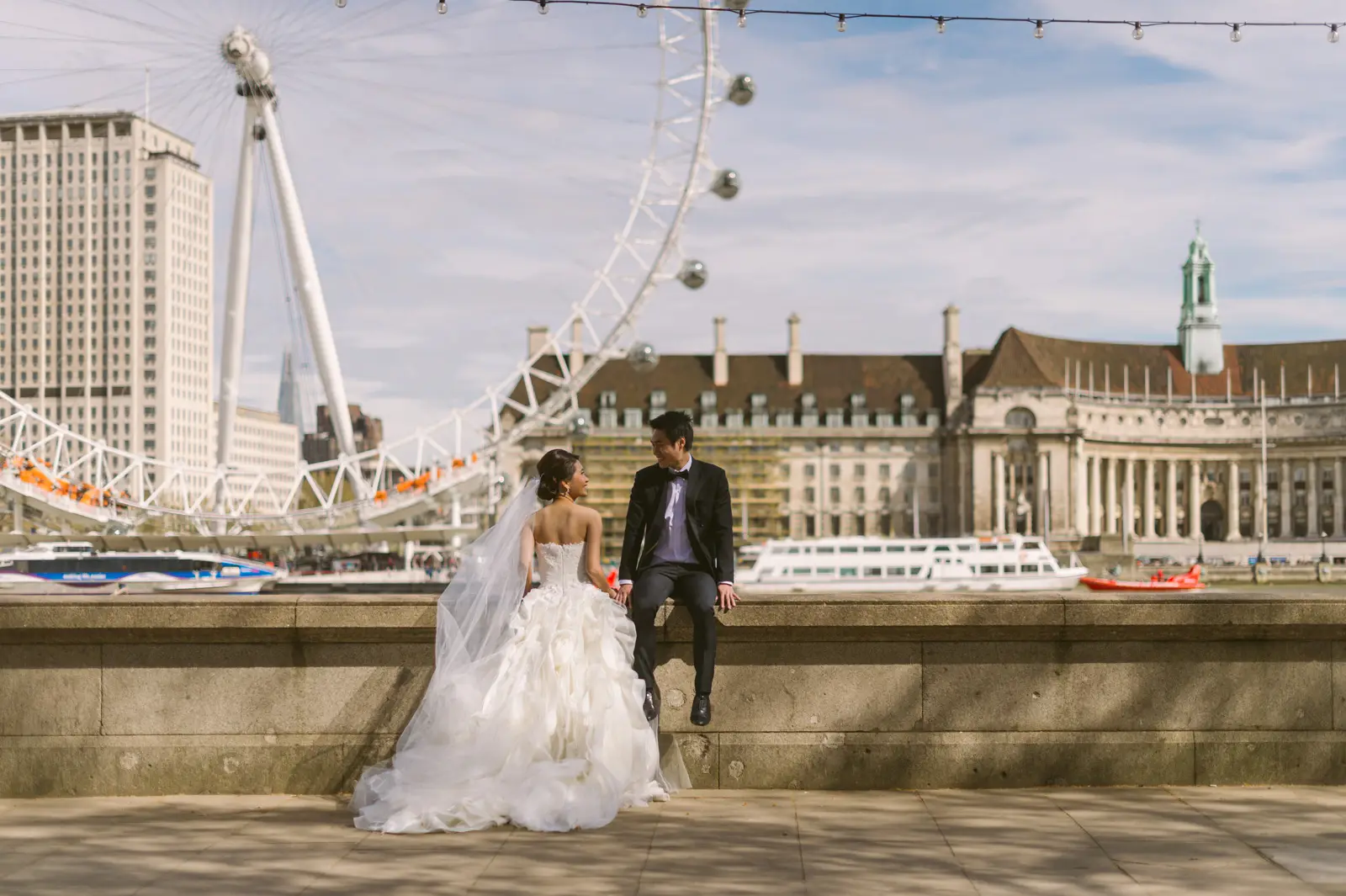
London can give you royal architecture, pastel neighbourhoods, parks, bridges and night-time city light in one session, but the route only works when the timing is realistic.
Use this guide to plan a London pre-wedding session around your preferred locations, travel dates and the time you want to spend taking photographs.
Best seasons
Choose the season for the mood, not only for the weather.
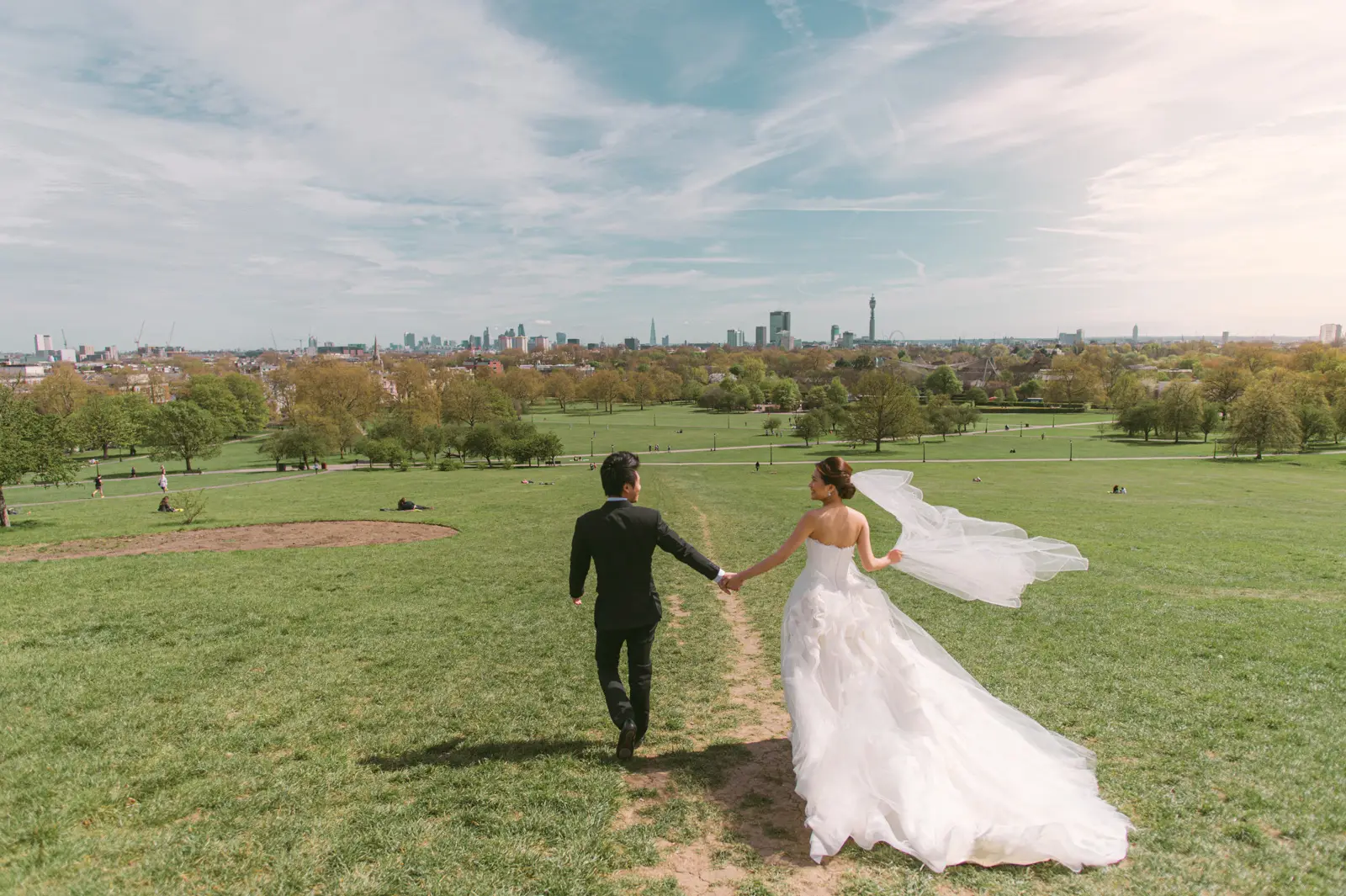
Spring: blossom, softer colours and lighter clothing. Parks and Primrose Hill are particularly good, though blossom timing varies.
Summer: long days and late sunsets. This is the easiest season for combining an indoor luxury sequence, a park and blue-hour city photographs.
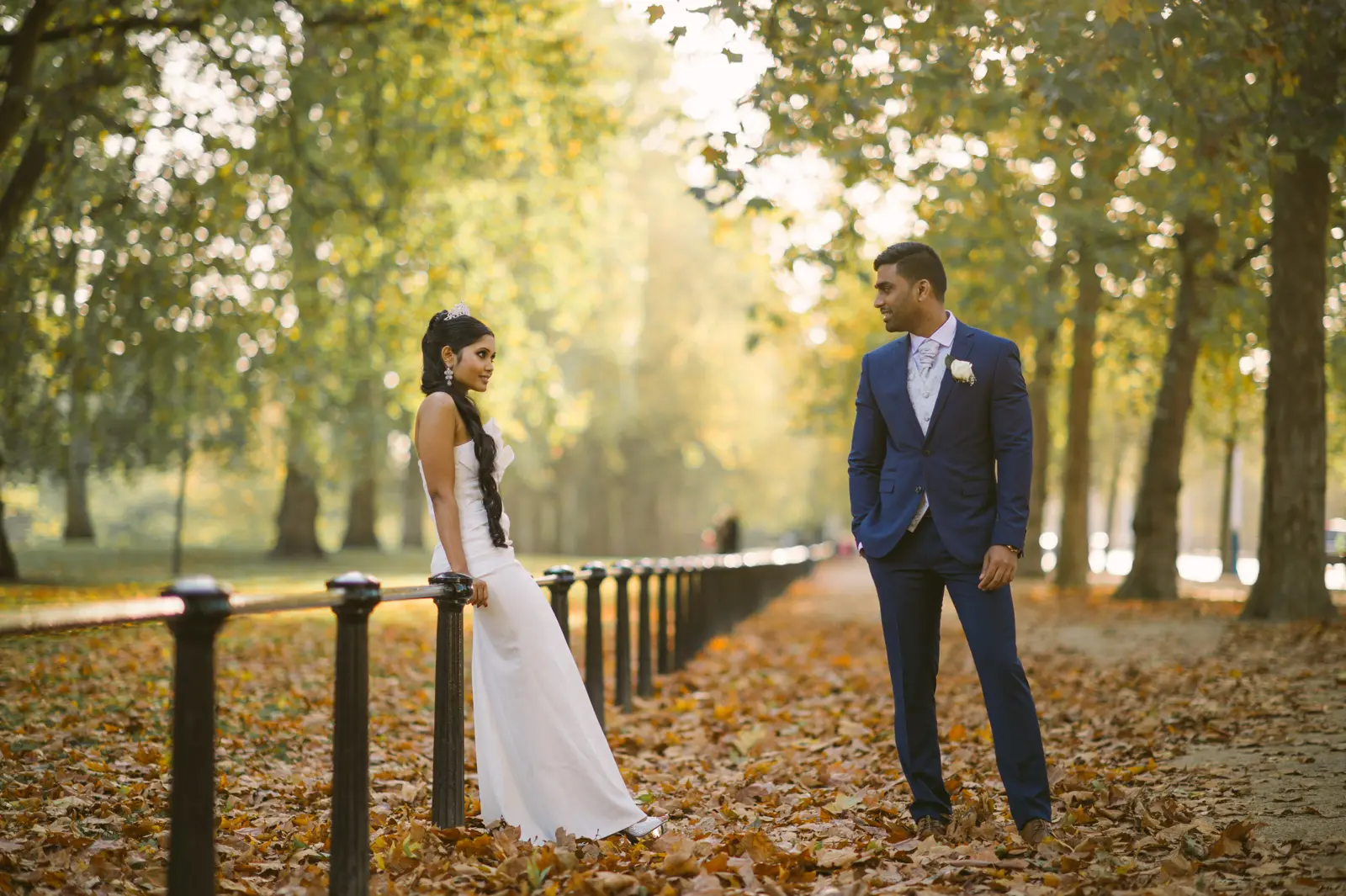
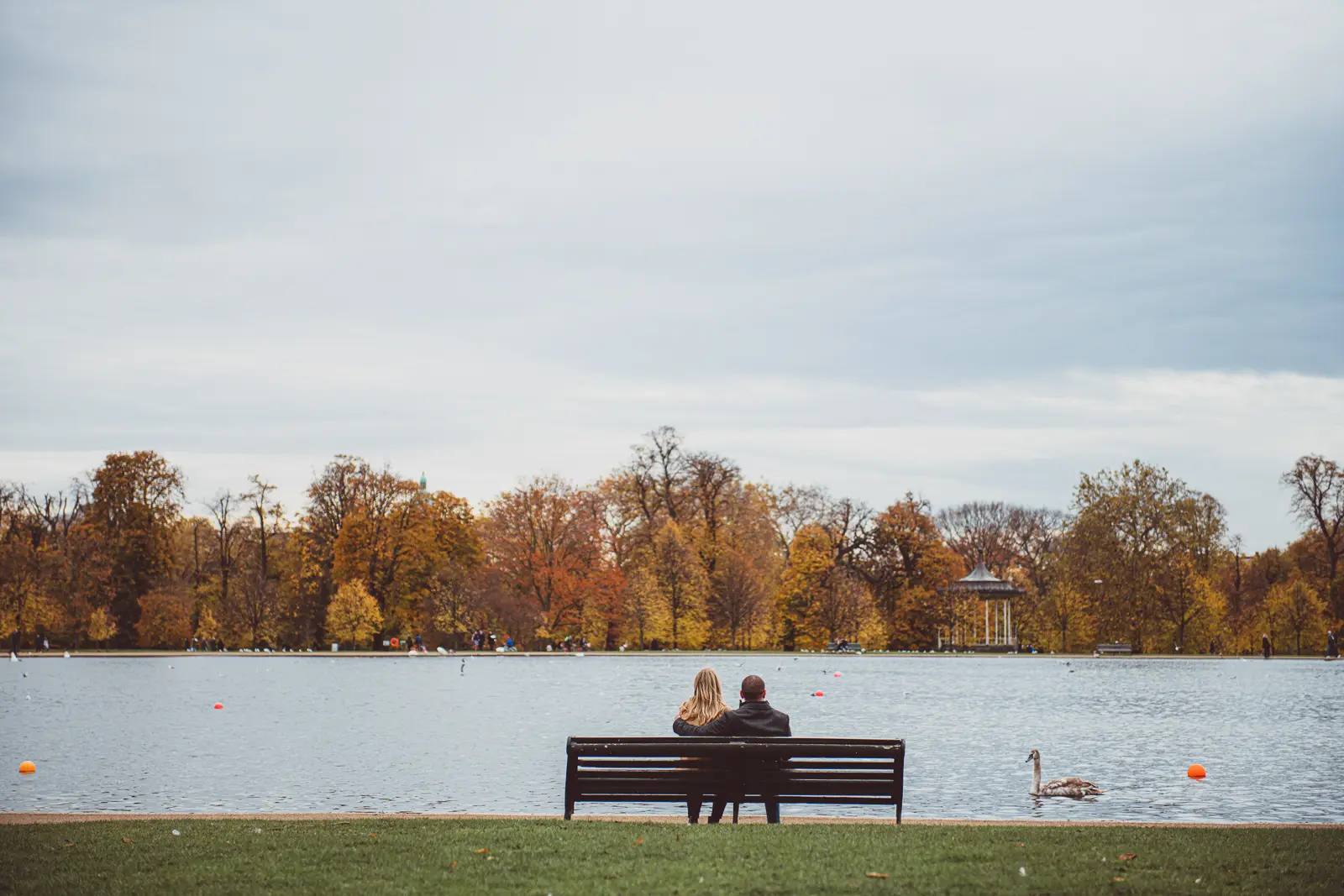
Autumn: amber foliage, richer clothing and earlier evening light. London can feel especially cinematic at this time of year.
Winter: fewer crowds, crisp air and strong styling with coats and tailoring. The shorter day simply means the route needs to be tighter.
Best time of day
Sunrise, sunset and blue hour give three different versions of London.
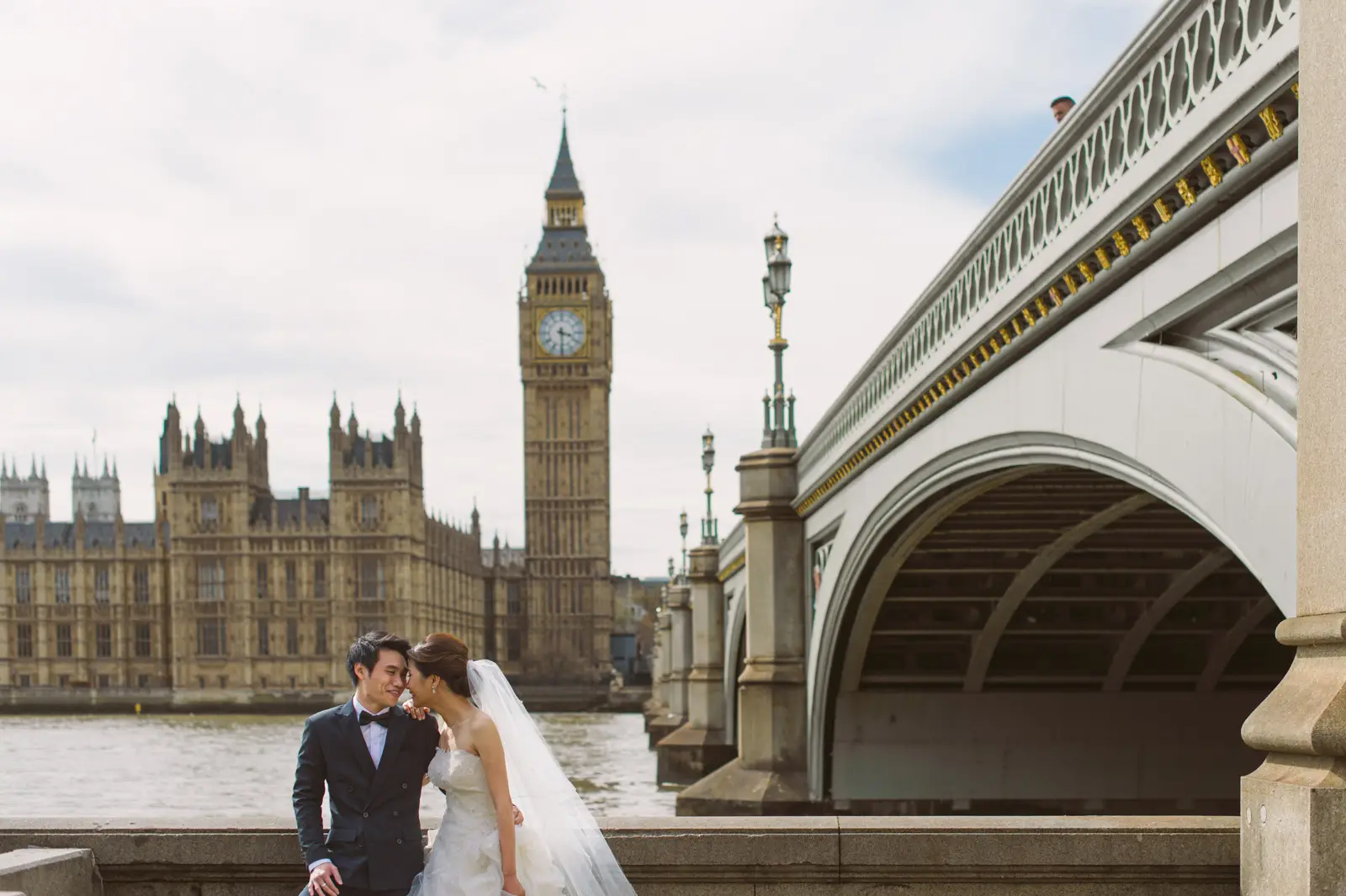
Sunrise is the cleanest time for Westminster, Big Ben, St Paul’s and other central landmarks. Streets are quieter and the light is softer.
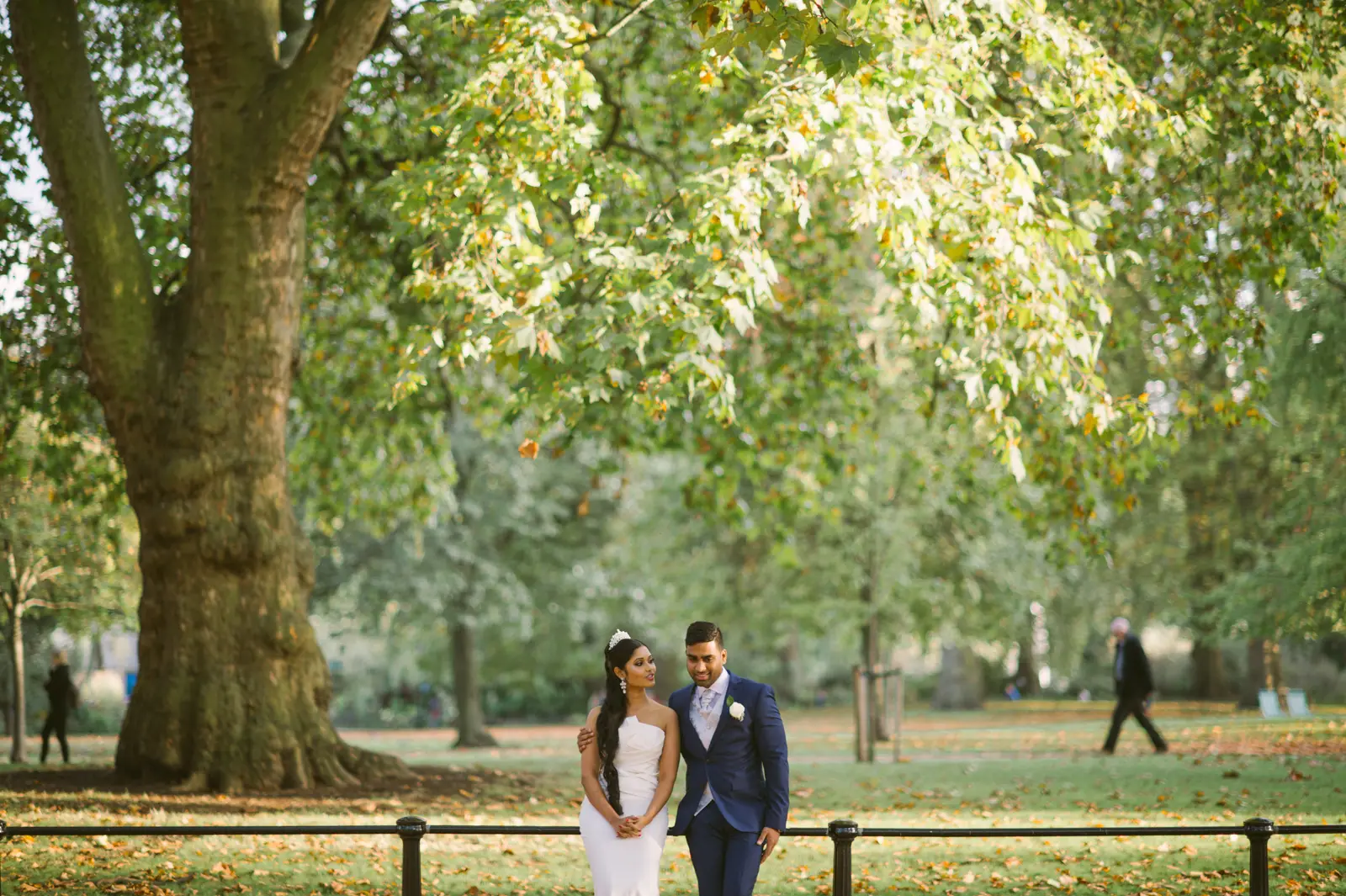
Late afternoon is ideal for parks and riverside walking. Hyde Park, Kensington Gardens and Albert Bridge gain warmer light and more room for natural movement.
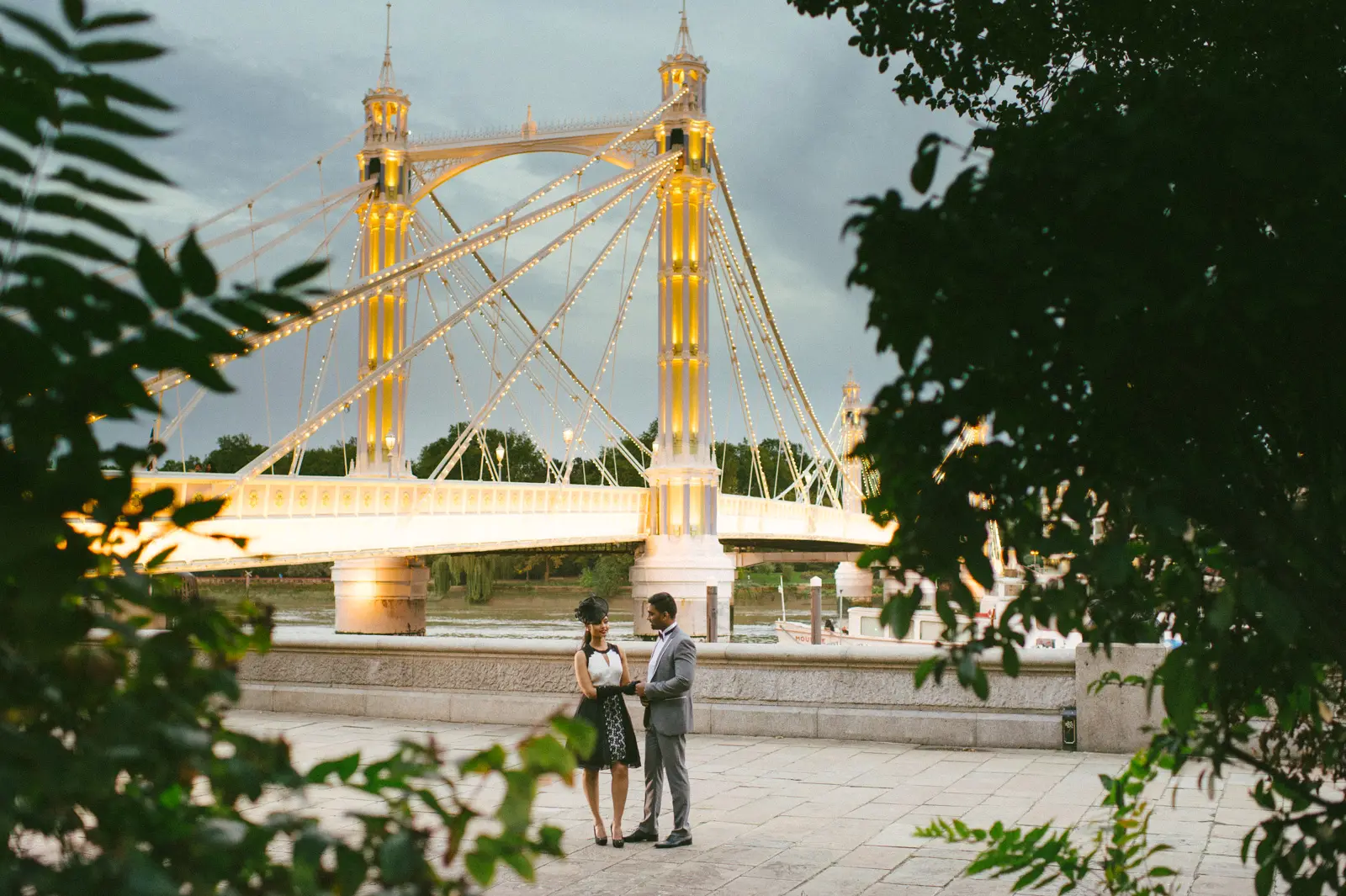
Blue hour and night are valuable because London changes character once bridge lights, traffic and skyline reflections become part of the photograph.
I normally build the schedule around one of those light moments rather than reaching every location at an arbitrary time.
Classic locations
Icons, neighbourhoods and quieter alternatives.
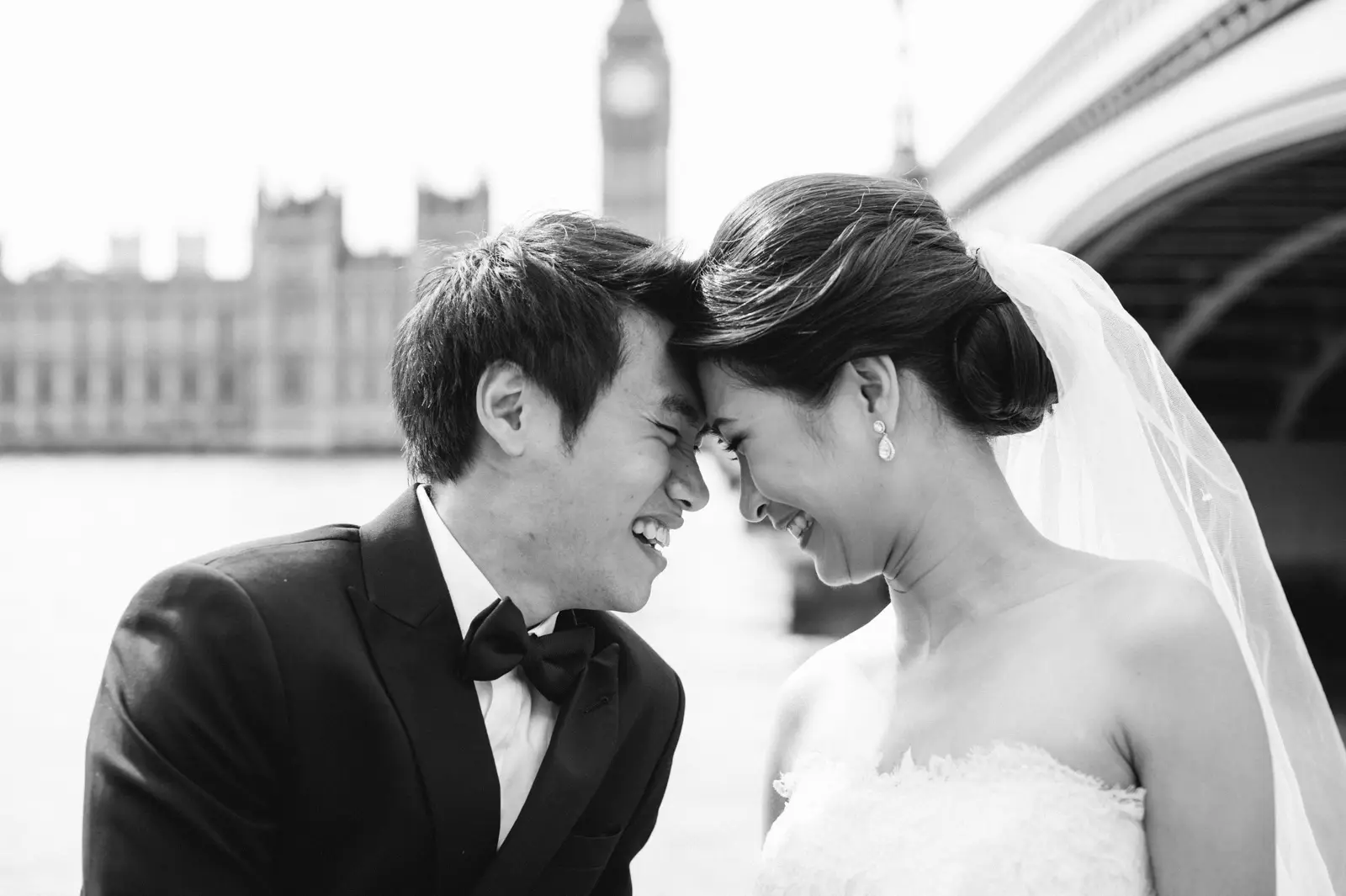
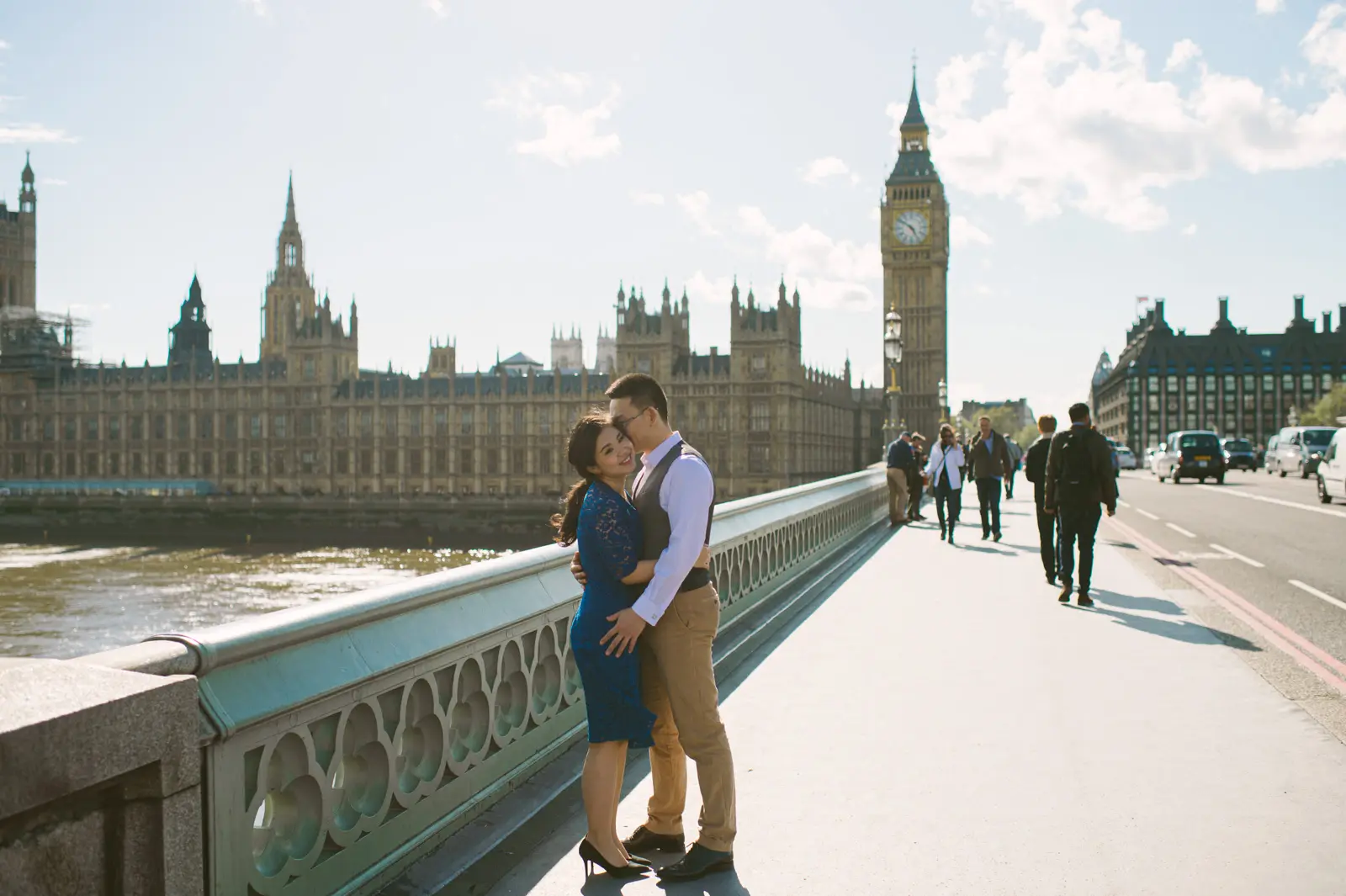
Big Ben and Westminster Bridge: unmistakably London, strongest at sunrise or blue hour.
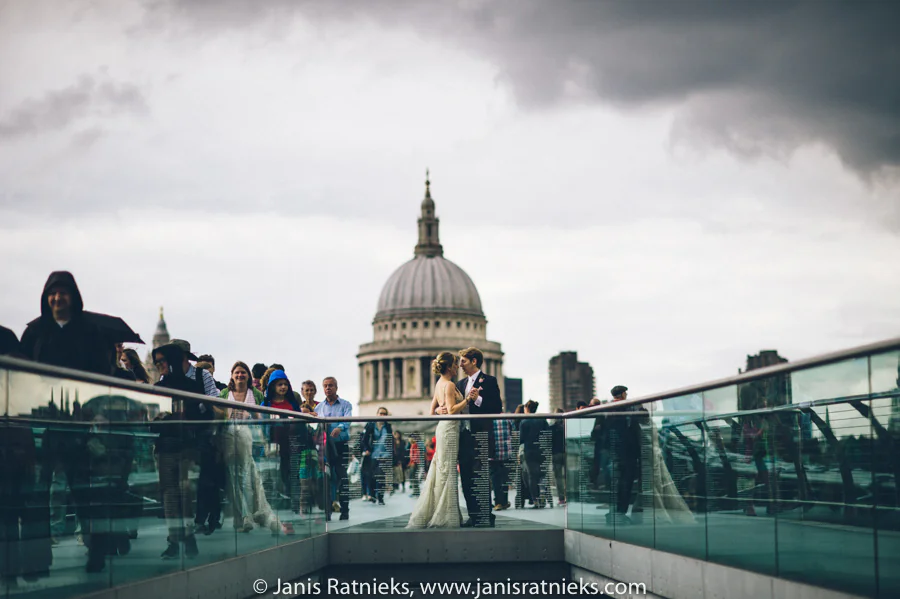
St Paul’s and Millennium Bridge: symmetry, steps and long architectural lines for a more editorial look.
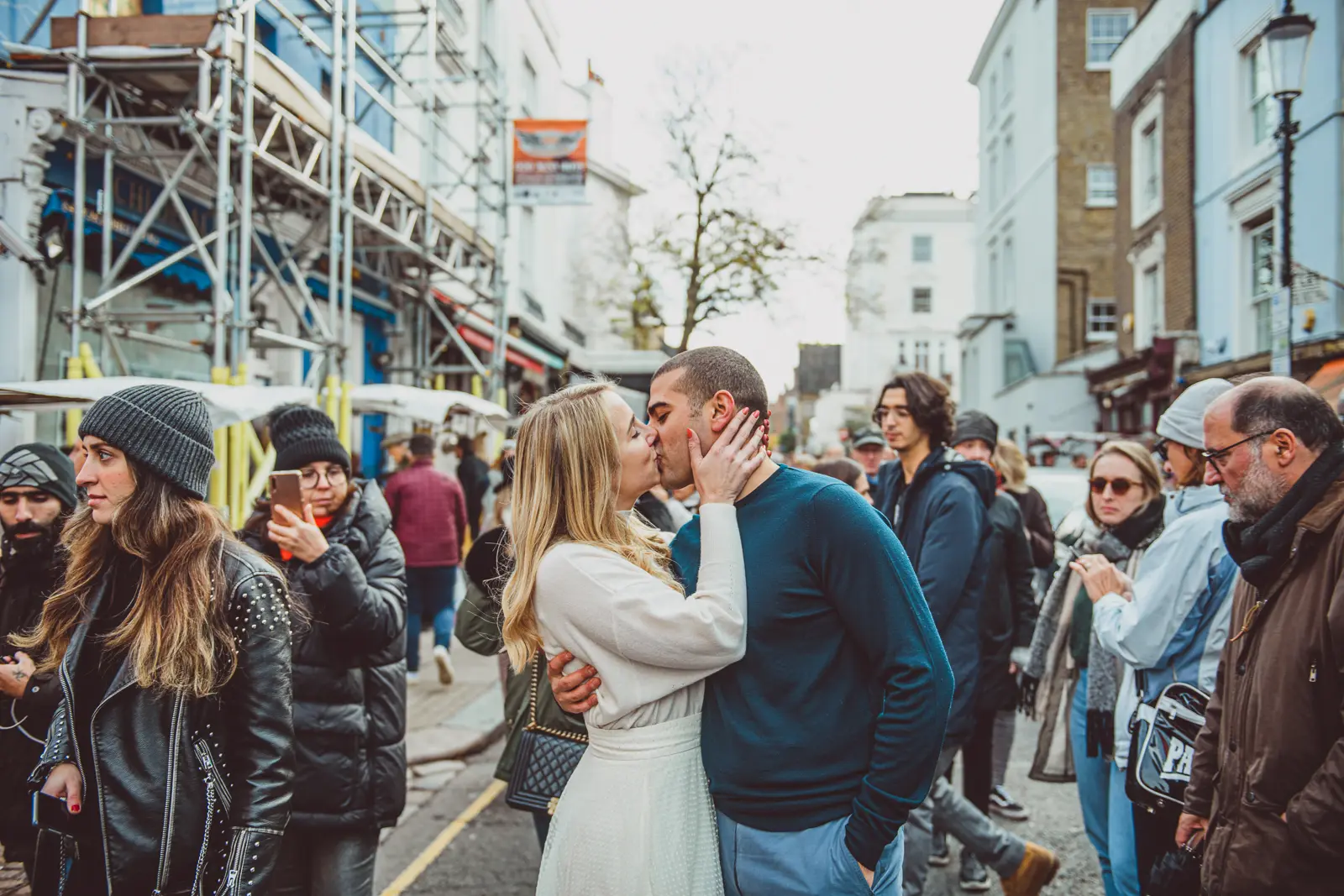
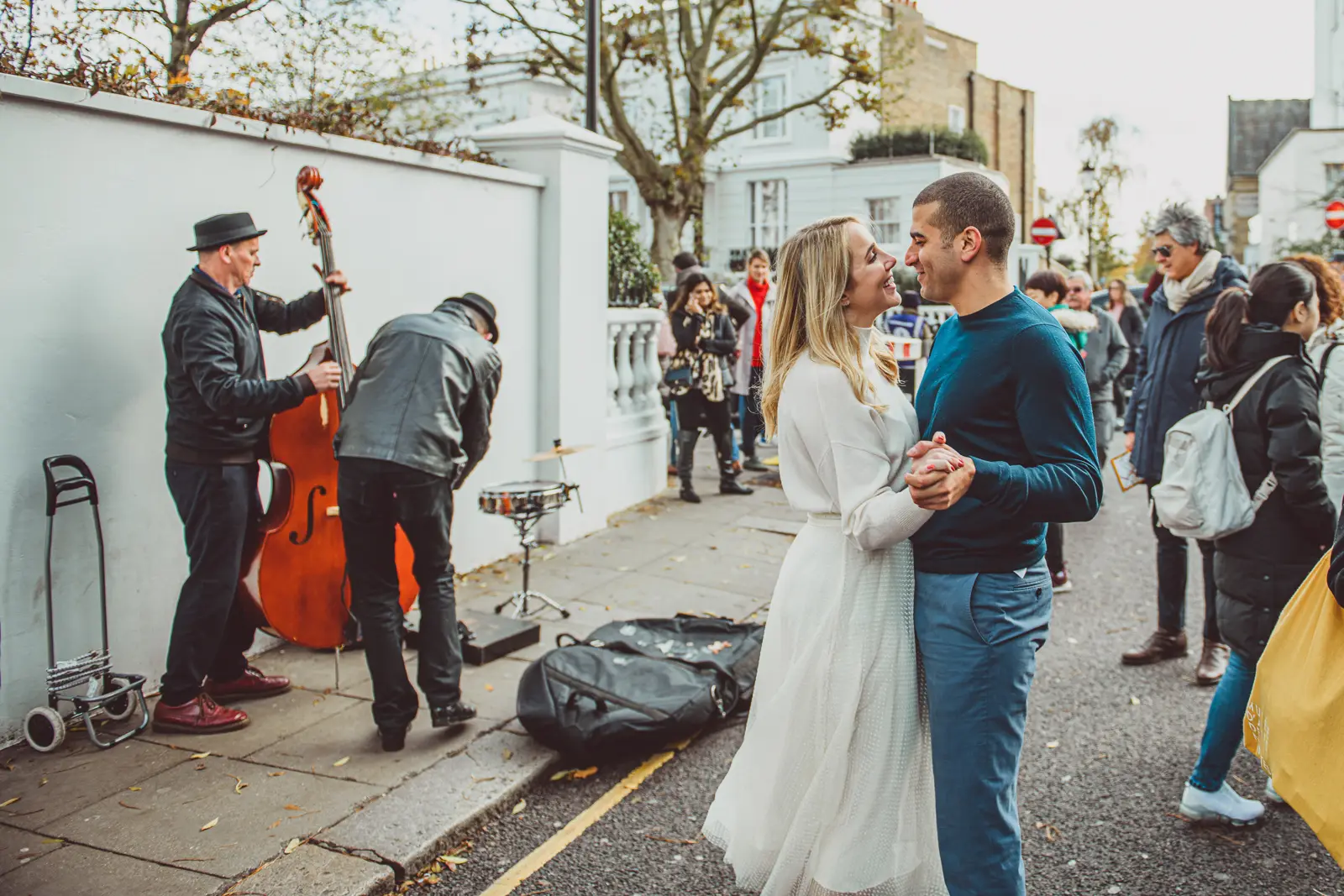
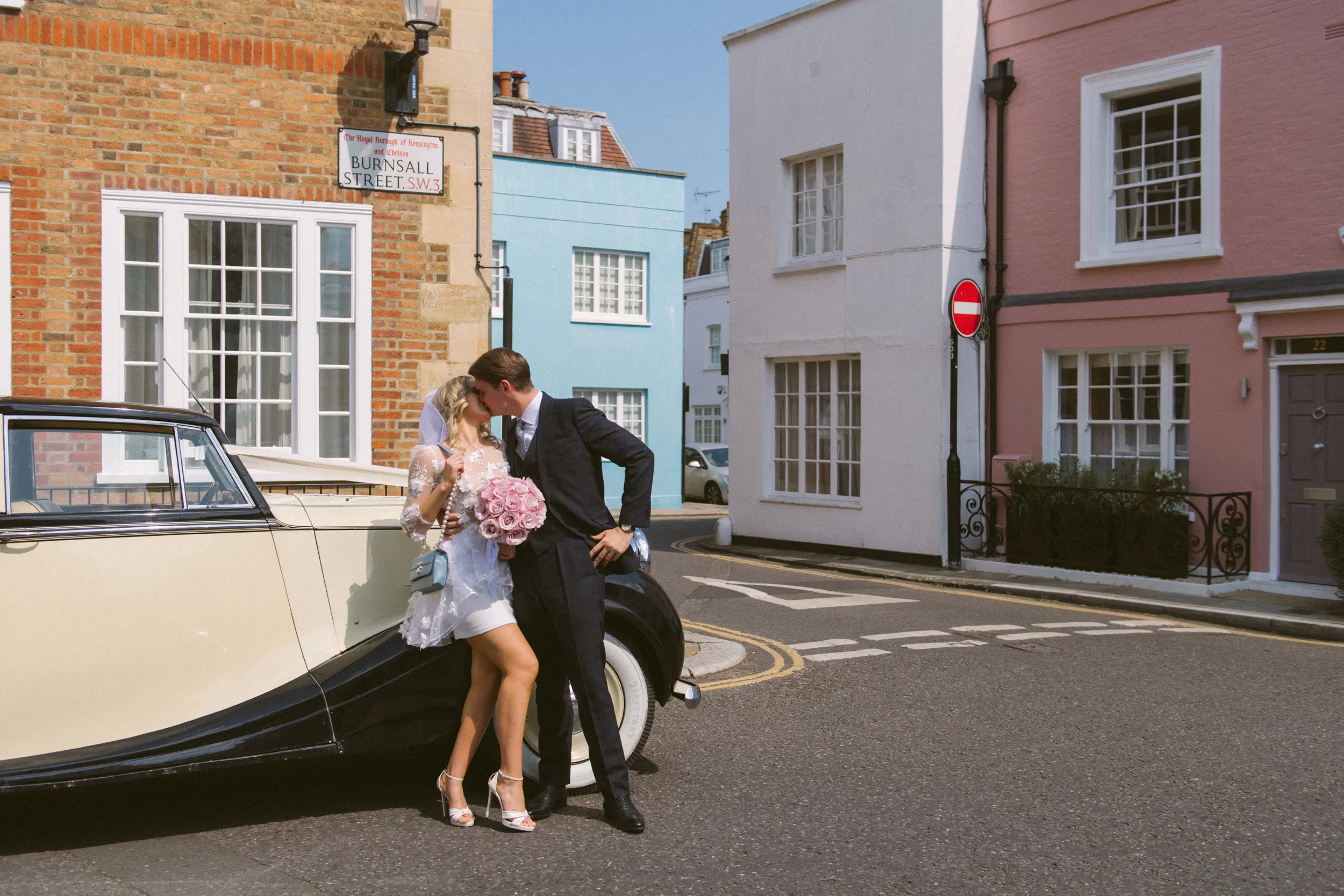
Notting Hill and Portobello Road: colour, smaller-scale streets and a relaxed contrast to the big monuments.
Regent’s Park, Primrose Hill and Hyde Park: greenery, blossom and more room for movement.
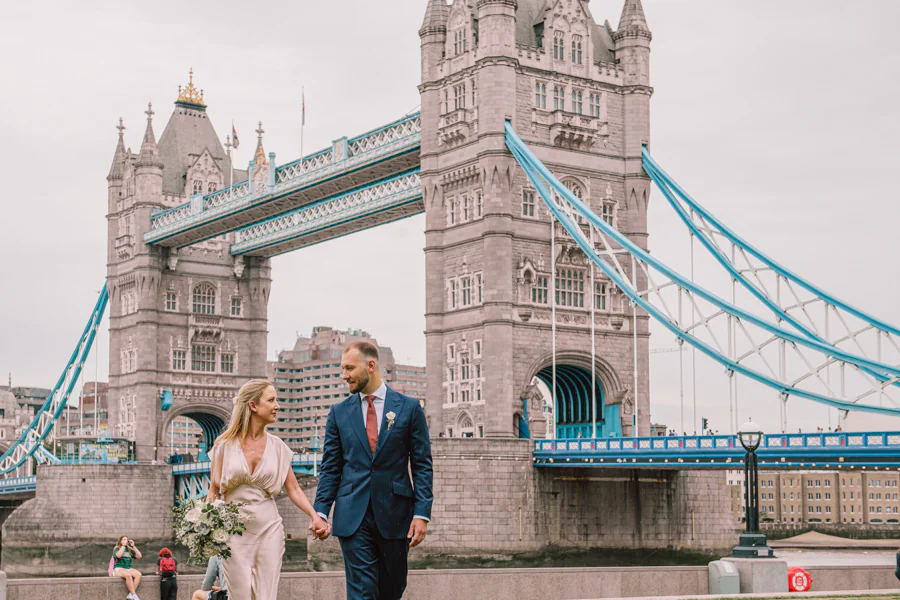
Tower Bridge and Albert Bridge: especially strong once the city lights come on.
Greenwich and St Dunstan in the East: grand colonnades, river views and ivy-covered ruins for a different side of London.
For a location-by-location breakdown, use the dedicated London pre-wedding locations guide.
Sample routes
Three realistic ways to build the session.
2–3 hours · Notting Hill + Hyde Park
Pastel streets and Portobello first, then Hyde Park and the Round Pond. It gives colour, street texture and greenery without crossing London several times.
4–5 hours · Primrose Hill to Tower Bridge
Start with skyline views, continue through Westminster and St Paul’s, then finish by the river. This is a strong first-London route when you want recognisable places without making the gallery repetitive.
6–8 hours · Big City Epic
Westminster, St Paul’s, Chelsea or Mayfair and then Albert Bridge or Tower Bridge after dark. The extra hours matter because the final night photographs feel completely different from the first daylight frames.
These are starting points rather than fixed itineraries. I adapt them around the season, hotel, traffic, outfits and how much walking you actually want to do.
Permits and approach
A small handheld setup keeps London flexible.
Many restrictions become more complicated when a shoot starts looking like a commercial production with tripods, lighting stands and a large crew. My normal approach is intentionally lightweight and mostly natural-light.
That does not mean every location is automatically permit-free. Hotels, private interiors and managed properties can have their own rules, and those are checked separately.
The advantage is freedom. We can react to rain, stop for a spontaneous frame, move across a bridge or change direction when a street is unexpectedly busy.
What to wear
Movement, tailoring and enough comfort to enjoy the city.
Flowing dresses, well-cut suits, satin, crepe, wool and structured coats all work beautifully against London stone, brick, parks and the river.
Pastels suit spring, richer tones work well in autumn, and winter allows coats and darker tailoring without looking out of place.
Comfortable walking shoes are one of the most useful things you can bring. They can be changed for the actual photographs.
For more detail, see what to wear for a London pre-wedding photoshoot.
Planning from overseas
You do not need to know London before we start.
Most of my London pre-wedding couples plan remotely. We begin with travel dates, hotel area and the photographs that matter most to you.
From there I suggest the right time of day, how many locations fit realistically, where an outfit change makes sense and which stops should be removed rather than rushed.
I also build a weather alternative. London rain is not automatically a problem, but a route should have covered streets, hotel interiors or timing flexibility available if conditions become difficult.
Posing and atmosphere
Guided enough to look polished, relaxed enough to look like you.
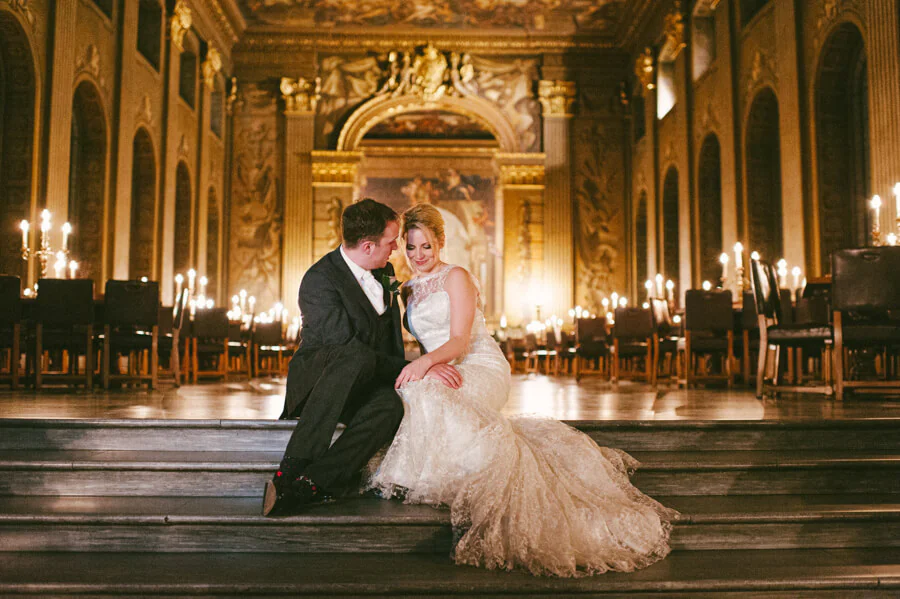
I use direction when it solves a photographic problem: where to stand for the light, how to use a bridge line, when a dress needs movement or how to place the couple inside strong architecture.
Once the frame works, I prefer movement and interaction rather than holding a pose for a long time. Walking, turning and talking usually create more convincing photographs.
The finished gallery can move between editorial frames at St Paul’s or a luxury hotel and much looser photographs in Notting Hill, a park or along the Thames.
Weather and backup plans
London weather should change the route, not ruin the session.
Rain is part of planning London rather than something I treat as an emergency. Light rain can look beautiful on stone streets and around the river, while heavier rain is a reason to change the order of locations rather than force the original schedule.
I like to know where the useful covered areas are before the shoot starts. A hotel lobby or suite, arcades, sheltered streets, station architecture and short indoor stops can protect the session while a shower passes. If the forecast is unstable, I also keep the route geographically tighter so we are not spending the useful dry windows travelling across the city.
Cloud is not bad light. In many central London locations it actually makes portraits easier because there is less contrast between bright sky and dark buildings. The conditions that matter most are persistent heavy rain, very strong wind and a schedule with no flexibility.
Hotels, outfit changes and travel time
The practical details decide how much of London you can actually photograph.
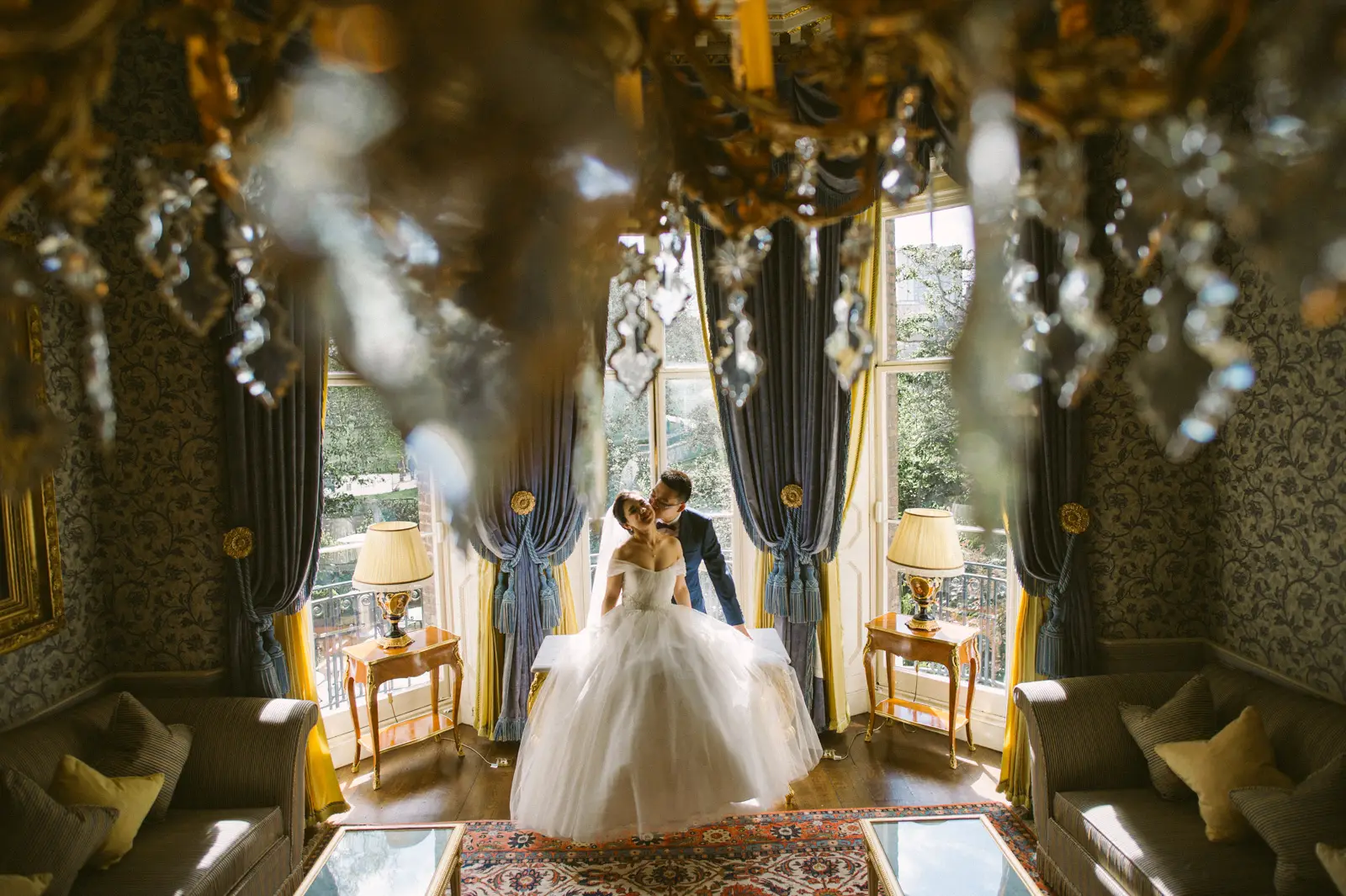
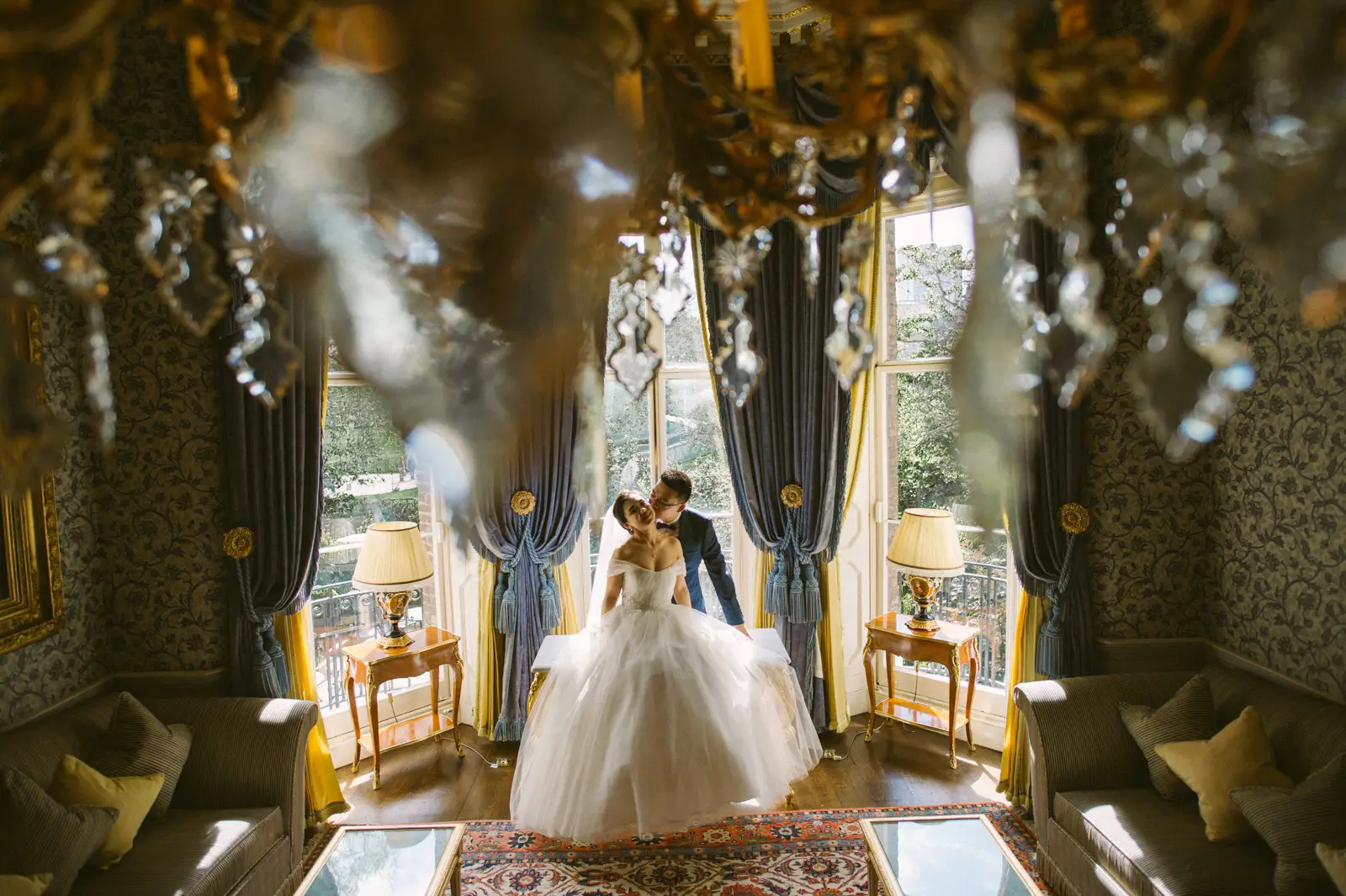
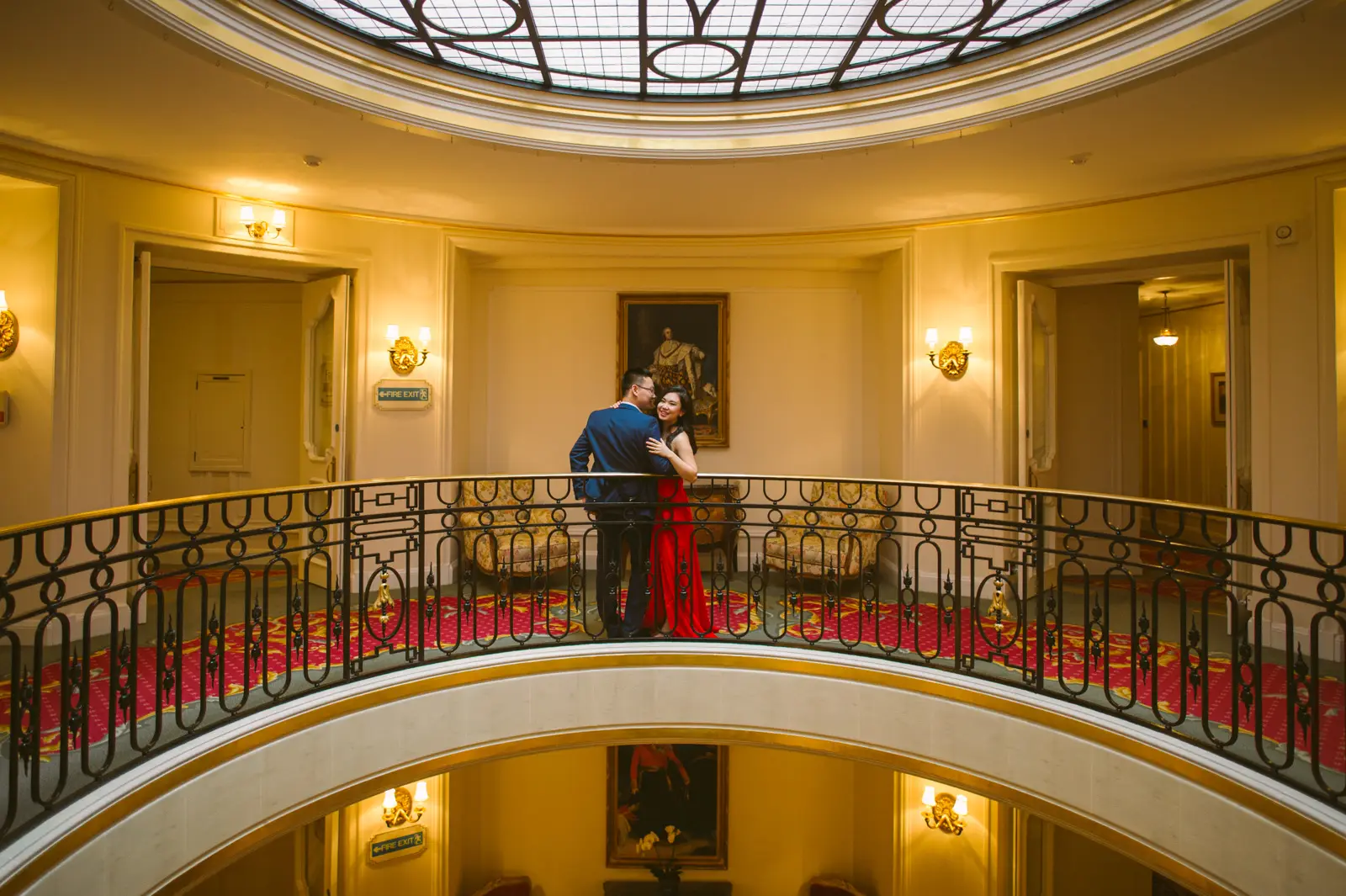
If you are staying at a central hotel, I usually treat it as part of the route rather than simply the place where the day begins. A good interior sequence can give the gallery a polished first chapter, and the hotel can also be the most sensible place for an outfit change before we move outside.
Outfit changes need to earn the time they take. For a shorter session, one strong look is often better than stopping repeatedly. On a longer shoot, a second outfit works well when it marks a clear change of mood: for example, formal tailoring around Westminster followed by something softer in a park or Notting Hill.
London travel times are easy to underestimate. A route that looks compact on a map can slow down because of traffic, road closures, events or simply the time needed to walk from the car to the viewpoint. I plan routes around connected areas and protect the best light rather than promising a long list of landmarks that leaves no time to photograph properly.
Choosing your route
Start with the photographs you want, then choose the places.
The easiest way to make a London pre-wedding shoot feel generic is to start with a checklist of famous locations. I prefer to begin with the visual mix: grand architecture, neighbourhood streets, greenery, river views, hotel interiors or night photographs.
Once that is clear, the locations become much easier to choose. Westminster and St Paul’s can cover the formal architectural side. Notting Hill gives colour and smaller streets. Hyde Park or Regent’s Park gives space and movement. A bridge at blue hour can finish the gallery with something completely different from the opening frames.
That approach also helps couples who have never visited London. You do not need to know which exact street or bridge will work best. Tell me the photographs you are drawn to and the amount of time you have, and I can build a route that creates variety without turning the session into a sightseeing race.
London pre-wedding FAQ
Before you book.
When is the best season for a London pre-wedding photoshoot?
Spring gives blossom and soft colour, summer has long evenings, autumn brings warmer tones and earlier blue hour, while winter is quieter and works beautifully with coats and tailoring.
What is the best time of day?
Sunrise is strongest for busy landmarks such as Westminster and St Paul’s. Late afternoon works well for parks and riverside routes, and blue hour is ideal for illuminated bridges and the skyline.
How many locations fit in one day?
For 6–8 hours, three or four areas is normally realistic. Shorter sessions are stronger when they stay within one or two connected parts of London.
Do we need photography permits?
Many public locations are straightforward with a small handheld setup, while private interiors and some managed properties need advance permission.
Can we combine a luxury hotel and outdoor London?
Yes. A hotel sequence can be paired with nearby parks, Mayfair streets or central landmarks as long as travel and outfit-change time are planned realistically.
Plan your London session
Tell me your season, outfits and must-have locations.
I can turn those ideas into a route with enough variety, realistic travel time and the strongest light protected for the places that matter most.
Continue planning
Comparing London with Europe
If London is one option among several destinations, compare it with my wider Europe pre-wedding photography guide.
Explore pre-wedding photography across Europe →