
01
One route, three very different landscapes
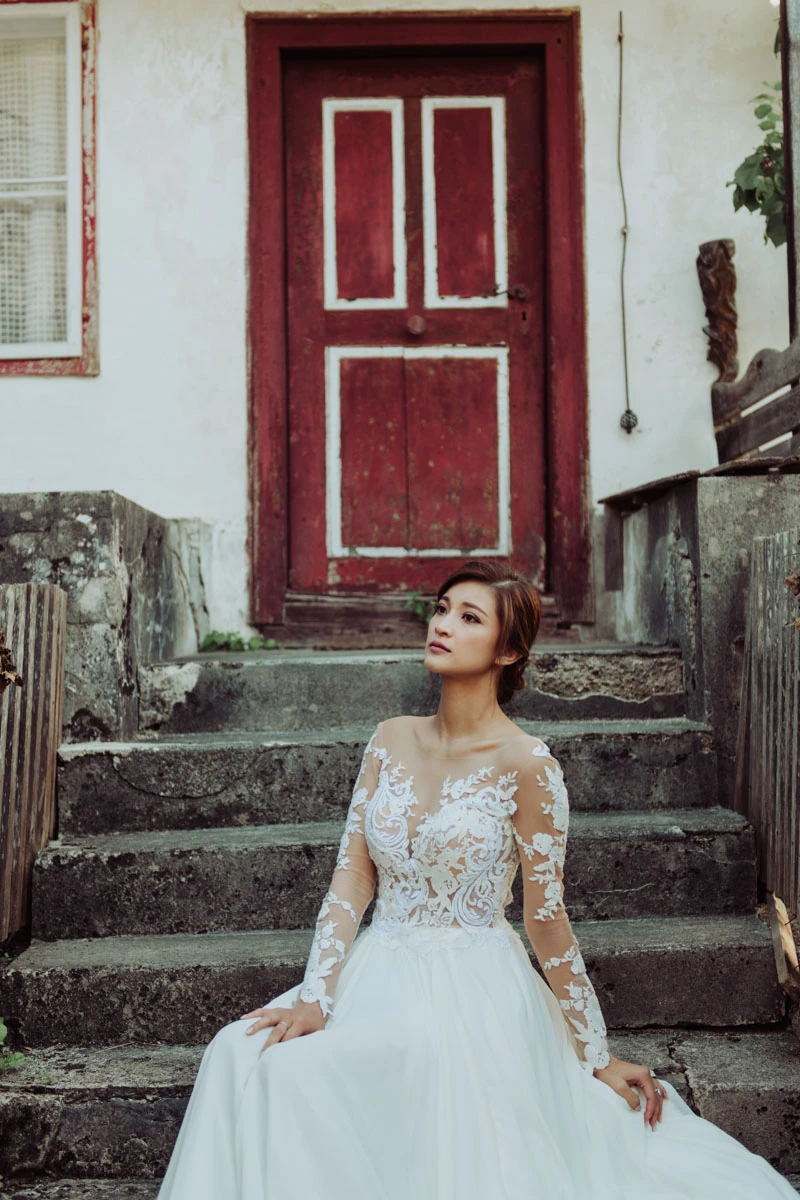
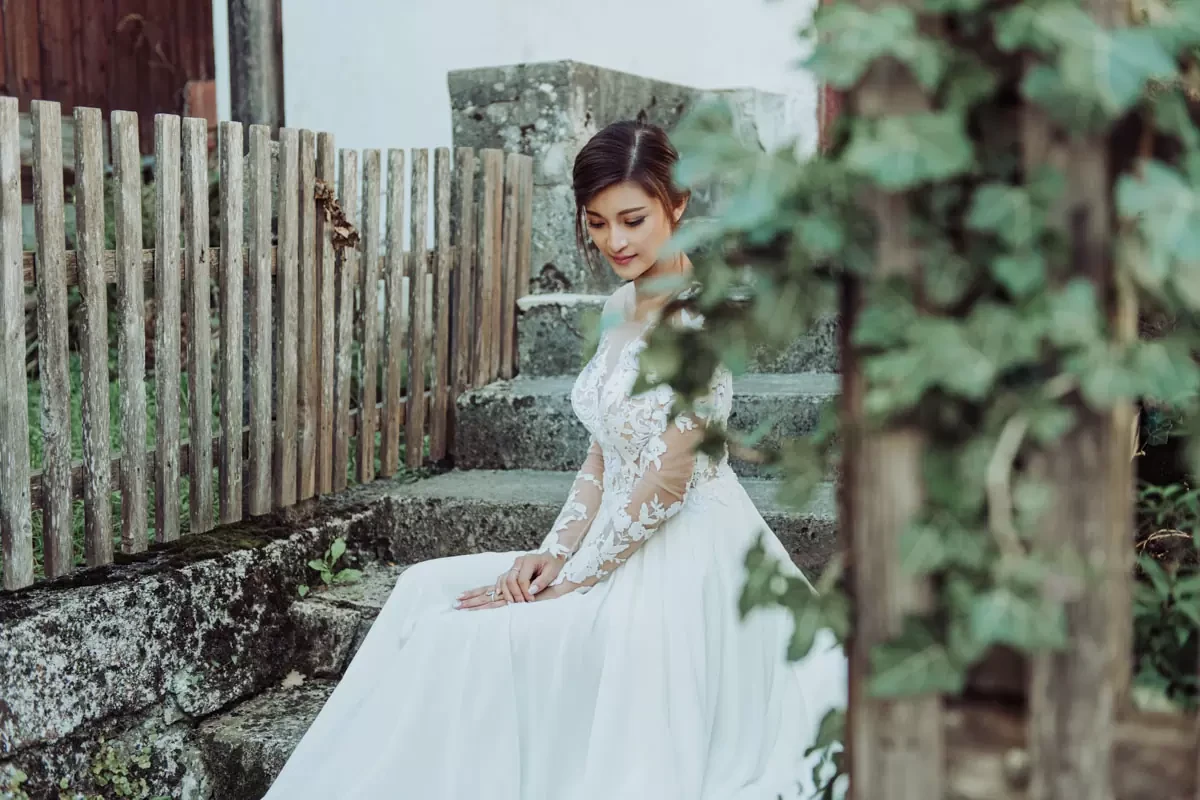
I did not want Hallstatt, Seceda and Lago di Braies to become three quick stops. They work together because they do different jobs photographically. Hallstatt gives architecture, a compact village and a lake. Seceda gives exposed mountain scale. Braies gives a second lake, but with the Dolomite peaks and wooden boats.
The practical advantage of three days is light. We can use Hallstatt twice without sacrificing the mountain afternoon, and we can arrive at Braies early enough to work before the lake becomes busy. More days do not automatically make a shoot better; having the right hours in the right places does.
For a new couple I would not copy our timings blindly. Lift schedules, roads, weather and access change. I would copy the structure: give every major landscape its own useful light window.

02
Four hours around golden hour
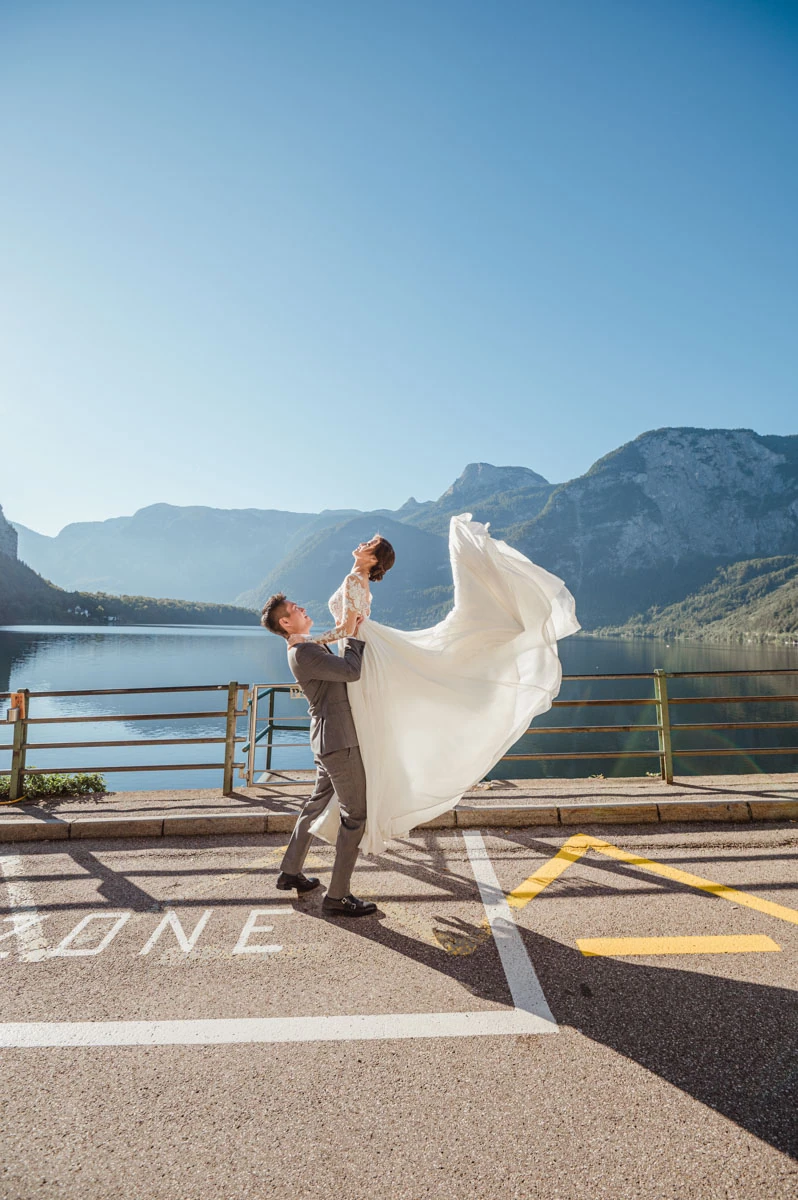
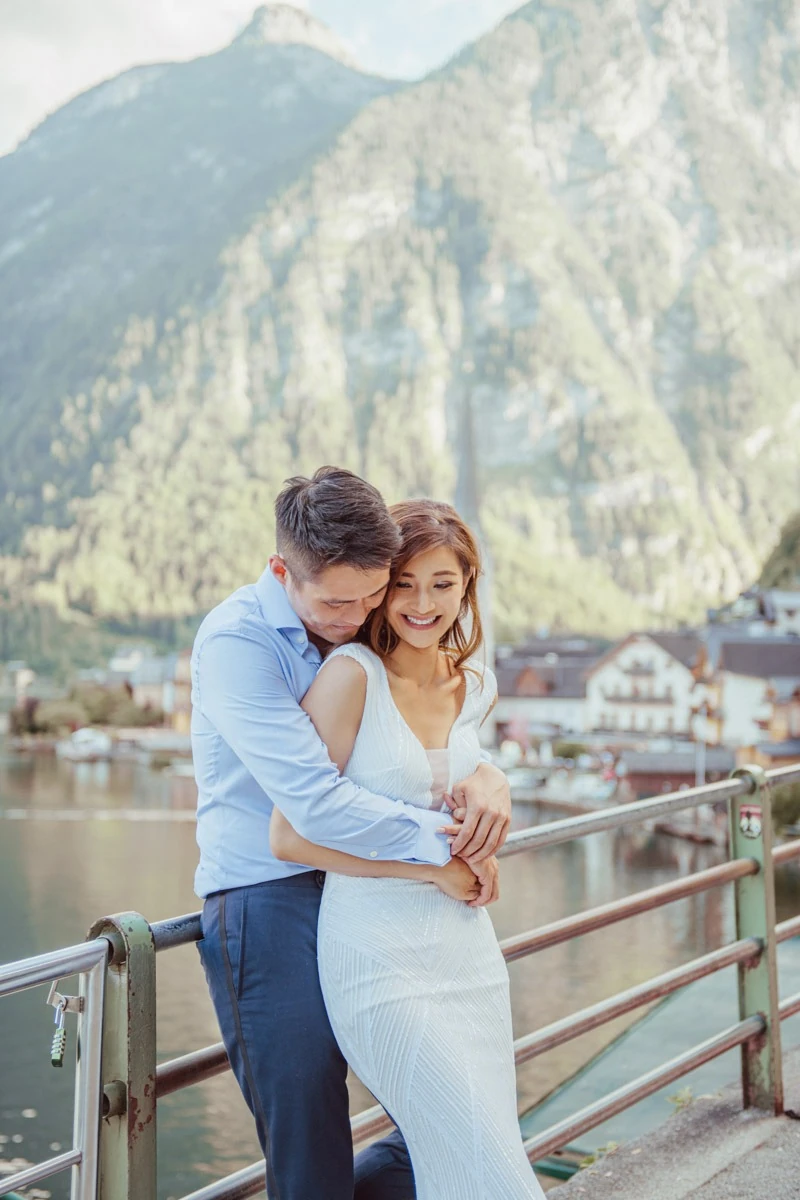
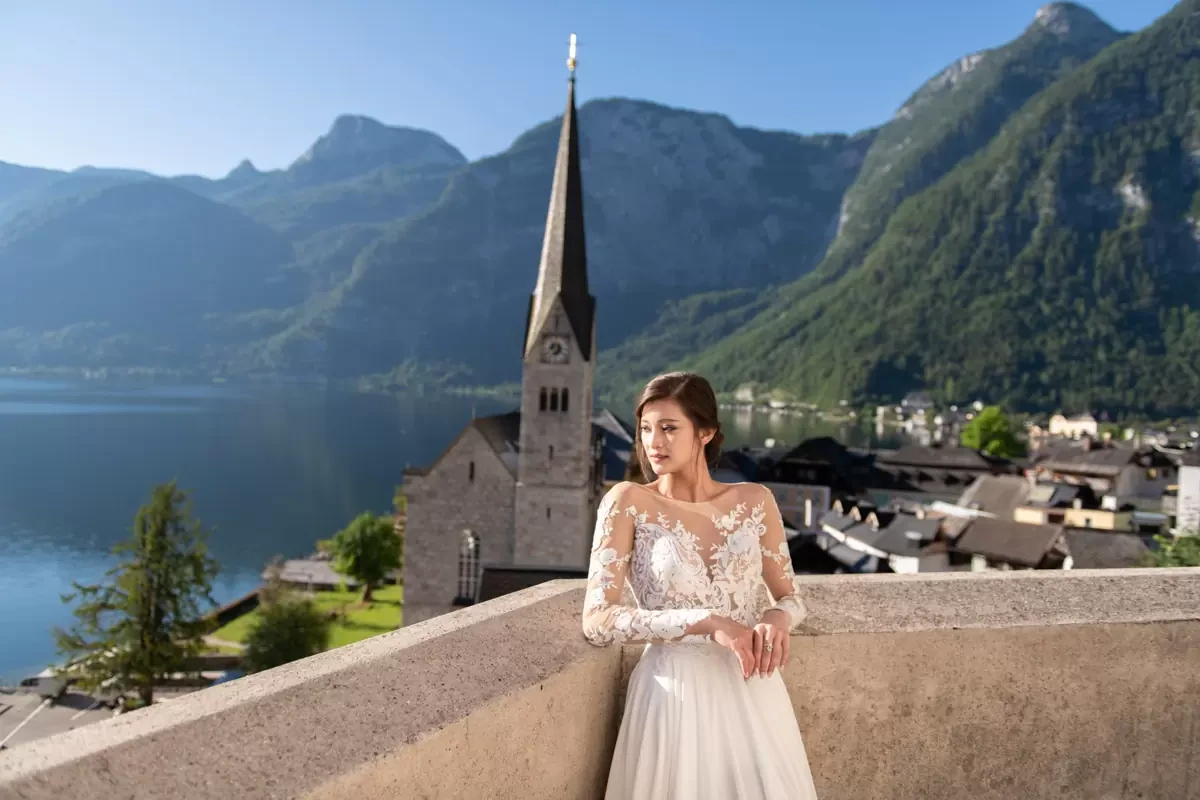
We began in Hallstatt with roughly four hours around golden hour. That gave Carmen and Leo time to settle into the shoot rather than arriving in Austria and immediately chasing a five-minute postcard photograph.
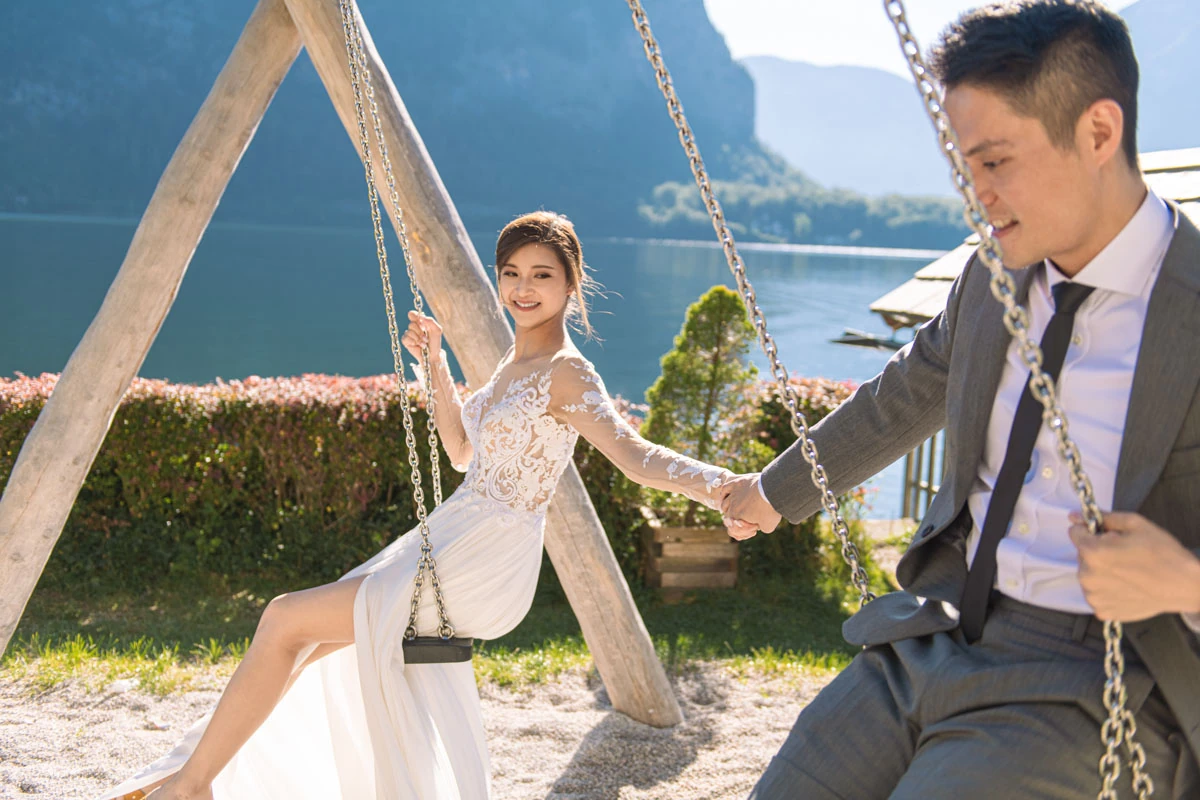
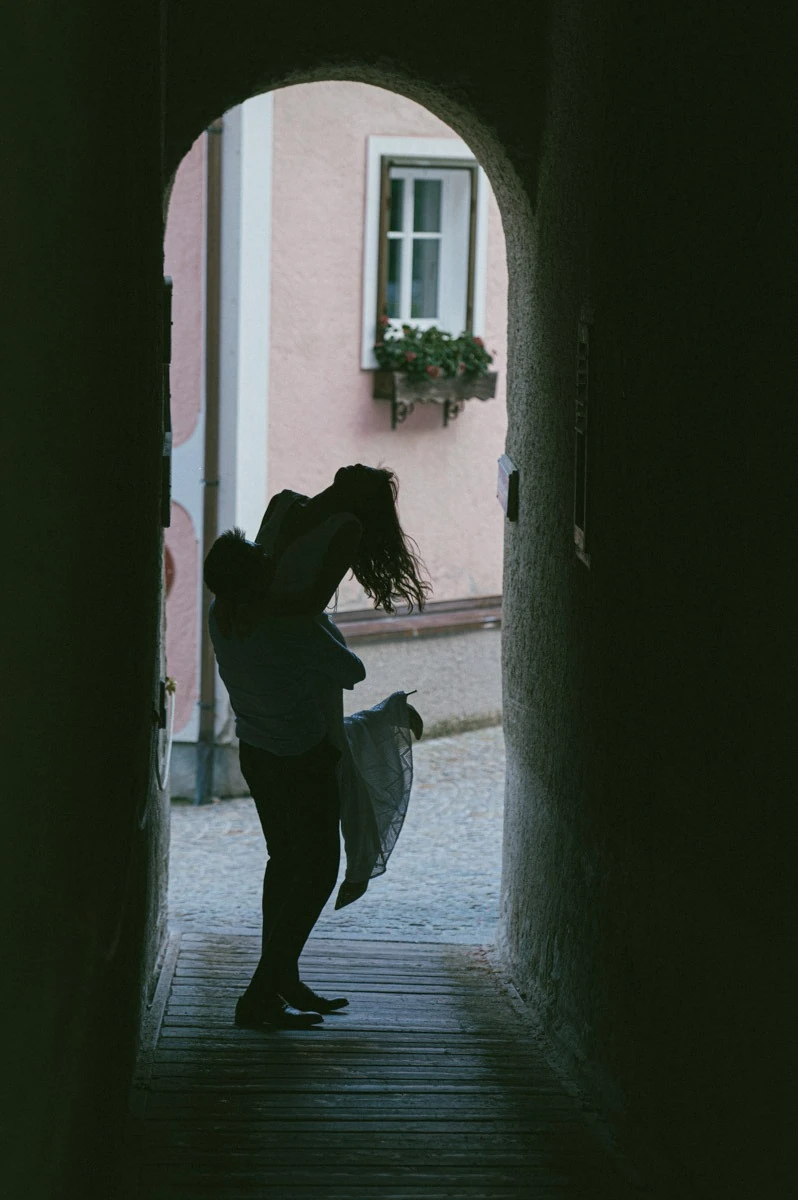
Late afternoon and evening bring warmer colour into the village and mountains. I used the streets and architecture for closer photographs, then opened the frames up around the lake. The point was not to tick off locations. It was to let the light change while we moved through a small area.
Hallstatt is particularly good for this because the walking distances are short. We could change the background without changing the whole pace of the session.
03
Hallstatt again, this time before the village fills up
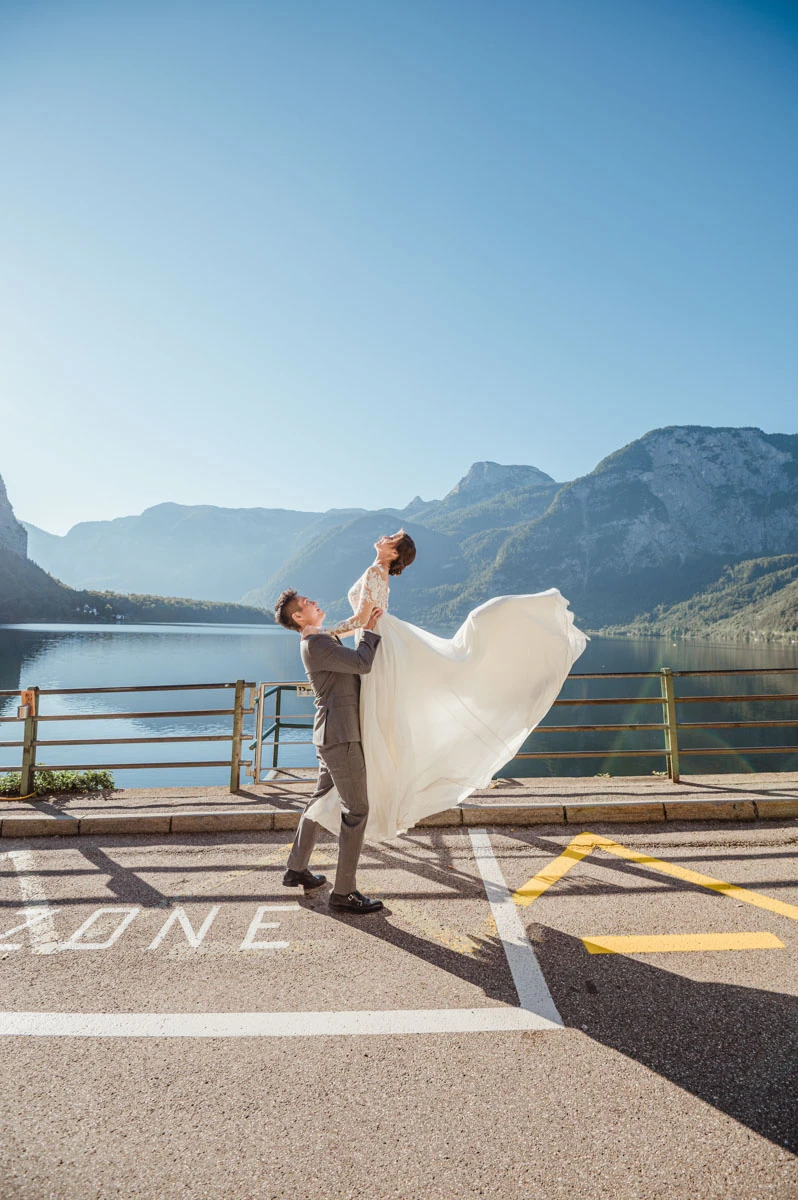
The next morning we returned to Hallstatt for about two hours. This was not repetition. The village at dawn is a different photographic problem from the same village at golden hour.
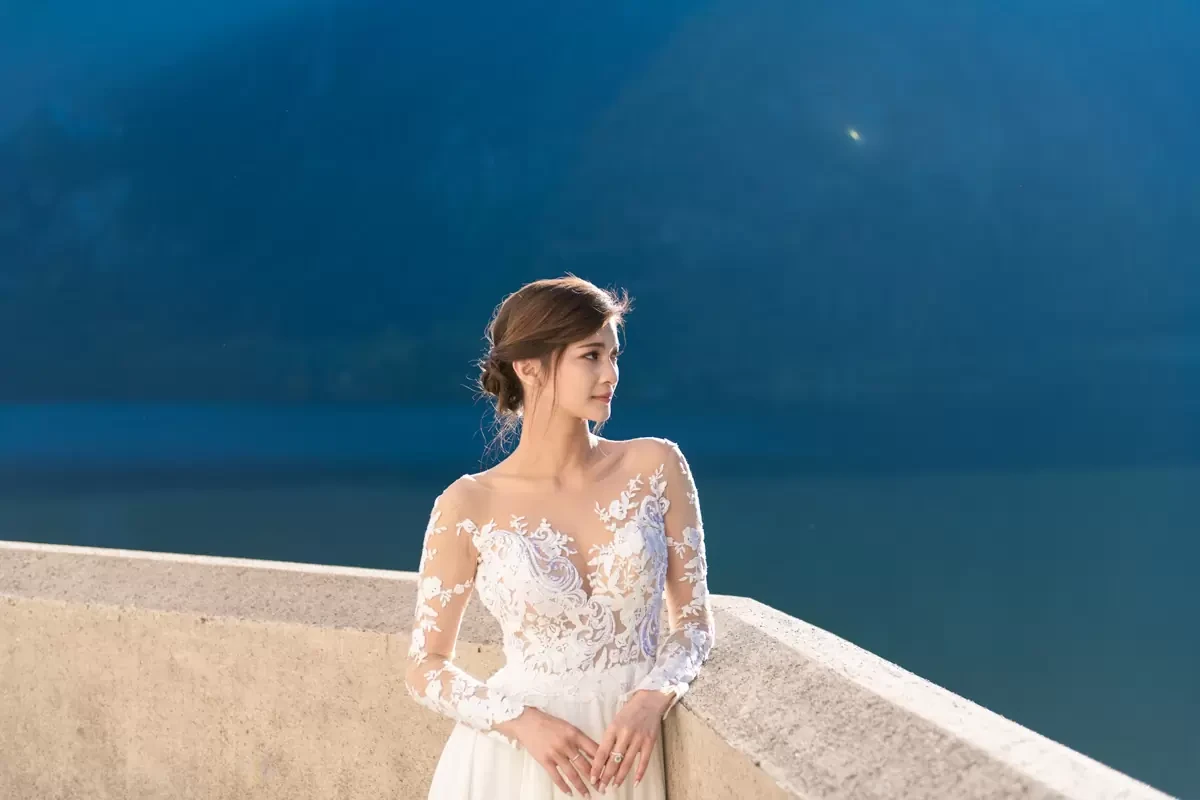
The streets were quieter, the backgrounds cleaner and the light softer. For large dresses and wider compositions, that freedom matters. It also gave Carmen and Leo a second Hallstatt chapter without asking them to spend another full day there.
After the morning session we packed up and left Austria. On that shoot our aim was to be on the road by late morning and reach the Seceda area for the afternoon.

04
Hallstatt ends here. The Dolomites start next.
This is why I do not create a second Carmen and Leo Hallstatt story and another full Dolomites story. It is one trip. The Hallstatt destination page uses a short Hallstatt excerpt and points here. Dolomites pages can use a short Italian excerpt and point here.
The complete chronology stays on this URL.


05
From a lakeside village to high mountain scale
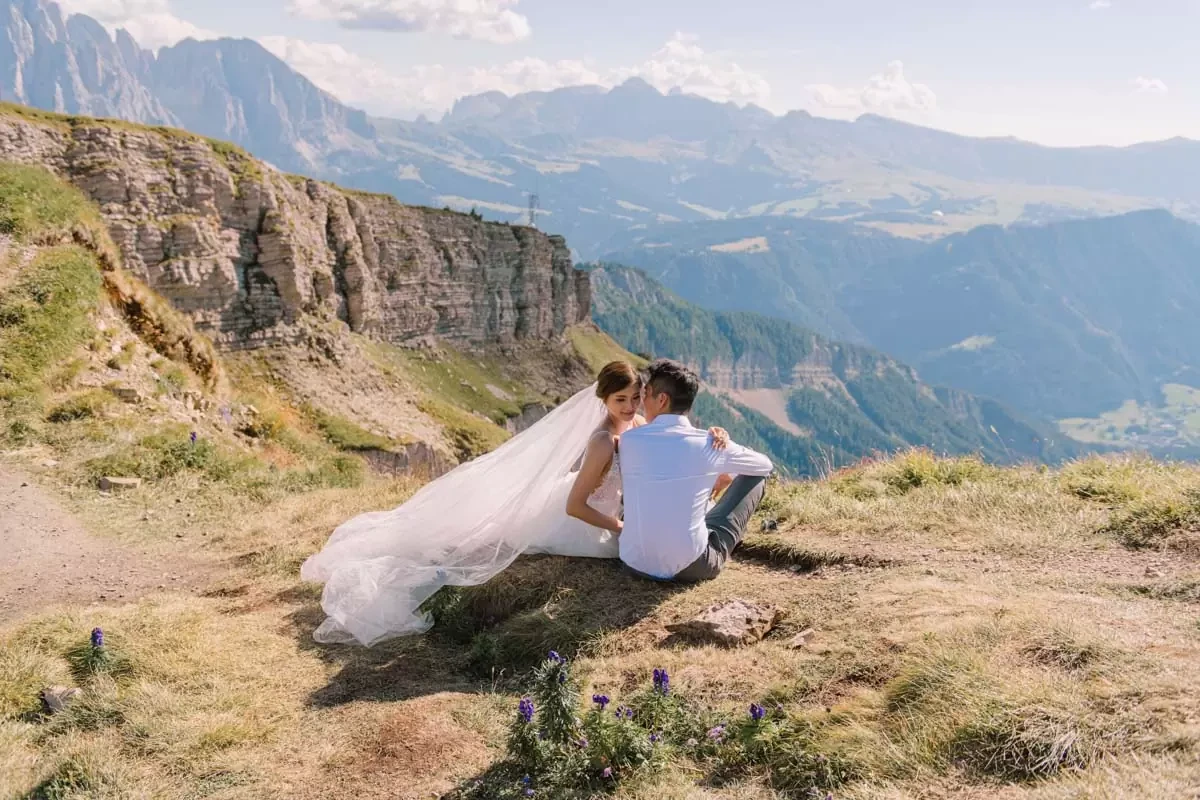
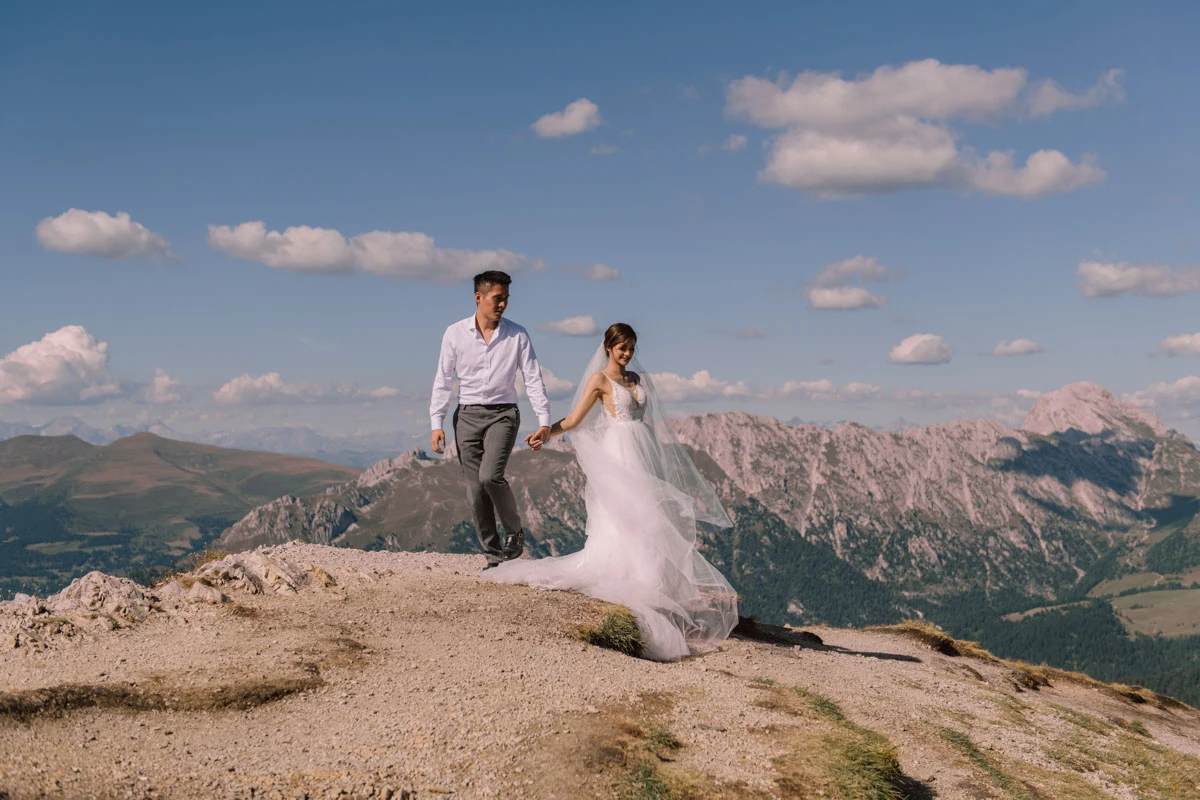
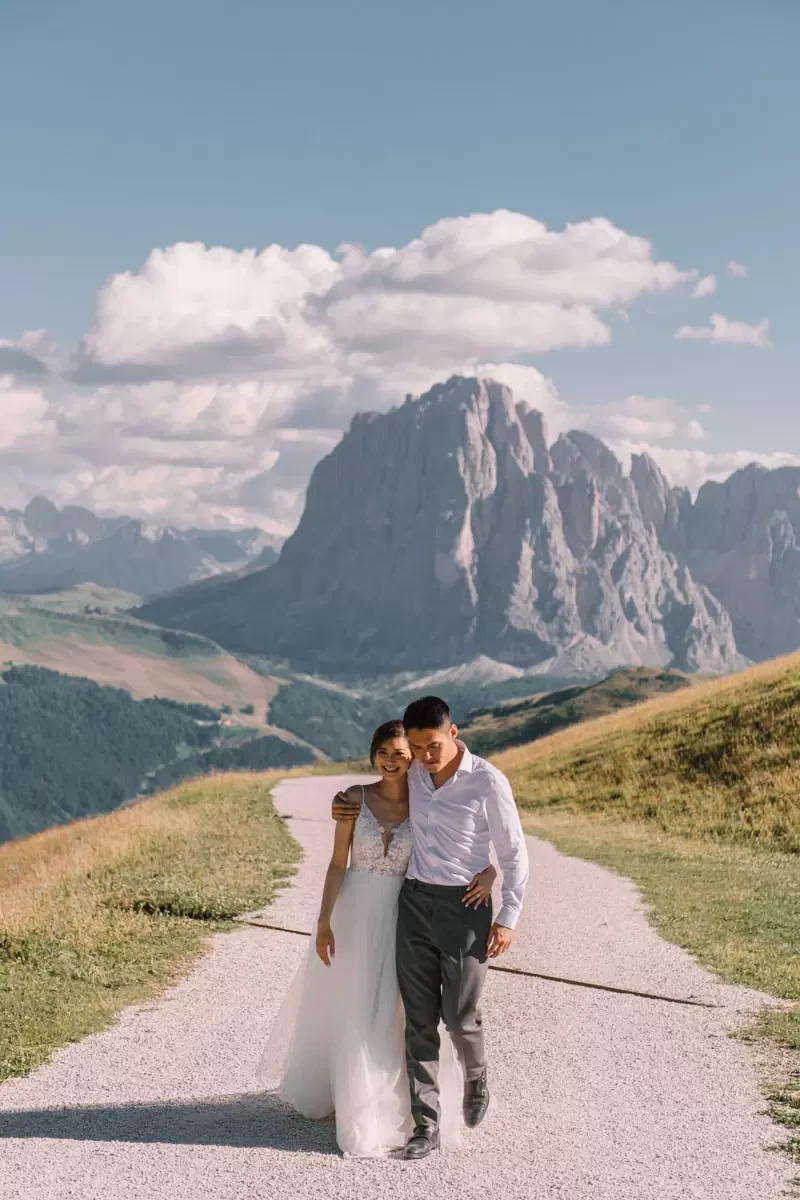
Seceda changed the visual language immediately. Instead of houses and water around the couple, we had open slopes, wind and the sharp Dolomite ridgeline. The photographs become more about scale and movement.
On our trip we used the lift to reach the mountain and spent around two to three hours photographing up there. Wind matters at Seceda. A dress, loose hair and a veil can look excellent in it, but only if the conditions remain safe and manageable.
The old version of this story mentioned the last lift time from that particular trip. I no longer present that as permanent advice. Lift timetables are exactly the sort of detail I re-check when planning a new shoot.

06
The road trip is part of the schedule
Driving from Austria into the Dolomites takes a meaningful part of the day, and I plan for it instead of pretending travel time does not exist. Depending on the season, road choice and mountain conditions, the journey itself can change.
After Seceda we kept the evening relatively easy and moved towards accommodation closer to Lago di Braies. That decision was entirely photographic: I wanted us close enough to the lake to use the early morning instead of spending it in a car.
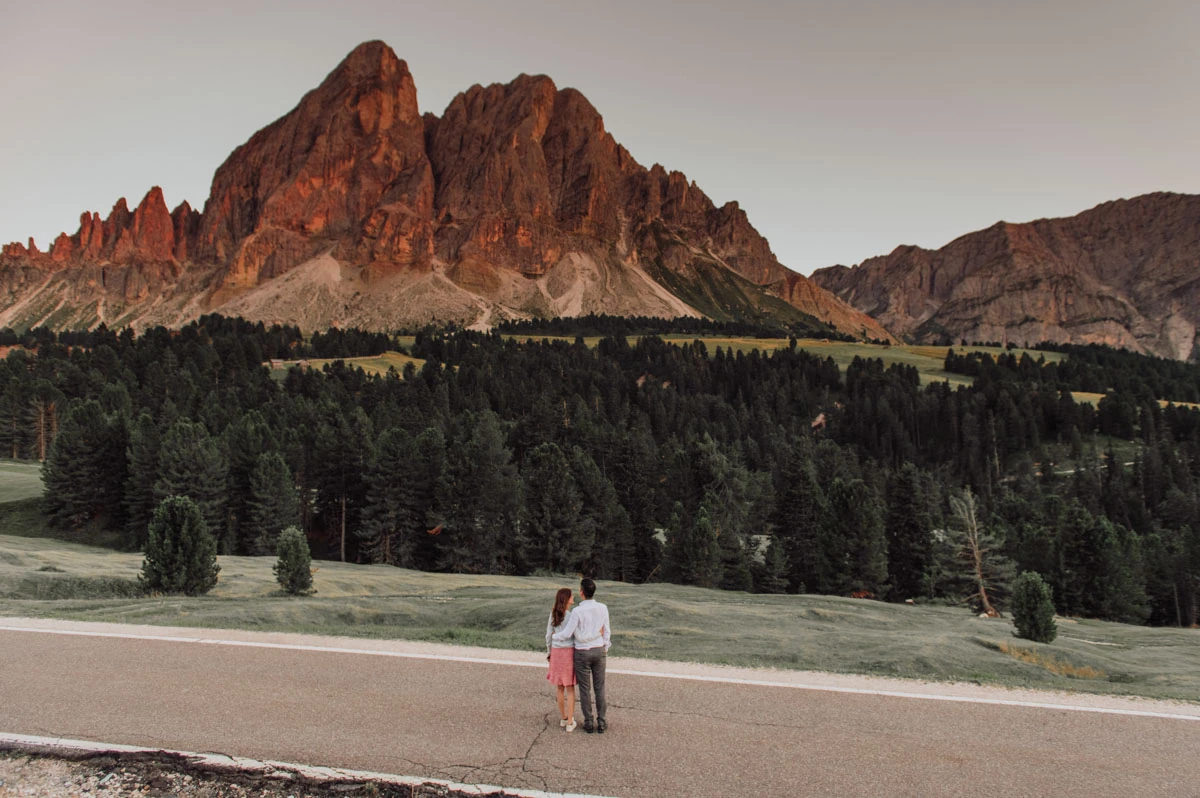
If we see a useful forest, road or patch of light during a transfer, I am happy to make a few casual photographs. I just do not build the schedule around accidental stops.
Day three · Lago di Braies


07
Early boats, glacier-fed water and another kind of lake
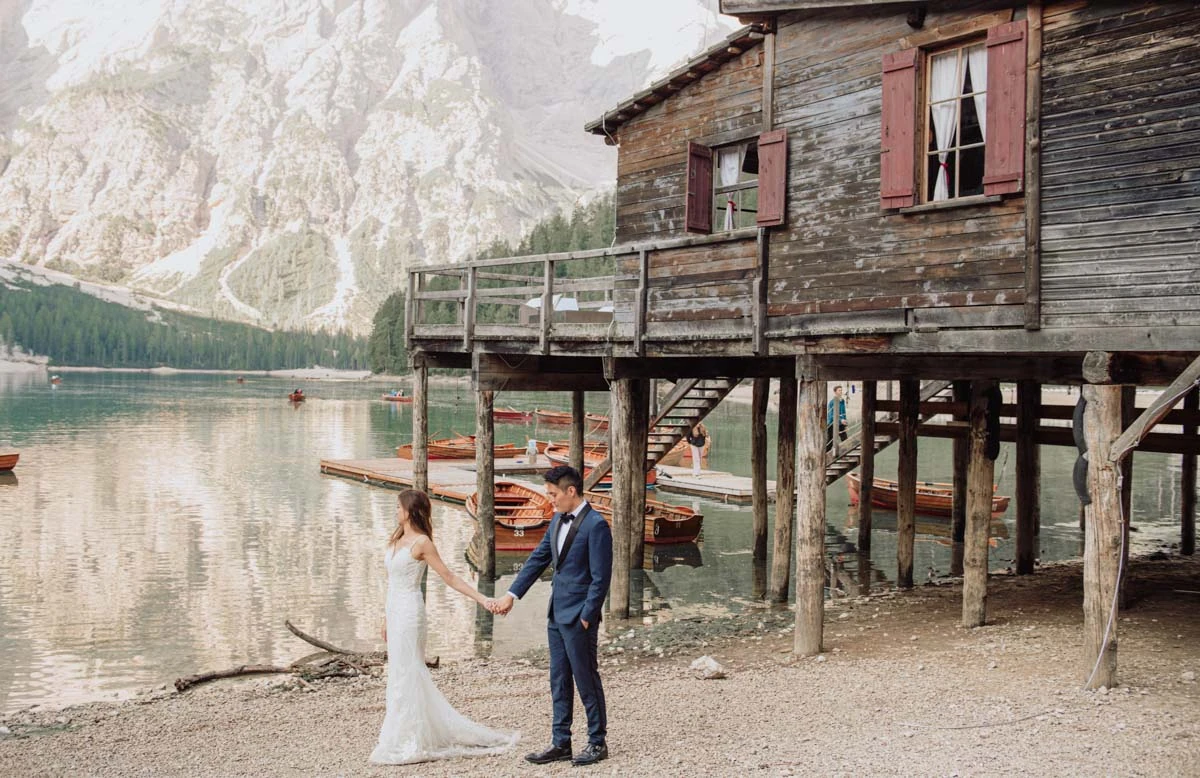
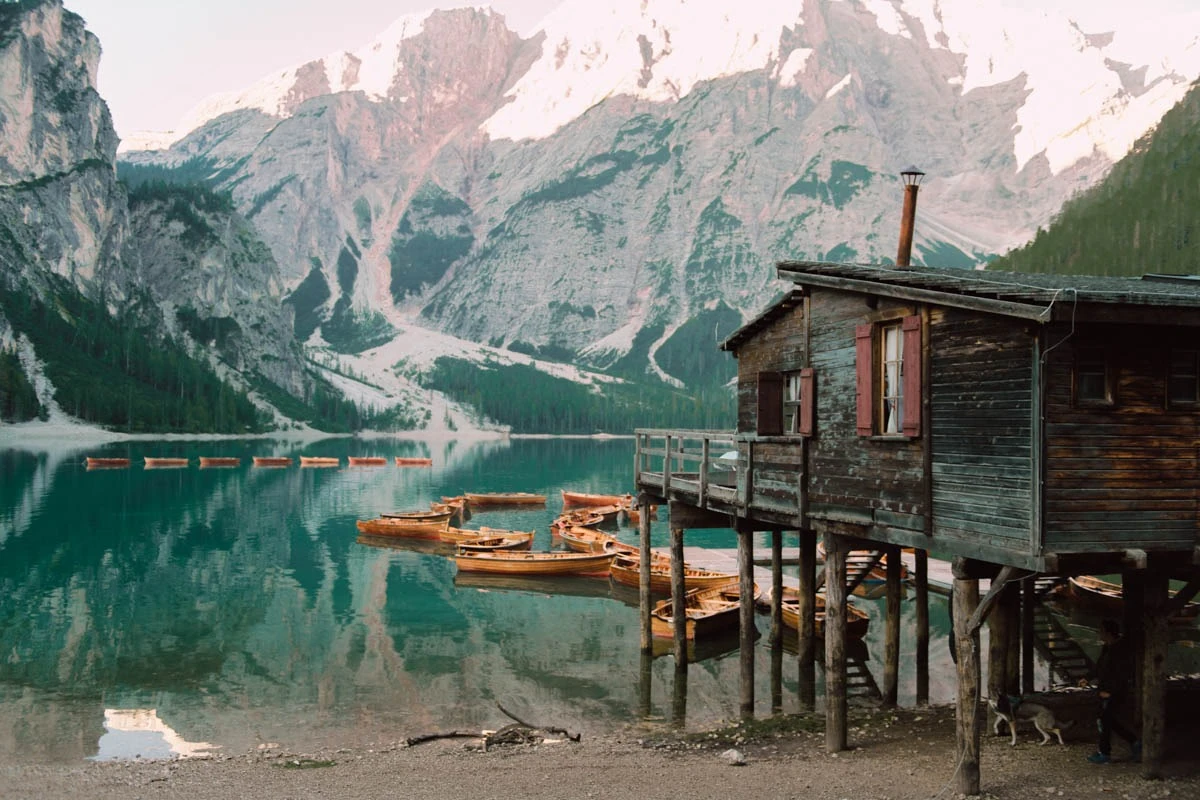
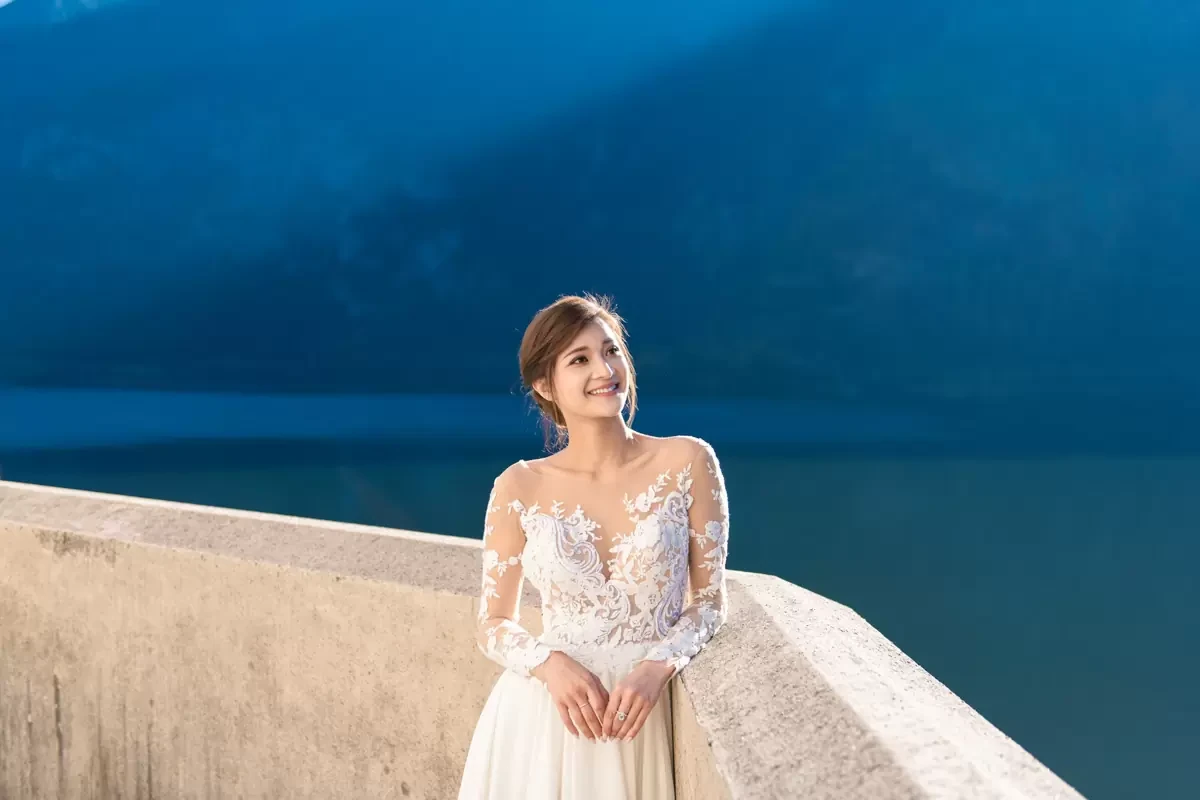
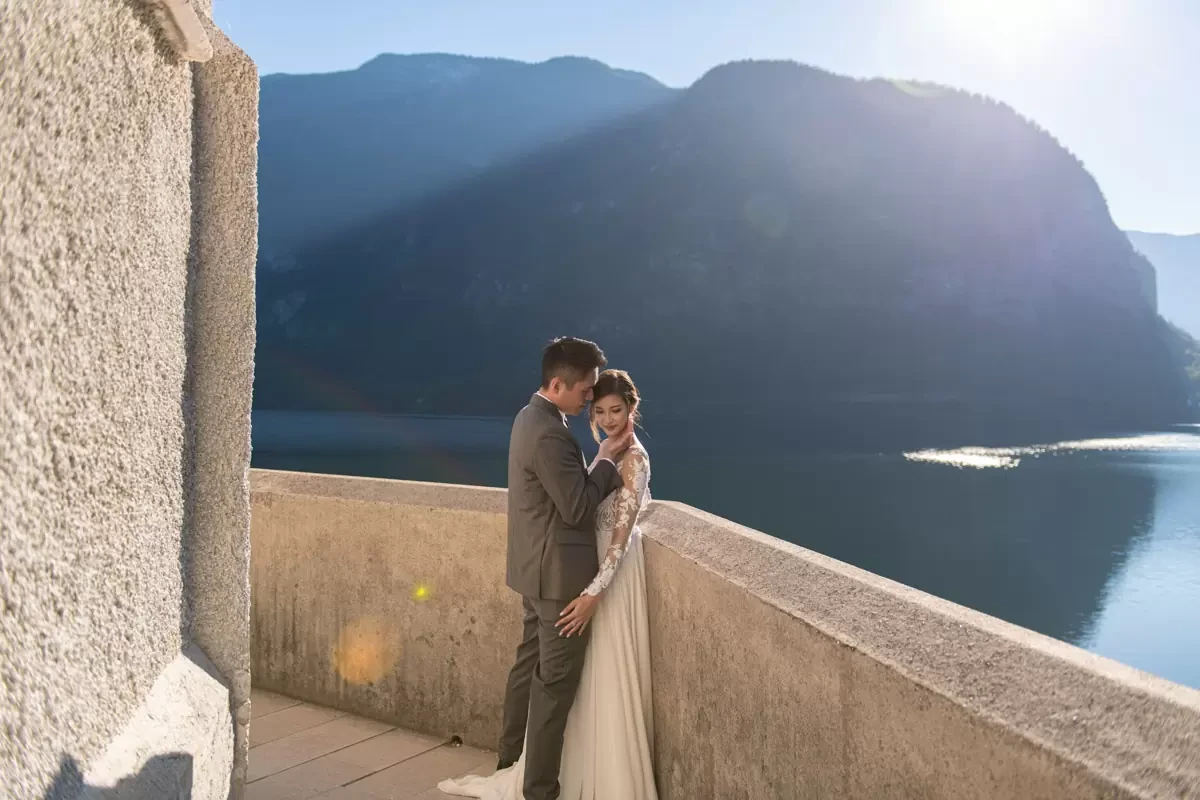
Lago di Braies was the final chapter, and once again the early start mattered. The wooden boat house and the lake become much harder to use cleanly once the day is busy, so we treated the morning as the valuable part of the schedule.
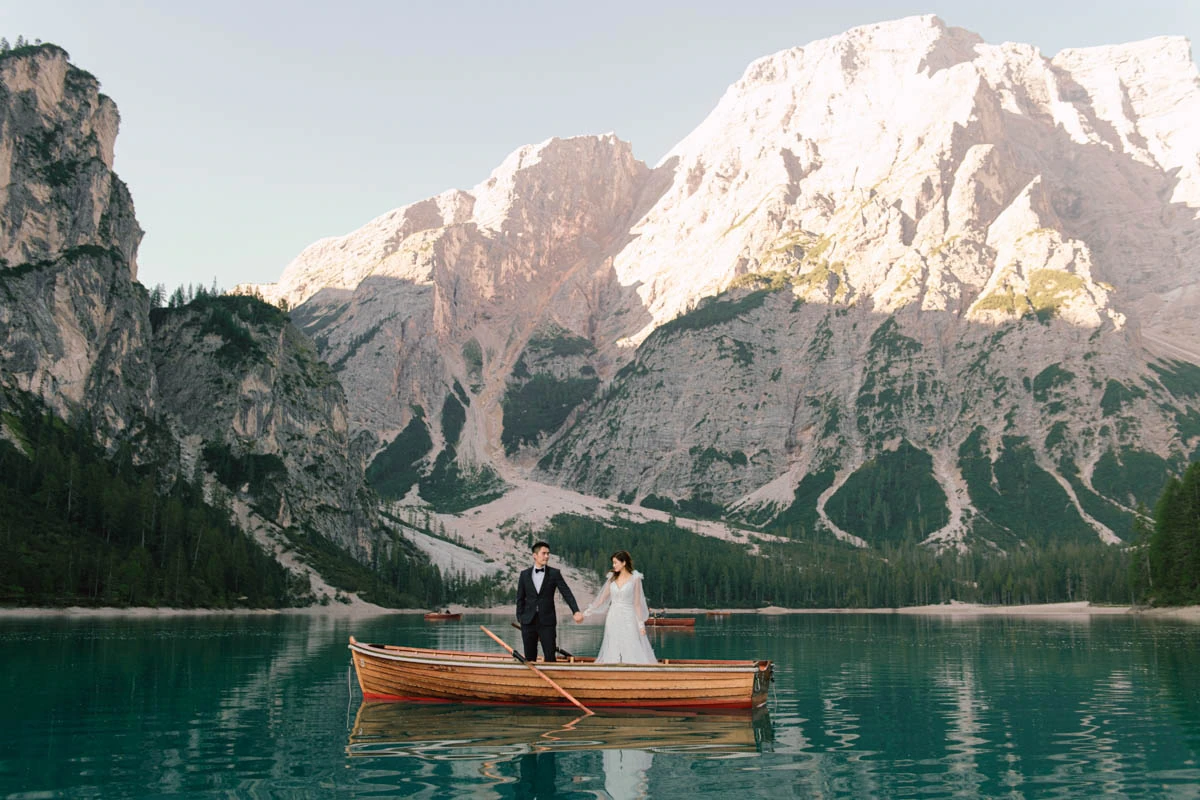
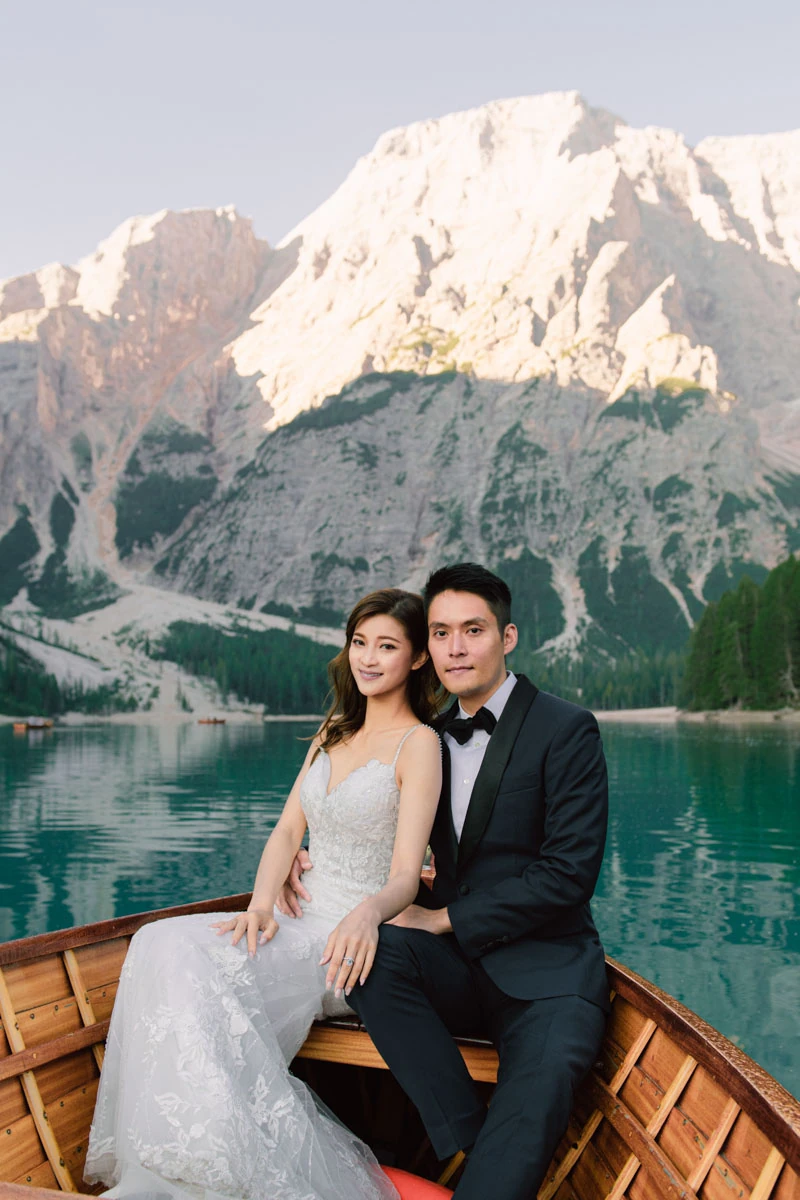
Carmen and Leo used one boat while I photographed from another. We had around an hour for the boat section, which was enough, then continued from the shore for another part of the gallery. Photographing from separate boats gives me more control over distance and background than sitting in the same boat with the couple.
The water and mountains are completely different from Hallstatt. That is the reason I am comfortable using two lakes in one story: visually they do not repeat each other.
How I would plan it now
Outfits, walking and keeping the route practical.
For a route like this I would not try to carry every outfit to every location. Hallstatt, Seceda and Lago di Braies already give three very different environments, so I would choose the clothes around those differences rather than around the idea of maximising the number of changes.
Hallstatt can support a more formal dress because the village is compact and there are places to pause between photographs. Seceda is different: wind, uneven ground and the lift journey make practical shoes and a warm layer much more important between frames. At Braies I would keep the boat section simple, because getting in and out of the boat with a large dress takes time and the useful early-morning window is limited.
I also prefer accommodation that helps the next morning rather than accommodation chosen only for the view. Before Braies, being close enough to reach the lake early is worth more to the photographs than adding another long drive before sunrise. The same principle applies to Hallstatt: sleeping nearby makes the dawn session realistic rather than theoretical.
The photography should look effortless even when the logistics are not. My job is to keep the transport, walking, outfit changes and weather decisions in the background so the finished gallery still feels like one continuous trip.
Why Carmen & Leo chose this route
They wanted the adventure photographs they had seen in my portfolio.
Carmen and Leo travelled from Hong Kong and came to me because they wanted more than a conventional city pre-wedding. They had seen my photographs from Hallstatt and the Dolomites and liked the idea of making the journey itself part of the story.
That mattered when I planned the route. I did not want three famous locations simply because they were famous. Hallstatt, Seceda and Lago di Braies had to give us different photographs. Hallstatt brought architecture, streets and a lived-in village beside a lake. Seceda removed almost everything except the couple, grass, sky and the ridgeline. Braies returned us to water, but in a much wilder Dolomite setting with the wooden boathouse and boats.
The result was a three-day shoot rather than an attempt to cover Austria and Italy in one exhausting day. The schedule gave us two completely different Hallstatt light windows, a dedicated mountain afternoon and a separate early morning at Braies.
That is the part of the original package I still believe in. The luxury is not simply having more hours. It is being able to place those hours where they make the most photographic difference.
Four hours to let the golden-hour look develop instead of rushing it.
Our first session was around four hours in Hallstatt during the late afternoon and golden hour. This was the warm-up day, but I never treated it as a throwaway first chapter. It gave Carmen and Leo time to get used to being photographed while I learnt how they moved together.
We worked through the cobblestone streets and the old architecture first, then used the lake and wider village views as the light became warmer. Hallstatt changes quickly as the sun drops behind the mountains. A view that feels relatively flat earlier can gain colour and separation later, so I prefer having enough time to revisit a background rather than photographing it once and moving on forever.
From behind the camera, the best thing about this evening was the balance between intimacy and scale. In the streets I could keep the frame close and concentrate on gestures and expressions. At the lake I could let Carmen and Leo become smaller in the photograph and use the mountains as part of the emotional weight of the image.
We finished the first day without trying to squeeze in another destination. The next morning was already planned as a second Hallstatt chapter, and that allowed the evening to remain relaxed.
Day two · Hallstatt at dawn
The same village, but photographically it was not the same session.
We returned at dawn for roughly two more hours. I wanted the morning because Hallstatt's streets and waterfront behave differently before the day visitors arrive. The backgrounds are cleaner, movement is easier and I can make wider compositions without constantly waiting for gaps.
The colour was also different. Day one had the warmth of the late sun. Day two had softer, quieter light. Putting those two sessions in the same story gave Carmen and Leo a much broader Hallstatt gallery than simply staying longer on one afternoon would have done.
By late morning we were finished in Austria. On that particular trip the plan was to leave Hallstatt at about 11:00 and reach the Seceda area at roughly 14:00. We had two possible road ideas in mind: a more scenic mountain route or the faster motorway option, depending on season and conditions.
I regard that drive as part of the photography schedule. If I book a mountain lift for the afternoon but pretend the transfer does not exist, the plan is already broken. Travel, food, parking and changing all have to fit around the light rather than being added afterwards.
Wind, the gondola and two to three hours above the valley.
At Seceda we changed scale completely. We used the lift to reach the mountain and spent around two to three hours photographing on the high slopes. On that trip the last lift down was around 18:00, which gave the afternoon a very real boundary. I keep that detail as part of the story, but for a new shoot I would check the current timetable rather than rely on an old one.
The wind was one of the biggest visual factors. Up there, loose hair, fabric and a veil can become part of the composition in a way they cannot in a sheltered village. When the wind is manageable I use it. When it becomes too strong, the priority changes from drama to safety.
Seceda is also where footwear matters. The final photographs can show an elegant dress against the ridgeline, but between frames the couple still has to move across mountain ground. I would much rather have practical shoes available and switch for the photograph than lose twenty minutes because every step has become difficult.
In the original plan I also considered using the drone if wind and rules allowed. That remains the way I think about aerial photography: optional, never essential. The core gallery has to work even if the drone stays in the bag.
A quiet evening was part of making the next morning work.
After the intensity of Hallstatt at dawn, the drive into Italy and several hours on Seceda, I did not want another major evening shoot. The plan was to eat, recover and move towards accommodation closer to Lago di Braies.
That decision sounds mundane, but it is exactly the kind of choice that improves a multi-day gallery. If the next location is best early, the hotel should make the early start easier. I would rather spend the evening positioning ourselves well for the next morning than arrive exhausted and late at the place we travelled all that way to photograph.
I was still open to spontaneous pictures on the road. If we found a quiet forest, a mountain road or a pocket of interesting light, I could make a few casual frames. But those were bonuses. I did not want an optional stop to steal energy from Braies.
Day three · Lago di Braies
One boat for Carmen & Leo, another boat for me.
Braies was another early start because the boathouse changes completely once the rental operation becomes busy. The old article noted that there can be around fifty rental boats on the lake once the day gets going. I wanted the quieter version before that activity took over the background.
Carmen and Leo took one wooden boat and I worked from another. That separation is important. If I sit in the couple's boat, most of my angles collapse into the same close perspective. From a second boat I can change distance, place them against the mountains and photograph the boat as part of the landscape rather than simply as the place I am standing.
We spent about an hour on the water. That was enough. Boat photography becomes repetitive surprisingly quickly if you stay too long, and the best frames usually come from a small number of clear ideas: rowing, stillness, distance, reflections and the couple framed against the peaks.
After the boat section we continued for roughly another hour from the shore. The glacier-fed colour of the water, the boathouse and the mountain walls gave me enough material without needing to turn the whole morning into a marathon. There is also a waterfall on the far side of the lake, another reminder that the landscape offers more than the single famous boathouse angle.
Drone use around Braies has restrictions, so again I treat it as optional. The ground-level and boat photographs are the story. Anything aerial is an addition only if the current rules and conditions allow it.
What the three days gave us
A real chronology instead of three disconnected portfolio locations.
When I look at Carmen and Leo's gallery as a whole, the reason the route works is progression. We begin in a village with architecture and warm evening light. We return to that village when it is quiet. Then the story opens into the high mountains and finishes on a completely different lake.
I would lose something by splitting that into separate Hallstatt story and Dolomites story pages. The travel is part of the experience, and the contrast between the locations is the point. Keeping the full chronology here makes the page more useful to couples who are considering a similar multi-day pre-wedding.
It also lets the Hallstatt and Dolomites destination pages stay focused on planning. They can show a short excerpt from this trip as evidence, then send readers here when they want to see what actually happened across the three days.
For me, that separation is cleaner both photographically and editorially. The guide answers how should we plan. This story answers what did a real three-day Alpine pre-wedding actually feel like.
The sequence, not the exact timetable.
I would happily build this type of Alpine route again. I would keep the two Hallstatt light windows, give Seceda its own afternoon and put Braies early the following morning.
What I would not preserve blindly are exact lift times, drone rules, road timings or access arrangements from the original shoot. Those are operational details, and Alpine destinations change. Before a new trip I check them again.
I also keep the route flexible. If Seceda is in cloud or the wind is unsafe, the schedule needs another option. A multi-day shoot gives us room to respond instead of forcing photographs in conditions that do not work.
Start with the landscapes you actually want.
Tell me whether Hallstatt, the Dolomites or both are the priority. From there I can build the number of days around light, transport and the amount of outfit changing you want to do.
Planning your own Dolomites session.
For locations, seasons, access and realistic mountain routes, continue with my Dolomites photography destination guide.